
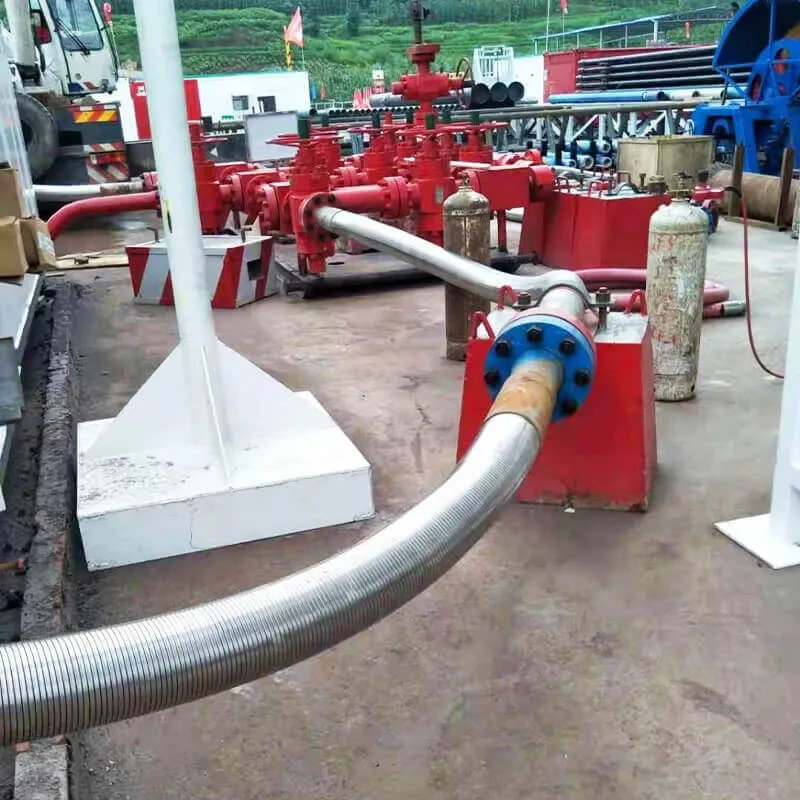
You need to understand api 16c fsl levels when selecting flexible choke and kill lines for well-control systems. These levels set fire resistance standards for hoses, ensuring api compliance and operational safety. Following api 16c guidelines protects your equipment and personnel.
Alienfrac manufactures api 16c choke and kill lines with strict compliance, offering reliable oilfield hoses for demanding environments. FSL levels help you match hoses to risk factors, maintaining compliance and reducing hazards. Choosing api 16c hoses with proper compliance supports safe oilfield operations.
Key Takeaways
- Understand API 16C FSL levels to select the right flexible choke and kill hoses for your well-control systems.
- Choose hoses based on their fire resistance level: FSL 0 for low risk, FSL 1 for standard operations, FSL 2 for higher risk, and FSL 3 for critical safety zones.
- Regularly maintain and inspect hoses to ensure compliance with API standards, including hydrotesting every six months or after 400 hours of use.
- Work with certified suppliers like Alienfrac to ensure you receive hoses that meet strict API 16C certification and safety requirements.
- Always review your operational environment and risk factors before selecting hoses to enhance safety and performance.
API 16C Overview
Purpose of API 16C
You rely on api 16c to set the foundation for safety and reliability in oilfield operations. The main objectives include protecting personnel and equipment, ensuring global interoperability, and enforcing strict standards for materials and manufacturing.
Api 16c regulates hoses used in choke and kill systems, making sure they withstand extreme pressures and harsh conditions. You benefit from these standards because they prevent catastrophic failures and promote consistent performance across different manufacturers.
Alienfrac designs its api 16c choke and kill hoses to meet these objectives, giving you confidence in demanding environments.
| Objective | Description |
|---|---|
| Safety and Reliability | Ensures hoses can withstand extreme pressures and harsh conditions to prevent catastrophic failures. |
| Global Interoperability | Allows equipment from different manufacturers to connect and function together reliably. |
| Strict Standards for Materials | Establishes high standards for materials and manufacturing processes to enhance safety and performance. |
Scope for Flexible Lines
Api 16c covers a wide range of equipment in well-control systems. You see its influence in articulated choke and kill lines, manifold assemblies, actuators, controls, and union connections. Api 16c product scope includes flexible choke and kill hoses, which are essential for safe and reliable operations.
These hoses connect critical components like the blowout preventer and choke manifold. Api 16c requires hoses to endure high pressures, extreme temperatures, and corrosive agents such as hydrogen sulfide. You must maintain hoses regularly, including hydrotesting every six months or after 400 hours of use, to ensure compliance.
| Equipment Type | Description |
|---|---|
| Articulated choke and kill lines | Flexible lines used in well control systems. |
| Choke and kill manifold buffer chamber | A component that manages pressure in the system. |
| Choke and kill manifold assembly | The assembly that controls the flow of fluids. |
| Drilling choke actuators | Devices that adjust the choke position. |
| Drilling choke controls | Controls for managing choke operations. |
| Drilling chokes | Devices that regulate flow during drilling. |
| Flexible choke and kill lines | Essential for safe and reliable operations. |
| Union connections used in choke and kill assemblies | Connectors for various components. |
| Rigid choke and kill lines | Non-flexible lines used in specific applications. |
| Swivel unions used in choke and kill equipment | Allow for movement and flexibility in connections. |
Key Terms
You encounter several key terms when working with api 16c hoses. Flexible choke and kill lines refer to hoses that absorb movement and vibration while maintaining a secure flow path. Manifold assemblies manage fluid flow and pressure. Actuators and controls adjust and regulate choke positions.
Api 16c defines requirements for fire resistance, pressure rating, and material quality. Alienfrac aligns its hoses with api 16c standards, ensuring you receive products that meet rigorous testing and certification.
Understanding these terms helps you select the right hoses for your well-control systems and maintain operational safety.
API 16C FSL Levels Explained
What Are FSL Levels?
You encounter api 16c fsl levels when you select hoses for well-control systems. These levels set the fire resistance requirements for flexible choke and kill hoses. Api created the FSL classification to help you match hoses to the risk profile of your operation.
You use api 16c fsl levels to ensure that your hoses can withstand exposure to fire and extreme conditions. Api 16c defines four FSL levels, ranging from basic to advanced fire resistance. You must understand these levels to choose the right hoses for your drilling environment.
Api 16c fsl levels provide a clear framework for evaluating hose performance under fire exposure. You rely on these levels to maintain safety and compliance in your well-control systems.
FSL 0-3 Definitions
You need to know the details of each api 16c fsl level. Api 16c divides fire resistance into four categories: FSL 0, FSL 1, FSL 2, and FSL 3. Each level represents a different degree of fire exposure and testing.
| FSL Level | Fire Resistance Requirement | Typical Application |
|---|---|---|
| FSL 0 | No fire test required | Low-risk environments |
| FSL 1 | Basic fire test | Standard drilling operations |
| FSL 2 | Enhanced fire test | Higher-risk well-control scenarios |
| FSL 3 | Severe fire test | Critical safety zones and sour service |
You select FSL 0 hoses for environments with minimal fire risk. FSL 1 hoses undergo a basic fire test and suit normal drilling conditions. FSL 2 hoses must pass enhanced fire tests, making them ideal for operations with higher risk.
FSL 3 hoses withstand severe fire exposure and are used in critical safety areas or sour service. Api 16c fsl levels guide you to match hoses to the specific hazards of your site.
You must consider the service path, not just pressure ratings, when you choose hoses. Api 16c fsl levels help you define the right fire resistance for your application.
Practical Implications
Api 16c fsl levels affect how you select and use flexible choke and kill hoses in different well-control scenarios. You must evaluate the operating path, including motion, bend geometry, fluid type, and temperature. Api 16c requires you to look beyond pressure ratings and consider the full service definition.
You use FSL 1 hoses for rotary, vibrator, and jumper duties under normal conditions. You need to specify the intended drilling liquid and operational environment for proper evaluation.
- Hose selection depends on the service path, not just pressure.
- You must consider motion, bend geometry, fluid type, and temperature.
- Api 16c fsl levels ensure hoses match the risk profile of your operation.
- You use FSL 0-3 service levels to define fire resistance and safety requirements.
Alienfrac manufactures api 16c choke and kill hoses that meet all api 16c fsl levels. You can customize hoses for your project, choosing the right fire resistance, size, and pressure rating.
Alienfrac tests and certifies hoses according to api standards, giving you confidence in demanding environments. You receive documentation and inspection reports to verify compliance.
Api 16c fsl levels help you maintain operational safety and reduce hazards. You rely on Alienfrac hoses to meet these standards and support safe well-control operations.
Technical Requirements
Testing Protocols
You must follow strict testing protocols to achieve api 16c certification for flexible choke and kill hoses. Api certification requires you to perform hydrostatic pressure testing, valve operational verification, and dimensional inspections. You need to test hoses under extremely high pressure to confirm their durability and performance.
Api 16c certification process includes factory testing and third-party audits. You receive independent compliance verification from organizations such as DNV, ABS, and CCS. These certifications confirm that your hoses meet api standards for choke and kill equipment.
You rely on Alienfrac to deliver api 16c certified products that pass all required tests. Alienfrac uses advanced machinery and quality control systems to ensure every hose meets api certification requirements. You receive hoses that withstand harsh environments and maintain performance during well-control operations.
| Evidence Type | Description |
|---|---|
| Independent Compliance | Third-party certifications provide independent verification that equipment meets API standards. |
| Testing Requirements | Factory testing includes hydrostatic pressure testing and valve operational verification. |
| Documentation Requirements | Includes material certifications, test results, and API monogram compliance certificates. |
You protect your operation by choosing hoses that pass api 16c certification and rigorous testing protocols.
Material Specs
You must select hoses with materials that meet api 16c certification standards. Api requires specific material specifications for choke and kill hoses. You need oil-resistant, seawater-resistant, and high-temperature-resistant synthetic rubber for the inner layer.
The middle layer uses high-strength fabric cloth and steel wire rope to provide structural stability. The outer layer must resist high temperatures, wear, oil, and ozone aging. You can add stainless steel armor for extra protection. Api 16c certified products operate in temperatures from -29℃ to +121℃ (-20℉ to +250℉).
You choose integral union or integral flange joints for secure connections.
- Inner layer: Oil-resistant, seawater-resistant, high-temperature-resistant synthetic rubber based on nitrile rubber.
- Middle layer: High-strength fabric cloth as the buffer layer and outer protective layer; high-strength steel wire rope as the pressure-bearing skeleton material.
- Outer layer: High-temperature resistant, wear-resistant, oil-resistant, and ozone-aging-resistant synthetic rubber.
- Protective layer: Stainless steel armor.
- Temperature Range: -29℃ to +121℃ (-20℉ to +250℉).
- Executive Standards: API Spec. 16C FSL0 FSL1 FSL2 FSL3 | ABS.
- Joint Type: Integral Union or Integral Flange.
Alienfrac manufactures oilfield hoses with these materials to meet api 16c certification. You receive hoses that perform reliably in extreme high pressure and corrosive environments. You can customize hoses for your project, ensuring compatibility with your well-control systems.
You improve operational safety by selecting hoses with api 16c certification and advanced material specs.
Documentation
You must maintain comprehensive documentation to complete the api 16c certification process. Api certification requires you to keep data books, certificates, and performance records. You need marking and traceability for every hose. You plan in-service inspections and maintenance for choke and kill systems.
Api 16c certification process includes repair and reconditioning criteria, audit preparation, and compliance templates. You use checklists developed from active certification projects to streamline compliance. You sustain long-term compliance by following api certification strategies throughout the operational lifecycle.
Alienfrac provides you with complete documentation for every hose. You receive inspection reports, pressure test records, material certifications, and api monogram certificates. You can access compliance templates and checklists to simplify api 16c certification audits.
| Requirement Type | Description |
|---|---|
| Quality Assurance Processes | Processes for ensuring quality in manufacturing and operational environments for API 16C. |
| Documentation Requirements | Includes data books, certificates, and performance records necessary for compliance. |
| Marking and Traceability | Requirements for marking, identification, and traceability under API 16C. |
| In-Service Inspection | Planning for inspection and maintenance of choke and kill systems. |
| Repair and Reconditioning Criteria | Guidelines on when equipment can be returned to service after repair. |
| Certification Audit Preparation | Strategies for preparing for API 16C certification audits, including common non-conformance findings. |
| Compliance Templates and Checklists | Access to templates and checklists developed from active certification projects for immediate application. |
| Long-term Compliance Assurance Strategies | Strategies for sustaining compliance throughout the operational lifecycle of choke and kill systems. |
You achieve api 16c certification by maintaining accurate documentation and following api certification guidelines.
You trust Alienfrac to support your api 16c certification process with quality assurance and compliance documentation. You receive oilfield hoses that meet api certification standards and help you maintain safe well-control operations.
Application Scenarios
Selecting FSL Levels
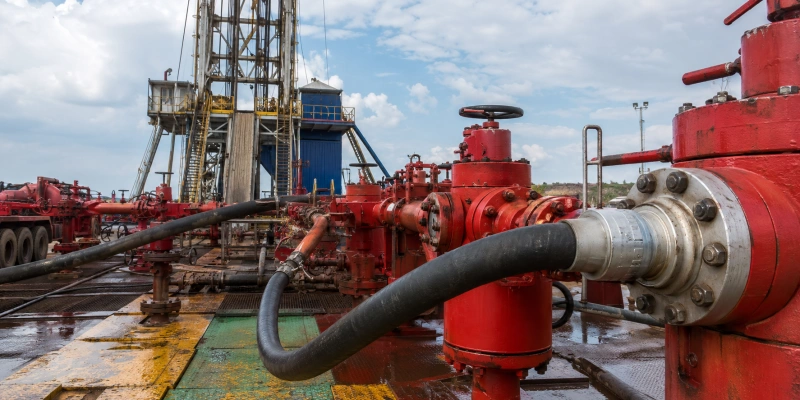
You must evaluate your operational environment before selecting FSL levels for flexible choke and kill lines. Each FSL level in api 16c addresses a different risk profile. You use FSL 0 for basic compliance in less demanding settings. FSL 1 provides enhanced verification for commercial drilling.
FSL 2 offers the highest manufacturing traceability, making it essential for offshore drilling, deep wells, and critical international energy projects. The table below helps you match FSL levels to your well control system needs:
| FSL Level | Description | Application |
|---|---|---|
| FSL 0 | Basic compliance level with standard manufacturing controls. | Less demanding operational environments. |
| FSL 1 | Enhanced quality verification level with stricter material traceability. | Commercial drilling operations. |
| FSL 2 | Highest level of manufacturing verification and traceability. | Offshore drilling, deep-well operations, high-risk environments, critical international energy projects. |
Tip: Always review your choke and kill systems’ risk factors before specifying FSL levels. This ensures your hoses meet both safety and regulatory requirements.
Alienfrac Product Use Cases
You see Alienfrac’s api 16c flexible choke and kill lines in action across diverse environments. Onshore drilling projects rely on these hoses for safety during complex geological operations. Offshore platforms use them for resistance to seawater corrosion and high pressure, which prevents environmental pollution.
The table below shows real-world examples:
| Operational Environment | Description |
|---|---|
| Onshore Drilling | Used in choke and well control systems across various terrains, ensuring safety during drilling operations under complex geological conditions. |
| Offshore Drilling | Essential for choke and well control on platforms, providing resistance to seawater corrosion and high pressure, crucial for preventing environmental pollution. |
You can customize hoses for your choke control systems, choosing the right size, pressure rating, and FSL level for your project.
Risk Management
You manage risk in pressure control systems by selecting the correct api 16c hoses for your application. Advanced materials in Alienfrac hoses deliver high burst pressure ratings and extended service life. You benefit from hybrid reinforcement systems and smart fibers that enable real-time pressure monitoring.
These innovations help you maintain safe choke control systems and well control system operations. You reduce downtime and improve safety by matching hoses to your operational needs.
- Focus on burst pressure ratings above 10,000 PSI.
- Choose hoses with advanced reinforcement for durability.
- Consider smart materials for real-time monitoring in critical choke and kill lines.
You protect your team and assets by aligning api 16c FSL levels with your operational risks.
Standards Comparison
API vs. ISO/EN
You often see api 16c as the main standard for flexible choke and kill hoses in oilfield operations. Api 16c sets strict requirements for fire resistance, pressure ratings, and material traceability. When you compare api 16c to ISO and EN standards, you notice some key differences.
ISO 14693 and EN 14585 also cover high-pressure hoses, but they focus more on rotary drilling and cementing applications. Api 16c targets well-control systems and critical safety zones.
| Standard | Focus Area | Fire Resistance | Traceability | Application Scope |
|---|---|---|---|---|
| API 16C | Choke & kill hoses | Yes | High | Well-control systems |
| ISO 14693 | Rotary drilling hoses | Limited | Moderate | Drilling, cementing |
| EN 14585 | Flexible hoses for rigs | Limited | Moderate | Drilling, cementing |
You choose api 16c hoses when you need the highest level of safety and compliance for well control. Alienfrac manufactures hoses that meet api 16c, ISO, and EN standards, so you can use them in projects worldwide.
Note: Api 16c hoses offer the most comprehensive fire resistance and traceability for critical well-control operations.
FSL Levels vs Other Standards
You use api 16c FSL levels to define fire resistance for flexible hoses. Other standards, such as ISO and EN, do not have a direct equivalent to FSL levels. Api 16c FSL 0-3 gives you a clear way to match hoses to your risk profile.
ISO and EN standards may require basic fire testing, but they do not specify graduated fire resistance levels.
- Api 16c FSL levels help you select hoses for everything from low-risk to severe fire exposure.
- ISO and EN standards focus on general performance, not detailed fire resistance categories.
Alienfrac positions its api 16c hoses as a global solution. You can trust these hoses to meet or exceed the requirements of api, ISO, and EN standards. This flexibility allows you to use Alienfrac hoses in international projects, knowing they comply with the strictest safety and quality guidelines.
Tip: Always check the project specifications and local regulations before selecting hoses. Api 16c FSL levels provide the highest assurance for fire resistance and traceability.
Buyer Guidance
Key Criteria
When you select api 16c hoses for your well-control system, you need to focus on several important criteria. The right choice ensures your equipment meets all api 16c certification requirements and performs safely under pressure. Use the table below to guide your evaluation:
| Criteria | Description |
|---|---|
| Working Pressure | Confirm the normal operating pressure for your field service. |
| Test Pressure | Check the hydrostatic pressure used during inspection or acceptance testing. |
| Connection Types | Verify the exact connection type, size, pressure class, and seal structure to avoid delays. |
| Service Conditions | Match the hose to your specific job requirements, such as cementing, acidizing, or fracturing. |
| Documentation Requirements | Request clear specifications, drawings, or photos to ensure correct selection and certification. |
Tip: Always review your project’s api 16c certification documents before placing an order. This step helps you avoid costly mistakes.
Supplier Tips
You should work with suppliers who understand api 16c certification and can support your technical needs. Follow these steps to make the best choice:
- Request full api 16c certification documentation for all hoses.
- Confirm that the supplier tests hoses for both working and test pressure.
- Ask for detailed drawings and connection specifications.
- Ensure the supplier provides traceability and marking for every hose.
- Choose suppliers who offer after-sales support and maintenance guidance.
Note: Reliable suppliers help you maintain compliance and extend the service life of your hoses.
Alienfrac Advantages
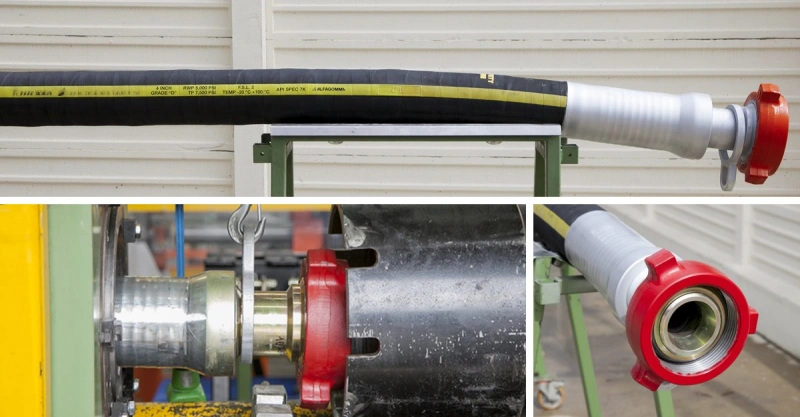
Alienfrac stands out as a trusted partner for api 16c hoses. You benefit from several key advantages:
- Alienfrac customizes hoses to meet your unique project requirements, ensuring a perfect fit for any application.
- The company holds multiple certifications, including api 16c certification, api Q1, api 7K, ISO 9001, and ISO 45001, guaranteeing high quality and safety.
- Alienfrac provides a global service network, offering installation guidance and after-sales maintenance for all hoses.
- You receive complete documentation and support throughout the product lifecycle, making api 16c certification audits easier.
- Alienfrac’s advanced manufacturing ensures every hose meets strict api 16c certification standards.
Choosing Alienfrac means you get reliable hoses, full certification, and expert support for every stage of your project.
Conclusion
You rely on API 16C FSL levels to maintain safe and compliant well-control operations. API 16c certification ensures your hoses meet strict fire resistance and traceability standards. Alienfrac delivers reliable hoses that support your operational needs and help you achieve API 16c certification.
You improve safety and performance by choosing hoses that pass API 16c certification audits. You should always consult certified suppliers and review documentation before selecting equipment. The table below shows why this step matters:
| Aspect | Description |
|---|---|
| Quality Assurance | Processes for API 16C manufacturing and operational environments |
| Documentation | Data books, certificates, and performance records |
| Marking and Traceability | Identification and traceability requirements under API 16C |
| Inspection and Maintenance | Planning for in-service inspection and maintenance |
| Repair Criteria | Guidelines for returning equipment to service |
| Certification Audits | Common findings during API 16c certification audits |
You protect your team and assets by following API 16c certification guidelines and working with trusted suppliers.
FAQ
What is the main purpose of API 16c hoses?
You use API 16c hoses to transfer well-control fluids safely between equipment during drilling operations. These hoses help you maintain control in high-pressure environments and support critical safety systems.
How do I choose the right FSL level for my project?
You should assess your operational risks and environment. Select the FSL level that matches your fire resistance needs. FSL 0 suits low-risk areas, while FSL 3 fits critical or sour service zones.
Can I customize Alienfrac 16c hoses for unique applications?
Yes, you can request customizations for Alienfrac 16c hoses. You specify size, pressure rating, length, and end connections to fit your project requirements.
What documentation do I receive with certified hoses?
You receive inspection reports, pressure test records, and compliance certificates. This documentation helps you verify that your hoses meet all required standards.
How often should I inspect or replace 16c hoses?
You should inspect hoses regularly and after every 400 hours of use. Replace hoses if you find damage or after failing a pressure test.
Tip: Always follow your maintenance schedule to ensure safe and reliable operation.