
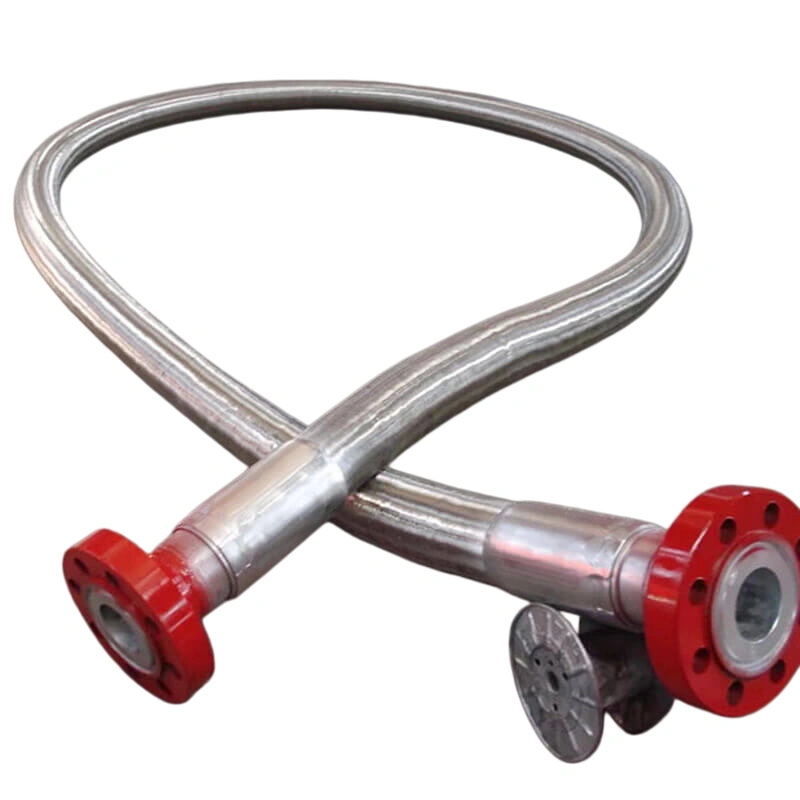
You rely on api 16c hose testing to protect your oilfield operations from dangerous failures. When you test api 16c hoses, you reduce the risks of accidents and injuries caused by pressurized fluid releases. These tests help prevent environmental damage from leaks or spills.
Fire resistance, pressure, and H2S service tests play a critical role in ensuring hose reliability. Alienfrac manufactures api 16c choke and kill hoses with strong quality standards. You need oilfield hoses that meet api requirements and keep your site safe.
Key Takeaways
- API 16c hose testing is essential for safety in oilfield operations. Regular testing reduces the risks of accidents and environmental damage.
- Fire resistance, pressure, and H2S service tests are critical. These tests ensure hoses can withstand extreme conditions and maintain integrity.
- Choose hoses with API certification. Certified hoses meet strict standards for pressure, fire, and chemical resistance, ensuring reliable performance.
- Maintain detailed records of hose inspections and tests. This practice helps track performance and ensures compliance with safety standards.
- Stay updated on API standards. Regularly review guidelines and attend training to ensure your hoses meet the latest safety requirements.
API 16c Hose Testing Essentials
Scope and Importance
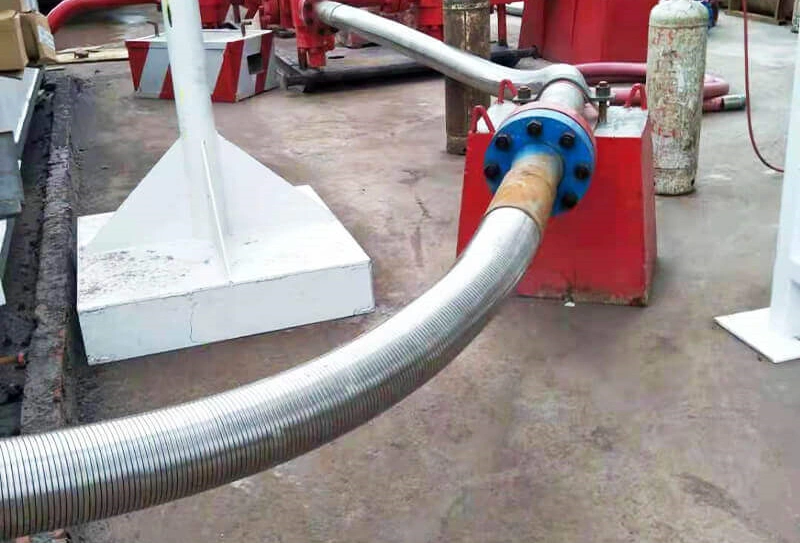
You depend on API 16c hose testing to ensure safety and reliability in your oilfield operations. This testing covers critical performance aspects of hoses used in flexible choke and kill lines, rotary vibrator and drilling hoses, and other high-pressure applications.
The testing verifies that hoses can withstand extremely high pressures, resist fire exposure, and endure corrosive environments such as those containing hydrogen sulfide (H2S). These factors directly impact your operational safety by preventing blowouts, leaks, and failures that could cause injuries or environmental damage.
The table below highlights key features you should expect from hoses meeting API 16c standards:
| Feature | Description |
|---|---|
| Extreme High Pressure | Rated for exceptionally high working pressures, often 10,000 psi and up, crucial for preventing blowouts. |
| Fire Resistance | Must pass a fire test to maintain integrity under open flame, essential for safety during incidents. |
| H2S Resistance | Compounded inner tube material resists corrosive agents like hydrogen sulfide, enhancing durability. |
| Multiple Service Levels | Available in different Fire Service Levels (FSL0 to FSL3), indicating varying fire-resistant capabilities. |
Compliance Standards
API 16c sets strict requirements for hose design, materials, and testing procedures. You must ensure hoses carry the API monogram, which confirms they meet these standards. The testing includes pressure tests such as working pressure, proof pressure, and burst pressure to verify strength and durability.
Fire resistance tests simulate exposure to open flames, while H2S service tests check chemical resistance.
Common non-compliance issues you should watch for include:
- Hose abrasion problems are caused by internal erosion or external vibration.
- Pressure pulsation leading to impulse fatigue and weakening of the hose structure.
- Improper routing that violates the minimum bend radius causes premature wear and failure.
Maintaining compliance reduces downtime and protects your personnel and equipment from hazardous failures.
Alienfrac Choke and Kill Hose Overview
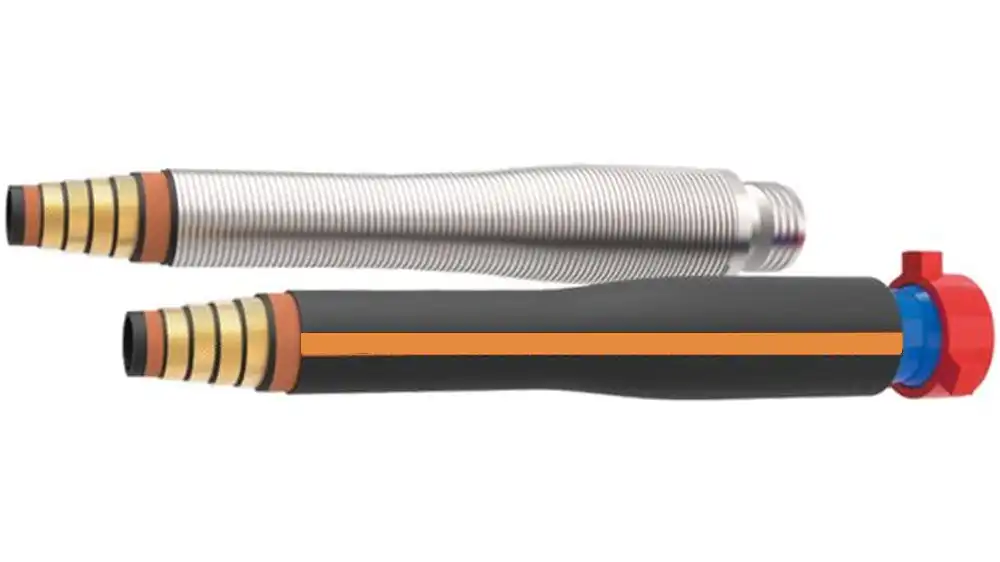
Alienfrac manufactures choke and kill hoses designed specifically for demanding oilfield environments. Their hoses meet API certification requirements and carry the API monogram, assuring you of their quality and reliability.
Alienfrac’s hoses handle high pressures up to 15,000 psi and provide excellent resistance to abrasion, fire, and H2S exposure.
You can rely on Alienfrac’s flexible choke and kill lines, rotary vibrator, and drilling hoses to maintain stable fluid flow and withstand harsh conditions. Their advanced construction uses high-tensile steel reinforcement and abrasion-resistant materials, ensuring long service life and operational safety.
Choosing Alienfrac means you get hoses tested and certified to meet the toughest API 16c standards, helping you keep your operations safe and efficient.
Fire Resistance in API 16c Hoses
Why Fire Resistance Matters?
You face many hazards in oilfield operations, but fire remains one of the most dangerous. Fires can start quickly and spread fast, especially when you work with flammable liquids and gases. The most common causes of fire incidents involving hoses include:
- Improper hot-work practices
- Ignition of flammable liquids from a generator
- Malfunctioning electrical motors
- Sparks from machinery are igniting flammable gases and vapors
When a fire breaks out, your hoses must keep working under extreme heat. If a hose fails, it can release high-pressure fluids, making the fire worse and putting your team at risk. Fire resistance in api 16c hoses protects your equipment and your people.
You need hoses that can withstand flames and keep vital systems running during emergencies. This is why api 16c requires strict fire resistance standards for all choke and kill hoses.
Fire Testing Procedures
You must test every api 16c hose for fire resistance before using it in the field. Fire resistance testing shows how a hose reacts to direct flames and high temperatures. This process helps you understand if the hose will keep its strength and flexibility during a fire. The main steps in fire testing include:
- Expose the hose to an open flame for a set period, usually 30 minutes, at a controlled temperature.
- Monitor the hose for leaks, bursts, or loss of pressure during and after exposure.
- Check the hose for damage to the outer cover, reinforcement, and inner tube.
You also need to test fire detection and suppression systems, such as sprinklers and smoke detectors, to ensure a safe work environment. These tests help you develop more fire-resistant and insulated hoses and improve workplace safety.
By following api 16c fire testing procedures, you reduce the risk of catastrophic hose failure during a fire.
Alienfrac Fire Resistance Features
Alienfrac designs every choke and kill hose to meet or exceed api 16c fire resistance requirements. You benefit from advanced materials and construction methods that provide superior protection.
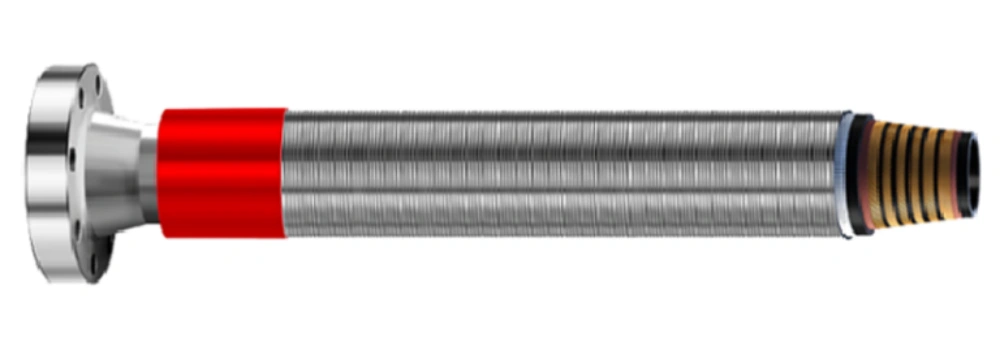
Each hose features a fire-resistant synthetic rubber inner tube, multiple fireproof layers, and a tough outer cover. These components work together to block heat and prevent damage during a fire.
Alienfrac hoses use high-tensile steel reinforcement and fire-resistant and insulated barriers to maintain pressure and flexibility under extreme conditions. The hoses carry major certifications, including api, DNV MED, CCS, and ABS, proving their reliability in the harshest environments.
You can trust Alienfrac hoses to deliver consistent performance and safety, even when exposed to open flames.
Tip: Always choose hoses with proven fire resistance and proper certifications for your critical oilfield applications.
By selecting Alienfrac, you ensure your operations stay safe and compliant with api 16c standards. You protect your team, your equipment, and your reputation with hoses built for fire resistance.
Pressure Test Methods for API 16c Hoses
Types of Pressure Tests
You need to understand the different types of pressure tests required by api 16c. Each test checks a specific aspect of hose strength and reliability. The three main types include working pressure, proof pressure, and burst pressure tests.
These tests confirm that your hose can handle extreme high pressure and maintain safety in demanding oilfield environments.
Here is a table summarizing the main pressure tests and their requirements:
| Test Type | Purpose | Typical Pressure Level |
|---|---|---|
| Working Pressure | Verifies safe operation under normal use | Rated system pressure |
| Proof Pressure | Confirms hose integrity above working level | 1.5 × working pressure |
| Burst Pressure | Determines the maximum pressure before failure | 2.4 × working pressure or higher |
You must also consider additional tests such as shell, backseat, and closure tests. These tests ensure that all components of the hose assembly meet api standards for pressure containment and leak prevention.
Testing Steps and Safety
You must follow strict steps during pressure testing to protect your team and equipment. Start by inspecting the hose for visible damage or wear. Connect the hose to a calibrated test system. Fill the hose with water for hydrostatic testing, which is the preferred method.
Increase the pressure gradually to the required test level. Hold the pressure for a specified time while monitoring for leaks or deformation.
Safety remains your top priority during pressure testing. Always use barriers or shields to protect personnel from accidental hose failure. Inspect pressure relief devices before each test to ensure proper function. Use ultrasonic or magnetic-particle inspections to detect surface cracks.
Strain-gauge measurements help you monitor high-stress points on the hose. After the test, perform a leak check to confirm the hose maintains integrity.
The table below outlines key safety protocols you should follow:
| Safety Protocols | Description |
|---|---|
| Hydrostatic Testing | Test to at least 150% of the maximum allowable working pressure. |
| Pneumatic Testing | Use only if hydrostatic is not possible, at least 125% of MAWP. |
| Inspection Requirements | Use ultrasonic or dye penetrant tests for cracks or flaws. |
| Strain-Gauge Monitoring | Place at high-stress locations during testing. |
| Pressure Relief Devices | Inspect regularly for compatibility and function. |
| Leak Testing | Conduct after pressure testing and at regular intervals. |
Note: Always document each pressure test and inspection. Accurate records help you track hose performance and maintain compliance with api 16c.
Alienfrac Pressure Ratings
Alienfrac choke and kill hoses deliver outstanding performance in high-pressure drilling hose applications. You can select hoses rated for 5,000 psi, 10,000 psi, or 15,000 psi, depending on your project needs.
Each hose undergoes rigorous api 16c hose testing to verify its ability to withstand working pressure and temperature extremes. Alienfrac uses advanced manufacturing techniques and high-tensile steel reinforcement to ensure every hose meets or exceeds api requirements.
You benefit from hoses that maintain stable fluid flow and resist failure, even under extreme high pressure. Alienfrac hoses protect your equipment and personnel by providing reliable pressure containment and leak resistance. You can trust these hoses to perform in the harshest drilling environments, both onshore and offshore.
Tip: Always match the hose pressure rating to your system’s working pressure and temperature. This practice ensures maximum safety and extends hose service life.
By choosing Alienfrac, you invest in hoses that meet strict api standards and deliver proven reliability in every pressure test.
H2S Service and API 16c Compliance
H2S Challenges in Oilfields
You face serious risks when working with oilfield hoses in environments where hydrogen sulfide (H2S) is present. H2S is a colorless, flammable, and highly toxic gas. Even at low concentrations, it can be fatal.
You cannot rely on your sense of smell to detect H2S because it paralyzes this sense, making it an unreliable warning sign. The gas is heavier than air, so it settles in low areas and forms invisible pockets of danger. Exposure can quickly lead to incapacitation, making escape difficult.
These hazards make H2S resistance a critical factor in oilfield hose selection and safety planning.
Testing for H2S Resistance
You need to ensure your hoses can withstand H2S exposure during demanding operations. API 16c hose testing includes specific methods to evaluate h2s resistance. One key method is H2S Sour Aging. This test exposes the hose to H2S under elevated pressure and temperature.
The goal is to confirm that the hose maintains pressure control and structural integrity in sour service environments. You must also consider industry standards for maximum allowable H2S exposure. The table below summarizes these limits:
| Standard/Agency | Limit Type | Value |
|---|---|---|
| OSHA | PEL-C (Ceiling) | 20 ppm |
| OSHA | Max Peak (8-hr shift) | 50 ppm (10 min) |
| ACGIH | TLV (8-hr day) | 10 ppm |
| ACGIH | Short-Term Exposure | 15 ppm |
You protect your team and equipment by choosing hoses that pass these rigorous tests and meet all exposure limits.
Alienfrac H2S Service Capabilities
Alienfrac designs oilfield hoses with advanced materials and construction to deliver outstanding H2S resistance. Each hose undergoes strict api 16c testing, including H2S Sour Aging, to ensure reliable performance in sour service conditions.
Alienfrac hoses maintain pressure control and resist chemical attack from H2S, even at high temperatures and pressures. You benefit from hoses that meet or exceed api and industry standards for safety and durability. Alienfrac’s commitment to quality gives you confidence in every operation.
You can trust these hoses to protect your people, your equipment, and your site when facing H2S challenges.
Tip: Always verify that your hoses carry the proper api 16c certification and have passed all required H2S resistance tests before deployment.
Best Practices for API 16c Hose Testing
Vendor and Product Selection
You should always start with a careful review of your vendor’s credentials. Look for suppliers who provide clear documentation of api certification and have a proven track record in oilfield hose manufacturing. Ask for test reports that show compliance with api 16c and other relevant api standards.
You need to confirm that each hose meets the required pressure rating and resistance to fire and H2S. When you select choke and kill hoses, check for visible api monograms and request details about the manufacturing process.
Alienfrac offers hoses that pass strict api certification and testing, giving you confidence in both performance and safety.
Tip: Consult with Alienfrac’s technical team to match the right hose to your application. Their expertise ensures you get hoses with the correct pressure and resistance features.
Recordkeeping and Maintenance
You must keep detailed records for every hose in your operation. Track each hose’s api certification, inspection dates, pressure test results, and maintenance actions. Use a simple table or digital log to organize this information:
| Hose ID | API Certification | Last Inspection | Pressure Test Date | Notes |
|---|---|---|---|---|
| 001 | Yes | 2024-03-10 | 2024-03-12 | No issues |
Regular inspection helps you spot early signs of wear, loss of resistance, or pressure drops. Schedule routine maintenance and replace hoses that fail any api test or show damage. This practice keeps your site safe and reduces downtime.
Staying Updated with Standards
You need to stay informed about changes in api 16c and related api requirements. Subscribe to industry updates and attend training sessions when possible. Review new guidelines for hose inspection, pressure testing, and resistance criteria.
Update your procedures to match the latest api certification standards. This approach helps you maintain compliance and ensures your hoses deliver reliable performance.
Note: Alienfrac stays current with all api changes and can advise you on the best practices for hose selection, inspection, and maintenance.
By following these best practices, you protect your team, your equipment, and your reputation. You ensure that every hose in your operation meets the highest standards for safety and reliability.
Conclusion
You protect your oilfield operations by prioritizing API 16c hose testing. Regular tests for fire, pressure, and resistance help you avoid dangerous failures. Alienfrac leads the industry with innovative manufacturing and strict fire standards.
You benefit from hoses that withstand fire, maintain resistance, and deliver reliable performance. The table below shows Alienfrac’s certifications and benchmarks for fire and resistance:
| Certification | Description |
|---|---|
| API 16C | Hoses maintain integrity at 180°C and resist hydrogen sulfide corrosion (NACE MR0175). |
You ensure safety when you choose certified hoses and schedule frequent fire and resistance tests. Contact Alienfrac for expert support and solutions.
FAQ
What does API 16c certification mean for hoses?
API 16c certification shows that your hose meets strict industry standards for pressure, fire, and H2S resistance. You can trust certified hoses to perform safely in critical oilfield operations.
How often should you test API 16c hoses?
You should test hoses before first use, after repairs, and at regular intervals based on your operation’s risk assessment. Always follow your company’s maintenance schedule and API guidelines.
Can you use Alienfrac Choke and Kill Hoses for offshore drilling?
Yes. Alienfrac Choke and Kill Hoses meet API 16c standards and offer high-pressure, fire, and H2S resistance. You can use them for both onshore and offshore drilling projects.
What is the maximum pressure rating for Alienfrac Choke and Kill Hoses?
You can select hoses rated for 5,000 psi, 10,000 psi, or 15,000 psi. Choose the rating that matches your system’s requirements for safe and reliable performance.
Where can you get technical support for hose selection?
Contact Alienfrac’s technical team for expert advice. You will receive guidance on hose selection, certification, and maintenance to ensure safe oilfield operations.