
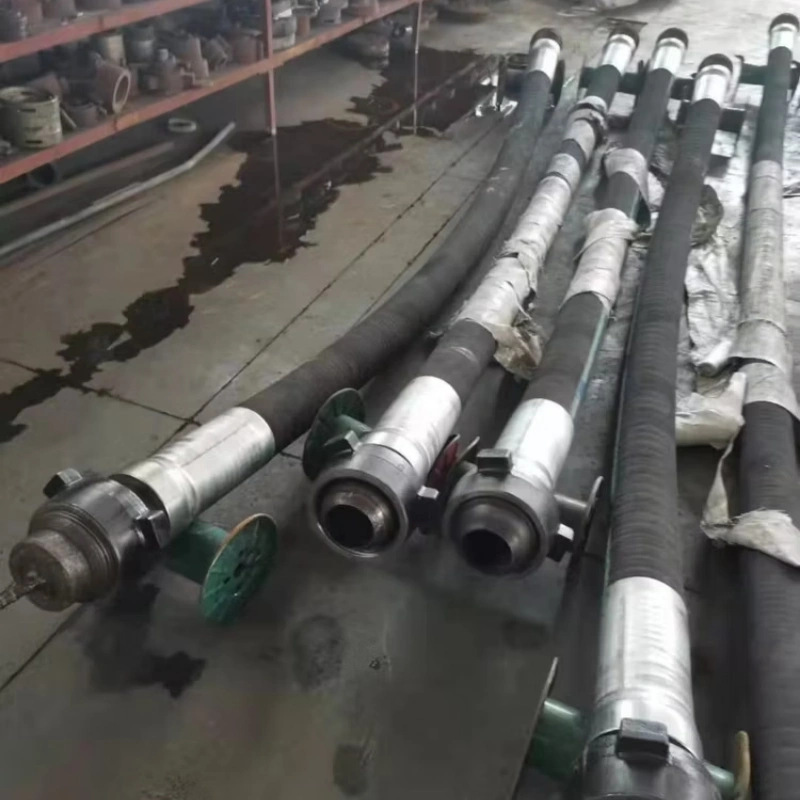
You face critical choices when selecting oil and gas equipment, especially when comparing api 16a vs api 16c vs api 6a. Each standard targets specific systems and environments, shaping performance and reliability. Choosing the right API standard impacts your operations in several ways:
- API compliance can reduce equipment failure rates by 32% within the first year.
- Fewer shutdown days lead to savings in lost production and repair costs.
- Regulatory approvals for API-certified equipment arrive much faster, which accelerates project timelines.
Alienfrac’s Choke and Kill Hose meets API requirements, supporting safer and more efficient drilling operations.
Key Takeaways
- Choosing the right API standard can reduce equipment failure rates by 32% in the first year, enhancing safety and efficiency.
- API 16A is essential for blowout preventers and drill-through equipment, ensuring well pressure control during drilling.
- API 16C focuses on choke and kill systems, managing well pressure with hoses and manifolds designed for high-stress conditions.
- API 6A applies to wellhead and Christmas tree equipment, crucial for controlling surface well pressure during production.
- Always match your equipment to the correct API standard to avoid safety hazards, regulatory issues, and costly downtime.
API Standards Overview
When you work in oil and gas, you rely on strict standards to keep your equipment safe and efficient. The American Petroleum Institute, or API, sets these standards. Each API standard focuses on a different part of oil and gas operations. You need to know which standard fits your equipment and project needs.
Tip: Choosing the right API standard helps you avoid costly downtime and keeps your team safe.
Here is a quick comparison of the main API standards for oil and gas equipment:
| API Standard | Definition | Primary Purpose |
|---|---|---|
| API 6A | Specification for Wellhead and Christmas Tree Equipment | Controls pressure well during drilling operations |
| API 16A | Specification for Drill-through Equipment | Used during drilling operations |
| API 16C | Choke and Kill Systems | Manages well control and pressure during drilling |
API 16A Overview
API 16A covers drill-through equipment. You use this standard for blowout preventers (BOPs), BOP stacks, and related parts. These pieces of equipment help you control well pressure and prevent blowouts during drilling. API 16A sets rules for design, testing, and performance.
You must follow these rules to keep your oil and gas operations safe.
Alienfrac understands the demands of API 16A. The company’s hoses and connectors support high-pressure drilling equipment, helping you meet strict safety standards.
API 16C Overview
API 16C focuses on choke and kill systems. You use this standard for equipment that manages well pressure during drilling. API 16C covers hoses, manifolds, and lines that move drilling fluids under high pressure.
The standard requires compatibility with pressure ratings, special materials for harsh environments, and rigorous testing.
| Requirement Type | Description |
|---|---|
| Pressure rating compatibility | All components are matched to the BOP stack’s working pressure. |
| Temperature and material classes | Designed for low-temperature environments and sour service using compliant materials. |
| Design verification and testing | Requires hydrostatic and functional testing, plus traceability of critical parts. |
| Documentation | Structured documentation available for audits and inspections. |
Alienfrac’s Choke and Kill Hose meets API 16C requirements. You can trust it for safe and reliable oil and gas equipment performance in tough drilling conditions.
API 6A Overview
API 6A covers wellhead and Christmas tree equipment. You use this standard for equipment that controls well pressure at the surface. API 6A includes wellhead housings, casing heads, tubing heads, valves, and Christmas tree assemblies. These parts work together to keep your oil and gas operations running smoothly.
- Versatile wellhead housing supports casing strings.
- Efficient casing head seals the annular space.
- Reliable tubing head prevents leaks.
- Diverse valves control fluid flow.
- Christmas tree assembly manages production flow.
- Standardized flanges ensure compatibility.
- Strict materials and testing keep equipment safe.
Alienfrac designs hoses and connectors that fit API 6A systems. You get reliable equipment for every stage of oil and gas production.
API 16a vs API 16c vs API 6a: Key Differences
When you compare api 16a vs api 16c vs api 6a, you see clear differences in scope, pressure, and equipment. Understanding these differences helps you select the right standard for your oil and gas operations. Each api standard addresses unique challenges and applications in the field.
Scope and Equipment
You need to match your equipment to the correct api standard. Each specification covers a distinct set of equipment types. The table below shows how api 16a vs api 16c vs api 6a differ in their focus:
| API Specification | Equipment Type |
|---|---|
| API 16A | Drill-through equipment (blowout preventers, annular BOPs, packing units, drilling spools, hydraulic connectors, adapters, clamps, and loose connections) |
| API 16C | Choke and kill equipment (manifolds, hoses, and flexible lines) |
| API 6A | Wellhead and Christmas tree equipment (production phase) |
You use api 16a for blowout preventers and related drill-through equipment. You rely on api 16c for choke and kill manifolds, hoses, and flexible lines. You select api 6a for wellhead and Christmas tree equipment during the production phase.
This distinction ensures your equipment meets the right safety and performance requirements.
Alienfrac’s Choke and Kill Hose is a prime example of api 16c application. You can trust this hose for high-pressure choke and kill lines, where reliability and compliance are critical.
Pressure Ratings
Pressure ratings play a key role in api 16a vs api 16c vs api 6a selection. Each standard supports a range of pressure classes to match different well conditions. The following table outlines the pressure class ranges for each api standard:
| API Standard | Pressure Class Range |
|---|---|
| API 6A | 2000 PSI to 20,000 PSI |
| API 16A | 2000 PSI to 15,000 PSI |
| API 16C | 2000 PSI to 15,000 PSI |
You must choose equipment that matches the expected pressure in your operations. For example, api 6a covers the widest range, supporting both shallow and ultra-high-pressure wells. Api 16a and api 16c focus on high-pressure drilling and well control applications, with maximum ratings up to 15,000 PSI.
The chart below shows typical pressure ratings and proof test values for oil and gas equipment:
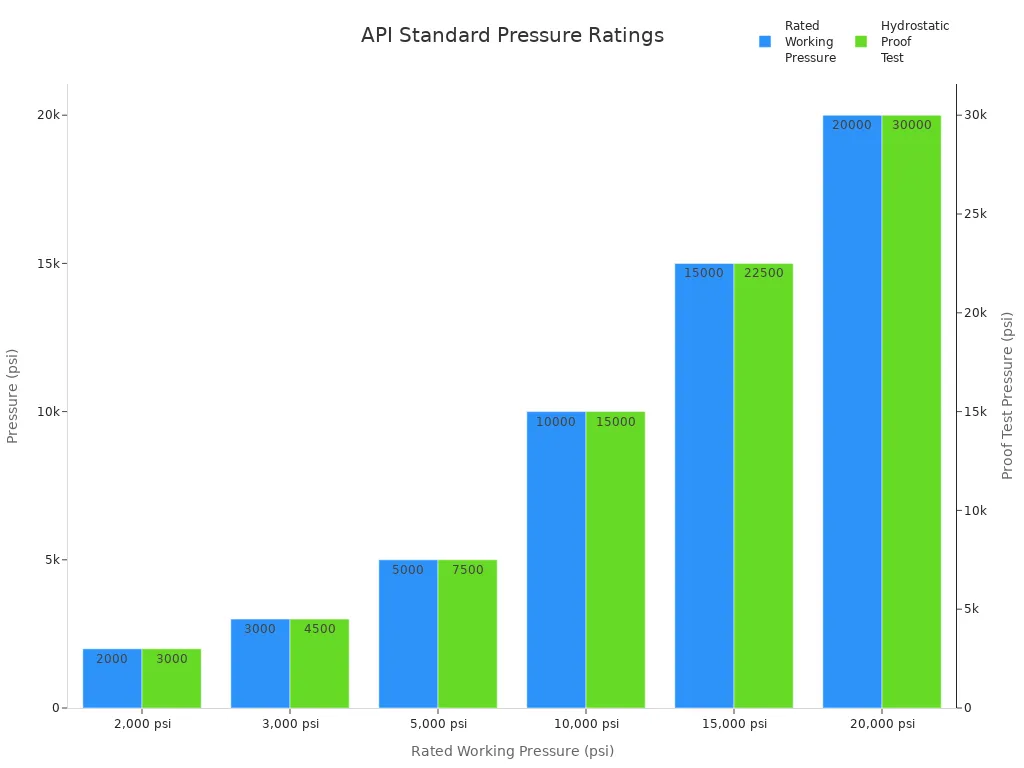
Alienfrac’s Choke and Kill Hose meets api 16c pressure requirements, with options for 5,000 psi, 10,000 psi, and 15,000 psi. You can select the right hose for your specific drilling environment.
Typical Applications in Oil and Gas
You encounter different applications for each api standard. Understanding these helps you make informed decisions:
- API 16A: You use this standard for blowout preventers and drill-through equipment during drilling. It ensures you control pressure well and prevent blowouts.
- API 16C: You rely on this standard for choke and kill manifolds, hoses, and flexible lines. These components manage well pressure during critical drilling operations. Alienfrac’s Choke and Kill Hose is designed for these demanding applications, providing safe and efficient fluid transfer.
- API 6A: You select this standard for wellhead and Christmas tree equipment during the production phase. It covers valves, flanges, and other components that control flow at the surface.
Note: Always match your equipment to the correct api standard. This practice improves safety, reduces downtime, and ensures regulatory compliance.
When you compare api 16a vs api 16c vs api 6a, you see that each standard serves a unique purpose. You must consider the scope, pressure ratings, and applications before making your selection. Alienfrac supports your operations with certified hoses and connectors that meet these strict api requirements.
Selecting the Right API Standard for Oil and Gas

Choosing the right api standard for your oil and gas project ensures safety, efficiency, and regulatory compliance. You need to evaluate several factors before making a decision. Consider the following when selecting between api 16a, api 16c, and api 6a:
- Working pressure and bore size: Match the choke manifold’s pressure rating with the BOP and select the correct bore size.
- Service conditions: Assess fluid type, temperature, and the presence of H₂S or CO₂ to determine material requirements.
- Configuration and flow paths: Define the number of choke lines and layout for operational efficiency.
- Operation and control: Decide between manual or remote operation and integration with monitoring systems.
- Interfaces and standards: Ensure compatibility with existing systems and compliance with the relevant api standard.
When to Use API 16A?
You should use api 16a when your project involves drill-through equipment such as blowout preventers, annular BOPs, and related connectors. This standard applies during drilling operations where you need to control well pressure and prevent blowouts.
Select api 16a if your equipment must withstand high-pressure drilling environments and meet strict safety requirements.
When to Use API 16C?
You need api 16c for choke and kill systems, especially when managing well control during critical drilling operations. This standard covers hoses, manifolds, and flexible lines that must endure extreme pressures, harsh chemicals, and severe environmental conditions.
Alienfrac’s Choke and Kill Hose is engineered for these scenarios, featuring:
| Layer | Material/Feature | Purpose |
|---|---|---|
| Inner layer | UPE, HNBR, PTFE | Resists oil, wear, and corrosion for safe fluid transport |
| Reinforcing layer | 2-6-layer steel wire winding | Provides pressure resistance and tensile strength |
| Outer rubber layer | High-temperature synthetic rubber | Shields against flames and protects the internal structure |
| Outer protective layer | Stainless steel armor | Enhances wear and fire resistance in harsh environments |
You benefit from absolute safety, reliability, and global interoperability when you choose api 16c-compliant hoses for your drilling operations.
When to Use API 6A?
Select api 6a for wellhead systems, Christmas trees, and pressure control equipment during the production phase. This standard is mandatory for surface equipment that controls well pressure and flow. The table below summarizes where api 6a compliance is required:
| Equipment Type | Compliance Requirement |
|---|---|
| Wellhead Systems | Mandatory api certification |
| Christmas Trees | Mandatory api certification |
| Pressure Control Equipment | Mandatory api certification |
Using API-certified equipment reduces failures by 30%, cuts unplanned downtime by 40%, and accelerates project approvals by 25%. You also save on insurance premiums over the project lifecycle.
By following these guidelines, you ensure your oil and gas operations remain safe, efficient, and cost-effective.
Common API Questions and Misconceptions
Interchangeability of Standards
You might wonder if you can use equipment certified to one API standard in place of another. This is a common question in oil and gas projects. The answer is almost always no.
Each API standard addresses specific equipment, testing, and performance requirements. You cannot swap an API 16A blowout preventer for an API 6A wellhead component or use an API 16C choke and kill hose where API 16A applies.
Tip: Always check the API monogram and certification on your equipment. This ensures you use the right product for the right application.
Here is a quick reference table to help you:
| API Standard | Typical Equipment | Interchangeable? |
|---|---|---|
| API 16A | Blowout Preventers (BOPs) | ❌ |
| API 16C | Choke & Kill Hoses | ❌ |
| API 6A | Wellhead/Christmas Tree | ❌ |
You must match the standard to the equipment and operation. Alienfrac’s Choke and Kill Hose, for example, meets API 16C only. You should not use it where API 16A or API 6A is required.
Risks of Incorrect Standard Selection
Selecting the wrong API standard can lead to serious problems. You risk equipment failure, safety incidents, and regulatory penalties. You also increase downtime and repair costs.
- Safety Hazards: Using the wrong standard can cause leaks, blowouts, or pressure loss.
- Regulatory Issues: Inspectors may shut down your operation if you use non-compliant equipment.
- Operational Delays: You may face long delays waiting for replacement parts or re-certification.
- Financial Losses: Equipment failure can damage other assets and lead to expensive repairs.
Note: You protect your team and your investment when you choose the correct API standard. Alienfrac’s certified hoses help you avoid these risks and keep your operations running smoothly.
If you have questions about which standard fits your project, consult with your supplier or reach out to Alienfrac’s technical team for expert guidance.
Conclusion
You now understand the main differences between API 16A, API 16C, and API 6A. You must focus on compliance to ensure safety and operational success. Each standard requires strict compliance for equipment selection, installation, and maintenance.
You improve safety and reduce risk when you follow compliance guidelines. Alienfrac demonstrates a strong commitment to compliance through certified hoses and advanced manufacturing. You can trust Alienfrac for reliable oilfield hoses that meet every compliance requirement.
FAQ
What is the main difference between API 16A, API 16C, and API 6A?
You see different scopes for each standard. API 16A covers drill-through equipment. API 16C focuses on choke and kill systems. API 6A applies to wellhead and Christmas tree equipment.
Can you use an API 16C hose in place of an API 16A component?
No, you cannot. Each API standard targets specific equipment and testing. You must use hoses and components that match the correct API specification for safety and compliance.
How do you verify if a hose meets API 16C requirements?
You should check for the API monogram, review the manufacturer’s certification, and request test reports. Alienfrac provides full documentation for its Choke and Kill Hose.
Why should you choose Alienfrac’s Choke and Kill Hose for API 16C applications?
You get a hose designed for high-pressure, harsh drilling environments. Alienfrac’s Choke and Kill Hose meets strict API 16C standards, ensuring safety, reliability, and global acceptance.