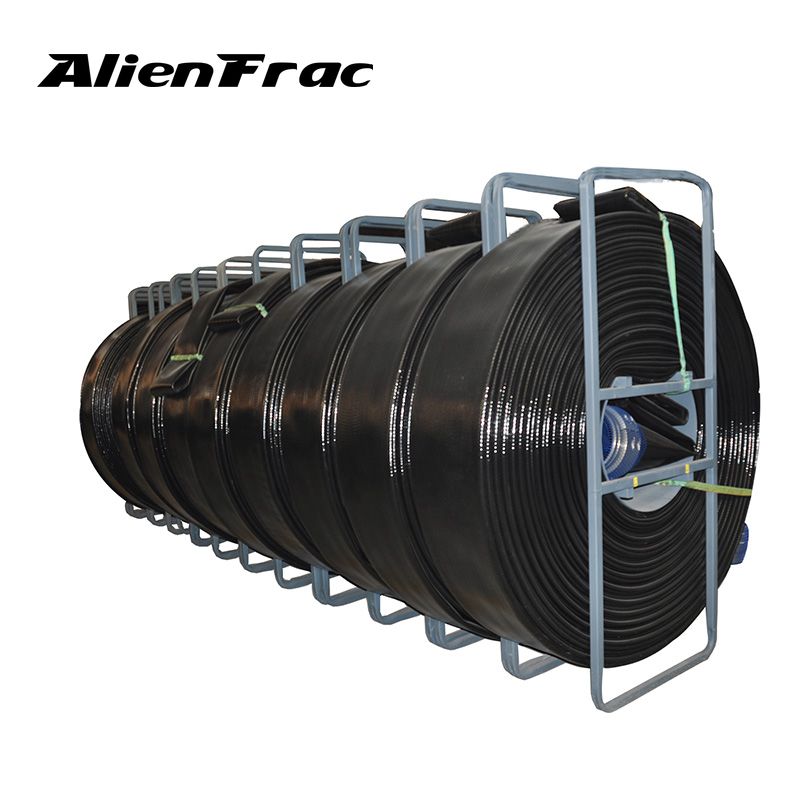
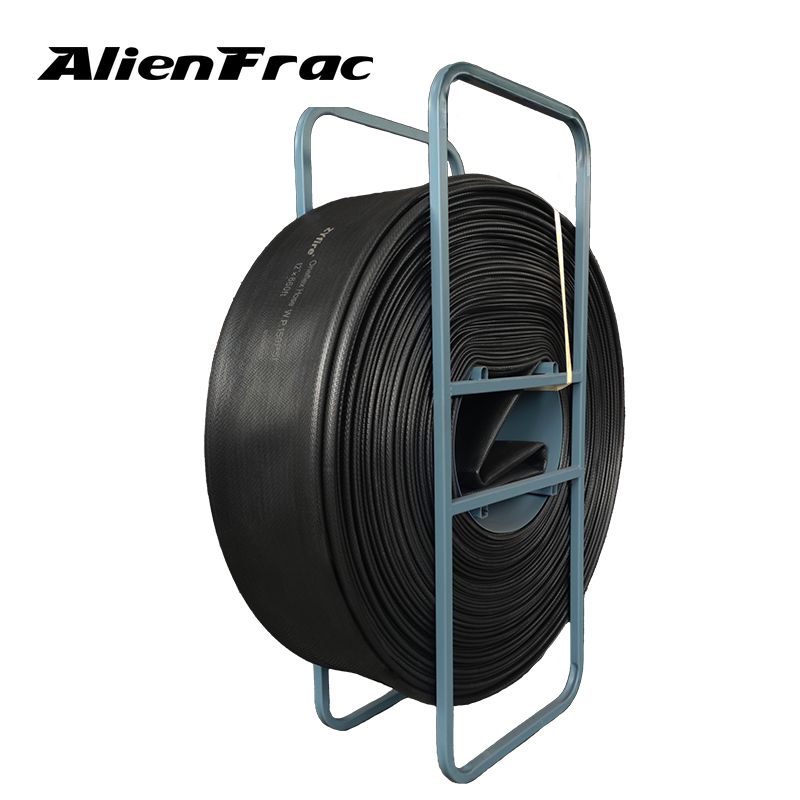
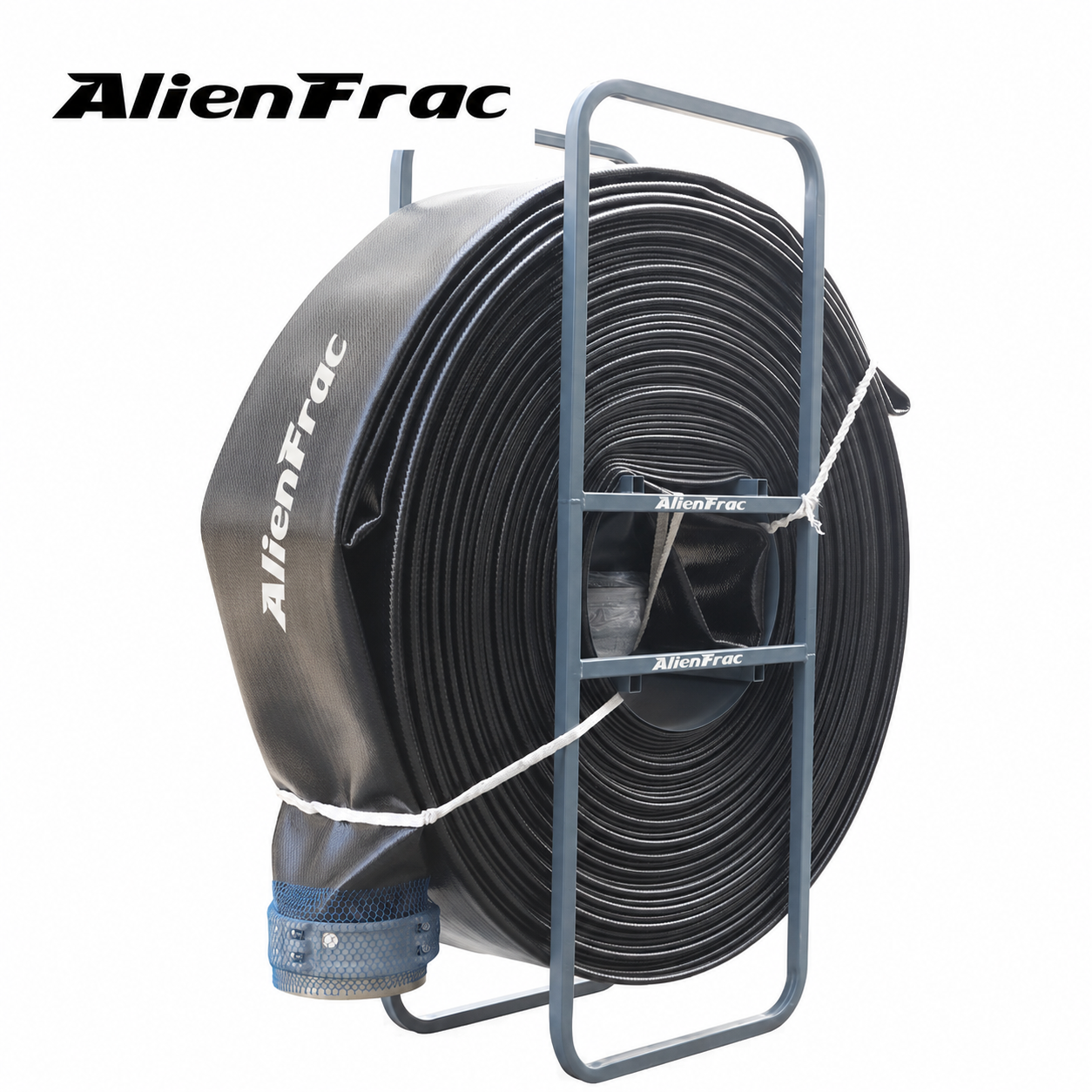
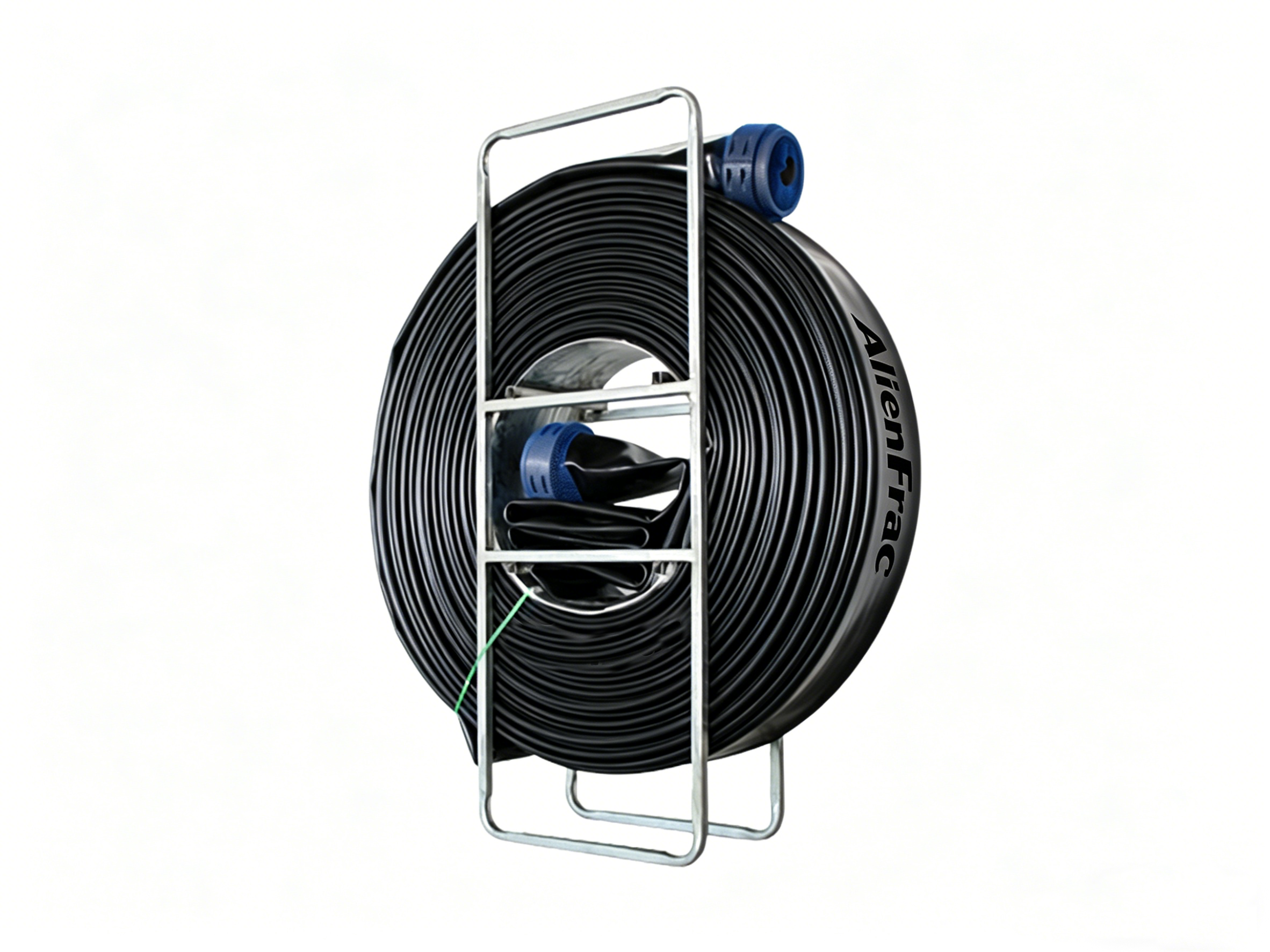
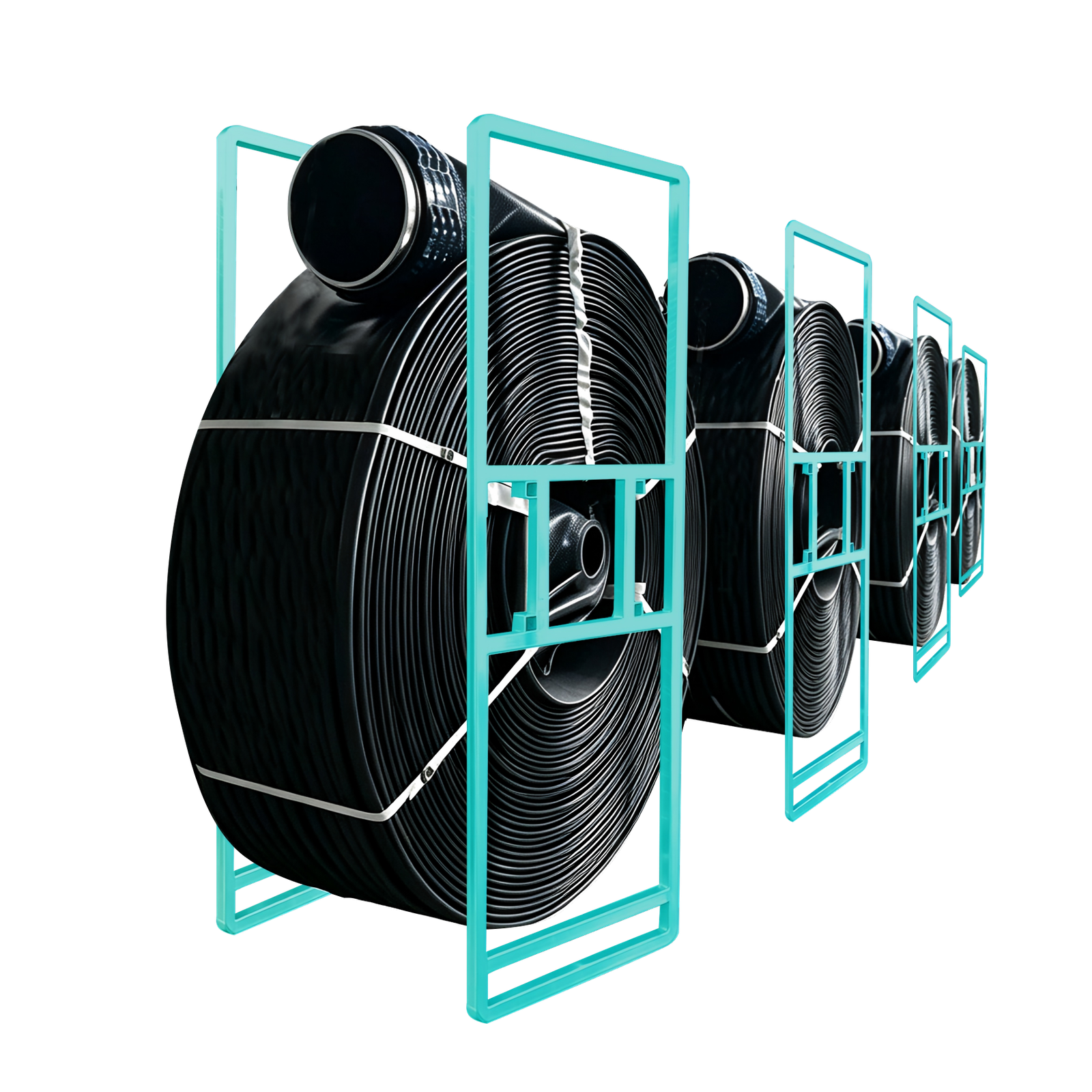
Move fresh water, treated water or compatible produced water across long field runs with a hose that rolls out quickly and packs down compactly. AlienFrac supplies through-the-weave fracturing TPU hose in multiple diameters, pressure classes, lengths and end configurations. Send us the medium, flow target, distance, temperature and connection standard; we will help narrow the right construction for the job.
For a useful recommendation, include the medium or water analysis, target flow, total run and elevation, pump pressure, operating temperature, preferred diameter, end connection, section length, quantity and delivery country. We will reply with the closest standard option or the questions needed to finish the specification.
• Size range across this family: 2–16 in.
• Published working pressure across listed models: 100–660 psi
• Long-length options: 100–1,320 ft, depending on model
• Through-the-weave TPU tube and cover on the TPU models
• Plain ends, grooved couplings and project-specific end options
Not every diameter is offered at every pressure. Temperature range, weight, wall thickness and burst pressure also vary by construction. Confirm the final specification on the quotation and datasheet for the exact hose supplied.
Start with the required flow, line length and operating pressure, then compare handling and connection needs. The three TPU ranges below cover different parts of the job; the highest number on a table is not automatically the best choice.
For jobs that need higher service pressure in a compact layflat line. Published options cover 2–12 in. diameters and 300–660 psi, with long lengths, embedded anti-static wires and custom end configurations. Review fluid compatibility before using produced water or chemical treatments.
A broad size and pressure range for oilfield water transfer, dewatering and other compatible fluid duties. Published options span 2–16 in. and 100–610 psi. Choose by the continuous working condition, not by burst pressure alone.
Built for high-volume surface transfer where large diameter matters more than very high pressure. Published options cover 8–16 in. with 120–200 psi working pressure and a -58°F to 176°F (-50°C to 80°C) temperature range.
In a through-the-weave hose, molten TPU passes through and around a circular-woven, high-tenacity polyester reinforcement. The process forms the inner tube and outer cover around the textile jacket, creating a compact structure without a separate glued liner. The smooth bore helps limit friction loss, while the outer TPU surface is selected for abrasion, weather and field handling.
• Faster deployment and retrieval than rigid pipe on temporary routes
• Compact storage on reels or in coils
• Abrasion-resistant TPU cover for rough ground
• Long continuous sections that reduce connection points
• Low elongation and dimensional stability where specified
• Multiple colors, markings and end configurations by project
• Water source or storage pond to frac site
• Temporary transfer across shale fields and uneven terrain
• Fresh, treated or recycled water lines
• Compatible produced-water transfer after chemistry review
• Pit-to-pit, dewatering and emergency water movement
• Industrial projects that need quick routing and compact transport
State whether the line carries fresh water, treated water, recycled water or produced water. Provide pH, chlorides, hydrocarbons, treatment chemicals and solids where relevant. TPU compatibility depends on the full formulation and temperature, not the fluid name alone.
Provide the target flow, total distance, elevation change, pump curve, expected inlet pressure and allowable pressure loss. Diameter should be selected from the complete system duty rather than a rule of thumb.
Select the hose by its rated working pressure at the actual operating temperature, including pump transients and surge. Burst pressure is a test limit, not a normal operating target.
Tell us about gravel, road crossings, vehicle exposure, bend points, reel equipment, deployment frequency and ambient temperature. These details influence cover, wall thickness, protection and hose length.
Specify grooved, Camlock, Storz, flange or other ends, including material, nominal size and mating standard. The finished assembly must be rated for the intended system pressure.
Ask for the datasheet for the exact construction, not a generic family brochure. Confirm nominal ID and tolerance, wall thickness, working and minimum burst pressure, temperature range, weight, elongation/expansion where specified, coupling rating and the test record supplied with the order. If traceability, anti-static performance, potable-water approval or a particular standard is required, put it on the purchase specification before production.
AlienFrac focuses on hose and connection products for oilfield service. For TPU water-transfer projects, that means one conversation can cover the hose construction, pressure class, length, markings and end configuration. Our job is to help you define a buildable specification and provide the documents agreed for that order—not to push the same hose into every application.
It is a flexible layflat hose used to move large volumes of water in temporary oilfield transfer systems. TPU forms the inner and outer surfaces around a woven reinforcement on the TPU models.
Across the listed TPU family, published sizes run from 2 to 16 in. Availability depends on the model and working-pressure class.
Possibly, but only after the water chemistry, solids, temperature and treatment additives are reviewed. Send a recent analysis and operating conditions for a compatibility check.
Published options range from 100 to 1,320 ft depending on the model. Longer sections reduce connection points but change handling, reel and transport requirements.
That depends on the mating equipment, flow requirement, pressure, field service practice and local standard. Grooved ends are common on large water-transfer lines; other options should be confirmed for the exact assembly.
fTPU vs rubber hose, neither material wins every job. TPU is often chosen for abrasion resistance, compact handling and through-the-weave construction. NBR/TPR can suit different temperature or fluid duties. Compare the exact compounds and operating conditions.
WhatsApp us