
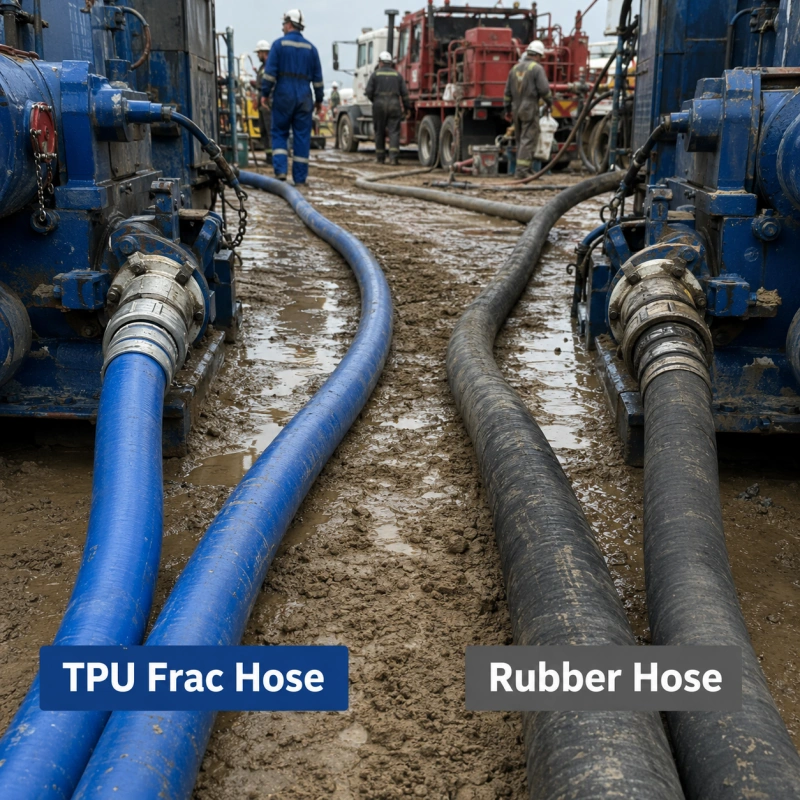
You will notice a clear advantage when comparing TPU frac hose vs rubber hose for industrial water transfer. Engineered TPU frac hoses, such as Alienfrac’s, deliver superior abrasion resistance, easier deployment, and better handling. Rubber hoses still perform well in high-pressure or chemically demanding environments.
The table below highlights key performance differences, including lifespan, UV resistance, and flexibility. For oilfield, mining, and agricultural operations, operational performance and abrasion resistance matter most.
| Property | Rubber Hose | TPU Hose |
|---|---|---|
| Abrasion Resistance | High | Excellent |
| Puncture Resistance | High | Very High |
| UV Resistance | 2-5 years | 3-7 years |
| Typical Lifespan | 5-8 years | 4-10 years |
| Temperature Tolerance | -40°C to +90°C | -50°C to +125°C |
| Chemical Resistance | Excellent oil/fuel resistance | Superior resistance to oils, greases, and hydrocarbons |
| Flexibility | Remains flexible but heavier | Maintains flexibility across temperatures |
Key Takeaways
- TPU frac hoses offer superior abrasion resistance, making them ideal for rough environments and reducing the risk of leaks.
- Choose TPU frac hoses for easier deployment and handling, which can lower labor costs and increase operational efficiency.
- Consider the chemical resistance of TPU hoses, as they perform better in harsh conditions compared to rubber hoses.
- Evaluate the lifespan and durability of hoses; TPU frac hoses generally last longer and require less maintenance than rubber hoses.
- Use a checklist to select the right hose for your needs, focusing on factors like pressure, terrain, and flexibility.
TPU Frac Hose vs Rubber Hose: Performance Comparison
Operational Performance in Industrial Water Transfer
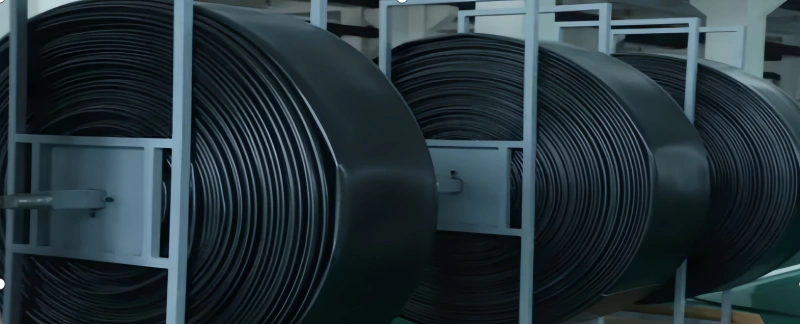
When you compare TPU frac hose vs rubber hose in industrial water transfer, you see clear differences in performance. You need a hose that can handle high flow rates, resist pressure surges, and maintain flexibility during long deployments.
TPU frac hose stands out because it remains flexible even in cold weather and does not kink easily. This flexibility allows you to deploy and retrieve the hose quickly, which increases your efficiency on site.
Alienfrac’s TPU Frac Water Supply Hose offer high tensile strength and excellent retention of properties after exposure to water, air aging, and chemicals. The following table summarizes the typical performance of rubber hose layers under industrial conditions:
| Parameter | Inner Rubber Layer | Outer Rubber Layer |
|---|---|---|
| Tensile Strength (MPa) | ≥ 20 | ≥ 20 |
| Tensile Elongation (%) | ≥ 350 | ≥ 350 |
| Air Aging Performance (70℃±2℃ x 168h) | Tensile Strength Retention (%) | ≥ 80 |
| Tensile Elongation Retention Rate (%) | ≥ 80 | ≥ 80 |
| Performance After Water Immersion (23℃±2℃ x 14d) | Tensile Strength Retention (%) | ≥ 70 |
| Tensile Elongation Retention Rate (%) | ≥ 70 | ≥ 70 |
| Brittleness Temperature (℃) | ≤ -55 | ≤ -55 |
| Acid and Alkali Resistance | Tensile Strength Retention (%) | ≥ 70 |
| Tensile Elongation Retention Rate (%) | ≥ 70 | ≥ 70 |
You will notice that the TPU frac hose delivers similar or better results, especially in flexibility and chemical resistance. This makes it a preferred choice for water transfer in oilfields, mining, and agriculture.
Abrasion Resistance: Lab Standards and Field Results
Abrasion resistance is a critical factor when you select a hose for demanding environments. You want a hose that can withstand rough terrain, dragging, and repeated use. The TPU frac hose vs rubber hose debate often centers on abrasion.
TPU layflat hose consistently outperforms rubber hose in both laboratory and real-world tests.
Laboratories use standards like ISO 6945, ISO 4649, ASTM D5963, and ASTM D4060 to measure abrasion resistance. These tests simulate the wear and tear hoses experience in the field.
Alienfrac’s TPU Frac Hose, for example, achieves an abrasion rating of 4000 DIN cycles, which means it can handle repeated dragging over gravel, rocks, and other harsh surfaces.
| Standard | Application |
|---|---|
| ISO 6945 | Abrasion resistance of hydraulic hose covers |
| ISO 4649 | Rubber abrasion testing (DIN method) |
| ASTM D5963 | Rubber abrasion testing |
| ASTM D4060 | Taber abrasion for plastics and coated materials |
Field studies confirm these lab results. You see fewer burst incidents and less downtime with the TPU frac hose. The following table highlights real-world outcomes:
| Feature | TPU Frac Hoses | Rubber Hoses |
|---|---|---|
| Abrasion Resistance | Far better, critical for rough conditions | Lower, prone to wear |
| Tensile Strength | High tensile strength reduces delamination | Generally lower |
| Chemical Resistance | Excellent against manure chemicals | Limited resistance |
| Service Life | Multiple seasons in harsh conditions | Shorter lifespan |
| Operational Efficiency | Fewer burst incidents, less downtime | More frequent failures |
You can trust the TPU frac hose to deliver superior abrasion resistance, which translates to longer service life and fewer interruptions.
Deployment Efficiency and Handling
Deployment efficiency matters when you need to move large volumes of water quickly. You want a hose that is lightweight, easy to handle, and simple to deploy or retrieve. TPU frac hose offers significant advantages over rubber hose in this area.
The lightweight design of Alienfrac’s hoses reduces labor costs and speeds up setup and takedown.
You can coil and uncoil the TPU frac hose with minimal effort. The hose remains flexible across a wide temperature range, so you do not have to worry about stiffness in cold weather. Rubber hose, while durable, is heavier and more difficult to maneuver, which increases installation and labor costs.
| Cost Implication | TPU Frac Hoses | Rubber Hoses |
|---|---|---|
| Upfront Cost | Higher upfront cost | Lower upfront cost |
| Durability | More durable, longer lifespan | Less durable |
| Maintenance Costs | Reduced maintenance costs | Higher maintenance costs |
| Installation and Labor Costs | Lower due to ease of handling | Higher due to complexity |
You gain efficiency and reduce total project costs when you choose TPU frac hose vs rubber hose for mobile or long-distance water transfer.
Service Life and Durability
You need a hose that lasts through multiple seasons and withstands harsh environments. The durability of TPU frac hose comes from its abrasion resistance, chemical compatibility, and ability to retain flexibility in extreme temperatures.
Alienfrac’s TPU Frac Hose, for example, resists UV rays, hydrolysis, and fungal deterioration, which extends its service life.
Several factors impact the durability of both hose types:
- The toughness and abrasion-resistant properties of tpu frac hose make it ideal for repeated use in challenging conditions.
- TPU frac hose provides exceptional chemical resistance, which is essential for industries dealing with harsh chemicals.
- TPU frac hose withstands harsh industrial environments, including exposure to rough surfaces and various external factors.
- Rubber hose handles high-pressure environments and extreme temperatures, which is crucial for firefighting and legacy systems.
Environmental factors also play a role. TPU frac hose retains flexibility and durability in extreme cold and provides superior abrasion resistance outdoors. It also exhibits good UV stability, which enhances longevity when exposed to sunlight.
When you compare TPU frac hose vs rubber hose, you see that TPU frac hose delivers better performance, longer service life, and greater efficiency in most industrial water transfer applications.
Engineered TPU Frac Hoses: Alienfrac Advantages
Advanced Construction and Material Benefits
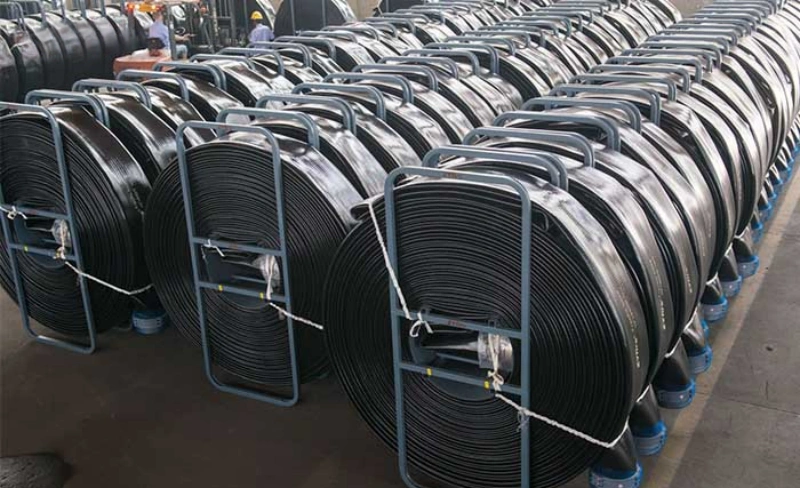
You gain a clear advantage when you choose engineered TPU frac hoses from Alienfrac. These hoses use advanced thermoplastic polyurethane materials that deliver abrasion-resistant performance.
You notice fewer failures during temporary frac water transfer because the hose withstands rough terrain and repeated dragging. The flexible layflat design allows you to deploy and retrieve the hose quickly, saving time and labor. Alienfrac hoses feature high-pressure capability, handling pressures up to 500 psi or more.
You benefit from superior resistance to UV rays, chemicals, and punctures, which extends the service life in demanding applications.
Alienfrac’s tpu frac hose includes safety features like reflective and glow-in-the-dark stripes. These features improve visibility during nighttime operations. The hoses resist fungal deterioration and hydrolysis, maintaining flexibility across extreme temperatures.
You see superior resistance to abrasion and chemicals, making these hoses ideal for temporary frac water transfer in oilfields, mining, and agriculture.
Application Fit: Oilfield, Mining, Agriculture
Alienfrac tpu frac hose meets the specific needs of your industry. You require hoses that handle high flow rates, resist abrasion, and perform reliably in harsh environments. The table below shows how Alienfrac hoses fit oilfield, mining, and agricultural applications:
| Characteristic | Description |
|---|---|
| High working pressure | Handles pressures of 500 psi or more for long-distance transfer. |
| Large internal diameter | Sizes like 4″, 6″, 8″, and 12″+ accommodate high flow rates. |
| Abrasion and UV resistance | Designed for rough terrain and outdoor conditions. |
| Chemical resistance | Suitable for produced water or chemical-laden fluids. |
| Flexible layflat design | Easy transport, storage, and deployment. |
You use tpu frac hose for temporary frac water transfer, vertical pumping from deep shafts, and chemical transport. The hoses offer flame-retardant and antistatic properties, reducing risks from methane and coal dust. You benefit from fast deployment and recovery, ensuring timely operations and fewer failures.
Alienfrac engineered TPU frac hoses carry certifications from DNV MED, CCS, ABS, and API. You trust these hoses because they meet international standards and feature patented innovation. You rely on abrasion-resistant hoses with superior resistance to chemicals and UV rays for critical applications.
Alienfrac hoses deliver performance and reliability for temporary frac water transfer and other demanding applications.
Abrasion Resistance and Selection Criteria
Key Factors for Choosing the Right Hose
When you select a hose for industrial water transfer, you need to consider several important factors. Abrasion resistance stands out as the most critical feature, especially if you work in environments with rough terrain or frequent dragging. Hoses with excellent abrasion resistance experience fewer failures and leaks.
This durability means you spend less time on repairs and replacements, which keeps your operations running smoothly.
You should also look at weight, storage efficiency, deployment speed, and handling. The table below compares standard rubber hoses and TPU frac hoses on these points:
| Factor | Rubber Hose | TPU Frac Hose |
|---|---|---|
| Weight | Generally heavier | Generally lighter |
| Storage Efficiency | Needs more space | More compact |
| Deployment Speed | Slower in long runs | Faster for long distances |
| Handling | Higher labor effort | Easier to move |
| Best Fit | Fixed/legacy use | Temporary water transfer |
You need to match the hose to your application. Standard rubber hoses work well in fixed or legacy systems. TPU frac hoses excel in long-distance, temporary frac water transfer where abrasion resistance is vital.
Decision Checklist for Engineers and Buyers
You can use a practical checklist to guide your selection process:
- Check the transfer distance and choose a hose that supports long runs without frequent connections.
- Assess the pressure requirements and select a hose that can handle pressure surges.
- Evaluate the terrain. If you expect rough surfaces, prioritize hoses with high abrasion resistance to prevent abrasion damage.
- Consider labor and logistics. Lighter hoses reduce handling effort and speed up deployment.
- Confirm media compatibility. Make sure the hose material resists the chemicals or fluids you plan to transfer.
- Review flexibility needs. Select hoses that flex without cracking for dynamic applications.
- Inspect the bend radius and ensure it fits your site layout.
- Use protective accessories like abrasion-resistant covers and clamps for added durability.
Tip: Alienfrac’s TPU frac hoses offer superior abrasion resistance, which means fewer leaks and longer service life in high-wear environments.
You should also consider sustainability, regulatory compliance, and support for custom engineering. As technology advances, smart hoses with sensors and predictive analytics will help you maximize uptime and safety.
Maximizing Hose Life: Expert Tips
Best Practices for Deployment and Maintenance
You can extend the life of your hoses by following proven deployment and maintenance strategies. Proper handling and planning help you avoid common failure modes and keep your operation running smoothly. Consider these best practices:
- Avoid sharp bends and kinks. Lay the hose in smooth curves to prevent stress points that shorten its life.
- Protect the hose at road crossings. Use steel or HDPE sleeves where vehicles pass to prevent abrasion and crushing.
- Pressurize the system gradually. Open pump valves slowly to reduce hydraulic shock, which can damage the hose and reduce its life.
- Use compatible fittings. Select fittings designed for layflat hoses to prevent leaks and extend service life.
- Drain and dry before storage. Remove all water and let the hose dry completely to prevent algae growth and material degradation.
Routine maintenance also plays a key role in maximizing hose life. Always drain hoses after use, especially if they have metal fittings, to prevent corrosion. Store hoses away from direct sunlight, as UV rays can degrade materials over time.
Regular cleaning and proper storage conditions help you get the most out of every hose.
Alienfrac’s TPU frac hoses support long life with robust construction and safety features. Reflective and glow-in-the-dark stripes improve visibility, reducing the risk of accidental damage during deployment and retrieval.
Inspection and Safety Strategies
You should inspect hoses regularly to ensure safe and reliable operation throughout their life. Create a structured inspection plan and check for:
- Abrasion, cracks, kinks, or leaks
- Seal failures at couplings and fittings
- Signs of hardening, softening, or discoloration
- Bulging, ballooning, or reduced flexibility
Track the age, hours of service, and exposure to chemicals or heat for each hose. Replace hoses before they reach critical wear thresholds to avoid unexpected failures. Combine regular inspections with performance monitoring and proactive replacement to maximize hose life.
Store hoses in cool, dry places and avoid dragging them over rough surfaces. Use reels or controlled payout during deployment to prevent twisting and localized stress. These steps help you achieve the longest possible life for your hoses, ensuring safety and reliability in every application.
Conclusion
You now see that engineered TPU frac hoses, like those from Alienfrac, deliver superior performance for mobile, long-distance, and abrasive water transfer tasks. Rubber hoses remain a strong choice for high-pressure, high-temperature, or legacy systems.
Use the comparison table and checklist to evaluate your project requirements. If you need a tailored solution, reach out to Alienfrac or consult a technical expert.
Make your next hose selection with confidence and maximize operational efficiency.
FAQ
What makes TPU Frac hoses ideal for high-volume operations?
You can rely on TPU frac hoses for high-volume operations because they handle large flow rates with ease. Their lightweight design and flexibility allow you to deploy and retrieve them quickly, which helps you maintain productivity on demanding job sites.
How do TPU Frac hoses improve water transfer efficiency?
You achieve better water transfer efficiency with TPU frac hoses due to their smooth inner surface. This design reduces friction loss, so you move water faster and more consistently over long distances.
Are TPU Frac hoses suitable for repeated deployment?
You can use TPU frac hoses for repeated deployment without worrying about performance loss. Their robust construction resists abrasion and damage, making them a reliable choice for projects that require frequent setup and takedown.
Do TPU Frac hoses offer extreme chemical compatibility?
You benefit from extreme chemical compatibility when you choose TPU frac hoses. These hoses resist a wide range of chemicals, so you can use them safely in environments with aggressive fluids.
How do TPU hoses compare to rubber hoses in chemical and oil resistance?
You get superior chemical and oil resistance with TPU hoses. They maintain integrity when exposed to oils, fuels, and harsh chemicals, which makes them a preferred option for challenging industrial applications.