
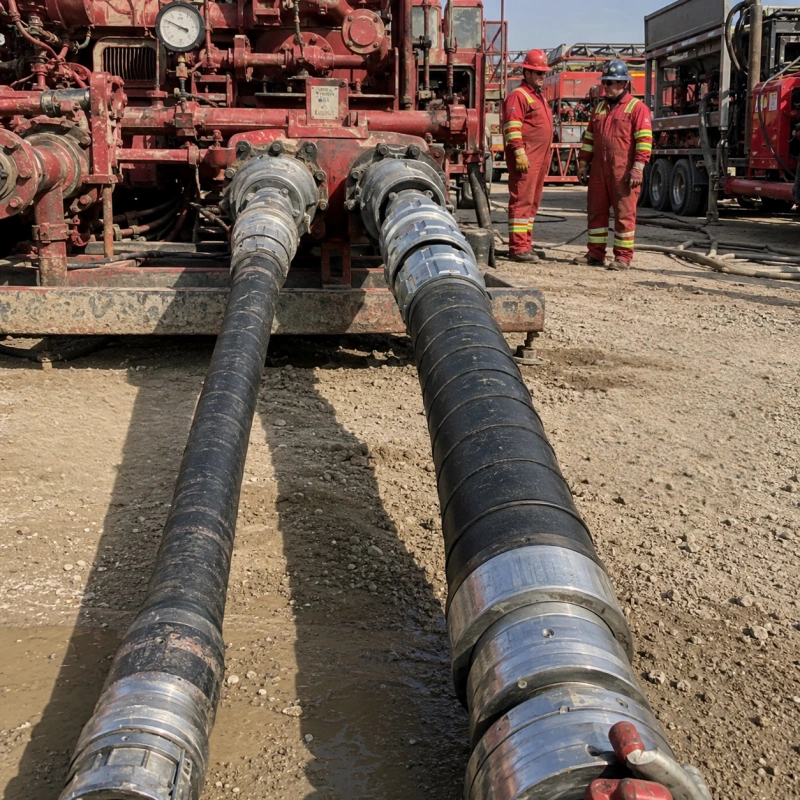
When you compare 15000 psi vs 20000 psi frac hose, the right choice depends on your pressure demands and safety goals. Most oilfield jobs run well with a 15000 psi hose, but extreme jobs with higher horsepower pumps require 20000 psi for added safety and durability.
You need to check your pressure needs, safety standards, cost, and equipment fit. Alienfrac stands out in high-pressure hose manufacturing, offering reliable solutions that meet strict industry requirements.
Key Takeaways
- Choose a hose based on your pressure needs. A 15000 psi hose suits most standard oilfield jobs, while a 20000 psi hose is ideal for extreme conditions.
- Always select a hose with a pressure rating above your maximum working pressure. This practice ensures safety and reduces the risk of failures.
- Consider the construction and materials of the hose. Alienfrac hoses use advanced materials for durability and corrosion resistance, ensuring long-term reliability.
- Evaluate flexibility and weight. Lightweight hoses improve handling and installation efficiency, making operations smoother and more cost-effective.
- Balance cost with performance. While 20000 psi hoses offer extra durability, 15000 psi hoses provide reliable performance at a lower price for standard applications.
15000 Psi vs 20000 Psi Frac Hose Quick Comparison
Choosing between 15000 psi vs 20000 psi frac hose requires a clear understanding of your operational needs. You must consider pressure ratings, safety margins, construction, flexibility, and cost. Alienfrac offers high-pressure frac hoses that deliver performance and reliability in every scenario.
Pressure Ratings and Safety Margins
You need to match the hose pressure rating to your job requirements. The 15000 psi vs 20000 psi frac hose comparison shows that both options offer robust safety margins, but the 20000 psi hose stands out in extreme conditions.
Alienfrac high-pressure frac hoses are engineered for demanding oilfield applications, ensuring you operate safely and efficiently.
| Pressure Rating | Key Features | Safety Margin Considerations |
|---|---|---|
| 15,000 psi | Multi-spiral steel wire reinforcement for fatigue resistance | Designed for high-pressure applications with material selections to prevent failure |
| 20,000 psi | Ultra-durable UHMWPE cover, PTFE/HNBR inner tube | Engineered for extreme conditions, ensuring safety during high-stress operations |
Tip: Always select a hose with a pressure rating that exceeds your maximum working pressure. This practice ensures you maintain a safe margin and avoid unexpected failures.
Construction and Materials
Alienfrac high-pressure frac hoses use advanced materials and construction methods. You benefit from hoses built for durability and corrosion resistance. The 15000 psi vs 20000 psi frac hose comparison highlights the superior engineering behind each product.
| Component | Description |
|---|---|
| Inner tube | UHMW-PE film combined with synthetic rubber for excellent corrosion resistance |
| Reinforcement | Six layers of high-strength spiral steel wires enhance durability under pressure |
| Outer cover | Abrasion and weather-resistant synthetic rubber protects the hose from environmental factors |
Alienfrac hoses deliver consistent performance, even in harsh oilfield environments. You can rely on their construction to withstand repeated high-pressure cycles.
Flexibility and Weight
Handling and installation efficiency matter in every oilfield operation. The 15000 psi vs 20000 psi frac hose comparison reveals important differences in flexibility and weight.
- The 20,000 psi high-pressure frac hoses are lightweight and flexible, making them easier to use in demanding environments.
- Flexibility allows you to achieve complex routings and maintain leak-free connections.
- Weight savings improve energy efficiency and simplify handling during installation.
Alienfrac hoses help you streamline your workflow and reduce labor costs. You gain operational advantages by choosing hoses that balance strength with flexibility.
Cost Overview
Cost plays a critical role in your decision. The 15000 psi vs 20000 psi frac hose comparison shows that higher-pressure hoses often come with a premium price. You must weigh the benefits against your budget and project requirements.
- 15000 psi high-pressure frac hoses offer reliable performance for standard oilfield jobs at a competitive price.
- 20000 psi hoses deliver extra durability and safety for extreme applications, justifying their higher cost.
- Alienfrac provides tailored solutions, helping you optimize your investment and maximize value.
Note: Investing in the right hose reduces downtime and replacement costs. Alienfrac’s high-pressure frac hoses offer long-term reliability, supporting your operational goals.
You can confidently choose between 15000 psi vs 20000 psi frac hose by evaluating pressure needs, construction quality, flexibility, and cost. Alienfrac ensures you receive high-performance hoses that match your oilfield requirements.
Key Differences in High-Pressure Frac Hoses
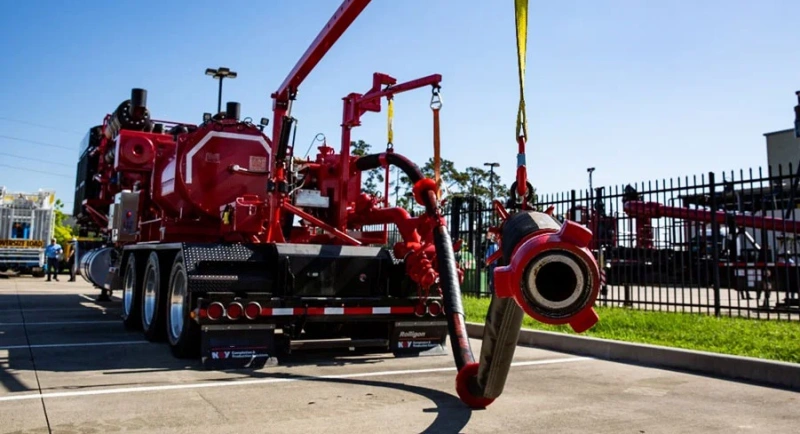
Pressure Capacity and Field-Tested Up to 20,000 Psi
You need to understand the pressure capacity when choosing between 15000 psi and 20000 psi frac hoses. The 15000 psi hose meets the requirements for most oilfield operations. The 20000 psi hose delivers extra strength for extreme jobs.
Alienfrac hoses are field-tested up to 20,000 psi, so you can trust their performance in the toughest environments. You get a hose that withstands intense pressure pulses and maintains structural integrity. Pressure testing ensures that each hose meets strict standards before deployment.
You avoid unexpected failures by selecting hose specifications that match your maximum working pressure and include a safety margin. Burst pressure ratings give you confidence during high-stress operations.
Note: Pressure pulses demand strength. Alienfrac hoses are engineered to handle sudden spikes, keeping your operation safe and efficient.
Durability and Service Life
Durability and service life matter in every oilfield project. You want a hose that lasts through repeated pressure cycles and harsh conditions. Alienfrac hoses use high-tensile steel wire reinforcement and abrasion-resistant covers. These features extend the service life and reduce downtime.
You can see the differences in application and psi rating in the table below:
| Hose Type | Typical PSI Rating | Application |
|---|---|---|
| Built-in Frac Hose | 10,000-15,000 | Fluid transfer, proppant delivery |
| Crimped Frac Hose | 15,000-20,000 | High-pressure pumping |
| Composite Frac Hose | 10,000-20,000 | Chemical injection, acid transfer |
You get reliable performance whether you choose a built-in, crimped, or composite frac hose. Alienfrac hoses deliver consistent strength and durability, even under intense pressure pulses.
Handling and Flexibility
Handling and flexibility affect installation and daily operation. You need a hose that bends easily and fits complex layouts. Alienfrac hoses offer lightweight construction and enhanced flexibility. You save time during setup and reduce labor costs.
The 20000 psi hose provides extra strength without sacrificing flexibility. You can route hoses efficiently and maintain leak-free connections. You benefit from a hose that adapts to your site’s demands.
- Lightweight hoses improve handling.
- Flexible hoses simplify installation.
- Strong hoses maintain performance under pressure.
Alienfrac hoses combine strength and flexibility, making them ideal for demanding oilfield environments.
Cost Implications
Cost influences your decision. You must balance performance with budget constraints. The 15000 psi hose offers reliable strength at a competitive price. The 20000 psi hose delivers added durability and safety for extreme applications. You invest in a hose that reduces downtime and replacement costs.
Alienfrac helps you optimize your investment by providing hoses that match your operational needs. You gain long-term value from hoses that last through multiple pressure cycles.
Tip: Choosing the right hose saves money and boosts productivity. Alienfrac hoses deliver strength, reliability, and cost-effectiveness for every oilfield scenario.
Application Suitability for Psi Frac Hose
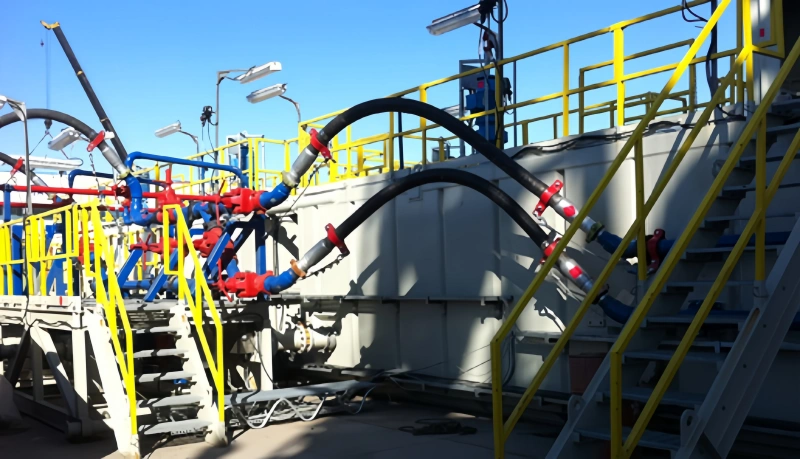
Standard Oilfield Operations
You often face routine oilfield tasks that demand reliable equipment. For most standard operations, a 15000 psi hose meets your psi requirements. These hoses handle the pressure levels found in typical drilling and fracturing jobs.
Industry standards, such as API 7K, show that hoses with ratings up to 15000 psi provide the safety and durability you need. You can trust these hoses to perform well under repeated cycles. Alienfrac offers hoses that match these psi requirements, giving you confidence in daily operations.
Extreme High-Pressure Jobs
You may encounter jobs that push equipment to the limit. In these cases, you need a hose that exceeds standard psi requirements. A 20000 psi frac hose stands out for extremely high-pressure applications. These hoses handle intense pressure surges and protect your crew from unexpected failures.
When you work with high-horsepower pumps or challenging formations, you need hoses that meet the strictest psi requirements. Alienfrac engineers hoses for these demanding environments, ensuring you maintain safety and performance.
Budget and Project Constraints
You must balance performance with cost on every project. If your psi requirements do not exceed 15000 psi, you can choose a hose that delivers reliability without overspending. For projects with tight budgets, a 15000 psi hose offers a cost-effective solution.
You still meet industry safety standards and maintain operational efficiency. When your psi requirements rise due to project complexity, investing in a 20000 psi hose makes sense. Alienfrac provides tailored solutions, helping you select hoses that fit your psi requirements and budget.
Tip: Review your psi requirements before making a decision. The right hose ensures safety, efficiency, and cost control for every frac job.
Decision Factors When Choosing a Hose
Safety and Regulatory Compliance
You must prioritize safety when selecting a frac hose for your operation. Industry standards, such as API and DNV, set strict guidelines for high-pressure equipment. You should always choose a hose with a psi rating that exceeds your maximum working pressure.
This approach gives you a safety margin and reduces the risk of failure. Alienfrac hoses meet international certifications, so you can trust their reliability in critical applications. Regular inspections and pressure tests help you maintain compliance and protect your crew.
You should document all maintenance and testing activities to meet regulatory requirements.
Tip: Never compromise on safety margins. A properly rated frac hose protects your team and your investment.
Equipment Compatibility
You need to ensure that your hose matches your existing equipment. Check the psi rating of your pumps, manifolds, and wellheads before making a selection. Alienfrac hoses offer a range of end connections and lengths, so you can find the right fit for your setup.
Compatibility reduces the risk of leaks and improves operational efficiency. You should also consider the type of fluids you will transfer. Alienfrac hoses resist chemical attack and abrasion, making them suitable for a variety of oilfield fluids.
Proper compatibility extends the service life of your hose and keeps your operation running smoothly.
Future-Proofing Your Operations
You want to prepare for changing demands in the oilfield. Upgrading from a 15000 psi to a 20000 psi hose allows you to handle more challenging jobs as technology advances. A 20000 psi system supports a wider range of applications, including those with higher temperature requirements.
You gain flexibility to adapt to new equipment and tougher environments. Reliability becomes even more important in extreme locations, such as deepwater fields. Extensive testing and analysis ensure that your hoses perform safely under fatigue and high temperatures.
By choosing a robust frac hose now, you set your operation up for long-term success.
- Transitioning to higher psi hoses supports future capital equipment upgrades.
- 20000 psi hoses cover more applications, including those with higher temperatures.
- Reliable hoses protect your investment in extreme environments.
- Testing and analysis confirm safety and durability for years to come.
Pros and Cons of 15000 and 20000 Psi Hoses
15000 Psi Hose Advantages
You gain several benefits when you choose a 15000 psi hose for hydraulic fracturing. This hose supports a wide range of operations and offers strong performance, cost savings, and reliability. The table below highlights the main advantages:
| Advantage | Description |
|---|---|
| Performance | Equipment supports operations with pressure ratings from 5k through 15k psi, ensuring reliability and performance for any project. |
| Cost | Achieve a 30%+ reduction in valve-related completion costs, with up to 50% savings on repair costs and 100% savings on grease and labor. |
| Reliability | Tailored solutions ensure regional demands are met, backed by comprehensive support services that prioritize safety, quality, and customer satisfaction. |
You can rely on this hose as a core part of a high-risk system. The multi-spiral steel wire reinforcement provides strength and helps resist abrasion during demanding jobs.
15000 Psi Hose Limitations
You should consider some limitations when using a 15000 psi hose in high-pressure or high-risk acid fracturing operations:
- In high-pressure fracking stages, hoses face not only static pressure but also frequent pressure impulses, leading to metal fatigue in steel reinforcements.
- The risk of hydrogen embrittlement arises when acid media penetrates the inner liner, potentially causing sudden structural failures.
- Abrasion from sand and chemicals can reduce service life, especially if the hose lacks a super-abrasion-resistant outer layer.
Abrasion resistance matters for long-term reliability, especially in harsh environments.
20000 Psi Hose Advantages
A 20000 psi hose gives you extra protection for extreme jobs. You can handle maximum psi demands and work with high-psi-rated equipment. The super abrasion-resistant frac hose design ensures you get the highest level of abrasion protection. You also benefit from:
- Superior durability for high-pressure cycles.
- Enhanced safety margins for critical operations.
- A super abrasion-resistant outer layer that shields against harsh chemicals and sand.
You can trust this hose to perform in the most demanding hydraulic fracturing scenarios.
20000 Psi Hose Limitations
You must also weigh the challenges of using a 20000 psi super abrasion-resistant frac hose:
- Constant surging and pressure spikes lead to significant stress on the steel wire reinforcement, causing impulse fatigue and potential catastrophic ruptures.
- Improper handling, such as bending the hose tighter than the manufacturer’s specifications, can misalign reinforcement wires, resulting in concentrated wear and early structural failure.
- The abrasive nature of high-velocity sand and chemical additives can erode the inner lining of the hose, exposing the steel reinforcement to moisture and chemicals, increasing the risk of blowouts.
- High-pressure operations can cause vibrations that strip away the protective outer cover, leaving the steel wire exposed to physical damage, which can compromise the hose’s pressure rating.
You need to monitor abrasion closely and follow best practices to extend the life of your high-pressure hoses. Regular inspection and proper handling help you avoid early failures and maintain safety.
Expert Recommendations for Alienfrac Frac Hose
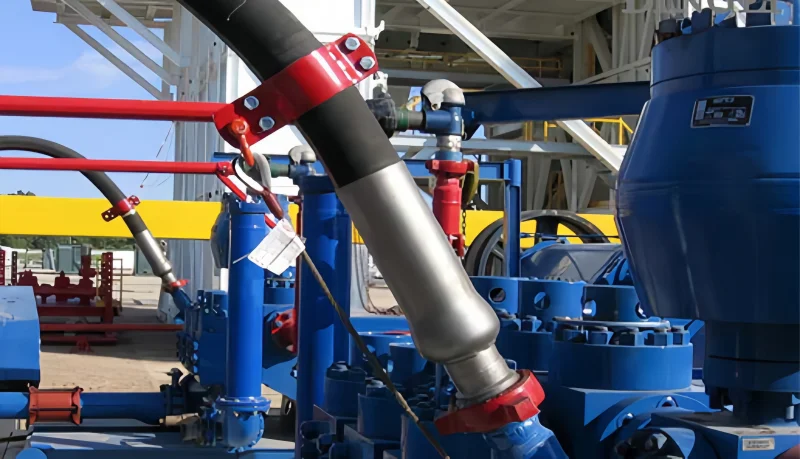
Guidance for Operators
You play a critical role in maintaining safety and efficiency during oilfield operations. Start by selecting a hose with the correct psi rating for your system. Inspect each hose before use to check for structural integrity and proper reinforcement.
Choose hoses that meet or exceed API standards and federal regulations. Alienfrac hoses come with certifications from DNV MED, CCS, ABS, and API.
You need proper certification and documentation for every frac hose in your operation. These records prove your hoses meet all required psi ratings and industry standards. Alienfrac hoses come with certifications from DNV MED, CCS, ABS, and API. Keep all certificates and test reports in a safe place, as they may be required during audits or inspections.
Follow minimum psi requirements to prevent accidents. Work with Alienfrac’s technical support team to customize hoses for your system. Crimped hoses maintain integrity up to 20,000 psi, making them ideal for high-pressure environments.
Advice for Engineers
You must confirm that your hose selection matches your system’s requirements. Prioritize industry standards such as API 7K FSL 1, DNV, ABS, and CCS. Regularly inspect hoses for signs of wear, leaks, or damage. Lubricate fittings and connections to minimize friction and wear.
Monitor hydraulic systems for leaks and maintain proper fluid levels. Address corrosion and faulty connections in electrical systems. Ensure your team receives training in proper hose use and maintenance.
Alienfrac emphasizes the importance of reinforcement in every hose. High-tensile steel wire reinforcement protects your system from failures during extreme pressure cycles. Choose hoses with robust reinforcement to extend service life and reduce downtime.
Tips for Procurement Teams
You need a clear process to acquire the most suitable frac hose for your project. Define your application scenario, such as frac water transfer or chemical handling. Confirm technical requirements, including working pressure, safety factor, fluid type, temperature range, and required flow rate.
Select hose diameter and length based on pump performance and site constraints. Specify material and construction, focusing on TPU or polyurethane layflat with reinforced polyester jacket for high pressure and durability.
Choose coupling systems and accessories that fit your system, such as self-locking couplings, flanges, reducers, elbows, and check valves. Verify certifications and testing, including burst tests and flame retardancy.
Assess supplier capabilities, including production capacity, inventory level, lead time, and experience with similar projects. Alienfrac offers tailored solutions and support to help you build a reliable system with proper reinforcement.
Conclusion
Choosing the right frac hose depends on your psi requirements and job demands. A 15000 psi hose suits most standard oilfield operations, while a 20000 psi hose fits extreme high-pressure tasks. The table below shows how different hose series match specific applications and psi ratings:
| Hose Series | Application Type | PSI Rating | Additional Features |
|---|---|---|---|
| 2270 | Tank Hose | 150 PSI | Handles brine, crude oil, drilling mud, and more. |
| 2275 | Frac Blender Hose | 400 PSI | Transfers sand slurries; available with abrasion cover. |
| 2285 | Oilfield Suction Hose | 150 PSI | For waste pit recovery and tank truck service. |
| 2290 | High-Temperature Tank Truck | 150 PSI | Rated for 350°F petroleum products. |
| 2295 | Hot Oil Transfer Hose | 2250 PSI | For high-pressure applications, the wire braid is reinforced. |
Alienfrac stands out by offering hoses made from superior synthetic rubber and reinforced composites. Their hoses tolerate higher pressures and resist chemicals better than competitors, as shown below:
| Feature | Alienfrac | Competitors |
|---|---|---|
| Material | Synthetic rubber, reinforced composites | Standard materials |
| Pressure Tolerance | Higher than standard hoses | Lower than Alienfrac |
| Chemical Resistance | Superior resistance | Standard resistance |
| Customization Options | Tailored lengths, pressure ratings, end connections | Limited customization options |
| Compliance with Standards | Meets all legal requirements | Varies by manufacturer |
Alienfrac’s commitment to quality and compliance ensures you get reliable, safe hoses that meet your operational needs.
Consult Alienfrac to find the hose that fits your psi demands and project goals. Their expert support helps you select and customize hoses for maximum safety and efficiency.
FAQ
What is the main difference between 15000 psi and 20000 psi frac hoses?
You get higher pressure capacity with a 20000 psi hose. This option handles extreme jobs and offers a greater safety margin. The 15000 psi hose works well for standard oilfield operations.
How do I know which psi rating I need?
Check your equipment’s maximum working pressure. Choose a hose with a psi rating above that number. This ensures safety and meets industry standards.
Can Alienfrac hoses handle abrasive fluids and chemicals?
Yes. Alienfrac hoses use abrasion-resistant covers and chemical-resistant inner tubes. You can transfer sand, proppant, and acids without worrying about premature wear.
How often should I inspect my frac hose?
You should inspect hoses before every use. Look for signs of wear, leaks, or damage. Regular checks help you prevent failures and extend hose life.
Does Alienfrac offer custom hose solutions?
Absolutely. You can request custom lengths, pressure ratings, and end connections. Alienfrac tailors hoses to fit your unique oilfield needs.