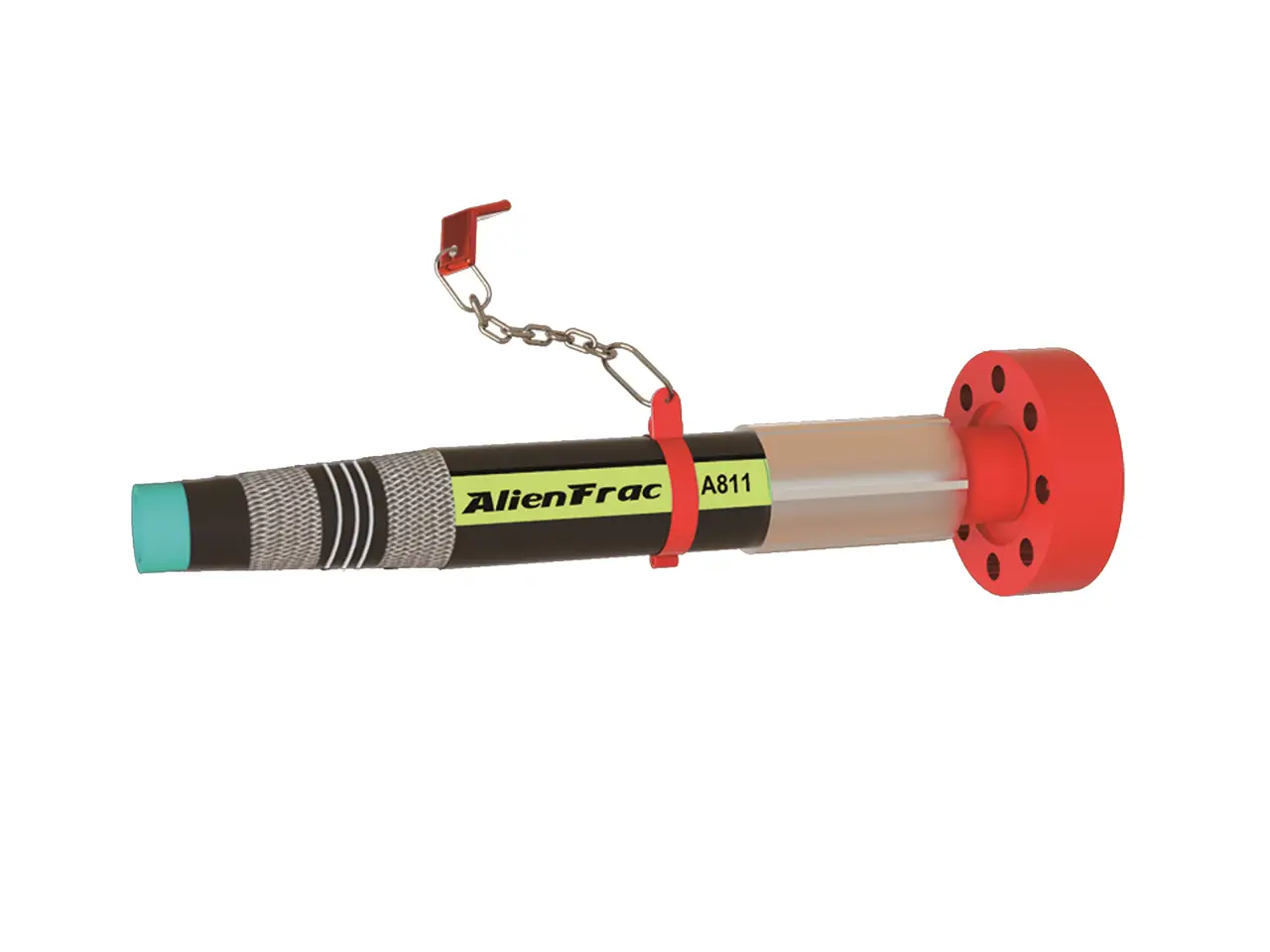
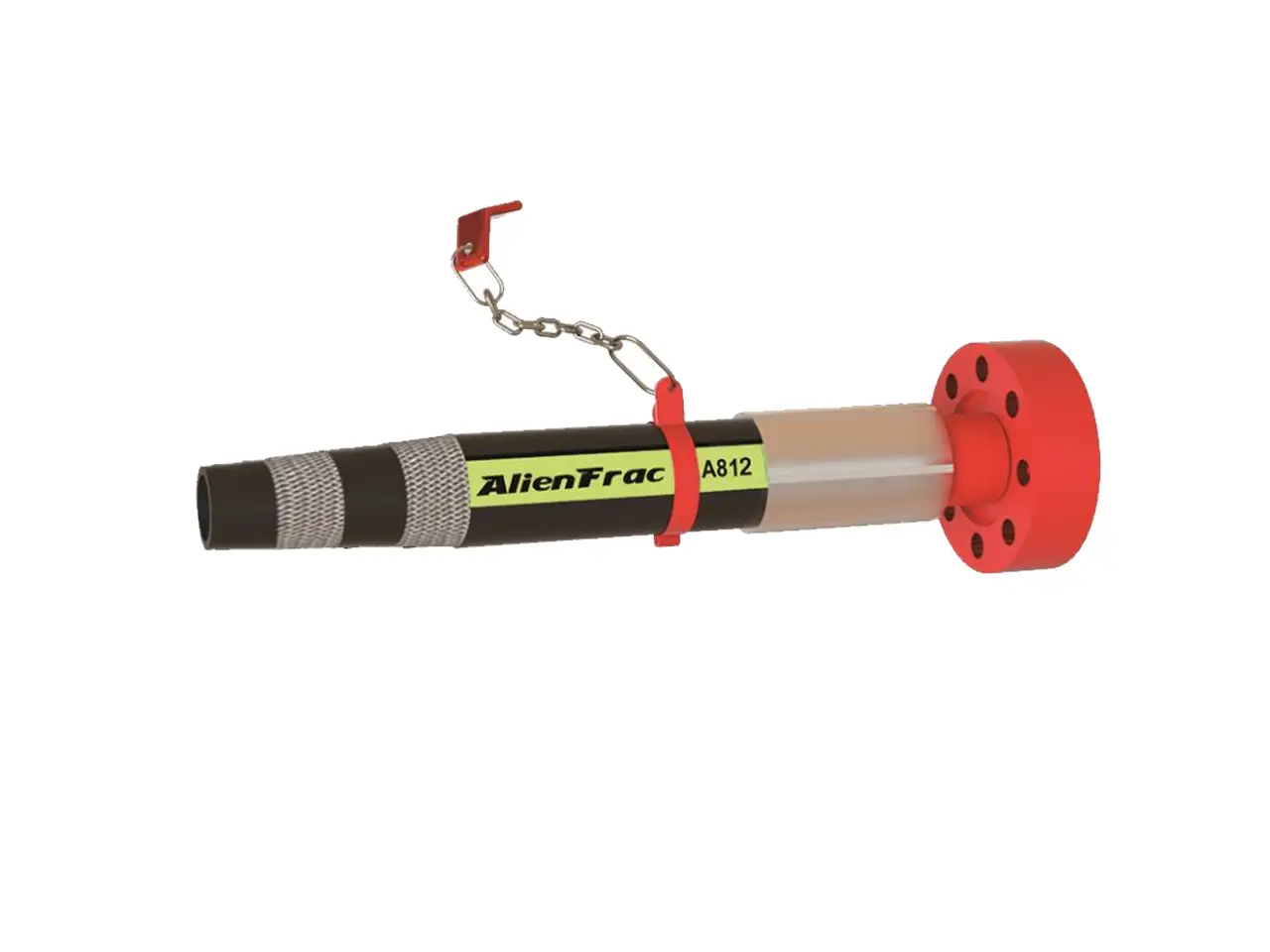
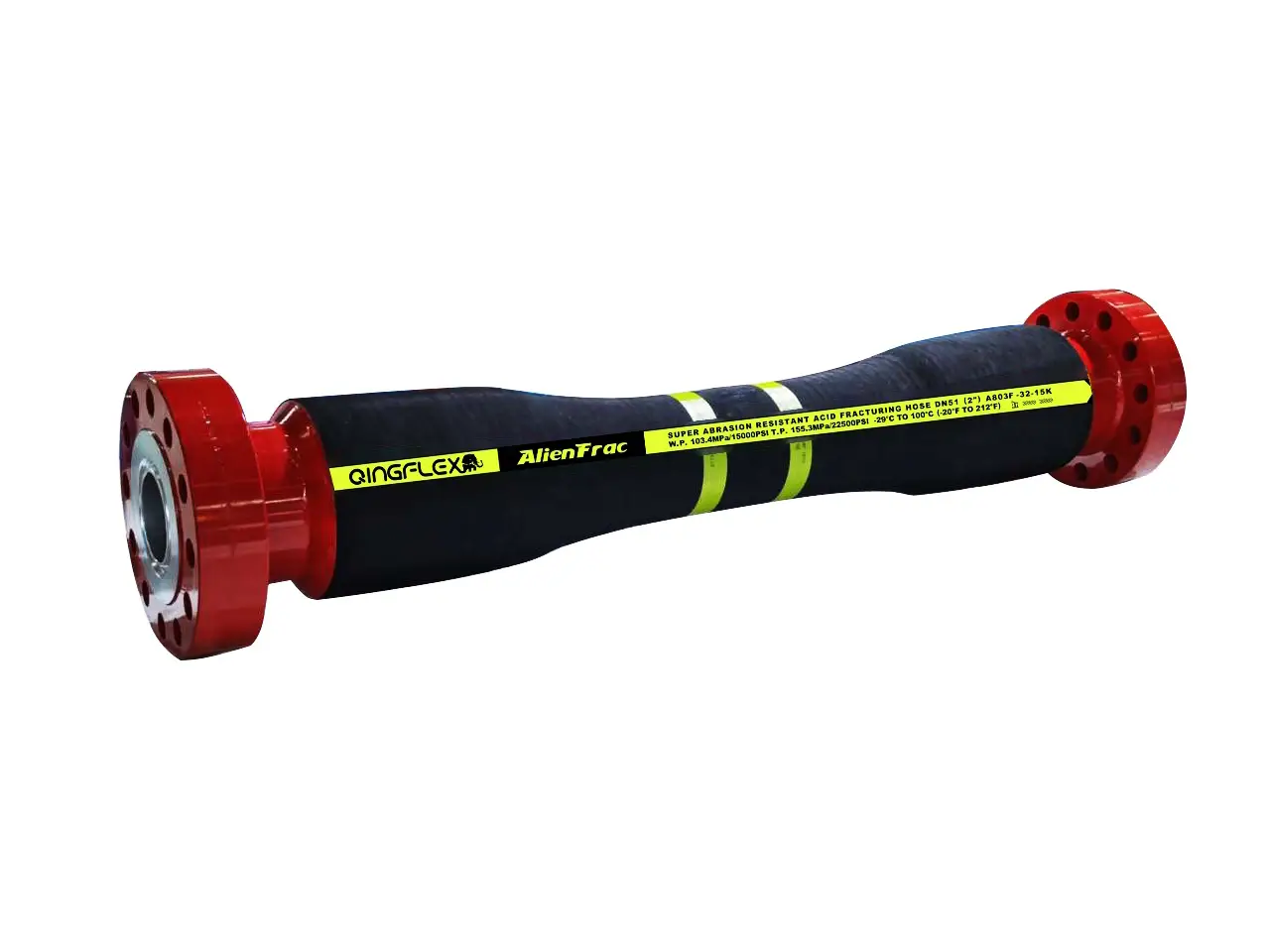
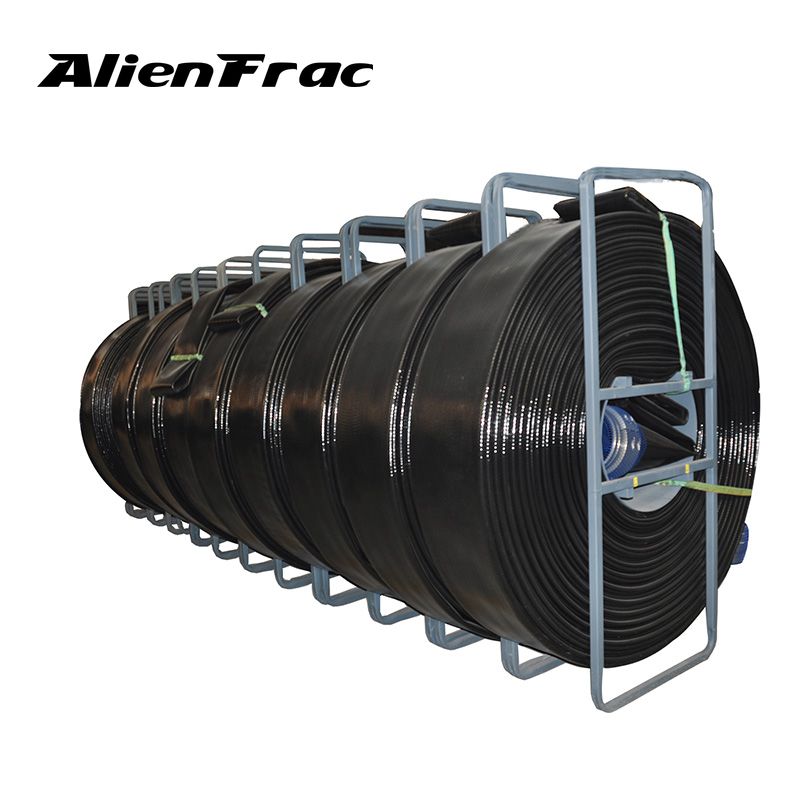
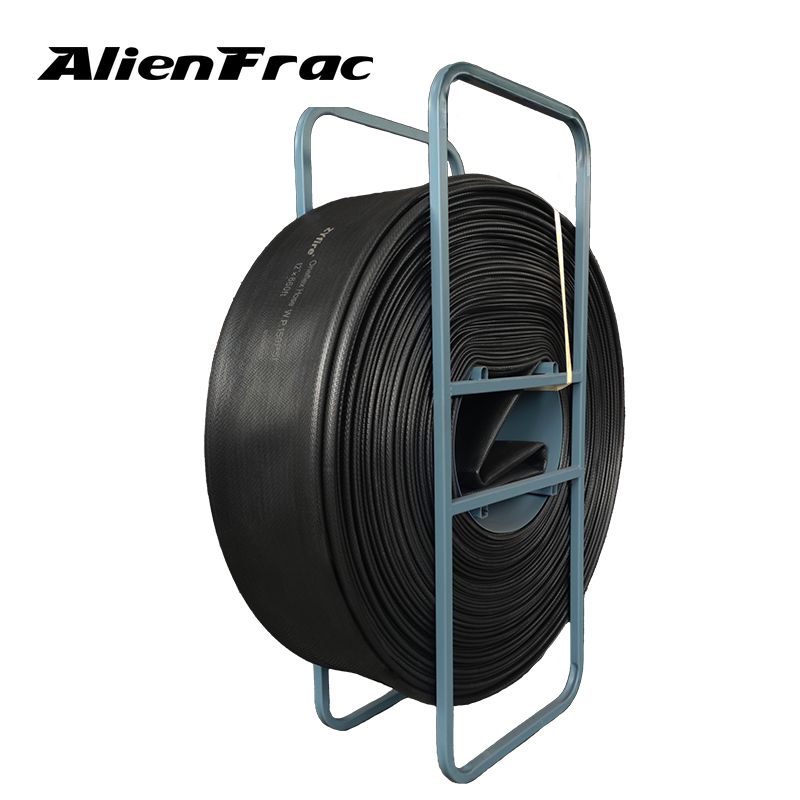
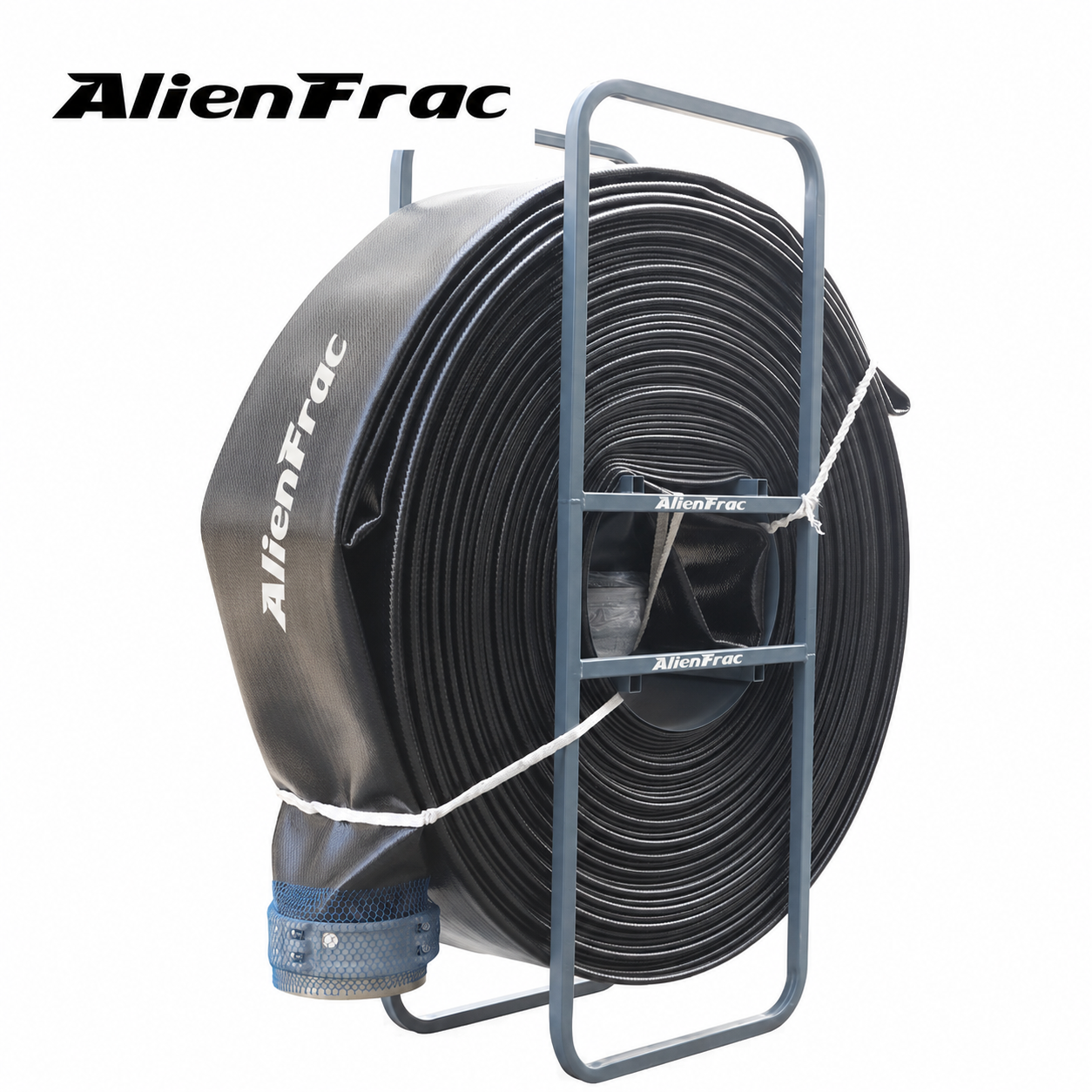
One frac site can require three very different hose systems. Start with the fluid and operating pressure: layflat hose for high-volume water transfer, reinforced flexible hose for high-pressure pumping, or a media-matched assembly for acid service. AlienFrac can help you check size, temperature, length, end connections and documentation before production.
Send the fluid composition, maximum working pressure, temperature, required inside diameter and length, connection at each end, installation conditions and documentation list. AlienFrac will review the duty and recommend the appropriate hose path.
“Frac hose” can mean a long-length water-transfer line, a high-pressure flexible flowline, or a hose built for chemically aggressive fracturing media. These products are not interchangeable. Use the three paths below to reach the right starting point.
Move fresh water, produced water or other compatible fluids over long distances with a flexible TPU layflat hose. Choose this path when fast deployment, compact storage and high flow matter. Do not use a transfer-rated layflat hose for 15K or 20K injection service.
Use a reinforced, full-bore frac hose where the line must carry high-pressure fracturing fluid between pumps, manifolds and other pressure-system equipment. Specify working pressure, surge conditions, fluid, temperature, bend radius and both end connections before selecting an assembly.
Choose an acid-service frac hose only after checking the complete fluid recipe, acid concentration, temperature, solids and exposure time. Acid compatibility does not automatically prove H2S sour-service suitability; disclose H2S and CO2 conditions separately.
| Buyer path | Typical duty | Pressure starting point | Construction focus | Common end options |
|---|---|---|---|---|
| Layflat water transfer | High-volume fresh, produced, or compatible-water transfer | Transfer pressure; model and size dependent | Through-the-weave TPU, abrasion resistance, long lengths, and low elongation | Grooved couplings, plain ends, or project-specific fittings |
| High-pressure frac hose | Flexible flowline between pumps, manifolds, and pressure equipment | 15K and 20K configurations shown in the AlienFrac range; verify the selected assembly | Full-bore tube, steel-wire reinforcement, bend integrity, and end-fitting integrity | Hammer unions, flanges, and hubs |
| Acid-service frac hose | Compatible acid, water, oil, or foam fracturing media | Assembly and media dependent; verify concentration, temperature, and exposure | Chemical- and abrasion-resistant tube, reinforced hose body, and matched end fittings | Built-in or crimped unions, flanges, and hubs |
A useful request for quotation describes the service, not just the hose name. The points below give engineering and sales teams enough information to choose the correct product family and identify missing data.
State whether the line will carry fresh water, produced water, brine, oil-based fluid, foam, acid or slurry. Add concentration, additives, pH, solids loading, particle size and any H2S or CO2 exposure. “Frac fluid” alone is not a material-compatibility specification.
Give the maximum continuous working pressure and any expected surges or pressure cycles. Proof and burst values are test or design limits; they are not permission to operate above the assembly’s rated working pressure.
For layflat systems, required flow, total run length, elevation change, pump data and allowable pressure loss drive the hose diameter and line layout. For slurry service, include solids concentration and velocity limits.
List both fluid and ambient temperatures, including startup, cleaning and upset conditions. Confirm any pressure derating and low-temperature handling limits with the selected hose data sheet.
Name the connection at end A and end B, including size, pressure class, sealing face and any swivel requirement. The hose-to-fitting interface is part of the pressure boundary and must be evaluated as an assembly.
Provide the installed bend, movement, support points, dragging exposure, vehicle crossings and lifting method. If a frac hose protective sleeve, armor, lifting eyes, clamps or restraints are required, include them in the same specification.
Ask for the applicable product data sheet, assembly drawing, pressure-test record, material and fitting traceability, marking details, inspection criteria, certificates and packing requirements. Confirm which standards apply to the exact hose assembly.
• Oilfield hose manufacturing focus since 2008.
• Built-in and crimped high-pressure hose capability.
• Configurable bore sizes, lengths and end connections.
• Product-specific testing and documentation available by order requirement.
• Manufacturer-direct technical review for contractors, distributors and OEM buyers.
AlienFrac’s broader oilfield hose business reports API Q1, API 7K and API 16C credentials. Ask which standard, certificate and marking requirements apply to the exact frac hose assembly you are ordering; do not assume one certificate covers every product on this page.
An acid-resistant tube may be suitable for a defined chemical recipe, but that does not by itself qualify the complete hose for hydrogen sulfide service. If H2S is present, provide concentration or partial-pressure data, water phase, temperature, pressure, CO2, chlorides, decompression conditions and required material standards for a separate review.
A frac hose is a flexible line used around a hydraulic-fracturing site to transfer water, slurry, chemicals, oilfield fluids or high-pressure fracturing media. The correct construction depends on the fluid, pressure, temperature, flow, routing and end connections.
Start with a TPU layflat hose when the job is high-volume, temporary water transfer and the fluid is compatible with the liner. Size the system from flow, distance, elevation, pressure loss, temperature and terrain.
No—not unless the exact hose assembly is specifically designed, rated and documented for that working pressure. Water-transfer layflat hose and 15K/20K reinforced frac hose belong to different service classes.
High-pressure describes the pressure duty. Acid service describes compatibility with a defined chemical environment. A project may require both, so pressure rating and chemical compatibility must be checked together for the complete assembly.
Some frac hoses are designed for abrasive slurry service, but suitability depends on solids concentration, particle size and shape, velocity, pressure, temperature, liner and bend layout. Send these data before selecting the hose.
Depending on the product family, options may include grooved layflat couplings, hammer unions, flanges, hubs, plain ends and project-specific fittings. Specify both ends and the required pressure class.
Keep the hose within its bend limit, avoid dragging it over sharp surfaces, protect road crossings, support heavy end fittings and inspect the cover before use. Add a compatible protective sleeve, armor or restraint only where the hose manufacturer approves it.
Send fluid composition, concentration and solids; maximum working and surge pressure; fluid and ambient temperature; required inside diameter and overall length; connection at each end; routing and handling conditions; quantity; and the document list.
WhatsApp us