
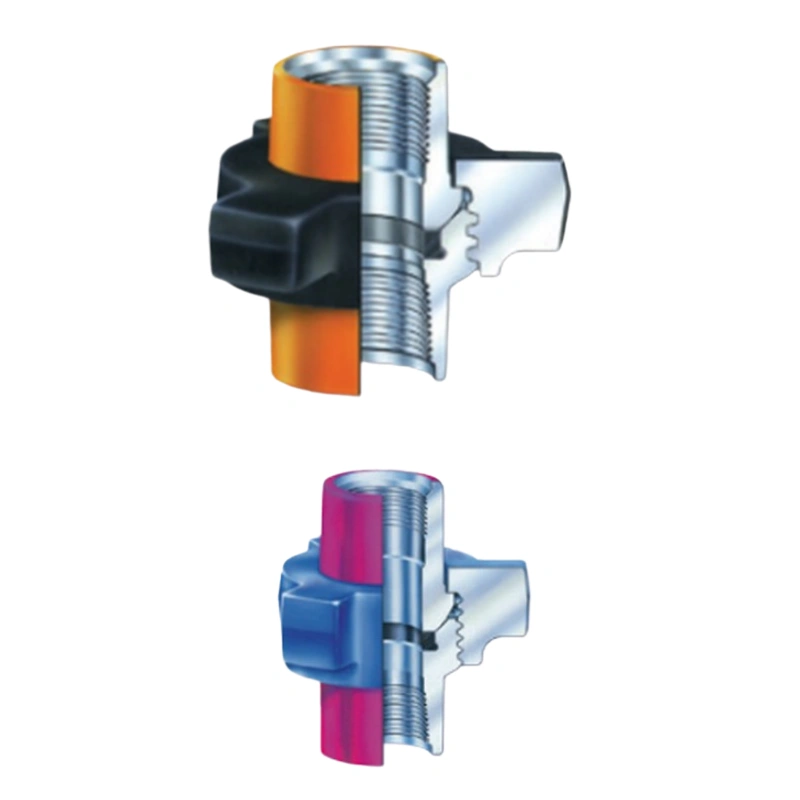
You face critical choices when selecting between Alienfrac Fig 602 and FIG 1502 hammer unions. The Fig 602 delivers reliable performance at 6,000 PSI with a lip-type seal, while the FIG 1502 handles even higher pressures with a robust rubber seal for intense oilfield applications.
Choosing the right hammer union pipe fittings directly impacts safety and operational efficiency. Quality connections minimize leaks, support safety, and maintain consistent performance under stress. You count on Alienfrac for quality, safety, and proven durability.
Their commitment to quality ensures every product meets the highest standards for safety and reliability.
Key Takeaways
- Choose Fig 602 for reliable performance in medium to high-pressure applications, with a working pressure of 6,000 PSI.
- Select FIG 1502 for extreme high-pressure tasks, offering a working pressure of 15,000 PSI and robust rubber seals.
- Utilize the color-coded system for quick identification of hammer unions, reducing errors and ensuring smooth operations.
- Regular maintenance and seal replacement are crucial for extending the life of hammer unions and preventing leaks.
- Always verify pressure ratings and seal types before installation to ensure safety and compatibility with your oilfield operations.
Quick Comparison of Hammer Unions
Fig 602 vs FIG 1502: Key Specs
You need to understand the main differences between Alienfrac Fig 602 and FIG 1502 hammer unions before making a selection. The table below gives you a clear side-by-side comparison:
| Feature | Fig 602 | Fig 1502 |
|---|---|---|
| Working Pressure | 6,000 PSI | 15,000 PSI |
| Test Pressure | 9,000 PSI | 22,500 PSI |
| Seal Type | Lip-type seal ring and secondary metal-to-metal seal | Resilient rubber seal ring for extremely high-pressure conditions |
| Typical Applications | Manifold and line connections, mud delivery, circulating lines, truck-mounted pumping systems | Cement filling, fracturing, acidizing, testing, choke, and kill lines |
This comparison helps you match the right hammer unions to your operational needs. Fig 602 works well for medium to high-pressure flowlines. FIG 1502 suits the most demanding, high-pressure oilfield tasks.
Visual Identification and Color Coding
You can quickly identify hammer unions in the field by their unique color codes. Alienfrac uses a clear color system for each figure:
| Figure | Nut Color | Sub Color |
|---|---|---|
| Fig 602 | Black | Orange |
| FIG 1502 | Blue | Red |
Tip: The color-coded system ensures you select the correct hammer unions for each job. This reduces mistakes and keeps your operations running smoothly.
- The color-coded system ensures quick identification of the correct union.
- It minimizes potential errors in the field.
- It supports smooth operations during tasks.
You can also find these hammer unions in a range of sizes, from 1 inch to 4 inches for Fig 602 and up to 3 inches for FIG 1502. This flexibility allows you to choose the best fit for your equipment and application.
By understanding these specs and visual cues, you make safer and more efficient choices for your oilfield connections.
Pressure Ratings for Hammer Unions
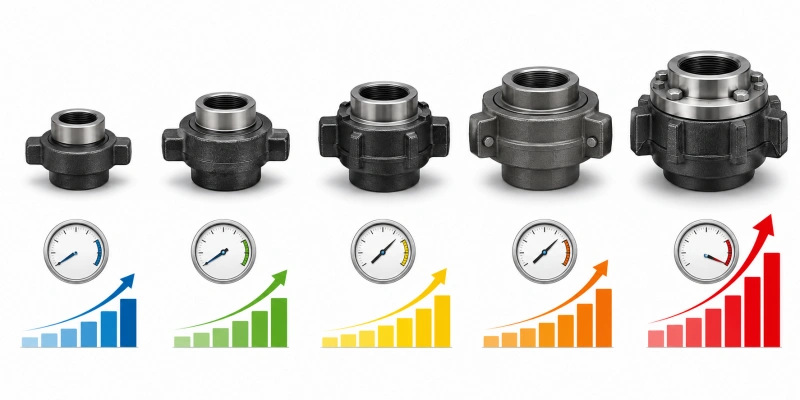
Alienfrac Fig 602 Hammer Union: Pressure
You rely on the Alienfrac Fig 602 hammer union when you need dependable performance in medium to high-pressure oilfield operations. This union features a working pressure of 6,000 PSI, which meets the demands of flowline systems, mud delivery, and circulating lines.
The test pressure reaches 9,000 PSI, ensuring the union withstands rigorous conditions during hydrostatic testing. You benefit from a compact design that supports safe and efficient installation. The lip-type seal ring, combined with a secondary metal-to-metal seat, maintains integrity under high pressure.
You can see the certified pressure ratings for Fig 602 in the table below:
| Pressure Type | Rating |
|---|---|
| Working Pressure | 6,000 PSI |
| Test Pressure | 9,000 PSI |
You choose Fig 602 hammer unions for applications where high pressure is present but ultra-high-pressure hammer unions are not required. The union’s pressure ratings give you confidence in its ability to handle demanding environments.
Alienfrac FIG 1502 Hammer Union: Pressure
You select the Alienfrac FIG 1502 hammer union for the most extreme oilfield conditions. This union is engineered for high-pressure and ultra-high-pressure hammer union applications. The working pressure reaches 15,000 PSI, and the test pressure rises to 22,500 PSI.
You use FIG 1502 hammer unions in cement filling, fracturing, acidizing, testing, and choke and kill lines. The robust wall thickness and resilient rubber seal ring ensure reliable performance under high pressure.
You trust this union when you need maximum safety and durability. The table below highlights the pressure ratings for FIG 1502 and other high-pressure hammer unions:
| Hammer Union Type | Working Pressure (CWP) | Test Pressure |
|---|---|---|
| FIG 1002 | 10,000 PSI | 15,000 PSI |
| FIG 1502 | 15,000 PSI | 22,500 PSI |
| FIG 2002 | Up to 20,000 PSI | 30,000 PSI |
| FIG 2202 | Up to 20,000 PSI | 30,000 PSI |
You see that FIG 1502 stands out as a high-pressure solution, offering superior working pressure and test pressure compared to other hammer unions. You rely on these ratings to ensure your equipment operates safely in high-pressure environments.
Application Impact of Pressure Ratings
You must match the pressure ratings of hammer unions to your operational requirements. Pressure ratings dictate the maximum pressure a union can handle. You need higher ratings for extreme operational environments.
Selecting the right working pressure and test pressure ensures safety and efficiency in oilfield applications.
- Pressure ratings determine the suitability of hammer unions for specific tasks.
- High-pressure hammer unions are essential for fracturing, acidizing, and choke and kill lines.
- Ultra-high-pressure hammer unions provide extra assurance in the most demanding conditions.
You follow these steps when choosing hammer unions for your operation:
- FIG 1002 and FIG 1502 ratings ensure compatibility with high-pressure systems.
- These unions withstand operational parameters in oilfield environments.
- Certified components maintain safety standards in global operations.
You protect your team and equipment by selecting hammer unions with the correct working pressure and test pressure. You avoid leaks and failures by relying on certified pressure ratings. You achieve efficient and safe oilfield operations by making informed choices.
Sealing Mechanisms in Hammer Union Pipe Fittings
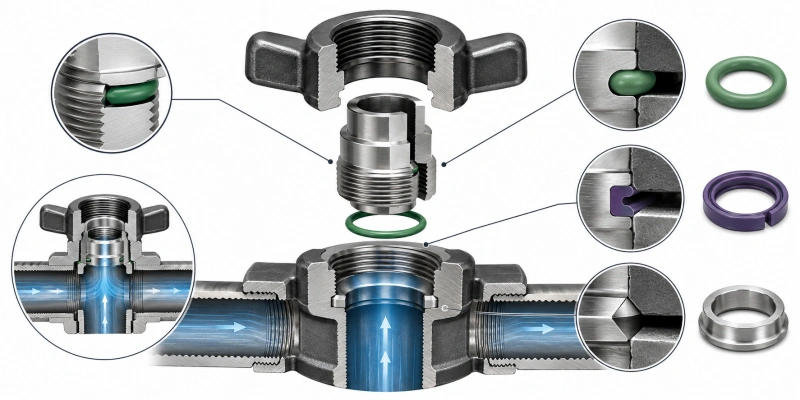
Fig 602 Lip-Type Seal
You depend on the Fig 602 hammer union for reliable sealing in medium to high-pressure applications. The design uses a lip-type seal made from nitrile-butadiene, which fits securely between the union’s forged steel components.
This seal creates a tight barrier that prevents leaks, even when you operate under significant pressure. The lip-type seal also reduces flow turbulence, which helps maintain system efficiency.
You can easily replace the seal when needed. This feature minimizes downtime and keeps your operations running smoothly. The secondary metal-to-metal seat behind the lip-type seal adds another layer of protection. This dual sealing mechanism gives you confidence in both routine and demanding oilfield tasks.
The table below highlights the materials and benefits you get with the Fig 602 lip-type seal:
| Material Type | Benefit |
|---|---|
| NACE MR0175/ISO 15156 compliant materials | Resistance to hydrogen-induced cracking, sulfide stress cracking, and corrosion fatigue in sour service applications |
| Heavy-duty forged steel | Superior tensile strength, impact resistance, and corrosion resistance |
| Interchangeability | Easy replacement and compatibility with other manufacturers’ components |
You see that the Fig 602’s sealing mechanisms support both performance and safety, especially when you need to handle sour service or corrosive media.
FIG 1502 Rubber Seal Ring
You choose the FIG 1502 hammer union when you need a seal that can withstand extreme pressure and harsh environments. The FIG 1502 uses a resilient rubber seal ring, also made from nitrile-butadiene, which fits tightly within the union’s robust wall thickness.
This seal provides a reliable barrier against leaks, even in high-pressure service.
You benefit from the replaceable design of the seal ring. When you need to perform maintenance, you can quickly swap out the old seal for a new one. This feature reduces downtime and ensures your equipment stays in top condition.
The color-coded blue nut and red subs make it easy for you to identify the correct union and seal during installation.
The table below compares the sealing surfaces and certifications that support the FIG 1502’s performance:
| Feature | Description |
|---|---|
| Material | High-strength steel and corrosion-resistant alloys |
| Sealing Surfaces | Precision-machined to prevent leaks |
| Certifications | DNV MED, CCS, ABS, API compliance |
| Application | Designed for sour gas and high-pressure environments |
| Reliability | Trusted for quick installation and reduced downtime |
You rely on the FIG 1502’s design to deliver consistent performance, even when you face hydrogen sulfide or other challenging conditions.
Seal Performance in Sour Service
You must consider seal performance in sour service when you select hammer unions for your operation. Sour service involves exposure to hydrogen sulfide and other corrosive media, which can cause rapid material degradation and failures.
Both Fig 602 and FIG 1502 hammer unions use sealing mechanisms that comply with NACE MR0175/ISO 15156 standards. This compliance ensures resistance to hydrogen-induced cracking, sulfide stress cracking, and corrosion fatigue.
You can trust these seals to maintain integrity in high-pressure and sour service environments. The precision-machined sealing surfaces prevent leaks, even when you operate under fluctuating pressure. The use of heavy-duty forged steel and corrosion-resistant alloys further enhances durability.
Note: The ACT 3 Hammer Union Lip Seals are manufactured using materials that comply with NACE MR0175/ISO 15156. This compliance is crucial for long-term safety and performance in sour gas environments.
You benefit from the following advantages when you use Alienfrac hammer unions in sour service:
- Reliable sealing against hydrogen sulfide and other corrosive media
- Prevention of sulfide stress cracking and corrosion-related failures
- Quick seal replacement for reduced downtime
- Compatibility with other manufacturers’ components for easier maintenance
You protect your equipment and your team by choosing hammer unions with proven sealing mechanisms. You ensure safe, efficient, and compliant operations in the toughest oilfield conditions.
Application of Hammer Union Pipe Fittings
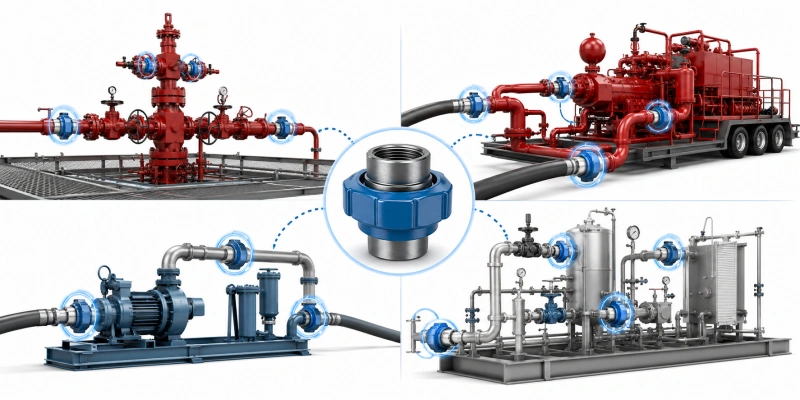
Oilfield Uses for Fig 602
You rely on Alienfrac Fig 602 hammer union pipe fittings for a wide range of oil operations. These hammer unions support drilling mud lines, cementing lines, manifold systems, well servicing units, and high-pressure flowlines.
You need dependable connections for fluid transfer applications in every stage of oil production. The lip-type seal ensures a tight fit and prevents leaks, even when you work with corrosive fluids or high pressure. You can see the typical applications in the table below:
| Application Type | Description |
|---|---|
| Drilling Mud Lines | Used for transporting drilling fluids. |
| Cementing Lines | Essential for cementing operations in wells. |
| Manifold Systems | Integral in managing flow from multiple sources. |
| Well Servicing Units | Utilized in the maintenance and servicing of wells. |
| High Pressure Flowline | Supports high-pressure fluid transport. |
You choose Fig 602 hammer unions when you need reliable performance and easy seal replacement in medium to high-pressure oil environments.
Oilfield Uses for FIG 1502
You select Alienfrac FIG 1502 hammer union pipe fittings for the most demanding oil applications. These hammer unions excel in cement filling, fracturing, acidizing, testing, and choke and kill lines. You trust the robust rubber seal to withstand extreme conditions and maintain a secure connection.
FIG 1502 hammer unions deliver superior performance in high-pressure oil operations, where safety and durability matter most. You use them for critical tasks that require maximum reliability and quick installation.
Choosing Hammer Unions for Your Operation
You must match hammer union pipe fittings to your operational needs. You consider the pressure rating, seal type, and oilfield application before making a decision. Fig 602 hammer unions suit fluid transfer applications and routine oil production tasks.
FIG 1502 hammer unions fit high-pressure environments and specialized oil operations. You look for color coding and size options to ensure compatibility with your equipment. You check the seal design for easy maintenance and replacement.
You select hammer unions that meet industry standards and support safe, efficient oil operations.
Tip: Always verify the pressure rating and seal type before installation. This step protects your equipment and ensures long-term reliability.
You make informed choices by understanding the strengths of each hammer union. You keep your oilfield running safely and efficiently with the right hammer union pipe fittings.
Alienfrac Hammer Union: Material & Compliance
Forged Steel Construction
You need hammer unions that deliver consistent performance in the toughest oilfield conditions. Alienfrac uses high-strength forged steel for every union. This material gives you the durability and toughness required for high-pressure operations.
You benefit from the use of 4130 steel, 4140 alloy, and 316 stainless steel. These materials provide excellent strength and resist wear, even when you face abrasive fluids or rough handling.
| Material Type | Properties |
|---|---|
| 4130 Steel | High strength, suitable for tough environments |
| 4140 Alloy | Excellent toughness and wear resistance |
| 316 Stainless Steel | Superior corrosion resistance in harsh conditions |
You can trust these hammer unions to maintain their integrity and resist corrosion, even after years of use.
NACE & API Certifications
You want assurance that your equipment meets industry standards. Alienfrac hammer unions comply with NACE and API certifications. These certifications confirm that your unions resist corrosion and perform reliably in harsh environments.
You also benefit from DNV MED, CCS, and ABS certifications, which validate safety and quality for marine and international applications.
| Certification | Impact on Reliability and Safety |
|---|---|
| NACE | Ensures resistance to corrosion in harsh environments, enhancing durability. |
| API | Confirms adherence to industry standards, improving overall performance. |
| DNV MED | Validates compliance with maritime safety standards, ensuring reliability in marine applications. |
| CCS | Certifies compliance with Chinese Classification Society standards, ensuring quality. |
| ABS | Ensures compliance with American Bureau of Shipping standards, enhancing safety in marine operations. |
You gain peace of mind knowing your hammer unions meet strict global requirements.
Durability in Harsh Environments
You face extreme temperatures, high pressures, and corrosive fluids in oilfield work. Alienfrac hammer unions stand up to these challenges. The forged steel construction and certified materials protect against corrosion and mechanical failure.
You can rely on these unions for long service life and minimal maintenance. The advanced design helps you avoid leaks and downtime, even in the most demanding environments.
Tip: Regular inspection and cleaning help you extend the life of your hammer unions and maintain corrosion resistance.
You keep your operations safe and efficient by choosing hammer unions built for durability and certified for quality.
End Connections & Sizes for Hammer Unions
Threaded vs Butt-Weld Options
You need to select the right connections for your oilfield operations. Alienfrac offers two main types of connections for hammer unions. Butt weld hammer unions create a permanent joint by welding directly to the pipe ends.
This method gives you a strong, leak-proof connection that works best in high-pressure systems where you want long-lasting performance. Threaded hammer unions use a threaded design.
You can quickly connect or disconnect these unions, making them ideal for temporary setups or when you need frequent equipment changes. You benefit from these options because you can match the connections to your operational needs.
You avoid downtime and improve efficiency by choosing the right connections for each task.
Tip: Always check the compatibility of your connections before installation. This step helps you prevent leaks and ensures a secure fit.
Size Range and Customization
You have access to a wide range of sizes and customization options with Alienfrac hammer unions. The available sizes cover most oilfield requirements, so you can find the right fit for your equipment. You can also request custom configurations if your operation needs special connections or unique sizes.
The table below shows the typical sizes, working pressures, materials, and end connection types you can choose:
| Item | Range and Description |
|---|---|
| Nominal Sizes | 1″, 1½”, 2″, 2½”, 3″, 4″ |
| Working Pressure | 2,000 / 3,000 / 5,000 / 10,000 / 15,000 / 20,000 psi |
| Materials | Alloy steel, stainless steel, and nylon unions for low-pressure corrosive lines |
| End Connections | F×F, F×M, M×M, butt-weld ends, LP/tubing threads, NPT, flanged ends, hose union ends |
You can select connections that match your equipment and operational demands. You also have the flexibility to choose from different materials, which helps you handle corrosive fluids or extreme conditions. You improve safety and reliability by picking the right sizes and connections for your oilfield setup.
Note: Customization lets you tailor connections and sizes to your unique requirements. You can work with Alienfrac to design hammer unions that fit your specific needs.
You make your oilfield operations more efficient by using the right connections and sizes. You reduce maintenance and improve performance by selecting hammer unions that fit your system perfectly.
Identification & Interchangeability of Hammer Unions
WECO Style Compatibility
You need hammer unions that fit seamlessly into your existing oilfield systems. Alienfrac hammer unions offer broad compatibility with WECO style and other global designs. This feature lets you integrate Alienfrac products without worrying about mismatched connections or operational delays.
You can rely on these unions to align with industry standards, including FMC/WECO figures. You get a range of sizes and pressure ratings, making it easy to match your equipment and operational requirements.
| Union Type | Compatibility with Alienfrac |
|---|---|
| WECO Style | Yes |
| Other Global Designs | Yes |
- Alienfrac hammer unions align with industry standards.
- You can choose from multiple sizes and pressure ratings.
- Compatibility with FMC/WECO style figures ensures easy integration.
You save time and reduce risk by using hammer unions that work with both WECO and other global designs. This compatibility supports efficient operations and simplifies maintenance.
Color Coding for Pressure Class
You need to identify hammer unions quickly in the field. Alienfrac uses a color coding system that helps you select the correct union for each application. This system minimizes errors and ensures you use the right union for the job.
You can spot the color-coded nut and sub at a glance, which streamlines installation and maintenance.
- The color coding system allows for quick identification of the correct hammer union for specific applications.
- You minimize mistakes when selecting unions for different tasks.
- Alienfrac unions resist corrosion in harsh environments, supporting long-term reliability.
You benefit from a system that follows API RP 14E for operational safety and NACE MR-01-75 for corrosion resistance. These standards help you maintain safety and performance, even when you work in challenging oilfield conditions.
Tip: Always check the color code before installation. This step ensures you match the union to the correct pressure class and application.
Installation & Maintenance of Hammer Unions
Best Practices for Safety
You must follow strict safety practices when installing Alienfrac hammer union pipe fittings. These steps help you prevent leaks, equipment damage, and safety hazards. Use this checklist to guide your installation process:
- Check Pressure Rating: Always select a hammer union that exceeds your system’s maximum pressure. This step adds a safety margin and reduces risk.
- Verify Temperature Resistance: Choose materials that withstand the highest and lowest temperatures you expect in your operation.
- Ensure Fluid Compatibility: Confirm that the union’s seals and metals match the fluids you handle. This prevents chemical reactions and seal failure.
- Inspect Size and Thread Compatibility: Double-check that the union fits your pipes and matches the thread type.
- Prioritize Corrosion Resistance: Use unions with protective coatings or corrosion-resistant alloys for harsh environments.
- Install with Proper Force: Avoid over-hammering. Use only the force needed to secure the connection.
Tip: Always wear appropriate PPE and follow your site’s safety protocols during installation.
Seal Replacement & Component Care
You extend the life of your hammer unions with regular maintenance and proper seal care. Routine checks and cleaning keep your connections leak-free and reliable.
- Inspect unions for thread damage, corrosion, cracks, or worn sealing surfaces.
- Clean all metal-to-metal sealing surfaces before assembly. Dirt or debris can cause leaks.
- Lubricate threads with anti-seize compound to prevent galling and ensure smooth assembly.
- Replace seals and O-rings periodically, especially in high-pressure or sour service environments.
- Never mix components from different manufacturers. This practice can compromise sealing and safety.
| Maintenance Task | Description |
|---|---|
| Regular Inspection | Look for wear, corrosion, or damage on all parts. |
| Seal Replacement | Change seals and O-rings at recommended intervals. |
| Thread Lubrication | Apply lubricant to prevent thread damage and ease assembly. |
| Clean Sealing Surfaces | Remove all debris before installation to ensure a tight seal. |
| Avoid Over-Hammering | Use only the necessary force to avoid damaging components. |
Regular maintenance protects your investment and ensures safe, efficient oilfield operations.
Alienfrac Service & Support for Hammer Unions
Technical Support & After-Sales
You need more than just quality products in the oilfield. You need a partner who stands behind every connection. Alienfrac provides expert technical support for all hammer unions. You can reach out to their team for help with installation, troubleshooting, or product selection.
Their engineers answer your questions quickly and clearly. You get guidance on best practices for maintenance and seal replacement. This support helps you avoid downtime and keeps your operations safe.
Alienfrac also offers strong after-sales service. If you face any issues with your hammer unions, you can expect fast solutions. Their team handles warranty claims and replacement parts with efficiency. You receive clear instructions and support materials.
You can also request training for your staff. This training covers safe installation, inspection, and maintenance procedures.
Note: Proper training and regular maintenance extend the life of your hammer unions and protect your investment.
Competitive Pricing & Fast Delivery
You want reliable products at a fair price. Alienfrac offers competitive pricing on all hammer unions. You can manage your budget without sacrificing quality or safety. Their transparent quotes help you plan your projects with confidence.
You also benefit from fast delivery. Alienfrac maintains a large inventory and uses efficient logistics. You receive your hammer unions quickly, even for urgent orders. This speed helps you keep your projects on schedule.
| Service Feature | Benefit to You |
|---|---|
| Technical Support | Quick answers and expert guidance |
| After-Sales Service | Fast solutions and warranty support |
| Training & Guidance | Improved safety and maintenance skills |
| Competitive Pricing | Better value for your investment |
| Fast Delivery | Reduced downtime and project delays |
You can trust Alienfrac to support you at every stage, from selection to installation and beyond.
Conclusion
You see clear differences between Alienfrac Fig 602 and FIG 1502 hammer unions. Fig 602 fits medium to high-pressure jobs with a lip-type seal. FIG 1502 handles extreme pressures with a robust rubber seal. Each union matches specific oilfield needs.
You gain reliable performance, safety, and efficiency with Alienfrac. For expert support and custom solutions, Alienfrac offers these advantages:
| Feature | Benefit to You |
|---|---|
| Customization | Size and pressure options for your operation |
| Certified Materials | 4130 steel, 4140 alloy, 316 stainless steel |
| Safety Certifications | API 6A and NACE compliance |
| Expert Guidance | Help with selection, inspection, and care |
You can trust Alienfrac for every oilfield connection.
FAQ
What is the main difference between Fig 602 and FIG 1502 hammer unions?
You will notice the main difference in pressure rating and seal type. Fig 602 supports up to 6,000 PSI with a lip-type seal. FIG 1502 handles up to 15,000 PSI and uses a robust rubber seal ring.
How do I identify the correct hammer union in the field?
You can use color coding for quick identification. Fig 602 features a black nut and orange subs. FIG 1502 uses a blue nut and red subs. Always check these colors before installation.
Can I replace the seals on Alienfrac hammer unions?
Yes, you can easily replace the seals on both Fig 602 and FIG 1502 hammer unions. This design helps you reduce downtime and maintain a secure, leak-free connection.
Are Alienfrac hammer unions compatible with WECO-style fittings?
You can use Alienfrac hammer unions with WECO style and other global designs. This compatibility ensures you can integrate them into your existing oilfield systems without issues.
What certifications do Alienfrac hammer unions meet?
Alienfrac hammer unions meet API, NACE, DNV MED, CCS, and ABS certifications. You can trust these products for safety, corrosion resistance, and reliable performance in harsh oilfield environments.