
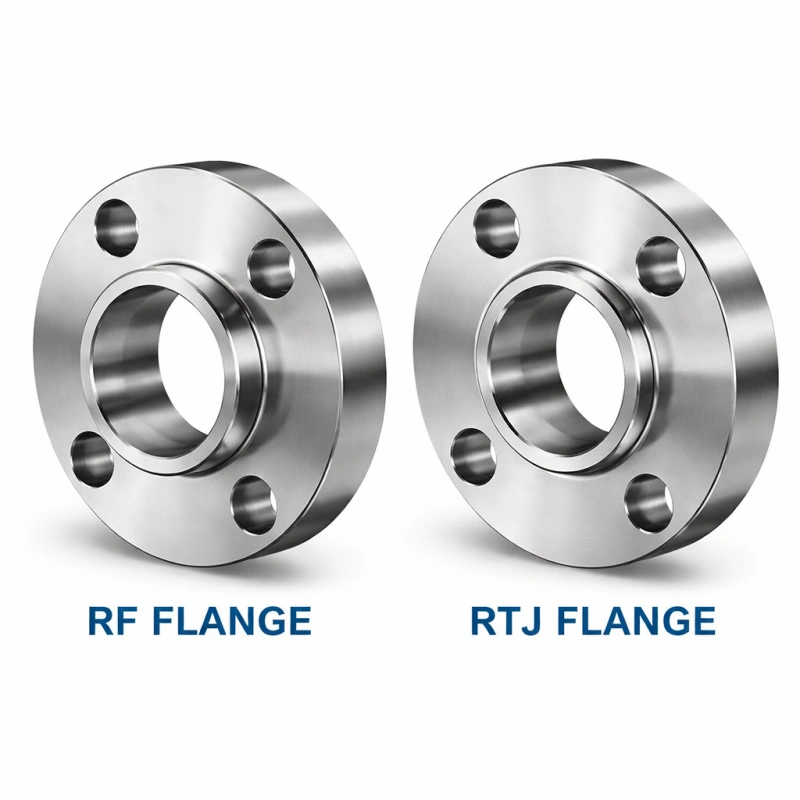
You need to select the right flange face for high-pressure systems to achieve both safety and reliability. Raised Face (RF) and Ring Type Joint (RTJ) flanges differ in how they create a seal and where you use them.
RF flanges use a flat or compressed gasket on a raised surface, making them common in lower-pressure environments. RTJ flanges use a metal ring gasket in a machined groove, which gives you long-term reliability under high pressure and harsh conditions. The table below highlights key differences:
| Flange Type | Sealing Mechanism | Suitability for High Pressure |
|---|---|---|
| RF | Flat/compressed gasket on raised surface | Commonly used for lower pressures |
| RTJ | Metal ring gasket in a machined groove | More suitable for higher pressures and temperatures |
When you need long-term reliability and safety, especially in demanding oilfield applications, Alienfrac’s flanges deliver proven performance. Use the Flange Face Types Comparison to guide your decisions in critical systems.
Key Takeaways
- Understand the sealing mechanisms: RF flanges use soft gaskets on raised surfaces, while RTJ flanges utilize metal ring gaskets in grooves for superior sealing under high pressure.
- Choose the right flange for your application: Use RF flanges for moderate pressures and RTJ flanges for extreme conditions to ensure safety and reliability.
- Consider material compatibility: Match flange materials with the process medium to prevent leaks and ensure long-term performance.
- Follow industry standards: Adhere to ASME, API, and ISO standards for flange selection and installation to maintain system integrity.
- Regular maintenance is key: Inspect flanges and gaskets regularly to prevent leaks and ensure optimal performance in your piping systems.
Flange Face Types Comparison
When you work with piping systems, you must understand the differences between flange face types. This flange face types comparison helps you choose the right connection for your application. You will see three main options: flat face flange, RF, and RTJ. Each type has unique features, sealing methods, and uses.
| Flange Type | Sealing Surface Geometry | Gasket Type |
|---|---|---|
| Flat Face Flange | The entire flange face is flat | Uses full-face gaskets |
| RF | Raised sealing surface around the bore | Uses ring or spiral wound gaskets |
| RTJ | Machined groove for a metal ring gasket | Metal-to-metal sealing |
Flat Face Flange Overview
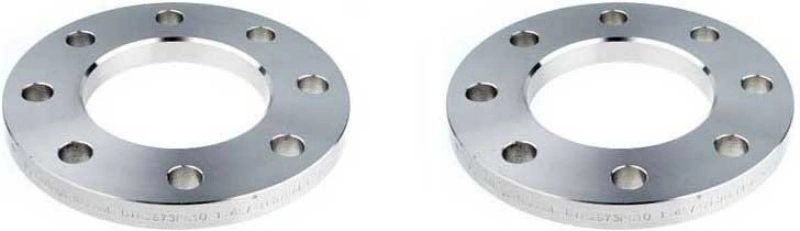
You will find the flat face flange in low-pressure systems. The entire face of this flange is flat and smooth. This design allows you to use a full-face gasket that covers the whole sealing surface. The flat face flange resists mechanical distortion and works best with non-metallic gaskets.
You often see this type in pressure classes 125 and 250. The flat face flange is common in water supply, HVAC, and other low-pressure applications. When you need a simple, reliable seal, the flat face flange gives you a straightforward solution.
Alienfrac’s API Flanges include flat face flange options that meet industry standards. You can trust these flanges for consistent quality and compatibility with your system.
Raised Face Flange Overview
The RF is the most widely used flange face in oil and gas, chemical, and power industries. You will notice a small raised area around the bore of the flange. This raised surface concentrates the gasket load, which improves the seal.
The RF uses ring gaskets or spiral wound gaskets, depending on your pressure and temperature needs. Serrated surfaces on the RF help grip the gasket and prevent leaks.
You can use the RF in all pressure classes, from low to high. The RF design supports both non-metallic and semi-metallic gaskets. You will find the RF in pipelines, refineries, and process plants.
Alienfrac’s API Flanges offer RF options that comply with ASME and API standards, giving you flexibility for many applications.
Ring Type Joint Flange Overview
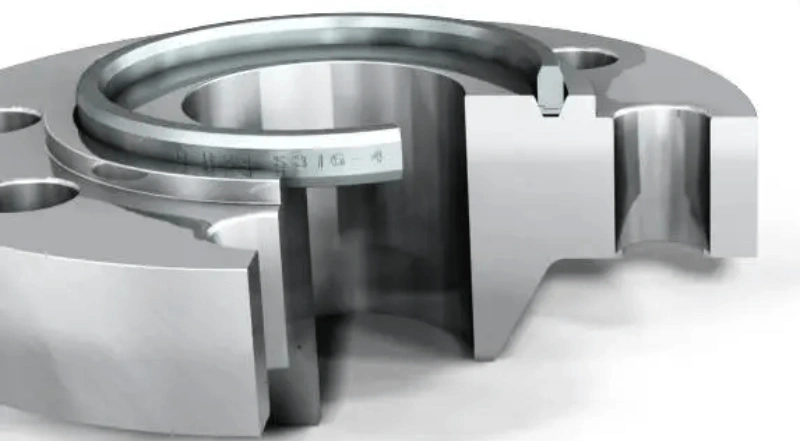
The RTJ stands out in high-pressure and high-temperature environments. You will see a deep, machined groove on the face of the flange. This groove holds a metal ring gasket. When you tighten the bolts, the metal ring compresses into the groove, creating a strong metal-to-metal seal.
The RTJ works best in pressure classes 900 and above.
You should use the RTJ when you need maximum sealing performance under extreme conditions. The RTJ resists vibration, thermal cycling, and pressure spikes. You often find the RTJ in oilfield wellheads, subsea systems, and critical process lines.
Alienfrac’s API Flanges include RTJ options that meet the strictest industry requirements. You can rely on these flanges for safety and durability in your toughest jobs.
Tip: Use this flange face types comparison to match the right flange to your system’s pressure, temperature, and sealing needs. Alienfrac’s API Flanges cover all three face types, so you always have a reliable choice for your project.
FF vs RF vs RTJ Flange: Design & Sealing Mechanisms
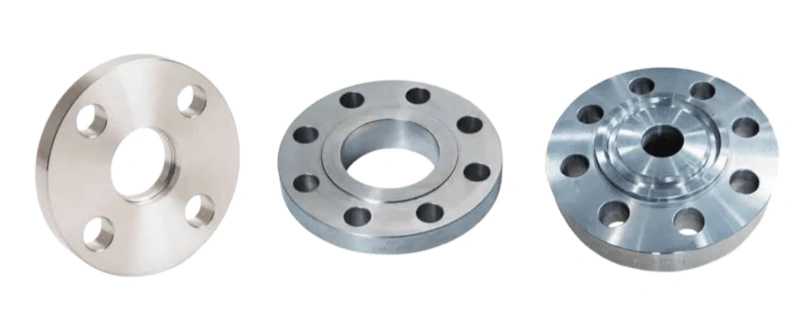
FF Flange Sealing
You encounter the ff flange in systems where sealing integrity matters, but pressure stays low. The ff sealing mechanism relies on a full-face gasket that covers the entire sealing surface design. You place the gasket between two flat faces, then tighten the bolts to compress the gasket.
This process creates a seal that prevents leaks. You must ensure the surfaces stay smooth and aligned. The ff works best with non-metallic gaskets, which handle minor imperfections. You see ff flanges in water treatment, HVAC, and low-pressure pipelines.
You achieve sealing integrity by maintaining proper bolt load and surface finish. You avoid mechanical distortion by using ff flanges with cast iron components.
RF Flange Sealing
You use the RF flange when you need better sealing integrity in moderate to high-pressure systems. The RF sealing mechanism centers on a raised area around the bore. You place a ring or spiral wound gasket on this raised surface. When you tighten the bolts, the gasket compresses between the raised faces.
The RF design concentrates force, improving sealing. Serrations on the RF help grip the gasket and prevent leaks. You find RF flanges in oil and gas, chemical, and power industries. You achieve sealing integrity by matching the gasket type to your pressure and temperature needs.
You benefit from easier installation and maintenance compared to RTJ flanges.
Tip: Always check the surface finish and alignment of the RF sealing surface before installation. This step ensures maximum sealing integrity.
RTJ Flange Sealing
You choose the RTJ flange for extreme conditions. The RTJ sealing mechanism uses a metal ring gasket that fits into a precision-machined groove. You tighten the bolts, causing the ring to deform and create a metal-to-metal seal. This method delivers unmatched sealing integrity under high pressure and temperature.
The RTJ sealing surface design resists leaks even during pressure spikes and thermal cycling. You see RTJ flanges in oilfield wellheads, subsea systems, and critical process lines. You must seat the ring gasket precisely to maintain sealing integrity. Installation requires careful attention to groove profiles and bolt load.
| Aspect | RF Flanges | RTJ Flanges |
|---|---|---|
| Sealing Mechanism | Compresses soft or semi-metallic gaskets between raised faces | Deforms the metallic ring gasket into a machined groove for metal-to-metal sealing |
| Suitability | Moderate to high pressure and temperature | Extreme pressure, temperature, and cyclic loads |
| Installation | Easier, less demanding | Requires precision, more involved |
You ensure sealing integrity by selecting the right flange for your system’s demands. You rely on FF, RF, and RTJ flanges to deliver performance and safety in every application.
FF vs RTJ Flange vs RF Flange: Application Uses
FF Flange in Industry
You often select the ff flange when your application requires a simple, reliable connection. The ff flange works best in low-pressure systems where sealing does not need to withstand extreme conditions. You see ff flanges in water treatment plants, HVAC systems, and industrial piping.
These flanges use full-face gaskets, which cover the entire sealing surface. You benefit from easy installation and maintenance. The ff flange resists mechanical distortion, making it suitable for cast iron components. You achieve consistent sealing performance in environments where pressure stays low.
You rely on ff flanges for application suitability in systems that do not demand high-pressure sealing.
RF Flange in Oil & Gas
You encounter the RF flange in oil and gas operations, chemical plants, and power generation facilities. The RF flange features a raised sealing surface that concentrates gasket load. You use ring or spiral wound gaskets to improve sealing integrity. The RF flange adapts to a wide range of pressures and temperatures.
You find RF flanges in pipelines, refineries, and process plants. You benefit from flexible application suitability, as the RF flange supports both non-metallic and semi-metallic gaskets. You achieve reliable sealing in moderate to high-pressure applications.
You choose RF flanges when you need a balance between performance and ease of maintenance.
Note: The RF flange remains the industry standard for oil and gas pipelines due to its proven sealing capabilities and versatility.
RTJ Flange for High Pressure
You select the RTJ flange for high-pressure applications where sealing must withstand extreme conditions. The RTJ flange uses a metal ring gasket seated in a precision-machined groove. You achieve metal-to-metal sealing, which resists leaks during pressure spikes and thermal cycling.
You find RTJ flanges in oil and gas wellheads, subsea systems, and critical process lines. The RTJ flange delivers unmatched sealing performance in environments with high temperatures and vibration. You rely on RTJ flanges for application suitability in demanding systems.
You ensure safety and durability by choosing RTJ flanges for your toughest jobs.
| Flange Type | Typical Application | Sealing Method | Pressure Range |
|---|---|---|---|
| ff | Water, HVAC, and low-pressure industry | Full-face gasket | Low |
| rf | Oil and gas, chemical, and power | Ring/spiral wound gasket | Moderate to high |
| rtj | Oil and gas wellhead, subsea, critical lines | Metal ring gasket | Extreme |
Pressure, Temperature & Performance
Pressure Ratings by Type
You need to match the flange type to your system pressure for safe and reliable operation. Flat face flanges handle up to 150 psi, making them suitable for low-pressure handling in water systems or cast iron valves.
The RF flange covers a much wider range, from 150 to 2500 psi, which fits most refinery, chemical, and power plant needs. The RTJ flange stands out for extreme pressure handling, supporting 600 psi and above, often exceeding 5000 psi in oil and gas wells or nuclear plants.
This high-pressure handling ensures leak prevention even in the harshest environments.
| Flange Type | Typical Pressure Range | Common Industry Uses | Key Advantages |
|---|---|---|---|
| FF (Flat Face) | Up to 150 psi (Class 150) | Water systems, cast iron valves, and low-pressure vents | Compatibility, cost-effective |
| RF (Raised Face) | 150–2500 psi (Class 150–2500) | Refineries, chemical plants, power auxiliaries | Balanced sealing, gasket flexibility |
| RTJ (Ring Type Joint) | 600–5000+ psi (Class 600 and above) | Oil & gas wells, nuclear plants | Extreme pressure/temperature resistance |
Temperature Suitability
Temperature capability plays a key role in leak prevention and sealing. Flat face flanges have limited temperature suitability, so you use them in mild environments. The RF flange offers moderate to high temperature handling, making it a versatile choice for most industrial systems.
The RTJ flange excels in severe service, withstanding high to extreme temperatures. You select RTJ when your system pressure and temperature reach the upper limits.
| Flange Type | Temperature Capability |
|---|---|
| Flat Face (FF) | Limited |
| Raised Face (RF) | Moderate to high |
| Ring Type Joint (RTJ) | High to extreme |
Sealing Performance
Sealing performance determines how well you prevent fluid leakage and maintain system pressure. The ff flange compresses a soft gasket over a large area, which works for low-pressure handling but offers less leak prevention.
The RF flange improves sealing by focusing bolt load on the gasket, giving you better leak prevention across a wide range of pressures. The RTJ flange delivers the highest sealing integrity.
Its metal-to-metal seal resists leakage, blowout, and pressure spikes, making it the top choice for critical leak prevention in high-pressure handling. You rely on RF and RTJ flanges for superior sealing and long-term reliability.
| Flange Type | Sealing Principle | Advantages | Limitations | Typical Pressure Range | Common Gasket Types |
|---|---|---|---|---|---|
| Flat Face (FF) | Compresses a soft gasket over a large area | Low cost, simple design | Low gasket stress, risk of blowout | Low (PN ≤ 16) | Rubber, compressed fiber |
| Raised Face (RF) | Concentrated bolt load on the gasket | Versatile, widely used | Gasket exposed, less protected | Low to high (PN 10–160+) | Spiral wound, metal-jacketed |
| Ring Type Joint (RTJ) | Metal ring deformation in the groove | Superior sealing, blowout resistant | Expensive, requires high preload | Ultra-high (PN ≥ 100) | Oval/octagonal metal ring |
Tip: Always choose the RF or RTJ flange when your application demands maximum sealing, leak prevention, and pressure handling. This choice helps you avoid costly leakage and maintain system pressure in critical operations.
Material & Gasket Fit
Flange Materials (Alienfrac API Flanges)
You need to choose the right material for your flange to ensure safety and performance. Alienfrac API Flanges offer several options, each designed for specific environments. Carbon steel works well in oil and gas systems. Stainless steel resists corrosion, making it ideal for harsh chemical plants.
HDPE suits water supply and chemical transfer lines. Alloy steel handles high-temperature systems. Your material selection depends on the operating conditions and the demands of your application.
| Material Type | Common Materials Used | Typical Use Cases |
|---|---|---|
| Flange Materials | Carbon Steel, Stainless Steel, HDPE, Alloy Steel | Oil and gas, corrosion-prone environments, water supply, high-temperature systems |
| Gasket Materials | Graphite, EPDM, PTFE, CNAF | High thermal resistance, flexible water systems, chemically inert, compressed air |
| Matching Factors | Operating pressure & temperature, media compatibility, flange surface finish/design, maintenance frequency & cost | Spiral wound gaskets for high-pressure weld neck flanges; rubber or CNAF gaskets for low-pressure slip-on flanges |
Gasket Compatibility
You must match the gasket type to the flange material for reliable sealing. Graphite gaskets withstand high temperatures and fit well with alloy steel flanges. EPDM gaskets provide flexibility and work best in water systems with HDPE flanges.
PTFE gaskets resist chemicals and suit stainless steel flanges in food or chemical applications. CNAF gaskets handle compressed air and low-pressure liquids. You select the gasket type based on the pressure, temperature, and media in your system.
Spiral wound gaskets pair with high-pressure flanges, while rubber gaskets fit low-pressure connections.
Tip: Always check the compatibility between flange material and gasket type before installation. This step prevents leaks and ensures long-term performance.
Risks of Mismatch
You face several risks if you mismatch flange material and gasket type:
- Immediate leakage can occur when the gasket does not compress evenly.
- Long-term sealing failure develops as the gasket relaxes and micro-cracks form.
- Flange and bolt damage result from uneven pressure and misalignment.
- Economic losses follow frequent repairs and maintenance in high-pressure systems.
You protect your system by choosing the right material and gasket type for every connection.
Ff vs Rtj vs RF Flange: Pros & Cons
FF Flange Pros & Cons
You often choose the ff flange for its straightforward design and cost-effectiveness. The ff flange gives you a simple solution when you need basic sealing in low-pressure systems. You can install and maintain the ff flange with minimal effort.
This flange protects your equipment by reducing stress on connected components. You benefit from easy visual checks and rigid construction.
However, the ff flange has limitations. You cannot use the ff flange in high-pressure environments because its sealing capability is limited. You must follow strict gasket rules to avoid leaks. The large surface area can sometimes create a penalty for sealing performance.
You may face higher maintenance if you do not align the surfaces properly.
| Advantages | Disadvantages |
|---|---|
| Simple design | Limited sealing capability |
| Easy to manufacture | Not suitable for high-pressure use |
| Low cost | Strict gasket requirements |
| Equipment protection | Surface area penalty |
| Visual inspection | Limited pressure rating |
Tip: Use the ff flange when you need reliable sealing in low-pressure, non-critical applications.
RF Flange Pros & Cons
You see the RF flange as the industry standard for many oil and gas systems. The RF flange offers better sealing than the ff flange because it concentrates the gasket load. You can use smaller gaskets, which reduces material costs.
The RF flange supports a wide range of gasket types, making it flexible for different sealing needs. You benefit from reduced maintenance because the RF flange provides better long-term sealing in demanding service.
You must pay attention to surface finish and alignment when installing the RF flange. The RF flange is sensitive to installation errors, which can affect sealing performance. You may need precise alignment to avoid leaks. The RF flange works best when you match the gasket type to your system’s pressure and temperature.
| Feature | RF Flange | FF Flange |
|---|---|---|
| Gasket alignment | Requires precise alignment | Requires careful alignment |
| Gasket size | Typically smaller | Often uses larger gaskets |
| Sealing performance | Better long-term sealing | Less effective in high pressure |
| Maintenance frequency | Reduced due to better sealing | Higher due to alignment issues |
| Installation sensitivity | Sensitive to surface finish | More forgiving |
Note: The RF flange gives you a balance of sealing reliability and maintenance ease for most industrial systems.
RTJ Flange Pros & Cons
You rely on the RTJ flange for the toughest jobs. The RTJ flange delivers exceptional sealing reliability in high-pressure and high-temperature applications. You can trust the RTJ flange to withstand temperatures beyond 750°C and pressures over 700 bar.
The solid metal construction ensures durability and resistance to degradation. You often see the RTJ flange in critical systems where sealing failure is not an option. The RTJ flange offers a long service life, often outlasting other components.
You must consider the higher manufacturing and installation demands of the RTJ flange. Precision machining of groove profiles increases costs. You need exact tolerances and surface finishes for optimal sealing.
The RTJ flange is best for high-value applications where you cannot risk leaks. You must select the right gasket material to match your media and corrosion resistance needs.
| Pros | Cons |
|---|---|
| Exceptional sealing in high-pressure, high-temperature use | Requires precision machining and installation |
| Solid metal construction for durability | Higher manufacturing costs |
| Withstands extreme temperatures and pressures | Limited to critical, high-value applications |
| Long service life | Demands careful material selection for chemical compatibility |
| Ideal for critical applications | Installation requires exact tolerances |
Tip: Choose the RTJ flange when you need maximum sealing integrity and cannot compromise on safety or performance.
Installation, Maintenance & Cost
Installation Steps
You must follow precise steps when installing FF, RF, and RTJ flanges. Each flange type requires specific surface finishes and alignment to ensure a secure seal. RTJ flanges demand precision-machined grooves and controlled roughness. Groove dimensions must match exactly.
RF flanges need a raised face with serrated or spiral finishes. Flatness and parallelism must meet ASME B16.5 standards. FF flanges use a smooth, flat surface and require proper alignment to prevent uneven bolt loading.
| Flange Type | Surface Finish Requirements | Tolerance and Alignment Considerations | Application Recommendations |
|---|---|---|---|
| RTJ | Precision-machined grooves for metallic ring gaskets; controlled roughness (125–250 µin RA) | Groove dimensions must match exactly; minor deviations can lead to leaks | Used in high-pressure, high-temperature environments like oil refineries |
| RF | Raised face with serrated or spiral finish (125–250 µin RA) | Flatness and parallelism must meet ASME B16.5 specifications | Ideal for medium to high-pressure systems |
| FF | Smooth, flat surface finish; used with full-face gaskets | Requires proper alignment to prevent misalignment and uneven bolt loading | Best for low-pressure systems and cast iron piping |
Tip: Always inspect the flange surface and alignment before tightening bolts. This step prevents leaks and ensures long-term reliability.
Maintenance Needs
You must consider maintenance requirements for each flange type. FF flanges offer simpler installation and easier maintenance. You face a higher risk of gasket blowout in high-pressure applications. RF flanges require careful handling and proper bolt torque.
Superior sealing performance makes them suitable for medium to high-pressure systems. RTJ flanges demand precise machining and specialized installation procedures. You benefit from exceptional sealing under high pressure and temperature. RTJ flanges are reusable but less forgiving to misalignment.
| Flange Type | Maintenance Needs | Advantages | Limitations |
|---|---|---|---|
| FF | Simpler, easier installation; higher risk of gasket blowout in high-pressure applications | Cost-effective for low-pressure systems; uniform compression | Not suitable for high-pressure; limited sealing efficiency |
| RF | Requires careful handling and proper bolt torque for optimal sealing | Superior sealing performance; suitable for medium to high-pressure systems | More complex machining; prone to damage if mishandled |
| RTJ | Requires precise machining and specialized installation procedures | Exceptional sealing under high pressure and temperature; reusable | Higher cost; less forgiving to misalignment |
Note: Regular inspection and proper torque application extend the life of your flange connections.
Cost Factors
You must evaluate cost factors when selecting flange types. Material choice impacts price. Carbon steel offers easy machinability and lower cost. Stainless steel and alloy steel suit corrosive and high-pressure environments. Nickel alloys handle extreme heat and corrosion, but cost more.
Flange size and pressure class affect material usage and machining complexity. Larger flanges and higher pressure classes increase costs. Tolerance, surface finish, tooling, and batch size also influence pricing.
| Material Type | Price Range (USD/kg) | Machinability | Common Application |
|---|---|---|---|
| Carbon Steel | 2.5 – 5 | Easy | Low to medium-pressure pipelines |
| Stainless Steel | 5 – 15 | Moderate | Corrosive environments |
| Alloy Steel | 6 – 18 | Moderate | High-pressure systems |
| Nickel Alloys | 20 – 50 | Difficult | Extreme heat/corrosion pipelines |
| Flange Size | Pressure Class | Material Usage (kg) | Machining Complexity | Cost Factor |
|---|---|---|---|---|
| 0.5”–2” | 150–300 lbs | 1–5 | Low | Base cost |
| 2”–12” | 150–600 lbs | 5–20 | Medium | +15–30% |
| 12”–24” | 600–1500 lbs | 20–50 | High | +50–70% |
| >24” | 1500–2500 lbs | 50+ | Very High | +100%+ |
Tip: Choose the flange material and size based on your system’s pressure, temperature, and environmental needs. This approach helps you optimize performance and manage costs.
Standards & Compliance
Key Standards (ASME, API, ISO)
You must follow industry standards when selecting and installing FF, RF, and RTJ flanges. These standards ensure your system operates safely and reliably. ASME, API, and ISO standards set clear requirements for materials, dimensions, tolerances, and testing.
You see ASME B16.5 as the most recognized standard for flanges. It covers pressure-temperature ratings, materials, and marking. ASME B16.47A and B16.47B address large-diameter steel pipe flanges, focusing on robust and lighter designs.
| Standard | Description |
|---|---|
| ASME B16.5 | Covers pressure-temperature ratings, materials, dimensions, tolerances, marking, and testing for flanges. |
| ASME B16.47A | Addresses large-diameter steel pipe flanges from NPS 26 to NPS 60, focusing on robust design. |
| ASME B16.47B | Details lighter and thinner large-diameter steel flanges with smaller bolt circles and sizes. |
You rely on these standards to ensure compatibility across different systems. API standards, such as API 6A, set requirements for high-pressure oilfield applications. ISO standards provide global consistency and quality assurance.
Sealing performance depends on bolt preload, gasket seating stress, and flange face type. You achieve reliable sealing by following each standard closely.
Note: ASME/ANSI flanges are designed for high-pressure systems, giving you a reliable seal under demanding conditions.
Alienfrac API Flanges Compliance
You need flanges that meet strict compliance requirements. Alienfrac API Flanges follow all relevant ASME, API, and ISO standards. You benefit from consistent quality and performance in every application. Alienfrac manufactures flanges with precise dimensions and material specifications.
You can trust these flanges for high-pressure and high-temperature systems. Each flange undergoes rigorous testing to ensure compliance with industry standards. You avoid compatibility issues and achieve long-term reliability by choosing Alienfrac API Flanges.
Tip: Always verify compliance with the latest industry standards before installation. Alienfrac provides full documentation and support for your project needs.
Flange Selection Guide
Selection Criteria
You must evaluate several factors when making a selection for flange face types. Each system has unique requirements, so you need to match the flange to your operating conditions. The table below summarizes the main criteria you should consider:
| Criteria | Description |
|---|---|
| Pressure & Temperature Requirements | Assess the maximum working pressure and temperature. RTJ flanges suit extreme conditions, while RF flanges often work for moderate environments. |
| Gasket Compatibility | Review the types of gaskets allowed. RF flanges fit soft gaskets, while RTJ flanges require metal ring gaskets. Confirm that the flange face finish matches the gasket specifications. |
| Material & Corrosion Factors | Select materials compatible with your process medium and environment. RTJ flanges may have stricter material requirements. |
| Compliance with Standards | Check relevant standards for your project. Some applications demand specific flange types for correct selection. |
| Installation & Maintenance | Consider installation ease and maintenance needs. RTJ flanges require precision, while RF flanges offer lower maintenance overhead. |
| Cost vs Lifecycle Value | Weigh upfront costs against long-term operational value. RTJ flanges may reduce lifecycle costs in critical applications. |
You improve system reliability by following these criteria. Alienfrac’s API Flanges meet all industry standards and offer options for every flange face type. You can trust these flanges for high-pressure, high-temperature, and critical applications.
Step-by-Step Selection
You need a clear process to ensure the correct selection of flange face types. Follow these steps to match the flange to your system:
- Define System Requirements
Identify the maximum pressure and temperature your system will face. You select RTJ flanges for extreme conditions and RF flanges for moderate ranges. - Determine Sealing Needs
Evaluate the importance of sealing integrity. You choose RTJ flanges for metal-to-metal sealing in critical applications. You select RF flanges for flexible sealing with soft or semi-metallic gaskets. - Check Material Compatibility
Review the process, fluid, and environmental factors. You select materials that resist corrosion and match the flange face type. Alienfrac’s API Flanges offer carbon steel, stainless steel, and alloy options. - Verify Standards Compliance
Confirm that your flange selection meets ASME, API, or ISO standards. You avoid compatibility issues by choosing flanges that follow industry requirements. - Assess Installation and Maintenance
Consider the skill level required for installation. You select RTJ flanges when you have access to precision machining and skilled labor. You choose RF flanges for easier installation and maintenance. - Evaluate Cost and Lifecycle Value
Compare upfront costs with long-term performance. You select RTJ flanges for critical applications where sealing failure is not an option. You choose RF flanges for balanced performance and cost.
Tip: Always document your selection process. This practice helps you justify your choices and ensures system safety.
Alienfrac’s API Flanges provide reliable solutions for every step. You can select the right flange for your project, knowing you have support for high-pressure and high-temperature systems.
Avoiding Common Pitfalls
You must avoid mistakes that can compromise sealing and system safety. The most common pitfalls in flange selection include:
- Choosing the wrong material. You risk corrosion and failure if you do not match the material to the operating environment. Review material specifications before making your selection.
- Mismatched flange size or pressure rating. Incorrect sizing or pressure ratings cause leaks and failures. Measure carefully and refer to industry standards for compatibility.
- Poor weld quality or incorrect weld procedure. Weak joints result from inadequate welding. Use qualified welders and inspect welds for quality.
- Inadequate gasket selection. Using the wrong gasket leads to leaks. Match the gasket material with the process fluid and pressure class.
- Over-tightening or under-tightening bolts. Improper bolt tightening warps flanges or causes leaks. Use a torque wrench and follow a star pattern for even pressure.
Note: You prevent these issues by following a structured selection process and consulting with experts. Alienfrac’s API Flanges offer full documentation and technical support, helping you achieve correct selection and reliable sealing in critical applications.
You ensure system integrity by making informed choices. You select the right flange face type for your needs, avoiding costly mistakes and maximizing performance.
Conclusion
You need to understand the differences between FF, RF, and RTJ flanges to ensure system reliability. The table below highlights how each flange type varies in design, sealing, and application:
| Feature | RF Flange | RTJ Flange |
|---|---|---|
| Design | Raised flat sealing surfaces | Circular metal gaskets |
| Sealing Method | Uses gaskets (rubber or metal) | Uses metal gaskets for higher sealing |
| Sealing Performance | Suitable for low pressure and temperature | Better sealing for high pressure and temperature |
| Application Field | Low-pressure and general industrial uses | High-pressure and high-temperature applications |
| Installation Method | Easy to install with bolts | Complex installation requires correct gasket placement |
Proper selection of ff, RF, and RTJ flanges gives you leak-free operation and long-term reliability. You avoid costly downtime and failures by matching the flange to your system’s needs.
Alienfrac’s API Flanges maintain structural integrity and reliability in demanding environments. You can always consult with experts at Alienfrac for tailored solutions that fit your requirements.
- Proper flange selection is essential for leak-free operation and mechanical strength.
- It ensures long-term reliability under varying pressure, temperature, and flow conditions.
- Incorrect flange selection can result in leaks, failures, and costly downtime.
- Key factors include pressure and temperature ratings, material compatibility, and flange face selection.
FAQ
What is the main difference between RF and RTJ flanges?
You will see that RF flanges use a raised surface with a soft gasket for sealing. RTJ flanges use a metal ring gasket in a machined groove. RTJ flanges handle higher pressures and temperatures.
When should you choose an RTJ flange over an RF flange?
You should choose an RTJ flange for extreme pressure or temperature conditions. RTJ flanges provide a metal-to-metal seal, which gives you superior leak prevention in critical oilfield or subsea applications.
Are Alienfrac API Flanges compatible with all gasket types?
You can use Alienfrac API Flanges with a wide range of gasket types. These flanges meet ASME and API standards, so you can select the right gasket for your pressure, temperature, and media requirements.
How do you ensure proper installation of RTJ flanges?
You must align the flanges precisely and use the correct ring gasket. Tighten bolts evenly in a star pattern. Always check the groove and gasket for damage before assembly.
Where can you find technical support for selecting the right flange?
You can contact Alienfrac’s technical team for expert advice. Visit Alienfrac’s official website or email alienfrac@qingflexgroup.com for tailored solutions and documentation.