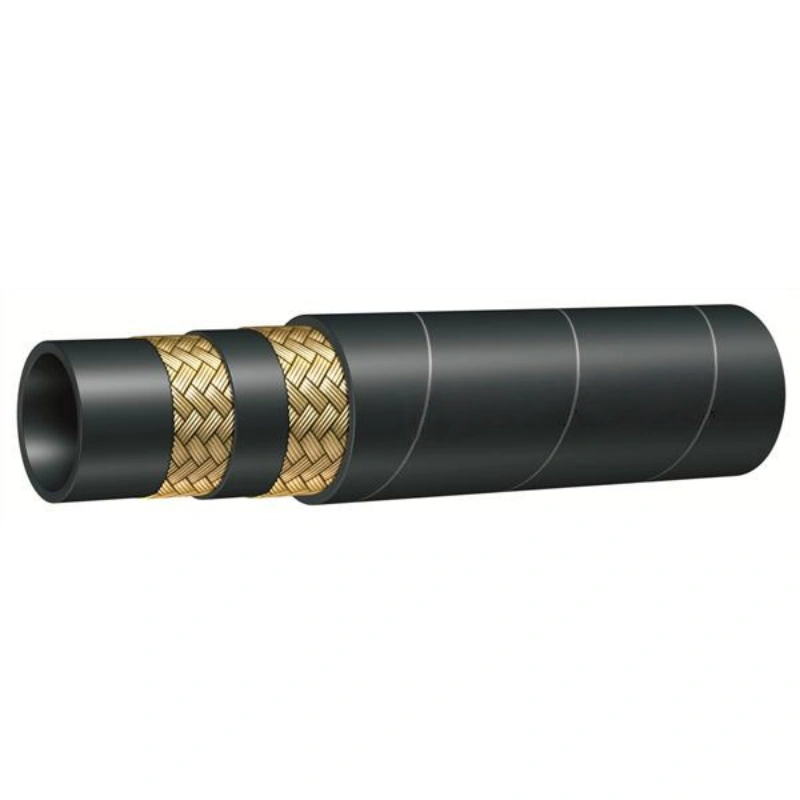
Industry professionals see three crucial facts shaping the hydraulic hose market in 2026. First, global demand rises with infrastructure expansion and increased mechanization, pushing the market toward US$2.1 billion and a 4.9% CAGR.
Second, volatility in raw material prices and compliance with regional safety standards challenge manufacturers. Third, certified products like Alienfrac’s Industrial Hydraulic Hose help stakeholders meet quality and reliability requirements in a competitive environment.
Key Takeaways
- The hydraulic hose market is set to grow to US$2.1 billion by 2026, driven by increased demand in construction and agriculture.
- Innovation in materials and technology enhances hose performance, making them safer and more efficient for heavy machinery.
- Certified products, like those from Alienfrac, ensure reliability and meet safety standards, building trust with customers.
- Manufacturers face challenges from rising material costs and strict regulations, making compliance essential for success.
- Investing in innovation and certification can give companies a competitive edge in the evolving hydraulic hose market.
Growth Drivers in the Hydraulic Hose Market
Infrastructure and Construction Demand

The hydraulic hose market continues to expand due to large-scale infrastructure projects and industrial expansion. Heavy machinery, such as excavators and loaders, relies on hydraulic systems for essential operations. The rising adoption of hydraulic systems in construction and mining equipment drives demand.
Government investments in infrastructure stimulus packages increase the deployment of heavy machinery. Construction and agriculture machinery segments are projected to hold a significant market share by 2026.
Increased mechanization in agriculture, with advanced equipment like tractors and harvesters, further boosts adoption. The construction industry rapidly adopts hydraulic excavators and cranes, which depend on durable hoses for reliable performance.
- The construction machinery sector maintains dominance in the hydraulic hose market.
- Large-scale projects in Asia and the Middle East fuel expansion.
- The agriculture and construction machinery segment is expected to reach 41.1% market share by 2026.
Material Innovation and Technology
Advancements in material science and technology play a key role in improving efficiency and performance. Manufacturers introduce improved hose end fittings and couplings for secure connections. Quick-release and fail-safe locking mechanisms enhance safety. Rigorous compliance testing ensures reliability.
Cut-resistant and flame-retardant hose cover materials increase durability. Specialized polymer sleeves and embedded metal mesh layers protect hoses in harsh environments. Custom hoses offer compatibility with emerging hydraulic fluids, such as bio-hydraulic fluids and synthetic esters.
Hoses fabricated from hygienic, non-toxic, or sterile materials serve specialized industries. These innovations support the adoption of hydraulic systems across diverse sectors.
- Advancements in material science drive innovation and efficiency.
- Smart monitoring systems improve performance and safety.
- Custom hoses meet the needs of new hydraulic fluids.
Role of Brands Like Alienfrac
Brands like Alienfrac shape industry standards through certified products and ongoing innovation. Alienfrac’s Industrial Hydraulic Hose products feature strong abrasion resistance, acid and alkali resistance, and fatigue resistance.
The company develops hoses in accordance with international standards, such as API 7K and API 16C. Pressure resistance capabilities reach up to 15,000 PSI, supporting critical operations in oil and gas fields.
Alienfrac invests in world-class production and testing equipment, ensuring consistent quality and mass production. Certified brands build customer trust by meeting safety and performance requirements. Product certifications like ISO, SAE, and DIN influence purchasing decisions and increase market share.
Certified brands like Alienfrac guarantee safety, reliability, and efficiency in hydraulic hose adoption.
| Performance Requirement | Description |
|---|---|
| Wear Resistance | High wear-resistant materials withstand abrasive media. |
| Chemical Corrosion Resistance | Materials resist acidic or alkaline fracturing fluids. |
| High Temperature Adaptability | Materials maintain stability in wide temperature ranges. |
| Lightweight Design | High-strength steel wire reduces weight while maintaining pressure capacity. |
| Industry Standards | API 7K certification ensures safety and reliability. |
Brands that prioritize innovation, efficiency, and certification become key growth factors in the hydraulic hose market.
Challenges in the Global Hydraulic Hoses and Fittings Market
Supply Chain and Material Costs
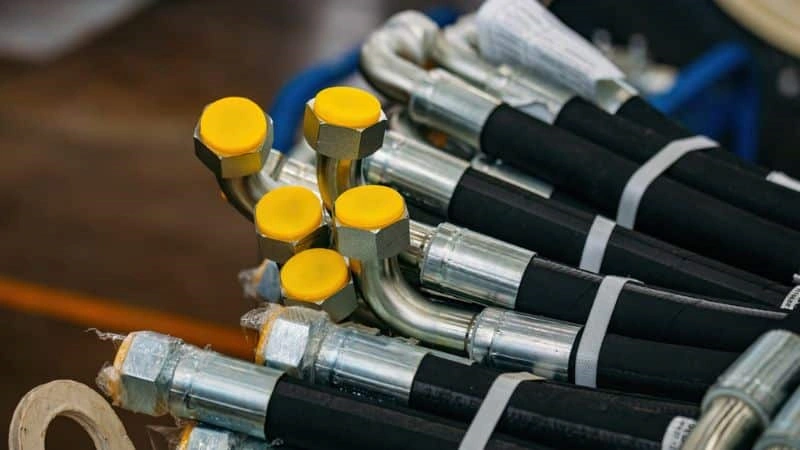
The global hydraulic hoses and fittings market faces several challenges related to supply chain disruptions and rising material costs. Manufacturers experience shortages of essential raw materials like steel and brass, which leads to longer lead times.
Transportation bottlenecks, such as port congestion and trucking shortages, complicate production schedules. Increased tariffs and regulatory hurdles affect the pricing and availability of imported materials.
Fluctuations in the price of synthetic rubber, driven by unstable crude oil and natural gas costs, add to the uncertainty. In January 2026, the price of synthetic rubber in China reached $2,267 per ton, with some types rising by 15%.
Since rubber makes up over half of the raw material for hydraulic hoses, these changes directly impact production costs and profit margins. Geopolitical events and natural disasters can also cause interruptions, resulting in shortages and delays.
These challenges make it difficult for manufacturers to maintain efficiency and consistent performance.
- Material shortages and price volatility
- Transportation and logistics issues
- Tariffs and regulatory barriers
Regulatory and Environmental Pressures
Manufacturers in the global hydraulic hoses and fittings market must comply with stringent environmental regulations. The European Union’s REACH and RoHS directives limit the use of hazardous substances in hydraulic hose production.
These rules help reduce environmental risks, such as leakage and contamination, and improve safety for users. Companies like Alienfrac address these challenges by obtaining certifications that prove compliance with international standards. Certified hoses ensure reliable performance and support the adoption of safer systems.
Meeting these regulations requires ongoing investment in technology and quality control, but it also builds trust with customers who value safety and efficiency.
Note: Compliance with stringent environmental regulations is essential for market access and long-term adoption.
Competition and Market Entry Barriers
The global hydraulic hoses and fittings market remains highly competitive. Major players like Parker, Manuli, and Gates dominate, making it hard for new companies to gain market share. High capital requirements, technical expertise, and regulatory hurdles create significant barriers.
The table below summarizes the main competitive forces:
| Competitive Force/Barrier | Description |
|---|---|
| Threat of New Entrants | Moderate; high capital costs and technical expertise create barriers. |
| Threat of Substitutes | Low; alternative fluid transfer systems are less efficient. |
| Buyer Power | Moderate; large firms negotiate pricing, but specialized hoses limit leverage. |
| Supplier Power | Low; raw materials are widely available, reducing supplier influence. |
| Competitive Rivalry | High; key players differentiate through durability and innovations. |
| Market Entry Barriers | High capital requirements, regulatory hurdles, and established competitor advantages. |
Despite these challenges, growing demand in construction and agriculture offers opportunities for innovation. Companies that focus on certified products, safety, and performance can succeed in this dynamic market.
2026 Market Outlook and Opportunities
Market Size and Growth Rate
The hydraulic hose market will reach new heights by 2026. Analysts project the market to hit US$2.1 billion, driven by a compound annual growth rate of 4.9%. This steady rise reflects strong adoption of hydraulic systems in construction, agriculture, and industrial sectors.
Market conditions remain favorable in regions with ongoing infrastructure projects and industrialization. Asia-Pacific leads the expansion, with China and India investing in new facilities and transportation networks.
North America and Europe also show robust demand, especially in the United States, Germany, and the United Kingdom. Latin America and the Middle East & Africa present opportunities as their economies diversify and invest in oil, gas, and construction.
| Region | Expected Growth Reason |
|---|---|
| North America | Strong industrial and agricultural sectors in the U.S. |
| Europe | Demand driven by Germany and the U.K. |
| Asia-Pacific | Rapid industrialization and infrastructure investments in China and India |
| Latin America | Potential growth in Brazil and Mexico |
| Middle East & Africa | Emerging markets in Saudi Arabia and UAE supported by construction and oil sectors |
These regions will see the highest adoption rates for hydraulic systems, fueling the overall market.
Trends in Product Certification and Quality
Product certification and quality assurance have become central to the hydraulic hose market. Manufacturers now focus on rigorous testing, documentation, and compliance with international standards. These trends ensure that hoses meet safety and reliability requirements for critical applications.
Companies use advanced inspection technology and precise measuring instruments to maintain high standards. They also test raw materials before production to prevent defects.
| Aspect | Description |
|---|---|
| Rigorous Testing | Hoses undergo extensive testing, including leak and burst tests to ensure safety and reliability. |
| Documentation | All inspection results are documented, ensuring traceability and compliance with industry standards. |
| Compliance with Standards | Adherence to standards like SAE J517 and ISO 9001 is crucial for quality assurance in production. |
| Advanced Inspection Tech | Use of precise measuring instruments and calibrated equipment enhances the quality control process. |
| Quality of Raw Materials | Incoming materials are tested for specifications to prevent defects in the final product. |
Manufacturers that achieve certifications such as ISO 9001 and API gain a competitive edge. For example, FlexIT USA Inc saw a major boost in sales and investments after earning ISO 9001:2015 certification.
Eaton, a global leader, uses certifications to build customer confidence and expand into sectors like wind power and mining machinery. These trends show that certification is not just a requirement but a driver of market success.
Alienfrac stands out in this area. The company’s Industrial Hydraulic Hose products meet strict standards, including API, ISO, and AMECA. Alienfrac’s commitment to quality and innovation supports the adoption of hydraulic systems in demanding environments.
Their certified hoses help customers meet regulatory requirements and ensure safe operations.
Strategic Opportunities for Alienfrac

Emerging trends and future outlook reveal several strategic opportunities for Alienfrac and other stakeholders. The adoption of smart technologies, such as IoT and real-time monitoring, allows manufacturers to offer predictive maintenance and early fault detection.
These systems reduce downtime and improve safety. Companies can also develop new business models based on service and analytics, creating value beyond the product itself.
Innovation in materials, such as bio-based and recyclable hoses, opens doors to environmentally conscious market segments. Compliance with global regulations enables access to premium markets and reduces environmental liabilities.
Customization and modular components allow manufacturers to serve niche and high-growth segments, such as aerospace, defense, and renewable energy. Collaboration with end-users leads to specialized solutions and long-term contracts.
Alienfrac can leverage its strengths in certification, quality, and innovation to capture these opportunities. The company’s focus on advanced manufacturing and tailored solutions positions it well for future market conditions.
By embracing new trends and technologies, Alienfrac can strengthen its competitive position and drive further adoption of its products.
Tip: Companies that invest in innovation, certification, and customer-focused solutions will lead the hydraulic hose market in 2026.
Conclusion
- Technological shifts, regulatory tailwinds, and demand transformation will shape the hydraulic hose market in 2026.
- Brands that invest in innovation, certification, and strategic positioning, such as Alienfrac, will lead in safety and efficiency.
- Stakeholders should focus on ongoing research and development, anticipate regulatory changes, and prioritize an emphasis on safety and efficiency.
| Key Focus | Benefit |
|---|---|
| Innovation | Improved safety, efficiency |
| Certification | Market access, reliability |
| Strategic Positioning | Competitive advantage |
Understanding these trends helps industry professionals respond to market changes and seize new opportunities.
FAQ
What drives the hydraulic hose market growth in 2026?
Global infrastructure projects and increased use of machinery in construction and agriculture drive market growth. Companies invest in advanced materials and certified products to meet rising demand.
Why do certifications matter for hydraulic hoses?
Certifications ensure hoses meet international safety and quality standards. They help users trust the product’s reliability and support compliance with regulations.
How does Alienfrac support industry needs?
Alienfrac offers certified Industrial Hydraulic Hoses with high durability and pressure resistance. The company invests in innovation and quality control to meet the needs of demanding industries.
What should buyers consider when selecting hydraulic hoses?
Buyers should check pressure ratings, temperature tolerance, material compatibility, and certifications. They should also consider the manufacturer’s reputation for quality and innovation.