
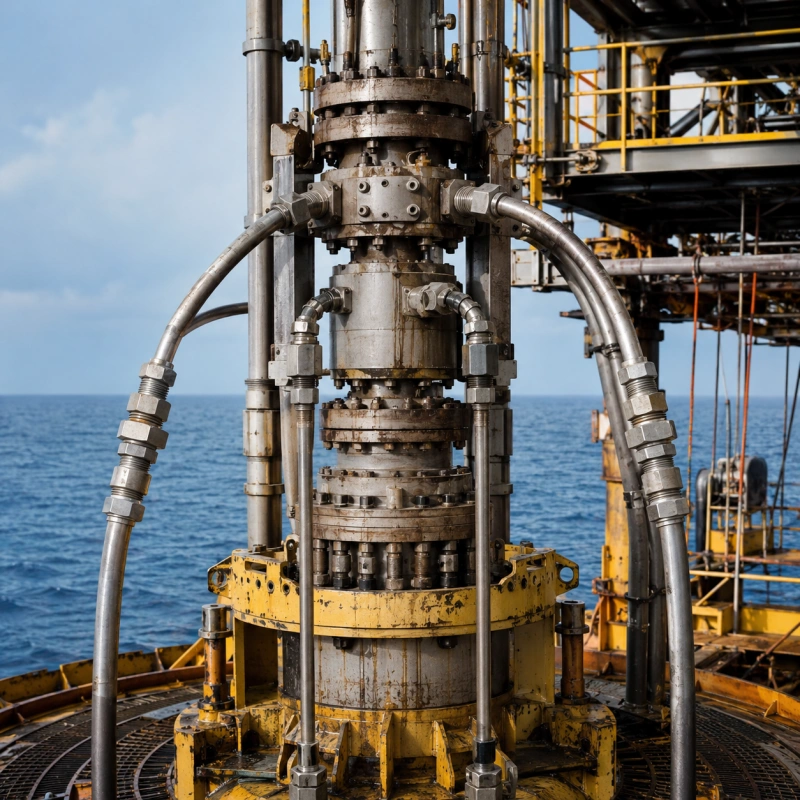
Choke and kill lines play a vital role in marine drilling riser systems. You rely on these high-pressure lines to manage fluid flow and control well pressure during offshore drilling. Operators face challenges such as vessel movement, corrosion, and frequent inspection needs.
The following table shows how choke and kill lines contribute to safety during demanding operations:
| Component | Function | Safety Contribution |
|---|---|---|
| Choke and Kill Lines | Provide high-pressure systems for fluid flow management | Help prevent blowouts by controlling well pressure effectively |
| Flexible Design | Allows movement of the Flex Joint without impairing flow capabilities | Ensures operational flexibility while maintaining safety during drilling operations |
| Multiple Flow Paths | Direct fluid flow in normal and hazardous operations | Minimizes trapped stack gas and enhances well control during emergencies |
Alienfrac delivers high-quality Choke and Kill Hoses engineered for reliability in tough oilfield environments.
Key Takeaways
- Choke and kill lines are essential for controlling well pressure and managing fluid flow during offshore drilling, helping to prevent blowouts.
- Regular inspection and maintenance of choke and kill lines are crucial for safety and reliability, ensuring that equipment operates effectively in harsh conditions.
- Choosing high-quality hoses, like those from Alienfrac, enhances durability and performance, providing resistance to oil, chemicals, and extreme temperatures.
- Understanding the integration of choke and kill lines with marine riser systems helps operators manage challenges like vessel movement and corrosion effectively.
- Following industry regulations and best practices for well control and safety ensures safe offshore drilling operations and protects personnel and equipment.
Choke and Kill Lines in Marine Drilling Riser Systems
Core Functions and Importance
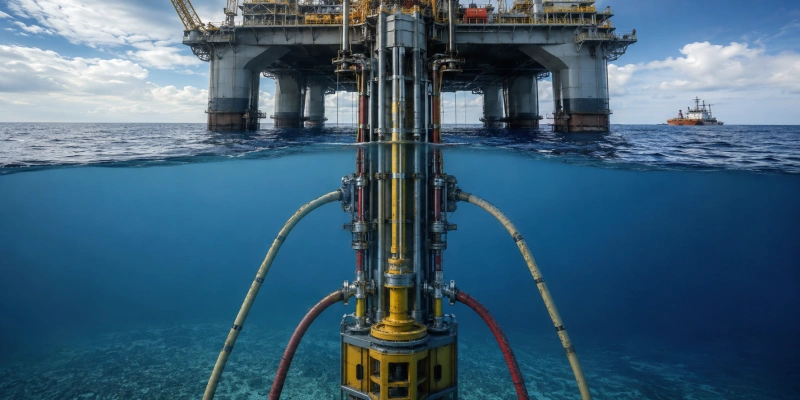
You depend on marine drilling riser systems to connect the wellbore from the subsea BOP to the surface. These systems form the backbone of offshore drilling operations. The drilling riser working principle centers on maintaining a safe and controlled pathway for fluids between the seabed and the rig.
Integral choke and kill lines play a critical role in this process. You use these lines to manage wellbore pressures, circulate out kicks, and inject fluids directly into the wellbore when needed.
- The riser connects the subsea blowout preventer (BOP) stack to the rig’s well control system.
- High-pressure choke and kill lines provide communication between the BOP stack and the choke manifold on the vessel.
- You can control wellbore pressures and maintain safe drilling operations, even during abnormal pressure events.
These features ensure that you can respond quickly to changes in well conditions. You keep your team and equipment safe by preventing uncontrolled releases of formation fluids. The marine drilling riser also supports drilling riser stress and tension indicators, which help you monitor the system’s integrity during operations.
Integration with Riser Systems
You see that the marine riser system includes control lines such as kill and choke lines. These lines travel from the drill manifold to the BOP and wellhead through separate lines installed on the outside of the riser. This arrangement is essential for the operation and control of the subsea field.
Kill and choke lines run from outlets on the subsea BOP to the rig floor choke manifold using external piping on the marine riser. You attach these lines to the main riser section and run them simultaneously with the marine riser system. Flexible hoses link the kill and choke lines on the riser to hard piping on the rig.
This setup accommodates rig movement and ensures reliable drilling riser connections.
Choke and kill lines are routed to flow ports below each preventer using hard piping. The lines remain flexible, allowing movement of the Flex Joint without impairing flow capabilities.
You benefit from durable, high-pressure systems that direct fluid flow in both normal drilling operations and hazardous well control operations. The system also provides multiple flow paths for testing equipment and minimizes trapped stack gas.
You rely on these features for efficient running and retrieving the BOP assembly and for maintaining the drilling riser working principle integrity.
Note: Integrating choke and kill lines with marine drilling riser systems presents several challenges. You must address water ingress and corrosion due to continuous seawater exposure. Complex maintenance procedures require specialized personnel and can lead to rig downtime.
Seamless integration with existing rig infrastructure demands careful engineering analysis and planning.
| Challenge | Description |
|---|---|
| Water Ingress and Corrosion | Continuous exposure to seawater increases the risk of equipment degradation. |
| Complex Maintenance Procedures | Retrieving and replacing IRJ components requires extensive rig downtime and specialized personnel. |
| Integration with Existing Infrastructure | Ensuring seamless communication between the IRJ and the surface control system demands meticulous planning and execution. |
Well Control and Safety
You rely on choke and kill lines as integral components of blowout prevention equipment systems. These lines confine well fluids to the wellbore, provide ways to add fluid, and allow controlled removal of fluids. You manage pressure well and prevent blowouts, which enhances safety during offshore drilling operations.
Regulatory standards, such as those from OSHA and IADC, guide your use of these systems. You follow best practices for worker safety and well control protocols.
- The BOP system must include a choke manifold suitable for anticipated surface pressures and well control methods.
- Choke manifold components must have a rated working pressure at least equal to that of the ram BOPs.
- Separate side outlets for kill and choke lines must be installed on the BOP stack.
Regulations require you to equip choke and kill lines with two full-bore, full-opening valves, one of which must be remote-controlled. This ensures you can manage pressure and maintain well integrity during drilling operations. You also monitor drilling riser stress and tension indicators to detect any issues early.
By following these guidelines, you keep your offshore operations safe and efficient.
Design and Features of Alienfrac Choke and Kill Hose

Construction and Materials
When you select a choke and kill hose for marine riser systems, you need to focus on the materials and construction. Alienfrac uses advanced materials that meet or exceed industry standards for high-pressure oilfield applications. The hose features a multi-layer structure designed for durability and safety.
| Layer | Material Used | Function |
|---|---|---|
| Inner layer | UPE, HNBR, PTFE | Provides oil and corrosion resistance, ensuring safe fluid transport. |
| Reinforcing layer | 2–6 layers of steel wire | Increases pressure resistance and tensile strength. |
| Outer rubber layer | High-temp synthetic rubber | Shields the hose from flames and high temperatures. |
| Outer protective layer | Stainless steel armor | Adds wear and fire resistance for harsh offshore environments. |
You benefit from a hose that resists oil, chemicals, and extreme temperatures. The stainless steel armor and synthetic rubber cover protect the hose from abrasion, fire, and mechanical damage. This robust construction supports the design of the system, ensuring reliable performance in demanding offshore conditions.
Pressure Ratings and Reinforcement
Alienfrac choke and kill hoses deliver high performance under extreme pressure. You can choose hoses rated for 5,000 psi, 10,000 psi, or 15,000 psi, which match the requirements of most offshore drilling projects. The hose structure includes multiple layers of high-strength steel wire or cable reinforcement.
These reinforcements prevent rupture or deformation, even during sudden pressure spikes.
| Product Type | Pressure Rating (PSI) |
|---|---|
| Alienfrac Choke and Kill Hose | Up to 15,000 |
| API-16C Compliant | Meets API standards |
High-strength steel cables, often zinc or brass-coated, provide exceptional load-bearing capacity and corrosion resistance. The hose also includes a polymer lining, textile plies, and a UV-resistant elastomeric cover. These features ensure the hose maintains integrity and flexibility during vessel movement and harsh weather.
Product Advantages and Certifications
You gain several advantages when you use Alienfrac choke and kill hoses. The advanced construction offers:
- Superior resistance to oil, chemicals, and fire
- High-pressure handling for safe well control
- Flexible design for easy integration with marine riser systems
- Durable outer armor for long service life
Alienfrac hoses meet major industry certifications, including API, DNV MED, CCS, and ABS. These certifications confirm that the hoses comply with strict safety and quality standards. You can trust Alienfrac to deliver hoses that support safe and efficient offshore drilling operations.
Operational Challenges Offshore
Vessel Movement and Flexibility
You operate a drilling rig in offshore environments where vessel movement creates unique challenges. Waves, wind, and currents cause the rig to shift constantly. These movements place dynamic loads on choke and kill lines.
You must ensure that hoses and connections remain flexible to absorb these loads without compromising fluid flow. Flexible choke and kill hoses from Alienfrac adapt to the motion of the rig, maintaining reliable performance. You benefit from hoses that allow the riser system to move freely while keeping well control intact.
Tip: Always check hose flexibility during pre-operation inspections. This helps you prevent unexpected failures caused by excessive loads.
Corrosion and Fatigue Risks
Offshore drilling exposes your equipment to harsh conditions. Saltwater accelerates corrosion, which weakens metal components. You face fatigue risks as repeated loads stress the hoses and fittings. Alienfrac designs choke and kill hoses with corrosion-resistant materials and robust reinforcement.
You protect your drilling rig by choosing hoses that withstand offshore environments. Regular inspection helps you detect early signs of corrosion or fatigue. You replace worn components before they threaten safety.
| Risk Factor | Impact on Equipment | Prevention Strategy |
|---|---|---|
| Corrosion | Weakens steel and fittings | Use corrosion-resistant materials |
| Fatigue | Causes cracks and leaks | Monitor loads and replace hoses |
Buoyancy and Structural Adaptations
You must address buoyancy when installing choke and kill lines on a drilling rig offshore. The riser system needs to stay balanced and avoid excessive loads from water pressure. Alienfrac hoses feature structural adaptations that help maintain buoyancy and stability.
You use buoyancy modules and protective armor to prevent sagging or damage. These adaptations ensure that hoses remain functional even when exposed to changing loads and water depths.
Note: Proper buoyancy management reduces stress on the riser system and extends hose service life.
Inspection, Maintenance, and Safety
Monitoring and Instrumentation
You need to monitor choke and kill lines closely during offshore drilling operations. Instrumentation such as pressure gauges, flow meters, and temperature sensors helps you track real-time conditions. These tools alert you to abnormal pressure spikes or drops, which can signal potential well control issues.
You perform regular inspections of these instruments to ensure they function correctly. Alienfrac hoses support advanced monitoring systems, allowing you to detect leaks or wear early. You rely on accurate data to make quick decisions and maintain safe operations.
Tip: Schedule routine inspection of all monitoring devices. Early detection prevents costly downtime and improves offshore safety.
Maintenance Best Practices
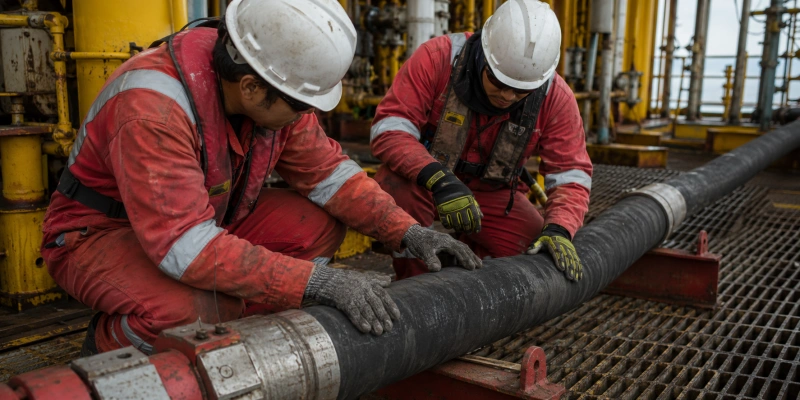
You follow strict maintenance routines to keep choke and kill lines reliable. Cleaning, lubricating, and replacing worn parts form the foundation of your maintenance strategy. You document every maintenance activity to track hose performance and identify trends.
Alienfrac provides technical support and guidance, helping you implement best practices for offshore environments. You use certified replacement parts to maintain system integrity. Regular maintenance reduces the risk of equipment failure and extends hose service life.
- Inspect hoses for signs of abrasion or corrosion.
- Replace damaged fittings immediately.
- Test pressure ratings after each maintenance cycle.
Alienfrac’s commitment to quality ensures you receive durable products and expert support for all maintenance needs.
Emergency Systems and Valves
You depend on emergency systems and valves to respond quickly during well control incidents offshore. Choke and kill manifolds include valves, pressure gauges, and flow-control devices that let you manage well pressure efficiently. These systems reduce the risk of blowouts and protect personnel and equipment.
| Requirement | Description |
|---|---|
| Deadman System | Automatically shuts in the wellbore during loss of hydraulic supply and signal transmission in subsea control pods. |
| Emergency Disconnect Sequence (EDS) | Manually activated system to shut in the wellbore and disconnect the LMRP in emergencies. |
| Autoshear/Deadman Functions | Closes at least two shear rams in sequence and performs shearing and sealing under specified conditions. |
| Choke and Kill Line Outlets | At least two side outlets for each line, with remote-controlled valves that hold pressure from both directions. |
| Pressure Testing | Choke and kill side outlet valves must be pressure tested according to specified conditions. |
You test emergency valves regularly to confirm they operate as intended. Alienfrac hoses integrate seamlessly with these safety systems, supporting rapid response and reliable performance in offshore drilling.
Conclusion
You depend on choke and kill lines to maintain safety and control in marine riser systems. Regular inspection and proactive maintenance maximize uptime and reduce risks.
- You inspect and repair hydraulic, choke, and kill lines to ensure riser operability.
- You perform thorough maintenance for BOPs and control systems.
Alienfrac’s Choke and Kill Hose delivers reliable performance for demanding offshore operations. You should prioritize quality and certified products.
| Standard | Description |
|---|---|
| API Standard 53 | Sets requirements for installation, testing, and maintenance of BOPs, choke lines, and control systems. |
FAQ
What is the main purpose of choke and kill lines in marine riser systems?
You use choke and kill lines to control well pressure and manage fluid flow during offshore drilling. These lines help prevent blowouts and support safe drilling operations.
How do you select the right pressure rating for a choke and kill hose?
You match the hose pressure rating to your drilling project requirements. Common ratings include 5,000 psi, 10,000 psi, and 15,000 psi. Always check your well control system specifications.
What certifications should you look for in choke and kill hoses?
You should choose hoses certified by API, DNV MED, CCS, and ABS. These certifications confirm compliance with industry safety and quality standards.
How often should you inspect choke and kill hoses offshore?
You inspect hoses before each operation and after any pressure event. Regular checks help you detect wear, corrosion, or leaks early. Schedule routine maintenance for best results.