
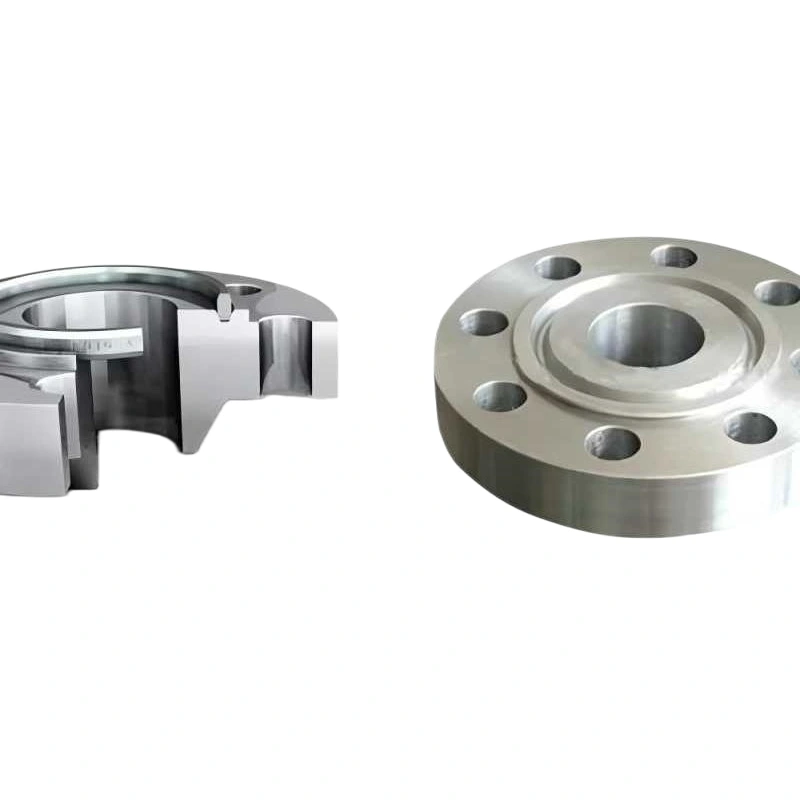
API 6A and ASME flanges are not simply two pressure ratings for the same type of connection. API Specification 6A covers wellhead and tree equipment interfaces, while ASME B16.5 and B16.47 standardize pipe flanges and flanged fittings within their specified size ranges. Determine the governing standard based on the equipment and piping design basis before comparing dimensions, ratings, or gaskets.
Do not mate API and ASME components simply because their nominal sizes or pressure designations appear similar. Verify the standard, connection type, pressure rating or class designation, material, temperature, sealing geometry, bolting, and all critical dimensions shown on the mating drawings.
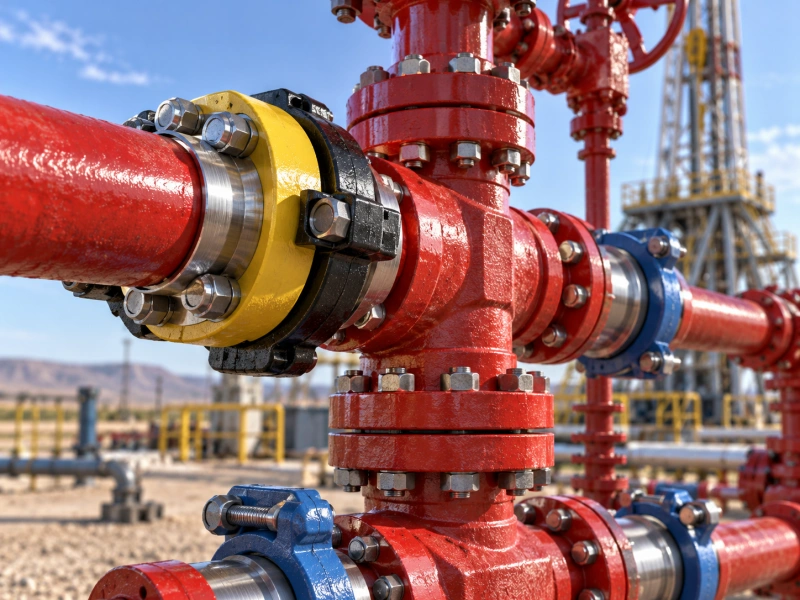
Scope of API 6A and ASME Standards
| Standard | Primary Scope | Nominal Size Scope | Selection Basis |
| API Specification 6A | Wellhead and tree equipment, including specified end and outlet connections | Use the connection sizes and rated working pressures defined by the applicable API edition | Equipment specification, connection designation and mating drawing |
| ASME B16.5 | Pipe flanges and flanged fittings | NPS 1/2 through NPS 24 | Piping class, material group, design pressure and temperature |
| ASME B16.47 | Large-diameter steel flanges | NPS 26 through NPS 60 | Piping specification, flange series, material and design conditions |
For projects that use multiple standards systems, start with a controlled list of flange standards for global projects. Do not use a standard designation as a general quality label; reference it only when its scope and dimensional requirements apply.
API Flange vs ASME Flange Comparison
| Comparison Point | API 6A Flange Connection | ASME B16.5 or B16.47 Flange |
| Governing equipment | Wellhead, tree and related pressure-control equipment covered by the equipment specification | Piping and flanged fittings governed by the piping design basis |
| Designation system | Bore, rated working pressure, 6B or 6BX connection and flange form | Approved flange datasheet, piping specification, and mating drawing |
| Rating method | API rated working pressure within the complete product specification | Pressure-temperature rating based on class, material group and temperature |
| Dimensional check | Applicable API connection table plus approved mating-equipment drawing | Applicable ASME dimension table plus piping and equipment drawings |
| Sealing description | Specified API ring-gasket family, ring number, and groove | RF, FF or RTJ configuration with the gasket specified for the joint |
| Material and quality inputs | Pressure-temperature rating based on class, material group, and temperature | ASTM material designation, piping class, design temperature and project quality requirements |
| Procurement release | Approved connection drawing and equipment datasheet | Approved flange datasheet, piping specification and mating drawing |
The table clarifies the selection boundaries. It does not establish equivalent grades or confirm that any two listed components can be directly connected.
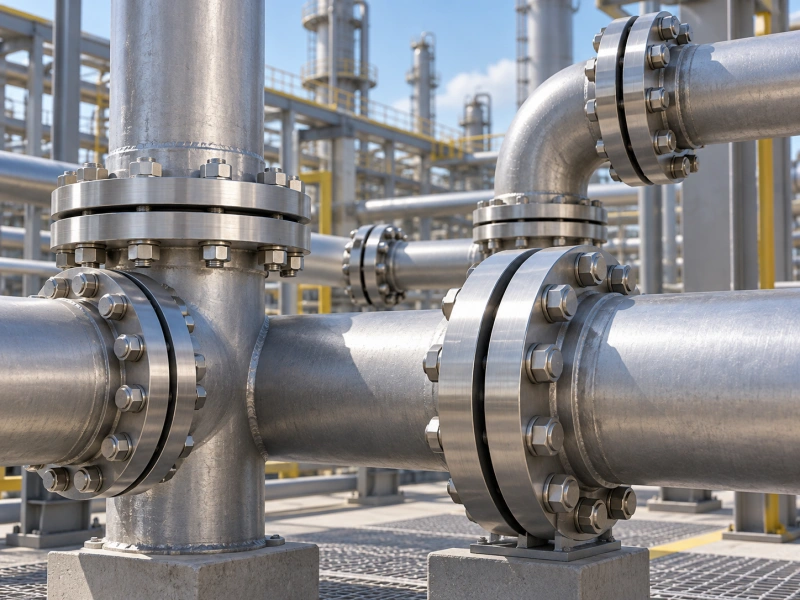
Rated Working Pressure and ASME Pressure Class
An API rated working pressure is not equivalent to an ASME pressure class. Likewise, ASME Classes 150, 300, 600, 900, 1500, and 2500 do not correspond directly to pressures in psi. The allowable pressure for an ASME flange depends on the applicable standard table, material group, and temperature.
Do not create a conversion-table entry such as “ASME Class 600 equals API 5,000 psi.” Such a comparison ignores differences in equipment scope, dimensions, sealing interfaces, and rating methods. Review API 6A rated working pressure separately from ASME flange pressure-temperature classes, then apply the governing project specification.
Dimensions and Interchangeability
API and ASME flanges are generally not interchangeable as standard components. Matching nominal bore sizes do not confirm that the outside diameter, bolt circle, number of bolt holes, hole diameter, flange thickness, hub geometry, flange face, or ring groove are compatible. The mating-equipment drawing must be used to verify the complete interface.
For an API connection, identify the bore, rated working pressure, 6B or 6BX type, ring gasket, and flange form before using a dimensional table. The API 6A flange size selection guide provides the required table fields and drawing-review sequence.
When an Engineered Transition Is Required
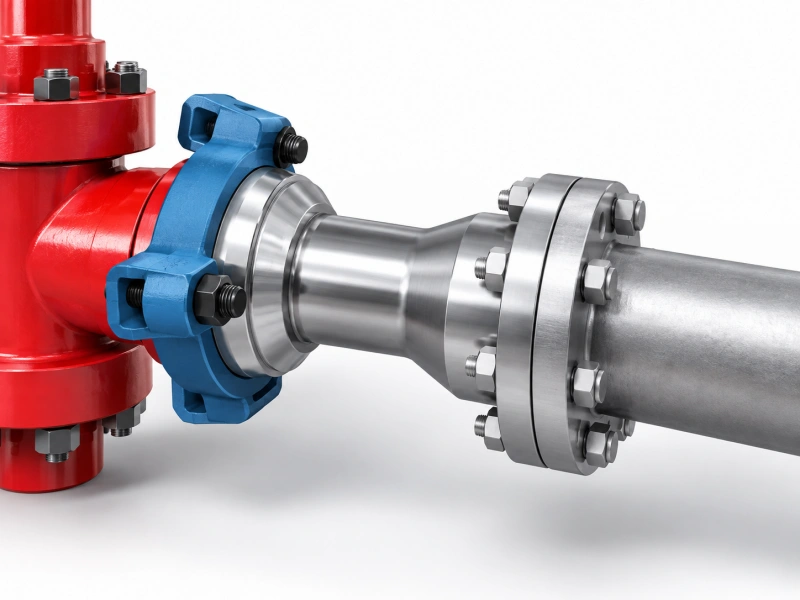
If a wellhead or tree connection must connect to ASME piping, specify a purpose-designed adapter or transition component. Each end must be defined independently, and the complete assembly must be checked for pressure, temperature, material, loads, sealing, bolting, dimensions, and applicable project requirements. Do not improvise a transition by redrilling, substituting a gasket, or treating similar bolt patterns as proof of compatibility.
API 6B and 6BX Compared with ASME RTJ
The phrase “ring-type joint” does not refer to a universal interface. API 6B and 6BX connections use API-specified ring-gasket and groove details. ASME RTJ flanges use the geometry and gasket designation required by the applicable ASME standard and piping specification. A metal ring that appears to fit is not evidence of compatibility.
Record the standard, ring-gasket family, ring number, groove geometry, and mating flange designation for each side. For the API connection itself, review the difference between API 6B and 6BX flanges. Final compatibility requires an engineer-approved drawing and joint specification.
Materials and Quality Requirements
Material terminology also differs. An ASTM grade identifies a material specification, while an API 6A purchase description may also require a material class, temperature class, PSL, PR when applicable, and service-specific controls. These requirements should not be reduced to a blanket statement that one standards family always uses stronger materials.
For API 6A procurement, specify the material class for an API 6A flange together with the temperature and service requirements. For ASME procurement, use the approved piping material specification, applicable material group, and design temperature. In both cases, define the traceability, inspection, NDE, testing, and documentation requirements in the purchase order.
How to Select API or ASME Flanges
- Identify the governing system. Determine whether the interface falls under API 6A wellhead or tree equipment, ASME piping, or an engineered transition between the two systems.
- Confirm the governing document and edition. Record API 6A, ASME B16.5, or ASME B16.47, together with the project specification and any purchaser-specific requirements.
- Define design conditions. Provide the design pressure, design temperature, fluid composition, corrosion-related or sour-service conditions, and external loads when relevant.
- Specify the full connection. For API, include the bore, rated working pressure, 6B or 6BX connection type, flange form, and ring gasket. For ASME, include the NPS, class, flange type, facing, and B16.47 series when applicable.
- Confirm material and quality levels. State the applicable material designation, heat treatment, impact requirements, PSL, and any other quality requirements.
- Compare mating drawings. Check the bore, OD, bolt circle, bolt-hole quantity and diameter, thickness, face or groove, gasket, and available assembly space.
- Approve documentation before release. Resolve any deviations identified in the supplier drawing and inspection plan before manufacturing or installation.
Procurement Examples Without False Equivalence
API 6A Wellhead Connection Request
A complete RFQ should identify the equipment tag, API 6A edition, bore, rated working pressure, 6B or 6BX connection, flange form, ring number, material class, temperature class, PSL, PR when applicable, sour-service requirements, quantity, and required document package. Attach the mating-equipment drawing.
ASME Piping Flange Request
A complete RFQ should identify ASME B16.5 or B16.47, NPS, class, flange type, facing, B16.47 series when applicable, bore or pipe schedule, ASTM material grade, design temperature, gasket and bolting specifications, quantity, and required inspection documents. Attach the piping class specification and mating drawing.
These examples represent separate specifications. They are not equivalent selections and should not be directly connected without an engineered transition.
Receiving and Documentation Checks
- Compare the product markings with the purchase order, approved drawing, and material certificate.
- Verify the standard, size or bore, pressure designation or class, material, and heat identification.
- Check the flange face or ring groove, bolt pattern, and critical dimensions against the approved drawing.
- Confirm that the inspection, NDE, testing, and traceability records match the supplied item.
Use the flange marking guide to identify the declared standard and traceability information. Product markings support verification but do not replace dimensional inspection or document review.
API 6A Flange Supply from AlienFrac
AlienFrac supplies API 6A flange connections for wellhead, tree, manifold, and oilfield pressure-control equipment. Available configurations are reviewed against the customer’s datasheet and mating drawing. See API 6A flange types and ratings or the broader API 6A flange connections overview.
To request a quotation, submit the governing standard, complete connection designation, design conditions, mating drawing, material and quality requirements, quantity, and required document package via Contact Us. AlienFrac will confirm which API configuration can be manufactured and return a drawing for review.
FAQ
Are API and ASME Flanges Interchangeable?
Normally, no. The standards have different scopes, rating systems, and dimensional interfaces. Use an engineer-approved transition when API equipment must connect to ASME piping.
Does an ASME Pressure Class Equal a Pressure in psi?
No. An ASME class designation does not correspond directly to a pressure in psi. Determine the pressure-temperature rating from the applicable standard table, material group, and temperature.
Can an ASME RTJ Ring Be Used in an API 6BX Connection?
Do not assume compatibility. Confirm the governing standard, ring designation, groove geometry, and approved joint drawing. Similar terminology for metal-ring joints does not establish interchangeability.
Which Standard Applies to Large-Diameter Pipe Flanges?
ASME B16.47 covers large-diameter steel flanges from NPS 26 through NPS 60 within its scope. API 6A covers a different scope—wellhead and tree equipment—and should not be selected as a substitute based on diameter alone.
What Information Is Needed for an RFQ?
Provide the governing standard and edition, complete connection designation, design pressure and temperature, service fluid, material, facing or ring gasket, mating drawing, quantity, and inspection and documentation requirements.
Reference Standards
Use the editions required by the purchase order and project specification. Official information on scope and updates is available from API Specification 6A and ASME B16.5. Controlled standard tables and approved project drawings take precedence over general web comparison charts.