
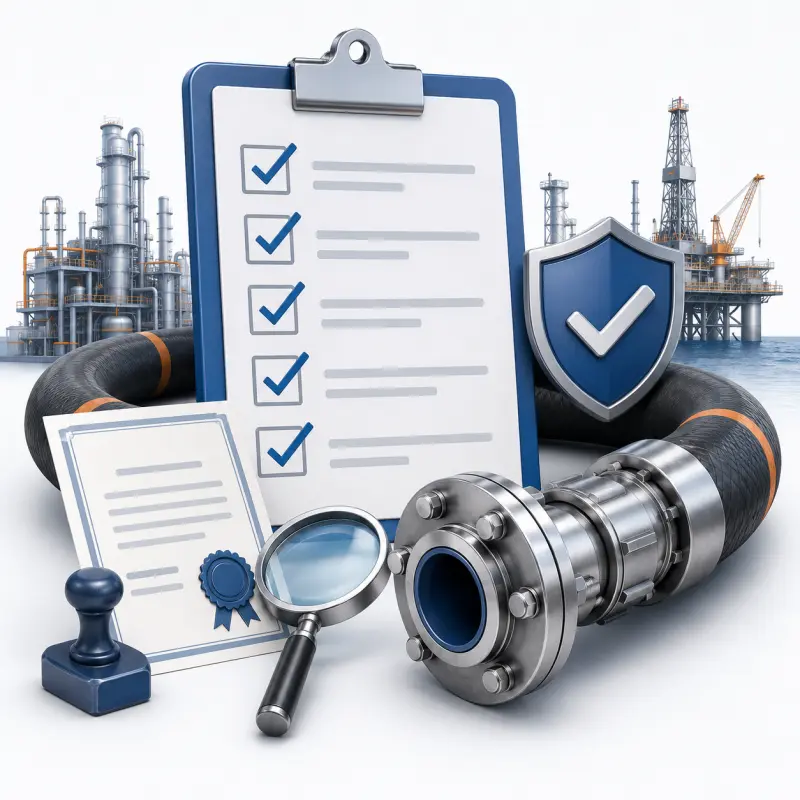
When you review an API hose certificate checklist during procurement, you protect your operation from costly risks. The api standards set strict requirements for oilfield hoses. You must check for authenticity, manufacturer credentials, and proper api markings.
Environmental regulations now influence your equipment choices, and fire resistance or H2S service capabilities often become mandatory. Alienfrac stands out as an API-certified manufacturer.
Unsafe operations are far more expensive than preventive safety measures. One failed hose assembly, one compromised valve, one ignored pressure irregularity, or one poorly maintained pipeline can shut down operations, damage equipment, harm personnel, and create major environmental consequences.
Choosing hoses that meet all api and international standards ensures safety and reliability.
Key Takeaways
- Always verify the authenticity of API hose certificates to avoid counterfeit products and ensure compliance with industry standards.
- Check the manufacturer’s credentials, such as their API license and certifications, to ensure you are sourcing from a reliable supplier.
- Inspect API markings on hoses for traceability and compliance, ensuring they match the certificate and manufacturer records.
- Confirm that the hose specifications align with your operational needs, including pressure ratings and environmental performance.
- Utilize digital tools for certificate verification to streamline your procurement process and enhance reliability.
Key API Hose Certificate Checklist Items
When you handle an api hose certificate checklist, you take the first step toward safe and compliant oilfield operations. Each item on this checklist helps you avoid costly mistakes and ensures your equipment meets industry standards. Let’s break down the essential elements you must verify.
Certificate authenticity and validity
You must confirm that every api hose certificate checklist starts with authentic and valid documentation. This protects your operation from counterfeit products and ensures you receive hoses that meet strict api requirements. The table below shows the key elements you should look for when checking authenticity and validity:
| Key Element | Description |
|---|---|
| Quality Management System | Must comply with API Spec Q1 to ensure consistent quality in manufacturing. |
| Documentation of Design Packages | Required to demonstrate compliance with design and development requirements, including all necessary background documents. |
| Maintenance of Product Specifications | Ensures that products conform to applicable standards and specifications throughout their lifecycle. |
You should always request original certificates and verify them with the issuing authority. This step keeps your procurement process transparent and reliable.
Manufacturer credentials (Alienfrac)
You need to check the manufacturer’s credentials on your api hose certificate checklist. Alienfrac, for example, holds certifications from api and other international bodies. This proves their commitment to quality and innovation. You should look for:
- The manufacturer’s name and address
- Valid api license number
- List of relevant certifications (such as DNV MED, CCS, ABS, and api)
- Evidence of a robust quality management system
When you choose a manufacturer like Alienfrac, you gain confidence in the hose’s performance and compliance. This step reduces risk in your procurement process.
API markings and traceability
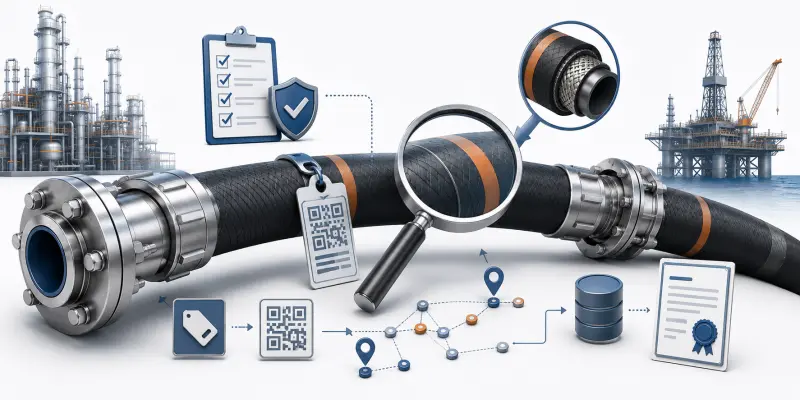
You must inspect all api markings on the hose. These markings guarantee traceability and show that the hose meets api standards. Here’s what you should find on the hose:
- Manufacturer’s name or mark
- API specification and date of manufacture
- End finish (UF or SF)
- Size designation (outer diameter)
- Mass designation (weight per unit length)
- Grade and type (steel grade)
- Impact test temperature (if required)
- Heat treatment details
- Manufacturing process (seamless or electric-welded)
- Supplementary requirements
- Hydrostatic test pressure
- Type of thread (connection type)
- Drift test information
- Serialization (for certain grades)
- Tin plating (for couplings, if applicable)
- Visual inspection mark (for specific couplings)
You should match these markings with the certificate and manufacturer’s records. This step ensures you can trace every hose back to its source, which is critical for safety and compliance.
Application compatibility
You must confirm that the hose matches your application. The wrong hose can lead to chemical degradation, leaks, or bursts under pressure. Your api hose certificate checklist should include a review of these criteria:
| Criteria | Description |
|---|---|
| Pressure Ratings | Balancing pressure capacity is essential for safe operation in oilfield applications. |
| Temperature Resistance | Affects elastomer aging, flexibility, and sealing integrity; hoses operate within specific ranges. |
| Environmental Performance | In sour-gas environments, material degradation risks must be mitigated with compliant materials. |
| Hose Size | Must align with mud pump output to ensure proper flow and efficiency. |
| End Connections | Reliability of connections is critical under high-pressure conditions. |
| Minimum Bend Radius Requirements | Ensures the hose can be maneuvered without compromising integrity. |
If you use an incompatible hose, you risk swelling, hardening, or cracking. This can cause dangerous leaks or bursts. Always match the hose’s specifications to your operational needs.
Safety clamps and testing
You must check that every hose comes with proper safety clamps and has passed all required testing. This step is vital for operational safety. The api hose certificate checklist should confirm that the hose meets the following api specifications:
| API Specification | Description | Key Features |
|---|---|---|
| API 7K | Specification for Drilling and Well Servicing Equipment | High-pressure capability, abrasion and corrosion resistance, wide temperature range |
| API 16C | Specification for Choke and Kill Systems | Extreme high pressure, fire resistance, H2S resistance |
| API 16D | Specification for Control Systems for Drilling Well Control Equipment | Hydraulic control and transmission, fire-resistant, robust construction |
You should also verify that safety clamps are installed and tested according to api standards. This ensures the hose will perform safely under extreme conditions.
Tip: Always keep a copy of your api hose certificate checklist for every procurement. This habit helps you track compliance and quickly resolve any issues.
By following each step in your api hose certificate checklist, you protect your team, your equipment, and your operation.
Why API Certification Matters in Procurement?

When you handle procurement for oilfield hoses, you need to understand why api certification is so important. This certification is not just a formality. It is a foundation for compliance, risk reduction, and safety in your operations.
Regulatory compliance
You must meet strict industry regulations in every procurement decision. Api certification proves that your hoses follow the latest standards. These standards cover design, production, and testing. When you choose hoses with api certification, you show regulators and clients that you value compliance.
Alienfrac, for example, holds api and international certifications. This demonstrates a commitment to meeting global requirements and helps you avoid penalties or delays.
Operational risk reduction
Api certification helps you reduce operational risks in several ways:
- Standardized processes under api Q1 ensure consistent production and fewer mistakes.
- Risk assessment and contingency planning allow you to spot and control risks before they become problems.
- Supplier control means only approved vendors provide materials, lowering the chance of equipment failure.
- Preventive maintenance and corrective actions address issues early, reducing downtime.
- Design validation and testing confirm that hoses meet safety and functional standards before use.
- Data-driven decisions help you plan maintenance and predict reliability, keeping your operation running smoothly.
- Api certification also builds confidence with clients and gives your company a competitive edge.
When you follow these steps, you protect your team and equipment from unexpected failures.
Safety and reliability
Api certification ensures that every hose you procure meets high safety and reliability standards. You want hoses that perform under pressure and in harsh environments. API-certified hoses go through strict testing and quality checks. This reduces the risk of leaks, bursts, or other failures.
Alienfrac’s commitment to api and international certification means you can trust their hoses for critical applications. Your focus on certified products keeps your operation safe and reliable.
API and International Standards for Oil-Resistant Hoses
API 7K, 16C, 16D overview
You need to understand the main API standards before you select any oil-resistant hose for your operation. API 7K, 16C, and 16D set the requirements for oilfield hoses used in drilling, pressure control, and hydraulic systems.
Each standard oil-resistant hose must meet strict guidelines for pressure, temperature, and safety. The table below shows the key features of each API standard:
| Standard | Key Features |
|---|---|
| API 7K | High-pressure capability (1,500 to 15,000 psi), abrasion and corrosion resistance, wide temperature range. |
| API 16C | Extreme high pressure (10,000 psi and up), fire resistance, H2S resistance, multiple service levels. |
| API 16D | Hydraulic control and transmission, fire-resistant and insulated, robust construction. |
You should always check that your premium oil-resistant hose matches the correct API standard for your application. This step ensures your fuel transfer, drilling, or control system uses a high-quality oil-resistant hose that meets industry expectations.
Other standards (ISO, SAE, EN, UL)
You will find that oil-resistant hose products must also comply with international standards for oil-resistant hoses. These standards help you compare quality and safety across regions. Here are the most common standards you should know:
- North America: SAE, UL, and API
- Europe and Asia: ISO and EN
- Mining/Offshore: Fire-resistant versions like MSHA
When you choose a standard oil-resistant hose, you ensure your equipment meets both local and global requirements. This protects your fuel systems and keeps your oilfield hoses safe in harsh environments. Always look for a premium oil-resistant hose that carries these marks of quality.
Alienfrac’s compliance and certifications
Alienfrac stands out as a leader in high-quality oil-resistant hose manufacturing. You can trust their oilfield hoses because they meet both API and international standards for oil-resistant hoses. The table below highlights Alienfrac’s certifications:
| Certification Type | Details |
|---|---|
| DNV MED | Compliance with international standards |
| CCS | Compliance with international standards |
| ABS | Compliance with international standards |
| API | Compliance with API standards |
| API 7K | Compliance with API standards for drilling hoses |
| API 16C | Compliance with API standards for pressure control hoses |
When you select a premium oil-resistant hose from Alienfrac, you get a product that passes strict tests for fuel, pressure, and durability. Their commitment to quality means every high-quality oil-resistant hose and standard oil-resistant hose you buy will perform safely in your toughest applications.
You can rely on Alienfrac for every oilfield hose, fuel transfer, and premium oil-resistant hose need.
Tip: Always verify that your oil-resistant hose supplier holds valid certifications for both API and international standards. This step protects your operation and ensures long-term reliability.
Procurement Checklist for Oil-Resistant Hoses
Reviewing certificate details
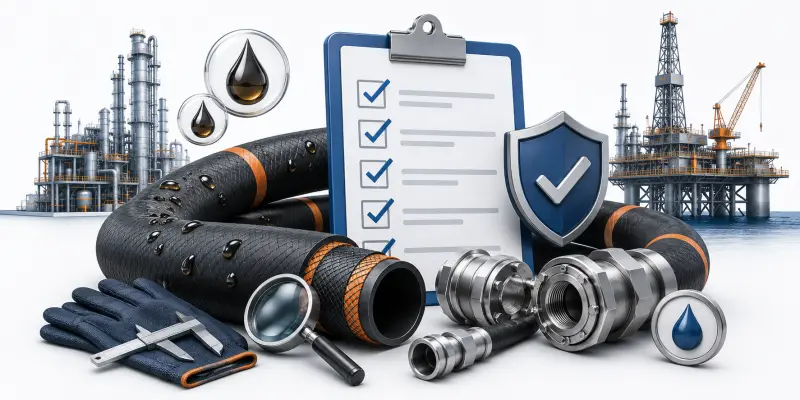
Start your procurement checklist for oil-resistant hoses by reviewing all certificate details. Check that each certificate matches the hose you receive. Look for the product name, batch number, and date of issue. Confirm that the certificate lists the correct fuel type, pressure rating, and temperature range.
This step helps you avoid mistakes in your fuel dispensing operations and ensures you use the right oil-resistant hose for your needs.
Verifying the manufacturer’s API license
You must verify the manufacturer’s api license before you accept any oil-resistant hose. Use the API Composite List to check the license status. The table below shows the steps:
| Step | Description |
|---|---|
| 1 | Access the API Composite List for real-time verification. |
| 2 | Confirm the manufacturer’s licensing status. |
| 3 | Check the authorized product scope for oil-resistant hoses. |
Alienfrac supports procurement officers by providing clear license information and documentation for every standard oil-resistant hose.
Checking API markings and traceability
Always check api markings and traceability on each oil-resistant hose. Follow these steps:
- Assign a unique identifier to each batch of raw materials.
- Track materials during production with batch codes.
- Label finished oil-resistant hose products with serial numbers.
- Clearly label packaging for shipping and delivery.
- Keep identification codes intact during installation and use.
This process ensures you can trace every standard oil-resistant hose from production to fuel dispensing.
Confirming hose compatibility
Check that each oil-resistant hose matches your fuel and fuel dispensing environment. Review the following:
- Each hose is designed for specific substances, temperatures, and pressures.
- Make sure the hose is compatible with the fuel you use.
- Confirm the hose maintains integrity at your operating temperatures.
- Check compliance with ISO and SAE standards.
- Assess safety margins and operational life.
Alienfrac tests every standard oil-resistant hose for compatibility with fuel and oilfield applications.
Assessing safety clamps and test plans
Evaluate the safety clamps and test plans for each oil-resistant hose. Use the table below:
| Criteria | Description |
|---|---|
| Pipe Outside Diameter | First screening parameter for clamp selection. |
| Chain Link Quantity | Affects load distribution and pressure uniformity. |
| Operating Condition | Consider land or offshore use. |
| Friction Condition | Surface contamination may require higher pressure. |
| Transient Load Transfer | Account for unexpected load changes during fuel dispensing. |
Alienfrac includes safety clamps and detailed test plans with every standard oil-resistant hose.
Using digital tools (e.g., CertCheck app)
Use digital tools to verify oil-resistant hose certificates. Tools like the SGS Certified Client Directory and UL Product iQ database help you confirm certificate status. Enter the certification number or company details to check validity.
These tools make your procurement process faster and more reliable, especially when handling multiple fuel dispensing operations.
Tip: Keep digital records of every oil-resistant hose certificate for easy access during audits or inspections.
Common Pitfalls in API Hose Procurement
When you manage procurement for oil-resistant hoses, you face several risks that can impact safety and performance. Understanding these common pitfalls helps you make better decisions and protect your operation.
Counterfeit certificates
Counterfeit certificates can mislead you into accepting oil-resistant hoses that do not meet industry standards. These fake documents often look real but lack proper verification. If you use a standard oil-resistant hose with a counterfeit certificate, you risk equipment failure and safety hazards.
Always verify certificates with the issuing authority and use digital tools to check authenticity. Keep a record of every oil-resistant hose certificate for future audits.
Incomplete documentation
Incomplete documentation creates confusion during procurement. Missing details about the oil-resistant hose, such as pressure ratings or fuel compatibility, can lead to costly mistakes. You might receive a standard oil-resistant hose that does not match your fuel system or operating environment.
Always review every document for accuracy. Check that each oil-resistant hose certificate includes batch numbers, test results, and installation guidelines. This step ensures you use the right oil-resistant hose for your fuel dispensing needs.
Unqualified manufacturers
Sourcing oil-resistant hoses from unqualified manufacturers increases your risk of failure. These suppliers may use poor-quality materials or skip important tests. You could face leaks, operational failures, or even catastrophic breakdowns.
In price-sensitive markets, you might feel tempted to choose a lower-cost oil-resistant hose, but this often leads to higher total costs over time.
- Products may not meet specifications, causing failures.
- Poor construction can result in leaks and increased maintenance.
- Safety and quality often take a back seat to price.
To avoid these pitfalls, follow these best practices:
- Source directly from manufacturers to avoid non-technical middlemen.
- Assess supplier capabilities by checking their R&D, production, and inspection standards.
- Install steel spring guards and bend restrictors on oil-resistant hoses exposed to heavy impacts.
- Use strategic routing to prevent hoses from draping over vibrating machinery.
- Conduct pre-operation inspections for exposed wire, blistering, or stiffness.
Tip: Careful procurement and regular inspection of every oil-resistant hose help you maintain safe and efficient fuel operations.
Conclusion
You protect your operation when you follow a detailed API hose certificate checklist for every oil-resistant hose. Alienfrac and other certified manufacturers help you meet strict safety and compliance standards. Systematic verification reduces procurement risks for oil-resistant hoses.
The table below shows how gap analysis supports this process:
| Benefit of Gap Analysis | Description |
|---|---|
| Identify missing processes | Helps organizations recognize what processes are lacking in their current system. |
| Detect non-conformities or weaknesses | Allows for the identification of areas that do not meet required standards. |
| Identify required improvements for compliance | Highlights necessary changes to align with API Q1:10th Ed. |
| Evaluate the effectiveness of existing procedures | Assesses how well current processes are functioning. |
| Develop action plans for compliance | Provides a roadmap for achieving compliance with standards. |
You should always use a checklist for oil-resistant hose procurement. Build strong relationships with suppliers who deliver high-quality oil-resistant hoses. This approach ensures every oil-resistant hose in your operation meets the highest standards.
FAQ
What is the most important item to check on an API hose certificate?
You should always check the authenticity of the certificate first. This step helps you avoid counterfeit products and ensures your hose meets strict API standards.
How can you verify a manufacturer’s API certification?
Visit the API Composite List online. Enter the manufacturer’s name or license number. You will see their certification status and product scope. Alienfrac provides this information for every hose.
Why do API markings matter on oilfield hoses?
API markings allow you to trace each hose back to its source. These markings prove compliance and help you track quality. Always match the markings with the certificate.
What should you do if you suspect a counterfeit certificate?
Contact the issuing authority immediately. Use digital verification tools to check the certificate number. Never use a hose with a questionable certificate.
Does Alienfrac support digital verification for certificates?
Yes. Alienfrac encourages you to use digital tools for certificate verification. This process makes your procurement faster and more reliable.