
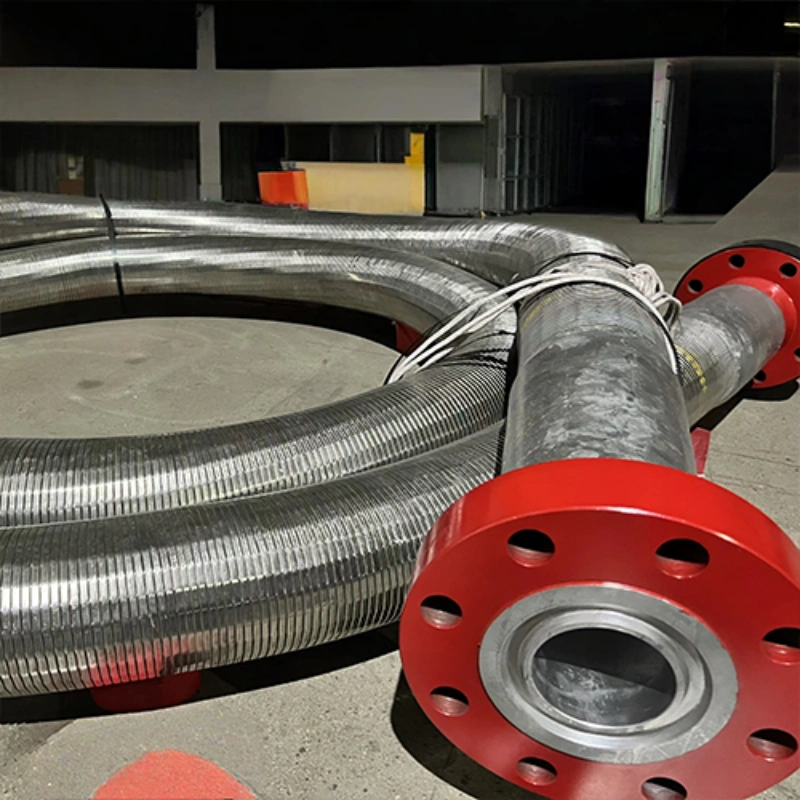
When you specify api 16c hose end connections, you must consider both your operational needs and strict industry requirements. You ensure safe and reliable performance by matching the right end connections to your equipment and application.
Using hoses that meet api and 16C standards protects your operations in high-pressure environments. Leading manufacturers like Alienfrac offer tailored solutions, allowing you to select custom sizes, materials, and connection types for your unique oilfield challenges.
Key Takeaways
- Gather project-specific details like pressure, temperature, and fluid type before selecting API 16c hose end connections.
- Choose hoses that meet the required pressure and temperature ranges to ensure safe operation in high-pressure environments.
- Select the right connection type, such as flanges or unions, to match your equipment and avoid leaks during operations.
- Verify the size and pressure class of hoses to prevent mismatches that could lead to equipment failure.
- Request proper documentation and certifications to ensure compliance with API standards for safety and reliability.
Application Requirements for API 16c Hose End Connections
When you specify api 16c hose end connections, you must start by gathering all project-specific details. These details include the pressure, temperature, and type of fluid that the hose will carry. Each factor plays a critical role in ensuring safe and reliable performance in high-pressure oilfield environments.
Alienfrac offers custom solutions, so you can match your hose to the exact needs of your operation.
Pressure and Temperature Criteria
You must select hoses and end connections that meet the pressure and temperature demands of your application. The table below shows the most common ranges for api 16c hoses used in oilfield operations:
| Specification | Value |
|---|---|
| Pressure Range | 10,000 psi and up |
| Temperature Range | -29℃ to +121℃ (-20℉ to +250℉) |
Always confirm that your chosen hose and connections can handle the maximum pressure and temperature expected during operation. This step helps prevent failures and ensures compliance with api and 16C standards.
Fluid Compatibility
The type of fluid you plan to transport affects the selection of your hose’s inner tube and end connections. Consider the following points:
- The inner tube must be compatible with the fluids, such as drilling mud, oil, gas, or hydraulic fluid.
- Compatibility maintains hose integrity and performance under specific application conditions.
If you have unique fluid requirements, Alienfrac can customize the hose construction to ensure safe and efficient operation.
Environmental Factors
You must also consider the environment where the hose will operate. Oilfield hoses often carry hazardous fluids, so a failure can lead to spills and environmental damage. Regular testing and inspection help identify weaknesses before they cause problems.
Alienfrac’s high-pressure hoses undergo strict testing to support safe operations in challenging environments.
By collecting accurate information on pressure, temperature, fluid type, and environmental risks, you set the foundation for specifying the right api 16c hose end connections for your oilfield project.
Selecting API 16c Hose End Connections
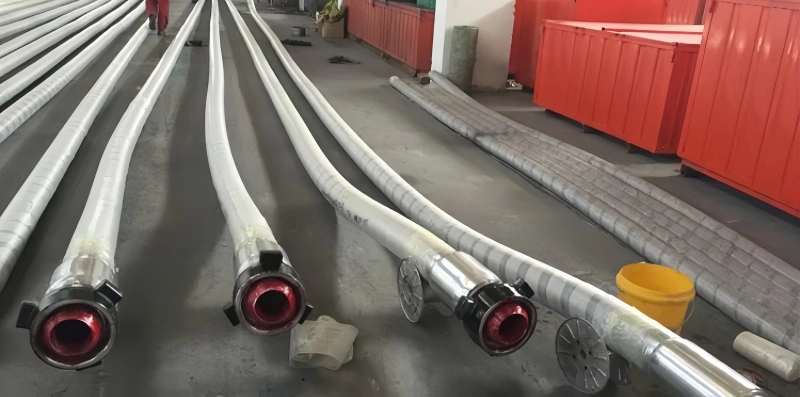
Choosing the right api 16c hose end connections is a critical step in building a safe and efficient well control system. You must ensure that every connection matches both the technical requirements of your choke and kill hoses and the specifications of your existing oilfield equipment.
This attention to detail helps you avoid leaks, pressure drops, and costly downtime during drilling operations.
Common Connection Types
You will find that flange connections are the most widely used type for api 16c hose end connections in the oil and gas industry. Flanges come in two main designs: crimping type and integral type. The crimping type allows you to assemble hoses on-site, which makes maintenance and replacement much easier.
The integral type is manufactured as a single piece, giving you higher structural integrity and better pressure resistance. This feature is especially important when you transport hazardous fluids under high-pressure conditions.
Besides flanges, you can also choose unions, hubs, or custom-specified end connections. Each type offers unique benefits for different applications. For example, unions provide quick assembly and disassembly, which is useful for frequent hose changes. Hubs offer a compact design for tight spaces.
Custom connections let you match the hose to specialized equipment or unique installation layouts.
Tip: Always verify the connection type with your equipment supplier before ordering. This step ensures that your choke line and kill line will fit perfectly with your well control system.
Matching Connections to Equipment
You must match the end connections of your api 16c hoses to the inlet and outlet ports of your drilling equipment. This process involves checking the size, pressure rating, and connection standard for each piece of equipment.
If you use mismatched connections, you risk leaks or even catastrophic failure during high-pressure operations.
Alienfrac offers a wide range of product options to help you achieve perfect compatibility. The table below summarizes the available choices:
| Product Type | Options Available |
|---|---|
| End Connections | Flanges, unions, hubs, or custom-specified end connections |
| Construction Options | Built-in armored, built-in unarmored, crimped armored, and crimped unarmored |
You can select the best combination for your application, whether you need a flexible hose for a kill line or a robust armored hose for a choke line. Alienfrac’s engineering team can also help you design custom solutions that meet both api and 16C standards.
This support ensures that your high-pressure hoses integrate seamlessly with your oilfield systems.
When you specify api 16c hose end connections, you improve safety, reliability, and efficiency across your drilling site. You also reduce the risk of downtime and equipment failure, which protects your investment and keeps your operation running smoothly.
Sizing and Standards for API 16c Connections
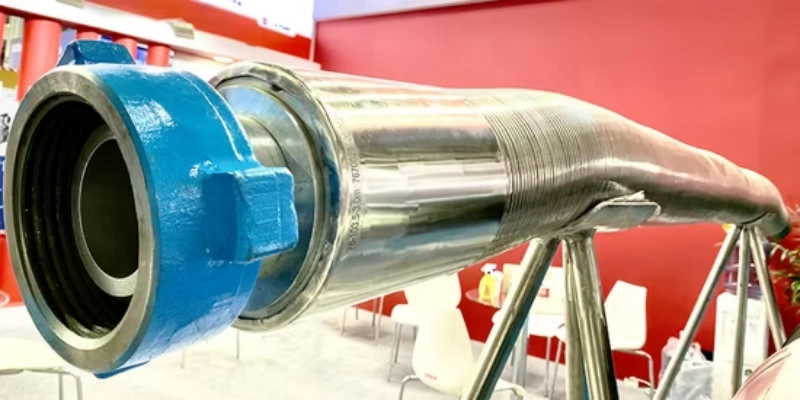
When you specify api 16c hose end connections, you must pay close attention to sizing and industry standards. These factors ensure that your high-pressure hoses perform safely and reliably in oilfield environments.
You must select the correct size, pressure class, and connection standard to match your equipment and operational needs.
Size and Pressure Class
You should always confirm the size and pressure class before ordering any api 16c hose end connections. The size refers to the inner diameter of the hose and the dimensions of the end connections. The pressure class indicates the maximum working pressure the hose can handle.
Choosing the right combination prevents leaks, blowouts, and costly downtime.
The table below summarizes the standard options for api 16c hoses:
| Specification Item | Description |
|---|---|
| Working Pressure | Commonly includes 5,000 psi, 10,000 psi, and 15,000 psi. |
| End Connections | Available with flanges, unions, hubs, or customer-specified end connections. Connection standard, size, and pressure class should be confirmed before production. |
You must match the hose size and pressure class to your well control system. For example, a choke line may require a different size or pressure rating than a kill line. Always check your equipment manuals and consult with your supplier if you have questions.
Alienfrac offers a wide range of sizes and pressure classes for high-pressure oilfield applications. You can request custom diameters and pressure ratings to fit your unique project requirements. This flexibility helps you avoid mismatches and ensures a secure fit in your system.
Thread and Flange Standards
You must also consider the thread and flange standards when specifying api 16c hose end connections. These standards ensure that your hoses connect securely to other components in your well control system.
The most common standards include API, ANSI, and NACE. Each standard defines the dimensions, pressure ratings, and material requirements for threads and flanges.
You should always verify the following before placing an order:
- The flange or thread type (such as API 6A, ANSI B16.5, or NACE MR0175)
- The pressure rating and size
- The material compatibility with your fluid and environment
Alienfrac manufactures hoses and end connections that comply with major industry standards. The company holds multiple certifications that demonstrate its commitment to quality and safety. The table below highlights some of the key certifications:
| Certification Type | Description |
|---|---|
| API 16C Monogram | Ensures compliance with API 16C standards. |
| API Q1 Monogram | Indicates adherence to quality management systems. |
| ISO 9001 | Reflects commitment to quality management. |
| DOT Certification | Validates compliance with Department of Transportation regulations. |
| MA MSHA | Ensures safety standards in mining operations. |
| Various Quality Certifications | Demonstrates overall commitment to quality and safety. |
You can trust that hoses with api certification meet the strict requirements for high-pressure oilfield service. Alienfrac also complies with NACE MR0175 for sour service applications, which protects your system from corrosion and extends hose life.
Tip: Always request documentation for api 16c and NACE compliance when you order hoses for critical well control operations.
By following these sizing and standards guidelines, you ensure that your api 16c hose end connections deliver safe, reliable performance in the toughest oilfield environments.
Ensuring API 16c Compliance

Markings and Documentation
You must ensure that every hose assembly includes clear and permanent markings. These markings show the hose type, pressure rating, temperature range, and manufacturing date. They also display the relevant api 16c monogram and serial number.
Markings help you trace each hose back to its production records, which is vital for safety and compliance.
Proper documentation supports your operation from installation to inspection. You should keep the following records for each hose:
- Inspection reports that confirm the hose passed hydrostatic pressure and dimensional tests.
- Material traceability records that link each component to its source.
- Pressure test certificates that verify the hose meets the required working pressure.
- Maintenance logs that track service intervals and repairs.
Alienfrac provides comprehensive documentation with every shipment. You receive inspection reports, pressure test results, and full traceability records. This support helps you meet regulatory requirements and maintain a safe worksite.
Certification Requirements
You must select hoses and end connections that meet strict api certification standards. The main certifications for oilfield hoses include:
- API 16C for choke and kill hoses and flexible choke line or kill line assemblies.
- API 7K and ISO 14693 for drilling and well control equipment.
- API Q1 for quality management systems.
End fittings must also comply with industry standards. You can choose from API male nipples, API flanges, butt-welded hammer unions, or other special connections. Each option ensures a secure fit and reliable performance.
Alienfrac holds the API 16C Monogram, which proves compliance with industry standards for choke and kill hoses. The company also maintains API 7K and API Q1 certifications, showing a strong commitment to quality assurance. You benefit from Alienfrac’s inspection support and certified products, which help you achieve full 16c compliance on every project.
Tip: Always request api certification documents and inspection reports before accepting any hose assembly for critical service.
Communicating Specifications to Suppliers
Clear communication with your supplier ensures you receive the right hose for your project. You must provide accurate details when specifying 16c hoses. This step helps you avoid costly mistakes and delays. Alienfrac offers direct engineering support to review your requirements and confirm every detail before production.
Information Checklist
You should gather all technical information before you contact your supplier. Use this checklist to organize your data:
- Hose inner diameter and length
- Working pressure and temperature range
- Fluid type and compatibility
- Required end connections (flange, union, hub, or custom)
- Pressure class and connection standard (such as API 6A or NACE MR0175)
- Installation layout or bend radius
- Armored or unarmored construction
- Sour service requirement (if needed)
- Quantity and delivery location
- Certification and documentation needs (API 16C, inspection reports)
Tip: You can send this checklist to Alienfrac’s engineering team. They will review your specifications and help you select the best 16c hose for your application.
Sample Specification Format
You can use a simple format to communicate your requirements. This format helps your supplier understand your needs and speeds up the quoting process.
| Item | Specification Example |
|---|---|
| Hose Type | API 16C Choke and Kill Hose |
| Inner Diameter | 3 inches |
| Length | 60 feet |
| Working Pressure | 10,000 psi |
| Temperature Range | -20°F to +250°F |
| End Connections | 3” API 6A Flange |
| Construction | Built-in armored |
| Fluid | Drilling mud |
| Certification | API 16C, NACE MR0175 |
| Quantity | 4 units |
| Delivery Location | Houston, TX |
You should always confirm every detail with your supplier. Alienfrac’s direct support and engineering review help you avoid errors and ensure your 16c hoses meet all api standards.
Conclusion
You improve operational safety and compliance when you specify api 16c hose end connections with accuracy. The table below highlights why each requirement matters:
| Requirement | Description |
|---|---|
| Working Pressure | Hose must be designed for a working pressure of at least 250 p.s.i.g. |
| Design Compliance | Hose and connections must be verified by a recognized testing laboratory. |
| Kinking and Straining | Hoses must be long enough to avoid kinking or straining. |
Non-compliance can lead to equipment failure, environmental pollution, or even casualties. You should always communicate your needs clearly and request api certification for your choke and kill hoses. For advanced solutions and ongoing support, partner with manufacturers like Alienfrac.
FAQ
What information do you need to specify an API 16C hose end connection?
You should provide hose size, length, working pressure, temperature range, fluid type, end connection type, construction preference, and certification needs. This information helps your supplier deliver the correct hose for your application.
Can you customize hose end connections for unique equipment?
Yes. You can request custom end connections to match your equipment. Alienfrac offers engineering support to design and manufacture connections that fit your specific requirements.
How do you verify API 16C compliance for hoses?
Always check for the API 16C monogram, review inspection reports, and request certification documents. These steps confirm that your hose meets industry standards for safety and performance.
What is the typical lead time for API 16C hose orders?
Lead times vary by order size and customization. You can expect standard hoses to ship faster than custom assemblies. Contact Alienfrac for an accurate delivery estimate based on your project needs.