
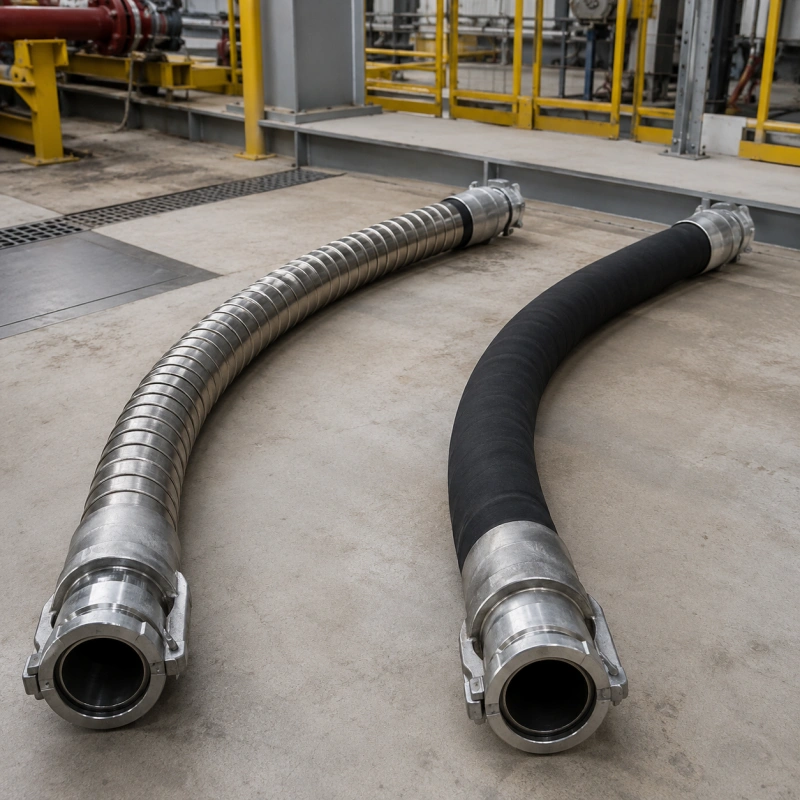
The main difference between the armored and unarmored API 16C hose lies in the presence of an external protective layer. You choose an armored hose for maximum defense against mechanical damage in harsh oilfield environments. You select an unarmored hose when you need lighter weight and greater flexibility.
This distinction impacts your project’s safety, performance, and compliance with industry standards. Alienfrac supplies both types, ensuring you meet any operational requirement with confidence.
Key Takeaways
- Armored hoses offer maximum protection against mechanical damage in harsh environments.
- Unarmored hoses provide lighter weight and greater flexibility for easier handling.
- API 16C hoses are crucial for safety and efficiency in oilfield operations.
- Choose hoses based on site conditions, pressure needs, and installation requirements.
- Alienfrac offers both armored and unarmored hoses to ensure compliance and safety.
What Is an API 16C Hose?
Definition and Main Uses
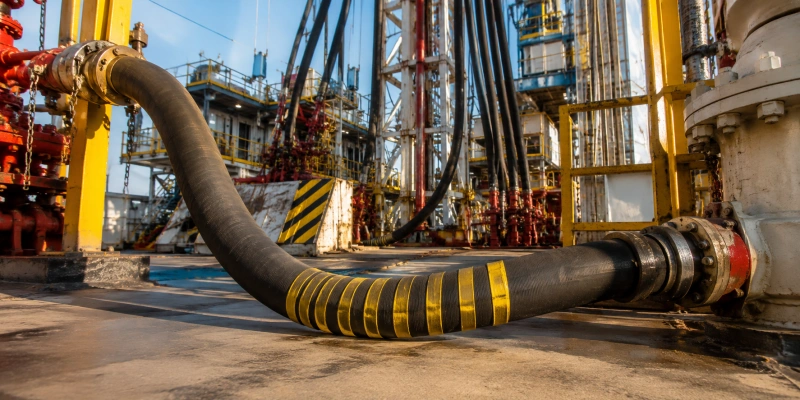
You rely on API 16C hoses when you need a flexible, high-pressure connection in oil and gas drilling operations. These hoses serve as critical links in your well-control system, especially during challenging drilling scenarios.
API 16C hoses, also known as choke and kill hoses, connect vital equipment such as blowout preventers (BOP), choke manifolds, and mud pumps. Their design allows you to safely transfer drilling mud and well-control fluids under extreme pressure.
You will find these hoses essential for several key tasks:
- Providing flexible choke and kill lines for BOP systems
- Conveying hydraulic power and fluid in high-pressure drilling
- Supporting both onshore and offshore rigs that demand reliable high-pressure hoses
- Delivering oil-gas mixtures containing hazardous gases under high pressure through choke and kill manifolds
Alienfrac, manufactured by Qingdao Qingflex Hose Factory, offers API 16C hoses that meet or exceed global standards. The company holds the API 16C Monogram certification, which assures you that every hose aligns with strict industry requirements.
You can trust Alienfrac’s API 16c Choke and Kill Hose for both performance and compliance.
Importance in Oilfield Operations
You depend on API 16C hoses to maintain safety and efficiency in your drilling projects. These hoses protect your operation from dangerous blowouts and fluid leaks. Their robust construction allows them to withstand extreme pressures, open flames, and corrosive well fluids.
Tip: Always check for proper documentation, including inspection reports and pressure test charts, to ensure your hoses meet API 16C standards.
Here’s how API 16C hoses contribute to operational safety:
| Feature | Description |
|---|---|
| Extreme High Pressure | Rated for pressures often exceeding 10,000 psi, crucial for preventing blowouts. |
| Fire Resistance | Maintains integrity under open flame conditions, essential during incidents. |
| H2S Resistance | Compounded to resist corrosive agents like hydrogen sulfide present in well fluids. |
| Multiple Service Levels | Available in various Fire Service Levels (FSL0 to FSL3) for different applications. |
When you choose Alienfrac’s certified hoses, you ensure your equipment meets the highest safety and performance standards required in today’s oilfields.
Armored API 16C Hose Overview
Construction and Materials
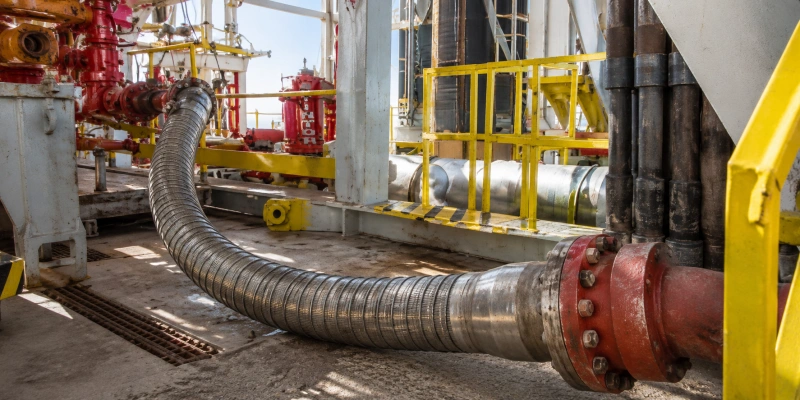
When you select an armored API 16C hose, you choose a product built for the toughest oilfield conditions. The construction uses multiple advanced materials, each serving a specific purpose to maximize durability and safety. Here’s a breakdown of the main components:
| Material Type | Characteristics | Purpose |
|---|---|---|
| Inner Rubber | Advanced black nitrile rubber, oil-resistant, seawater-resistant, high temperature | Ensures longevity and performance under extreme conditions |
| Reinforcement Layer | High-strength steel wire winding | Provides unmatched durability and robustness for demanding applications |
| Fireproof Layer | Durable fiberglass cloth | Enhances fire resistance, securing the hose’s integrity during heat exposure |
| Outer Rubber | Premium black chloroprene rubber, fire-resistant, wear-proof, ozone-resilient | Offers comprehensive protection and extended lifespan |
| Armor | Durable stainless steel telescopic sleeve | Enhances the hose’s protection and extends its robustness and service life |
Alienfrac manufactures armored API 16C hoses using these premium materials. The hoses meet API 16C standards and hold certifications from DNV, ABS, and CCS, ensuring you receive a product that stands up to global oilfield demands.
Key Features and Benefits
You benefit from several advanced features when you use an armored API 16C hose. The design focuses on safety, reliability, and long-term performance. Key features include:
| Feature/Benefit | Description |
|---|---|
| H2S-resistant elastomers | Extends service life in harsh, corrosive environments |
| Multi-layer steel wire armoring | Delivers superior burst pressure ratings for maximum safety |
| Coflexip-style flexible designs | Improves fatigue resistance, increasing operational lifespan |
| Real-time monitoring sensors | Supports predictive maintenance and reduces the risk of failures |
Alienfrac’s armored hoses offer you peace of mind in high-risk operations. You can trust their robust construction to handle extreme pressures and mechanical impacts.
Typical Applications
You will find armored API 16C hoses essential in the most demanding oilfield applications. These hoses excel in high-pressure environments where safety and durability cannot be compromised.
| Application | Description |
|---|---|
| High Pressure Hose | Used for oil, gas, mud, and other high-pressure media delivery. Commonly connects choke and kill hoses, mud & gas separators, and choke manifolds. |
When you operate in harsh drilling sites, armored hoses from Alienfrac ensure your equipment remains protected and your operations stay efficient.
Unarmored API 16C Hose Overview
Construction and Materials
You choose an unarmored API 16C hose when you need a flexible, lightweight solution for your oilfield operations. This hose does not include an external armor layer. Instead, it relies on a robust internal structure to deliver strength and reliability. The main components include:
- Inner Tube: Made from abrasion-resistant synthetic rubber. This material resists drilling fluids and harsh chemicals.
- Reinforcement Layer: High-tensile steel wire or steel cable provides the pressure resistance you need for demanding applications.
- Outer Cover: Oil-resistant, weather-resistant, and abrasion-resistant rubber protects the hose from environmental damage.
Alienfrac manufactures unarmored API 16C hoses using advanced weaving and winding technology. You receive a product that meets API 16C standards and passes strict quality inspections.
Key Features and Benefits
You benefit from several advantages when you select an unarmored API 16C hose from Alienfrac:
| Feature | Benefit |
|---|---|
| Lightweight Design | Easier handling and faster installation |
| High Flexibility | Simplifies routing in tight or complex layouts |
| Certified Quality | Meets API 16C, DNV, ABS, and CCS standards |
| Customizable Options | Choose size, length, and end connections |
Note: You can request hoses with H2S-resistant liners for sour service environments.
Alienfrac’s unarmored hoses help you reduce installation time and labor costs. You can move and position these hoses with less effort compared to armored versions.
Typical Applications
You use unarmored API 16C hoses in environments where mechanical impact risk is lower. These hoses work well in:
- Land-based drilling rigs with protected hose runs
- Offshore platforms where weight reduction is critical
- Temporary well-control setups that require frequent hose movement
You can rely on Alienfrac’s unarmored API 16C hoses for safe, efficient fluid transfer in moderate oilfield conditions. Their flexibility and lighter weight make them a smart choice for many drilling projects.
Armored vs Unarmored API 16C Hose Comparison
Durability and Protection
When you compare armored vs unarmored api 16c hose, durability stands out as a key difference. Armored hoses from Alienfrac feature a stainless steel armor layer that shields the hose from external threats. This outer protection works with the tough rubber cover to resist abrasion and mechanical damage.
You can drag or lay armored hoses across rough surfaces without worrying about scratches or cuts. The armor also helps prevent damage from dropped tools or moving equipment in crowded rig areas.
Unarmored hoses, while still strong, do not have this extra layer. You rely on the reinforced rubber and steel wire construction for protection. These hoses perform well in controlled environments but may wear faster if exposed to sharp edges or heavy traffic.
If your operation involves frequent movement or harsh conditions, you gain peace of mind with an armored API 16C hose.
Tip: Choose armored hoses for high-traffic zones or where hoses may contact metal, gravel, or other abrasive surfaces.
Flexibility and Handling
You need to consider flexibility when selecting between an armored vs unarmored api 16c hose. Unarmored hoses offer greater flexibility, making them easier to route through tight spaces or around equipment. You can bend and position these hoses with less effort, which speeds up installation and adjustment.
- Flexible hoses simplify routing during setup.
- They absorb vibrations, which helps protect your system from shocks.
- Proper flexibility prevents hoses from kinking or failing due to tight bends.
Alienfrac’s unarmored hoses excel in applications where you need to move hoses often or fit them into complex layouts. Armored hoses, while still flexible, have a stiffer feel due to the steel armor. This makes them less suitable for sharp bends but ideal for straight runs where protection is critical.
You improve system stability and reduce fatigue damage to connections by choosing the right level of flexibility for your application.
Weight and Installation
Weight plays a major role in how you handle and install hoses. Armored hoses weigh more because of the steel armor. You may need extra hands or lifting equipment to move and position these hoses, especially on large rigs or offshore platforms.
The added weight increases installation time but delivers unmatched protection.
Unarmored hoses are lighter and easier to carry. You can install them quickly, even in elevated or hard-to-reach spots. This reduces labor costs and speeds up project timelines. If your team needs to reposition hoses frequently, unarmored options from Alienfrac save you time and effort.
| Feature | Armored API 16C Hose | Unarmored API 16C Hose |
|---|---|---|
| Weight | Heavier, more robust | Lighter, easier to handle |
| Installation | May require lifting aids | Quick, manual installation |
| Labor Intensity | Higher | Lower |
Application Suitability
You should match the hose type to your specific oilfield needs. Armored hoses from Alienfrac suit high-risk environments where hoses face mechanical hazards, such as offshore rigs, crowded work sites, or areas with moving machinery. You gain maximum protection and long service life.
Unarmored hoses work best in protected or low-impact settings. You benefit from their flexibility and lightweight on land rigs, temporary setups, or where hoses run through cable trays or shielded paths. Both types meet API 16C standards, so you never compromise on safety or compliance.
For the best results, review your site conditions and operational demands before choosing between armored vs unarmored api 16c hose. Alienfrac offers both options, ensuring you always find the right fit for your project.
Choosing the Right API 16C Hose
Assessing Operational Needs
You start by evaluating your project’s demands. Consider the environment, pressure requirements, and hose routing. If your site exposes hoses to heavy machinery or abrasive surfaces, you need maximum protection. Choose an armored hose for these conditions.
If your operation values flexibility and quick installation, select an unarmored hose. Alienfrac offers both types, allowing you to match the hose to your specific needs. Review the pressure rating, length, and end connection options. You can customize these features for your project.
Safety and Compliance
Safety and compliance drive your decision. API 16C hoses must meet strict standards to prevent failures and environmental risks. You need hoses that handle high-pressure fluids and resist acidic gases.
Alienfrac hoses undergo rigorous testing and hold certifications from API, DNV, ABS, and CCS. Review the following requirements:
| Requirement | Description |
|---|---|
| Extreme working environment | Hoses must withstand pressures up to 15,000 psi and resist harsh conditions like acidic gases and extreme temperatures. |
| Absolute safety and reliability | API 16C ensures that hoses are designed and tested to prevent failures that could lead to environmental disasters. |
| Global interoperability | Compliance with API standards allows for reliable connections between equipment from different manufacturers. |
- Hoses must handle high-pressure drilling fluids safely.
- Failure of hoses can lead to serious environmental pollution and equipment damage.
- Compliance with API standards is crucial for emergency operations.
Always request inspection reports and pressure test charts before installation.
Maintenance and Longevity
You improve hose longevity by choosing the right construction. Armored hoses resist external damage and last longer in harsh environments. Unarmored hoses require careful handling and regular inspection.
Alienfrac provides hoses with abrasion-resistant covers and H2S-resistant liners. You reduce downtime by following maintenance schedules and checking for wear.
Selection Tips for Alienfrac Hoses
You select the best hose by matching it to your operational risks and installation needs. Review the armored vs unarmored api 16c hose comparison for your site. Alienfrac supports you with engineering reviews and custom options. Provide details like pressure rating, length, and connection type.
You receive expert advice and tailored solutions for every project.
Contact Alienfrac for guidance on hose selection and compliance documentation.
Conclusion
You see clear differences between the armored and unarmored API 16C hose. Armored hoses deliver maximum protection and durability. Unarmored hoses offer flexibility and lighter weight. You improve safety and efficiency by matching the hose to your project needs. Alienfrac provides expert support and custom solutions.
Use this checklist before you select:
- Review site hazards
- Confirm pressure requirements
- Check certification and documentation
- Consult Alienfrac for tailored advice
FAQ
What is the main difference between armored and unarmored API 16C hoses?
You see the main difference in the external armor. Armored hoses have a steel layer for extra protection. Unarmored hoses do not. This impacts durability, weight, and flexibility.
When should you choose an armored API 16C hose?
You should choose an armored hose for harsh environments. These hoses resist mechanical damage from tools, equipment, or rough surfaces. They work best on offshore rigs or crowded sites.
Are unarmored API 16C hoses safe for high-pressure drilling?
Yes. You can use unarmored hoses for high-pressure drilling if the environment is controlled. They meet API 16C standards and pass strict tests. Always check your site’s risk level before choosing.
Can you customize API 16C hoses from Alienfrac?
Absolutely. You can request custom sizes, pressure ratings, lengths, and end connections. Alienfrac supports your project with tailored solutions and expert engineering advice.