
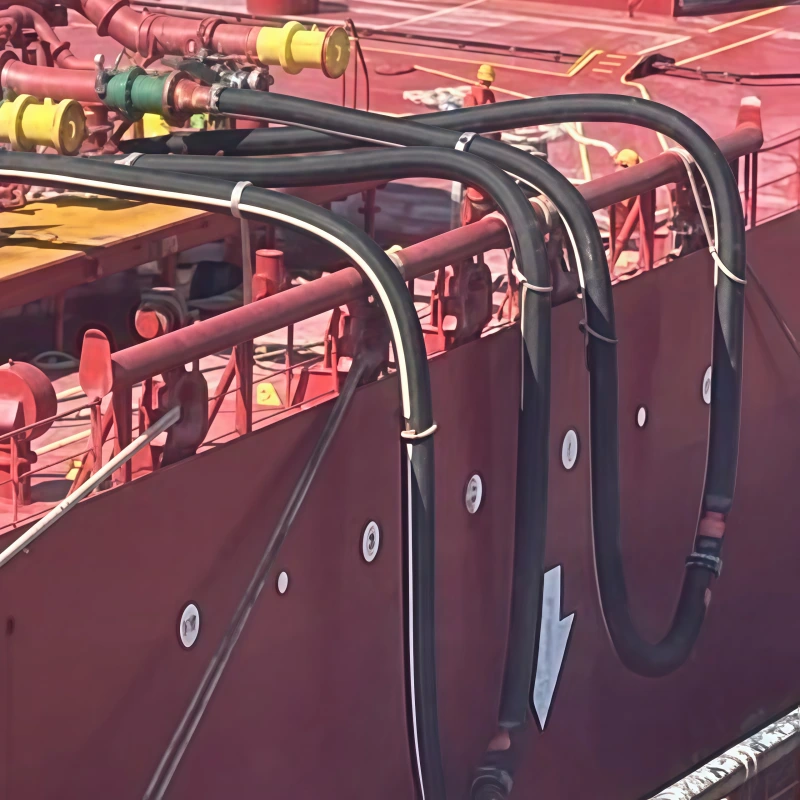
You need the right oilfield hose to keep your oil or petroleum operations safe and efficient. When you match hose size, material, pressure, temperature, and fittings to your job’s needs, you prevent accidents and equipment failures.
The STAMPED method helps you make smart choices. Alienfrac supplies high-quality oilfield hoses that meet tough industry demands. Review the table below to see how common requirements affect safety and efficiency:
| Requirement | Impact on Safety and Efficiency |
|---|---|
| High-pressure capabilities | Prevents hose failures that could lead to accidents and environmental hazards. |
| Regular testing for integrity | Identifies weak or damaged hoses before they fail, enhancing safety and reducing downtime. |
| Compliance with API standards | Ensures optimal equipment performance and minimizes inefficiencies in operations. |
Knowing how to choose the right oilfield hose helps you protect your team and boost productivity.
Key Takeaways
- Identify your specific application needs in the oil industry to choose the right hose type for tasks like drilling or fluid transfer.
- Match hose materials to the fluids you will transfer to prevent failures and ensure safety; for example, use NBR for crude oil.
- Use the STAMPED method—Size, Temperature, Application, Material, Pressure, Ends, and Delivery—to guide your hose selection process.
- Regularly inspect hoses for wear and damage to prevent leaks and ensure safe operation; replace them as needed.
- Consult experts like Alienfrac for tailored advice on hose selection to avoid costly mistakes and enhance safety.
Identify Application Needs in the Oil Industry
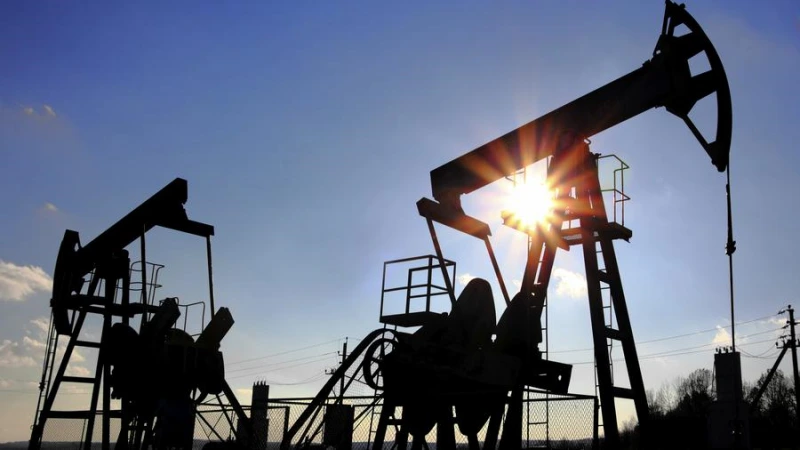
Define Use Case and Environment
Start by identifying what you need the hose to do in your oil industry operation. Each application—drilling, fracturing, cementing, or fluid transfer—requires a specific type of hose.
For example, drilling hoses must handle high-pressure mud, while fracturing hoses need to withstand rapid pressure changes and harsh chemicals. The table below shows how different oil applications match with hose specifications and their main uses:
| Operation Type | Hose Specification | Application Description |
|---|---|---|
| Drilling | API Spec 7K | Transports water-based and oil-based mud under high pressure during drilling and cementing. |
| Fracturing | API Spec 16C | Delivers oil-gas mixtures and killing fluids under high pressure, often in hazardous conditions. |
| Cementing | API Spec 7K | Provides a flexible connection for cementing, ensuring safe material transfer. |
| Fluid Transfer | General Hoses | Moves crude oil, natural gas, and other fluids across oil industry operations. |
You can explore Alienfrac’s product range to find hoses designed for each of these tasks. This step helps you avoid mistakes when choosing a hose for your specific environment.
Determine Fluid or Material Type
Next, consider the type of fluids you will transfer. Crude oil, diesel, lubricants, and biofuels each require hoses made from materials that resist chemical reactions. For example, NBR (Nitrile Rubber) works well with crude oil and diesel because it resists hydrocarbons and additives.
If you use the wrong material, the hose can swell, crack, or fail. The table below lists common fluids and the best hose materials for each:
| Fluid Type | Recommended Hose Material | Notes |
|---|---|---|
| Crude Oil | NBR | Excellent resistance to hydrocarbons |
| Diesel/Gasoline | TPU or NBR | Handles aromatics and additives |
| Lubricants | NBR or UHMWPE | Good for viscous oil products |
| Biofuels | Composite or UHMWPE | Check for ethanol compatibility |
Matching the hose material to your fluids keeps your operation safe and efficient.
Assess Operating Conditions
Finally, review the operating conditions in your oil industry setting. You need to know the pressure and temperature ranges, as well as any exposure to heat, cold, abrasion, or chemicals. For example, some hoses must handle temperatures from -40°F to 300°F and pressures up to 6,000 psi.
The materials used in hoses, such as PTFE for heat resistance or NBR for abrasion, help them perform well in tough environments. The table below shows how different materials provide resistance to common hazards:
| Type of Resistance | Common Materials Used |
|---|---|
| Heat Resistance | PTFE, FKM, VMQ |
| Cold Resistance | FKM, NBR |
| Abrasion Resistance | NBR, PU |
| Chemical Resistance | PU, PTFE, FKM |
| Pressure Resistance | PET, PU |
| Corrosion Resistance | CR, FKM |
By understanding your environment, you can select a hose that lasts longer and keeps your oil industry operation running smoothly.
Tip: Review your application needs with Alienfrac’s experts to ensure you get the right hose for your job.
How to Choose the Right Oilfield Hose: Key Selection Criteria
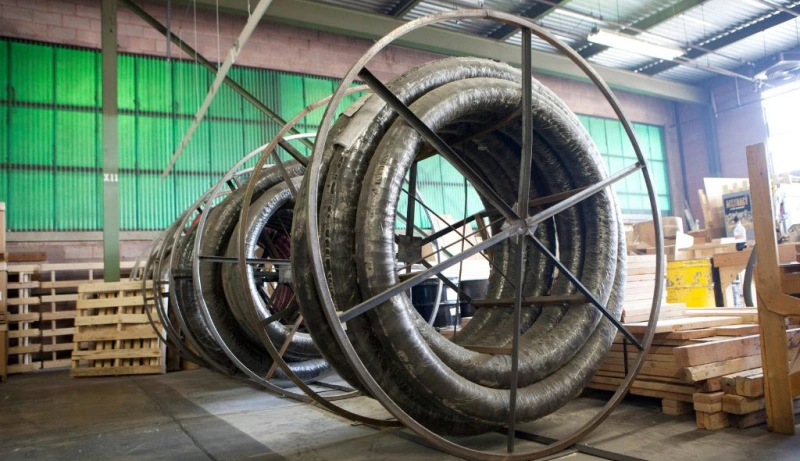
When you want to know how to choose the right oilfield hose, you need a clear hose selection guide. The STAMPED method gives you a step-by-step approach to selecting your hose.
This method stands for Size, Temperature, Application, Material, Pressure, Ends, and Delivery. Each part of the STAMPED method helps you focus on key factors to select the right industrial hose for your operation.
The STAMPED acronym—Size, Temperature, Application, Material, Pressure, Ends, and Delivery—is a comprehensive guide to choosing the appropriate hose. By considering these factors, you can ensure optimal performance, minimize risks, and enhance the longevity of your industrial hose assembly.
Let’s break down each part of the STAMPED method and see how it applies to choosing the right product for your system.
Size and Flow Requirements
You must start with the correct hose size. The diameter and length affect flow rates and pressure drops. If you use a hose that is too small, you risk high-pressure losses, heat buildup, and damage to the hose’s inner tube.
This can lead to flow erosion, damaged seals, and even hose failure. On the other hand, a hose that is too large can make routing difficult, increase costs, and slow down response times in hydraulic systems.
| Impact Type | Description |
|---|---|
| Small Diameter Hose | Causes high pressure losses, excessive flow rates, and heat generation, damaging the hose’s inner tube and leading to flow erosion. This can damage seals, clog pumps, valves, and filters, resulting in hose failure. |
| Large Diameter Hose | Contains more fluid than necessary, complicating routing, increasing costs, and delaying response times in hydraulic systems. |
Alienfrac offers custom hose sizes to match your specific application. Accurate sizing is a key part of any hose selection guide and ensures your industrial hose assembly works safely and efficiently.
Temperature and Pressure Ratings
Temperature and pressure rating are two of the most important factors in choosing the right oilfield hose. Oilfield hoses must handle extreme temperatures and high-pressure applications. The material you choose must match the temperature range and pressure rating of your operation.
| Material | Temperature Range | Working Pressure | Burst Pressure |
|---|---|---|---|
| HNBR | -40°F to 275°F | 15,000 psi | >60,000 psi |
| FKM | -20°F to 400°F | 15,000 psi | >60,000 psi |
| NBR | Limited compatibility with high-temperature fluids | 15,000 psi | >60,000 psi |
Industrial hoses face pressure surges and temperature swings. These can weaken the hose and shorten its life. High-quality hoses, like those from Alienfrac, use reinforced layers to handle these conditions. Always check the pressure rating and temperature range before selecting your hose.
Material Compatibility
Media compatibility is another key factor in any hose selection guide. The hose material must match the fluids or materials you plan to transfer. For example, NBR works well with crude oil and diesel, while PTFE handles high temperatures and aggressive chemicals.
Polymers and additives help control viscosity and fluid loss in drilling and fracturing.
| Material Type | Examples/Functions |
|---|---|
| Base Fluids | Fresh water, saltwater, oil (in oil-based mud systems) |
| Clay Minerals | Bentonite (viscosity), Kaolinite (when required) |
| Weighting Agents | Barite (density control), Hematite, Galena (special cases) |
| Fluid Loss Control | CMC (Carboxymethyl Cellulose), Starch (reduces filtrate loss) |
Alienfrac hoses use advanced materials to ensure media compatibility and long service life. When you choose the right hose, you protect your equipment and keep your operation running smoothly.
End Fittings and Connections
End fittings are critical for safe and leak-free operation. The right hose fittings prevent leaks, blowouts, and system failures. For high-pressure applications, you need secure connections like Verso-LOK swivel locking hose connections or double ferrule compression fittings.
These fittings stay tight even under vibration and pressure spikes.
Improper fittings can loosen, wear out, or create weak points. This leads to leaks, repeated failures, and unnecessary downtime. Always follow best practices for how to install hydraulic hose fittings. Alienfrac offers a wide range of end fittings to match your industrial hose assembly and specific application.
Delivery and Installation
Proper delivery and installation ensure your hose performs as expected. When you receive your hose, check that the pressure rating, material, and fittings match your requirements. Use the correct fittings and avoid excessive bends. Secure the hose with clamps and route it away from sharp edges or heat sources.
Tip: Clean the hose and fittings before installation. Avoid twisting or stretching the hose. Regular inspections help you catch wear or damage early.
Professional installation extends the life of your hose and reduces the risk of failure. Alienfrac guides how to install hydraulic hose fittings and offers support for choosing the right product for your system.
When you follow the STAMPED method and use a reliable hose selection guide, you can choose the right hose for your oilfield operation. Alienfrac’s ability to customize hoses for high-pressure applications, unique media compatibility, and specific end fittings ensures you get the right hose every time.
Remember, selecting your hose with care protects your team, your equipment, and your bottom line.
Hose Construction and Durability in the Petroleum Industry
Multilayer and Reinforced Design
You need a hose that can handle the tough demands of the petroleum industry. The right hose construction and materials make a big difference in how long your hose lasts and how well it performs. Most oilfield hoses use multiple layers for strength and safety.
Steel wire reinforcement stands out for its ability to handle high pressure and resist fatigue. The table below compares common reinforcement types:
| Reinforcement Type | Typical Working Pressure | Fatigue Resistance |
|---|---|---|
| Spiral Wire (4-6 layers) | 10,000 – 15,000 psi | Excellent; withstands high-cycle impulse |
| Braided Wire (2-4 layers) | 3,000 – 6,000 psi | Moderate; prone to fatigue under constant flexing |
| Textile Braid with Wire Helix | Up to 3,000 psi | Suitable for suction and return lines only |
Steel wire spiral hoses give you the best durability for high-pressure petroleum applications. These hoses resist kinking and last longer under repeated use.
Material Choices and Performance
Choosing the right materials helps your hose resist abrasion, chemicals, and extreme temperatures. Rubber, thermoplastic, and composite materials each offer unique benefits. The table below shows how these materials compare:
| Material Type | Flexibility | Weight | Applications | Limitations |
|---|---|---|---|---|
| Rubber | Moderate | Heavy | General-purpose hoses for oil and gas | Limited chemical resistance |
| Thermoplastic | High | Lightweight | Chemical transfer, flexible designs | May not withstand extreme temperatures |
| Composite | Very High | Lightweight | Aromatic chemicals, cryogenic gases | More complex construction |
- Composite hoses work well in extreme pressure and temperature environments.
- Thermoplastic hoses offer chemical resistance and are easy to handle.
- Advanced materials like UHMWPE and HNBR improve durability and chemical resistance.
- Super abrasion-resistant covers protect hoses from rapid wear.
- Cold-weather hoses stay flexible at temperatures as low as -40°C.
- High-temperature hoses use heat-resistant materials to prevent breakdown above 150°C.
Alienfrac Oilfield Hose Features
Alienfrac uses advanced technology to produce hoses that meet strict petroleum standards. You benefit from hoses built with German and American weaving, winding, and spiral machines. UNIFLEX crimping ensures secure connections.
Large-scale machines allow high production capacity, so you get a reliable supply for your projects.
Alienfrac hoses hold certifications that matter in the petroleum industry:
| Certification | Description |
|---|---|
| API 7K | Required for drilling hoses |
| API 16C | Required for high-pressure hoses |
| API Q1 | Quality management system certification |
| DNV MED | Marine equipment certification |
| CCS | China Classification Society certification |
| ABS | American Bureau of Shipping certification |
Note: Certified hoses help you meet safety and quality standards in every petroleum application.
Alienfrac’s commitment to quality and innovation ensures your hoses perform reliably, even in the harshest environments.
Safety, Compliance & Avoiding Mistakes in Industrial Hose Selection
Meeting Industry Standards
You must follow industry standards during industrial hose selection to protect your team and equipment. Oil operations require strict compliance with safety regulations. Regular inspection helps you spot problems before they cause failures. The table below shows what you should check to meet regulations:
| Inspection Requirement | Regulation |
|---|---|
| Inspect for leaks at the flexible hose or its junction with fittings | 1926.1412(f)(2)(x)(A) |
| Check threaded or clamped joints for leaks | 1926.1412(f)(2)(x)(B) |
| Examine the outer covering of the hose for signs of failure | 1926.1412(f)(2)(x)(C) |
| Look for excessive abrasion on the outer surface | 1926.1412(f)(2)(x)(D) |
You should always use certified hoses for oil applications. This step ensures your industrial hose selection meets both safety and performance needs.
Ensuring Safe Operation
Safe operation starts with the right industrial hose selection. You need to inspect hoses often and replace them when you see signs of wear. Hoses in oil environments face vibration, pressure surges, and abrasive materials. These factors can cause leaks or bursts.
If you ignore regular checks, you risk accidents and downtime. Always follow a schedule for inspection and replacement to keep your oil operation safe.
Common Selection Errors
Many people make mistakes during industrial hose selection. You can avoid most problems by knowing what to watch for:
- Failure to respect the minimum bend radius. If you bend a hose too tightly, it will kink and create a weak spot.
- Cross-threading the test point. Incorrect alignment during installation can damage threads and cause leaks.
- Leaving a hose under pressure. This practice leads to premature fatigue and failure.
Other frequent causes of hose failure include abrasion, improper pressure rating, extreme temperatures, chemical incompatibility, improper assembly, and aging. Always match the hose to your oil application and check all fittings.
When to Consult Experts?
You should consult experts like Alienfrac during industrial hose selection when you need to:
- Define your oil application scenario.
- Confirm technical requirements such as working pressure and fluid type.
- Select the hose diameter and length for your site.
- Specify material and construction for durability.
- Choose the right coupling systems and accessories.
- Verify certifications and testing for safety.
- Assess supplier capabilities for reliability.
Tip: If you have any doubts about industrial hose selection, reach out to Alienfrac’s team for guidance. Their expertise helps you avoid costly mistakes and ensures your oil operation stays safe.
Conclusion
Choosing the right oilfield hose means matching size, material, and pressure ratings to your job. You protect your team and equipment when you follow safety standards and consult experts like Alienfrac. Certified hoses offer many long-term benefits:
- They prevent leaks and keep your operation safe.
- They meet strict industry standards for oil transfer.
- They lower maintenance costs and reduce downtime.
- They last longer, giving you better value over time.
Review your hose selection process and trust Alienfrac for reliable, certified solutions.
FAQ
What is an oilfield hose, and why do you need it?
You use oilfield hoses to transfer fluids like drilling mud, cement, or oil. These hoses protect your equipment from pressure spikes, abrasion, and harsh chemicals. You keep your operation safe and efficient with the right hose.
How do you choose the correct hose size?
You measure the diameter and length based on your flow requirements. A hose that is too small causes pressure loss. A hose that is too large increases costs. You match the size to your application for best performance.
Which materials work best for oilfield hoses?
You select materials like NBR, PTFE, or HNBR. NBR resists oil and abrasion. PTFE handles high temperatures and chemicals. HNBR offers durability in extreme conditions. You check compatibility with your fluids before choosing.
How often should you inspect your oilfield hoses?
You inspect hoses before each use and during regular maintenance. Look for leaks, abrasion, or signs of wear. Early detection prevents accidents and keeps your operation running smoothly.
Can you customize oilfield hoses for your project?
Yes, you can request custom diameters, pressure ratings, and fittings. Alienfrac offers tailored solutions to match your specific oilfield needs. You get hoses that fit your equipment and meet industry standards.