
You need to know how to select a frac hose that matches your oil and petroleum site requirements. Alienfrac helps you focus on safety, reliability, and cost-effectiveness every time you choose the right hose. You must consider safety for all fracking operations and oil applications.
Safety comes first when you select the right hose for petroleum projects. Safety in hose selection protects your team and equipment. How to select frac hose depends on the safety standards you set for your fracking operations. Ask how to select frac hose that ensures safety, and you’ll make the right choice.
Key Takeaways
- Always prioritize safety when selecting frac hoses. Choose hoses with pressure ratings 20-30% higher than your system’s maximum pressure.
- Check the temperature range of the hose material. Ensure it can withstand the extremes of your oilfield operations.
- Consider chemical compatibility to prevent leaks and failures. Use hoses made from materials that resist the fluids in your application.
- Select the right size and flexibility for your hose. This ensures proper flow and reduces pressure loss during operations.
- Invest in quality hoses for long-term savings. A durable hose reduces downtime and maintenance costs, maximizing your investment.
How to Select Frac Hose: Key Criteria
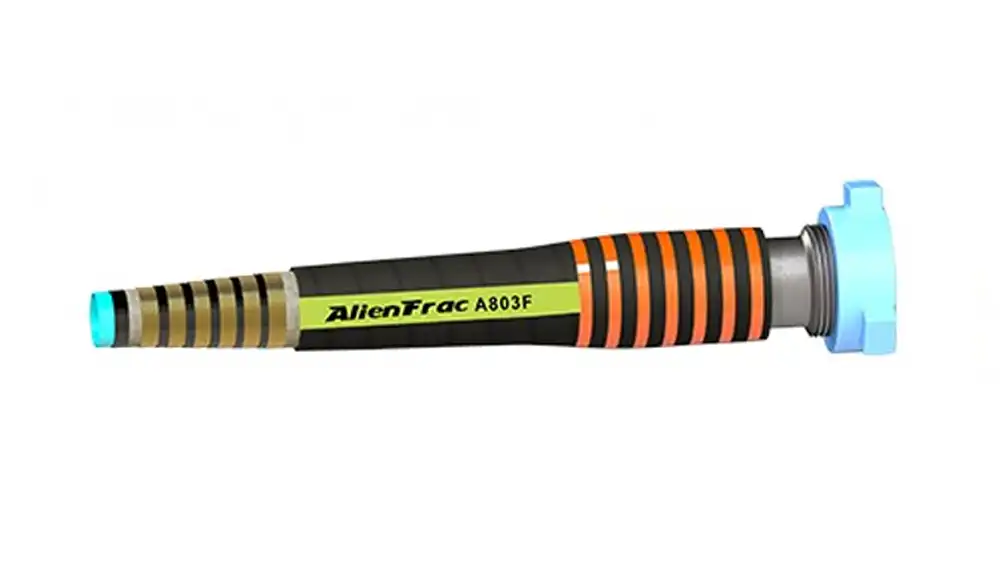
Selecting the right frac hose for your oilfield application means focusing on the most important factors. You need to match the hose to your site’s pressure, temperature, chemical, and mechanical demands. Following industry guidelines like STAMPED and API 7K, API 16C, and API 16D helps you make the best choice for safety and performance.
Pressure and Temperature Ratings
You must always check the pressure rating for your application. Oilfield operations use different pressures, so you need a hose that can handle the maximum working pressure plus a safety margin.
For example, API Specification 7K recommends choosing a hose with a pressure rating at least 20–30% higher than your system’s maximum pressure. This keeps your team and equipment safe.
Temperature also affects hose performance. If your application runs at high or low temperatures, the hose material must withstand those extremes. For instance, some hoses work from -20°F to 200°F, while others have different limits. Always check the temperature range for your application.
Here is a table showing how pressure and temperature requirements can vary by hose size and application:
| Part Number | I.D. (In) | O.D. (In) | W.P. @ 70°F (PSI) | Bend Radius @ 70°F (In) | Weight (Lbs / Ft) | Std. Length |
|---|---|---|---|---|---|---|
| 1510-200 | 2 | 2.32 | 7.0 | 65 | 29.8 | 100’ |
| 1510-250 | 2-1/2 | 2.87 | 8.0 | 65 | 29.8 | 100’ |
| 1510-300 | 3 | 3.44 | 10.0 | 60 | 29.8 | 100’ |
| 1510-400 | 4 | 4.50 | 15.0 | 50 | 29.8 | 100’ |
| 1510-500 | 5 | 5.60 | 22.0 | 45 | 28.0 | 100’ |
| 1510-600 | 6 | 6.75 | 30.0 | 40 | 28.0 | 100’ |
| 1510-800 | 8 | 8.86 | 38.0 | 30 | 28.0 | 20’/40′ |
Note: If your application temperature changes from 70°F, the hose’s pressure rating and performance will change too.
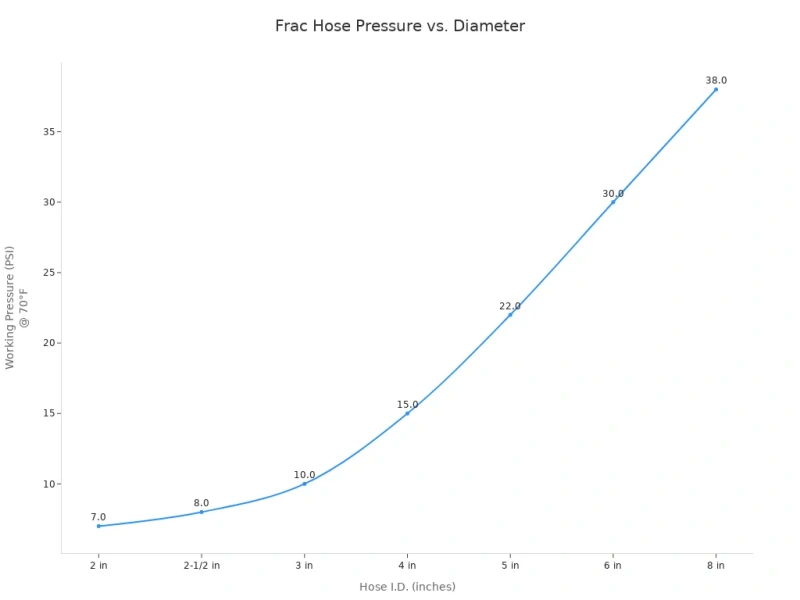
You can see how working pressure changes with hose size in the chart below:
Chemical and Abrasion Resistance
You need to consider chemical compatibility for every application. The hose material must resist the fluids you use, such as acids, slickwater, or proppant mixtures. If you choose the wrong hose material, you risk leaks, swelling, or hose failure.
Alienfrac hoses use advanced synthetic rubber and steel wire reinforcement to handle harsh chemicals and abrasive materials. This keeps your operations safe and reliable.
Abrasion resistance is also critical. Oilfield sites often expose hoses to rough surfaces, sand, and weather. A durable outer cover protects the hose from cuts, scrapes, and UV damage. Alienfrac hoses feature abrasion-resistant compounds that extend service life and reduce downtime.
Tip: Always check the hose’s chemical compatibility chart before use. Make sure the hose material matches your application fluids.
Flexibility and Size
Flexibility and size affect how you install and use the hose in your application. You need a hose that bends easily without kinking or losing strength. The right hose size ensures proper flow and reduces pressure loss.
Larger hose sizes move more fluid but may need more space and support. Smaller hoses fit tight spaces but may limit flow.
Industry guidelines, such as STAMPED, help you select the right hose size and flexibility:
- Choose a hose with a pressure rating above your system’s needs.
- Pick the correct length and inner diameter for your application.
- Make sure the hose material matches your fluids.
- Confirm the hose can handle your temperature range.
- Check for certifications like API 7K and test reports.
Alienfrac offers hoses in many sizes and lengths, with flexible designs for easy routing. You can customize hose size, length, and fittings to match your application. This ensures you get the best performance and safety.
Common Mistake: Do not choose a hose based only on price. Always check for certifications and make sure the hose fits your application’s pressure, temperature, and chemical needs.
By focusing on pressure, temperature, chemical resistance, abrasion protection, flexibility, and size, you can select the best frac hose for your oilfield application. Alienfrac’s certified hoses give you the reliability and safety you need for every job.
Comparing Alienfrac Frac Hose Types
Built-in vs. Crimped Hoses
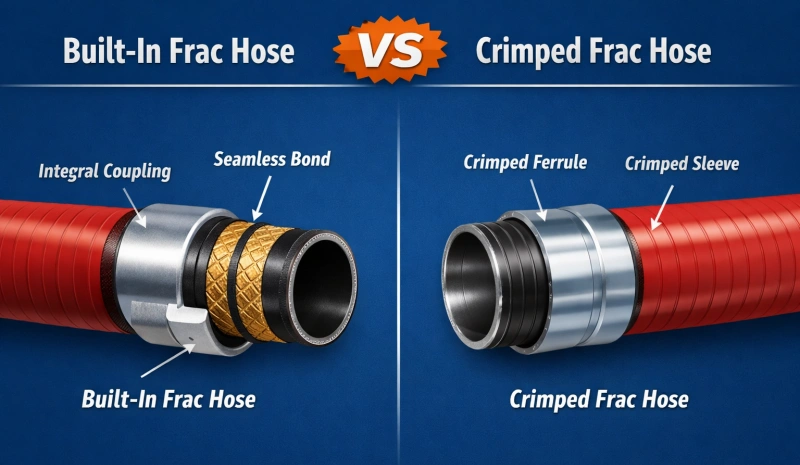
You need to choose between built-in and crimped hoses based on your site’s needs. Each type offers unique advantages for oilfield operations.
- Built-in frac hoses feature an integrated design. This reduces assembly time and lowers the risk of leaks or failures. You get more reliable and uninterrupted operations.
- Crimped frac hoses allow you to select specific hose and fitting combinations. This gives you flexibility for unique setups. However, you must pay close attention during the crimping process to ensure secure attachment. This can increase assembly time and maintenance.
- Built-in hoses provide long-term cost savings. They reduce downtime and maintenance expenses.
- Crimped hoses may cost less at first, but can lead to higher maintenance and operational costs over time.
- Both types require regular maintenance. Built-in hoses generally offer greater reliability because of their integrated construction.
Tip: For critical operations where reliability and efficiency matter most, built-in hoses often deliver the best results.
Specialized Hoses for Oilfield Needs
Alienfrac offers a wide range of hose types to match every oilfield requirement. You can select from high-pressure hoses, slickwater hoses, proppant hoses, chemical injection hoses, flowline hoses, and composite hoses. Each type is engineered for specific fluids, pressures, and site conditions.
Alienfrac high-pressure hoses stand out for their ability to replace steel pipes. These hoses use swaged fittings and reach working pressures of 15,000 PSI and 20,000 PSI. You benefit from flexible installation and longer service life compared to standard hoses.
Customization options help you optimize hose performance for your unique environment. The table below shows how different features can enhance your operations:
| Customization Option | Benefit |
|---|---|
| Advanced Polymers (PU) | Superior resistance to abrasion, chemicals, and temperature fluctuations. |
| Multi-Layer Construction | Handles pressures exceeding 5,000 PSI with enhanced integrity. |
| Reinforced Layers with Carbon Fiber | Improves load-bearing capacity and resistance to hydraulic shocks. |
| Anti-Kink Technology | Prevents flow restrictions and collapse under vacuum. |
| Embedded Sensors | Enables real-time monitoring and predictive maintenance. |
| Modular Designs | Simplifies repairs and reduces downtime. |
You can work with Alienfrac’s technical team to customize hose length, fittings, and materials. This support ensures you get the right solution for your oilfield challenges.
Ensuring the Right Hose: Durability and Compliance
Industry Standards and Certifications
You need to make sure your frac hose meets strict industry standards. Durability and compliance play a major role in keeping your oilfield operations safe and reliable. Alienfrac hoses stand out because they carry certifications from leading organizations.
These certifications prove that the hoses meet or exceed global quality and safety requirements.
Here is a comparison of key certifications and patented technologies:
| Certification/Patent Type | Details |
|---|---|
| API Certificates | API Q1, API 16C, API 7K |
| DOT Authentication | Meets Department of Transportation standards |
| New Invention Patents | Multiple patents for innovative hose technology |
| ISO 9001 | Certified quality management system |
| AMECA Certification | Complies with automotive standards |
| Working Pressure Ratings | Up to 15,000 PSI and 20,000 PSI |
| Enhanced Flexibility & Service Life | Advanced features for easier installation and longer lifespan |
Alienfrac hoses use high-quality steel and special coatings to resist corrosion and chemical damage. You benefit from hoses that last longer and perform better in harsh oilfield environments.
Longevity and Maintenance
You can extend the life of your frac hoses by following a few simple maintenance steps. Regular inspection and proper care help you avoid costly downtime and keep your operations running smoothly.
- Inspect hoses often to spot wear, cracks, or leaks.
- Store hoses correctly to prevent damage when not in use.
- Clean hoses after each use to remove fracking fluid residue.
- Train your team on safe handling and maintenance procedures.
- Flush hoses with clean water or approved solutions.
- Use low-pressure cleaning for stubborn deposits.
- Avoid harsh chemicals that could harm the hose material.
- Stay updated on safety regulations and best practices.
Tip: Schedule regular training sessions for your team. Well-trained operators help prevent accidents and extend hose service life.
The impact of regular inspection and maintenance is clear:
| Description | Impact on Downtime |
|---|---|
| Routine inspection prevents major issues | Reduces costly repairs and downtime |
| Early detection of wear or leaks | Ensures safe, reliable operation |
| Timely maintenance extends hose lifespan | Minimizes operational interruptions |
By choosing Alienfrac hoses and following these best practices, you ensure durability, safety, and compliance for every oilfield job.
Selecting Your Hose: Cost and Value
Cost vs. Service Life
When selecting your hose, you need to look beyond the initial price tag. The true value comes from balancing upfront costs with long-term reliability and reduced downtime. A hose that lasts longer and performs better will save you money over time. You should focus on these factors to maximize your investment:
- Safety and compliance with industry standards protect your team and equipment.
- Technological innovation in hose design increases durability and performance.
- Advanced materials extend service life and resist harsh oilfield conditions.
- Understanding your operational needs helps you make strategic purchasing decisions.
A customized frac hose can deliver significant cost savings. The table below highlights how tailored solutions impact your bottom line:
| Benefit | Description |
|---|---|
| Customization | Matches your exact size, length, and performance needs for a better fit. |
| Operational Efficiency | Improves fluid transfer and handling, saving time and resources. |
| Minimized Downtime | Reduces leaks and failures, keeping your operation running smoothly. |
Note: Investing in quality hoses up front reduces replacement frequency and lowers your total cost of ownership.
Manufacturer Support and Customization
Strong manufacturer support gives you a competitive edge in oilfield operations. Alienfrac offers a full range of services to help you get the most from your hoses. You benefit from:
- Custom hose assemblies, fittings, and fluid connectors for any application.
- On-site fabrication, repair, and pressure testing to ensure reliability.
- Fast shipping and maintenance support to minimize delays.
- Preventive maintenance solutions that reduce unexpected downtime.
- Technical consulting and predictive maintenance for better resource management.
- Compliance with API and ISO standards for peace of mind.
Alienfrac’s technical team works with you to design hoses that meet your specific requirements. This partnership ensures seamless integration and optimal performance in the field. You gain access to the latest innovations, quality control, and expert advice, all of which help you achieve reliable, cost-effective operations.
Tip: Manufacturer support and customization services not only improve hose performance but also lower your total cost of ownership over the life of your equipment.
Conclusion
You can select the right frac hose by following these essential steps:
- Evaluate pressure rating for safety.
- Assess temperature resistance for operational extremes.
- Check chemical compatibility to prevent hose failure.
- Consider abrasion resistance for durability.
| Aspect | Influence on Selection |
|---|---|
| Safety | Prevents leaks and failures under high pressure and corrosive fluids |
| Compliance | Ensures API and ISO standards for reliable operation |
| Cost-effectiveness | Reduces downtime and maintenance costs |
Use a quick checklist for every selection. Consult Alienfrac experts for tailored recommendations and reliable support.
FAQ
What is the main advantage of using Alienfrac frac hoses?
You get high durability, flexibility, and reliable performance under extreme oilfield conditions. Alienfrac hoses meet strict industry standards and offer advanced customization options for your specific needs.
How do you determine the correct hose size for your application?
Check your required flow rate, pressure, and installation space. Use the STAMPED guideline to match hose diameter and length to your system. Alienfrac experts can help you select the best fit.
How often should you inspect frac hoses in the field?
Inspect hoses before each use and after every job. Look for signs of wear, leaks, or damage. Regular inspection helps you prevent failures and extend hose life.
Can you customize Alienfrac hoses for unique oilfield setups?
Yes! You can request custom lengths, pressure ratings, fittings, and materials. Alienfrac’s technical team works with you to design hoses that match your exact requirements.