
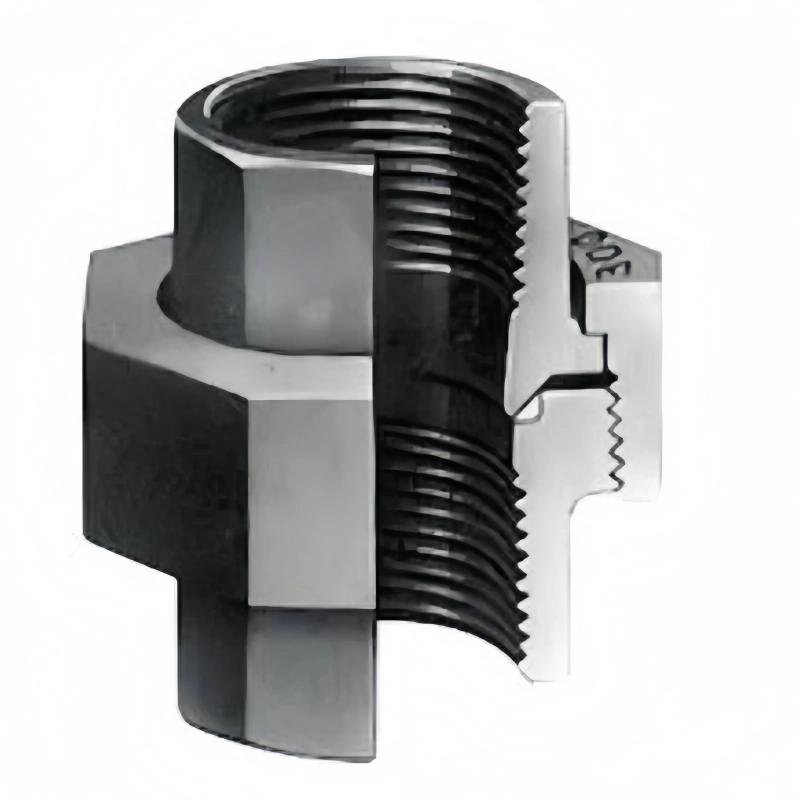
You must pay close attention to the hammer union flow direction in oilfield operations. Incorrect installation can cause leaks, speed up corrosion, and lead to system failure. These risks threaten both safety and productivity.
Alienfrac delivers reliable Hammer Union solutions that help you maintain high standards in every connection. You will find actionable steps in this article to troubleshoot and prevent common mistakes.
Key Takeaways
- Always check for visible signs of leaks, vibration, and sediment buildup at the pipe union. These symptoms often indicate flow direction errors.
- Verify the manufacturer markings and color codes on the hammer union to ensure correct flow direction and pressure rating.
- Use a checklist during installation to confirm flow direction, torque values, and alignment. This practice reduces errors and enhances safety.
- Conduct regular training and hands-on demonstrations to build confidence in recognizing and correcting installation mistakes.
- Follow proper installation techniques, including correct torque application and alignment, to prevent leaks and extend the service life of your hammer union.
Common Hammer Union Flow Direction Errors
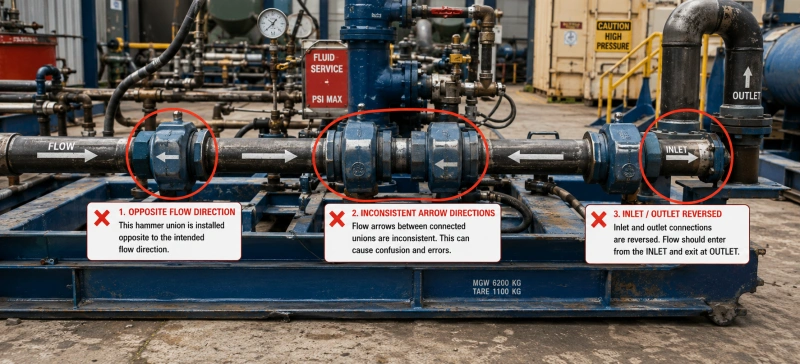
Symptoms in Oilfield Operations
You may notice several symptoms when the hammer union flow direction is incorrect. Leaks often appear at the pipe union connection, especially under high pressure. You might see vibration or hear unusual noises, which signal torque issues and possible misalignment.
Sediment or debris can build up inside the pipe union, reducing efficiency and increasing maintenance needs. If you observe pressure pulsations or inconsistent flow direction, these can indicate a problem with the installation. Sometimes, you find that wrench access is limited, making it hard to apply proper torque.
This can lead to loose connections and further leaks. In steam lines, improper direction of flow can cause heat to expand toward sensitive areas, making maintenance more difficult and increasing safety risks.
Tip: Always check for visible signs of leaks, vibration, and sediment buildup at the pipe union. These symptoms often point to flow direction errors.
Signs of Incorrect Installation
Spotting signs of incorrect installation helps you prevent costly downtime. You may see that the labeling or markings on the hammer union do not match the intended direction of flow. If the pipe union is difficult to inspect or the markings are hard to read, this can signal a misalignment.
You might find that torque cannot be applied evenly, which affects the seal and increases the risk of leaks. Sometimes, the union does not comply with project specifications, leading to operational failures.
When you notice that the direction of flow does not follow the manufacturer’s guidelines, you should review the installation. Consistent orientation makes inspections easier and ensures compliance with safety standards.
| Common Errors | Operational Risks |
|---|---|
| Incorrect flow direction | Leaks, vibration, sediment buildup |
| Misalignment | Uneven torque, loose connections |
| Poor labeling | Inspection delays, compliance risks |
| Wrong orientation | Maintenance access issues |
You protect your system by identifying these errors early. Proper hammer union flow direction ensures reliable torque, safe operation, and efficient maintenance.
Troubleshooting Hammer Union Flow Direction
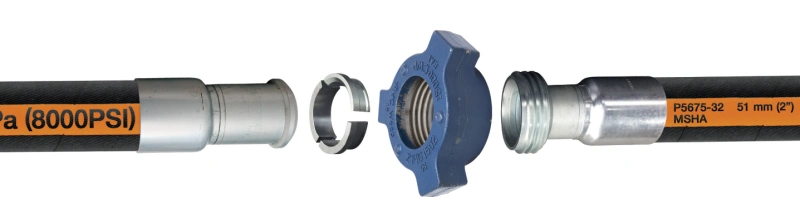
Visual Inspection Steps
You should begin troubleshooting hammer union flow direction with a thorough visual inspection. Start by examining the pipe union and surrounding connections for any visible signs of leaks or residue. Look for uneven wear or corrosion, which often points to improper installation practices or misalignment.
Check the orientation of the hammer union relative to the rest of the system. If you see that the union does not line up with the intended direction of flow, you may have found the root cause of the issue.
Alienfrac hammer unions feature color coding, which gives you a quick visual cue to identify the correct type and pressure rating. This practice helps you avoid incorrect connections and supports safe operations. When you see the correct color code, you can confirm that the union matches the system requirements.
Always inspect the sealing surfaces for damage, as this can affect torque and lead to leaks. If you notice any irregularities, address them before proceeding with further installation steps.
Tip: Use a flashlight to check hard-to-see areas around the pipe union. This helps you spot subtle signs of misalignment or improper torque application.
Checking Manufacturer Markings
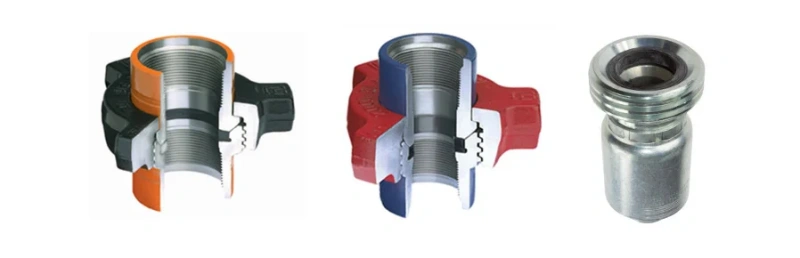
You must always check the manufacturer’s markings on the hammer union before finalizing installation. These markings provide essential information about the correct flow direction and pressure rating. Look for arrows cast or printed on the union body.
These arrows indicate the required orientation for proper flow direction. If you do not see clear markings, consult the technical specifications provided by Alienfrac. These documents include details about dimensions, torque values, and sealing surfaces.
Alienfrac hammer unions use both color coding and clear markings to help you verify the correct installation. The markings reduce the risk of errors and make inspections more efficient. You should also confirm that the union matches the project’s pressure rating.
Using the wrong rating can lead to compatibility issues and potential hazards. Always follow the manufacturer’s guidelines for torque and alignment to ensure a secure and leak-free connection.
- Look for arrows on the union body to confirm flow direction.
- Check color codes to verify pressure rating and compatibility.
- Review technical specifications for torque values and installation practices.
Verifying Direction of Flow
You need to verify the direction of flow before you complete the installation. This step ensures that the hammer union will perform as intended under high pressure. Follow these steps to confirm the correct orientation:
- Locate the flow arrow on the hammer union body.
- Position the union so the arrow matches the intended direction of flow in your system.
- Confirm the orientation relative to the pump or upstream source. The arrow should point away from the pump discharge.
- Apply the recommended torque to secure the connection. Use a calibrated torque wrench to avoid over-tightening or under-tightening.
- Inspect the pipe union for proper alignment. Misalignment can prevent you from achieving the correct torque and may cause leaks.
Industry standards require you to match the hammer union’s pressure rating with the mating parts. This practice prevents accidents and ensures safe operation. Always adhere to proper installation techniques, including correct torqueing, alignment, and lubrication.
Deviating from these steps can compromise the integrity of the connection.
Note: Consistent verification of flow direction and torque during installation reduces the risk of leaks, vibration, and maintenance issues. You protect your system and extend the service life of your equipment by following these best practices.
By following these troubleshooting steps, you can quickly identify and resolve errors in hammer union flow direction. Alienfrac’s color coding, clear markings, and robust technical support make it easier for you to maintain safe and efficient oilfield operations.
Fixing and Preventing Installation Errors
Safe Removal and Reinstallation
You must address hammer union flow direction errors quickly to protect your oilfield system. Begin by shutting down the affected section and relieving pressure. Use proper tools to loosen the pipe union, applying steady torque to avoid damaging the sealing surfaces.
Remove the union carefully, checking for signs of misalignment or uneven wear. Inspect both the male and female ends for corrosion or debris. Clean the connection points thoroughly before reinstalling.
Position the male end of the union on the upstream side. Place the female end and nut on the downstream side. This arrangement ensures proper sealing and supports the correct orientation. Align the union with the direction of flow. Tighten the nut using a calibrated torque wrench.
Apply torque evenly to achieve a secure fit and prevent leaks. Check the union for misalignment tolerance. If you notice any misalignment, adjust the connection before applying torque.
After reinstallation, inspect the pipe union for leaks and confirm that the flow direction matches the system requirements. Test the connection under operational pressure. Monitor for vibration or unusual noises.
These signs may indicate torque issues or improper installation practices. Document the steps you took and update your maintenance records.
Tip: Always use manufacturer-recommended torque values and follow Alienfrac installation practices. This approach reduces the risk of leaks and extends the service life of your hammer union.
Preventing Future Flow Direction Mistakes
You can prevent hammer union flow direction mistakes by adopting a systematic approach. Follow the manufacturer’s instructions regarding flow direction. Consult Alienfrac technical support if you encounter unclear guidelines. Design your piping system with appropriate supports.
Avoid using valves as rigid support points. Consider water hammer protection measures to safeguard your connections.
Create a checklist for each installation. Include steps for verifying the direction of flow, checking color codes, and confirming torque values. Position the pipe union so the orientation follows the direction of fluid flow. Proper orientation ensures the mechanical design functions correctly and minimizes misalignment.
Hands-on training builds confidence and muscle memory. Practical experience helps you recognize and correct mistakes before they escalate. Use live demonstrations to reinforce best practices. Checklists help you catch risky habits early and ensure consistent installation practices.
- Follow manufacturer’s instructions for flow direction.
- Consult technical support when guidelines are unclear.
- Design piping with proper supports and water hammer protection.
- Ensure the male end is upstream, and the female end is downstream.
- Orient the pipe union to match the direction of flow.
- Use checklists to verify torque, alignment, and flow direction.
- Provide hands-on training and live demonstrations.
| Preventative Measure | Benefit |
|---|---|
| Checklist for installation | Reduces errors |
| Hands-on training | Builds confidence |
| Proper orientation | Ensures correct flow direction |
| Manufacturer instructions | Supports safe installation |
| Water hammer protection | Prevents damage |
Note: Consistent use of checklists and training programs reduces installation errors. You improve safety and efficiency by following these preventative measures.
You maintain reliable hammer union flow direction by combining careful installation, proper torque application, and ongoing training. Alienfrac supports you with clear markings, color coding, and robust technical guidance. You protect your oilfield system and ensure long-term performance.
Conclusion
You ensure safe and efficient oilfield operations when you follow the right steps for hammer union flow direction. Start with visual inspections, confirm the direction of flow, and use manufacturer markings.
Always follow Alienfrac’s guidelines for pre-deployment checks, route planning, and pressure ramp-up. Regular training and proper handling keep your team prepared. Quality hammer unions deliver long-term benefits:
| Benefit | Description |
|---|---|
| Ease of Assembly and Disassembly | Quick connections save time and reduce downtime. |
| High Pressure and Durability | Reliable performance under extreme conditions. |
| Compatibility | Suitable for various fluids, preventing leaks and failures. |
Stay committed to best practices and ongoing training to protect your system and maximize performance.
FAQ
What is the main purpose of flow direction markings on a hammer union?
You use flow direction markings to ensure correct installation. These markings help you align the union with the system’s intended flow, which prevents leaks and supports safe operation.
How do you identify the correct pressure rating for your hammer union?
You check the color coding and manufacturer markings on the union. Alienfrac uses clear color codes and labels to help you match the union with your system’s pressure requirements.
What should you do if you cannot find flow direction markings?
Contact Alienfrac technical support for guidance. You can also review the product’s technical documentation. Never guess the flow direction, as this can cause safety risks.
Why is proper torque important during installation?
Proper torque ensures a secure seal. You avoid leaks and extend the service life of your hammer union by using a calibrated torque wrench and following manufacturer recommendations.
Can you reuse a hammer union after correcting a flow direction error?
You can reuse the hammer union if you find no damage or excessive wear. Always inspect the sealing surfaces and threads before reinstalling.