
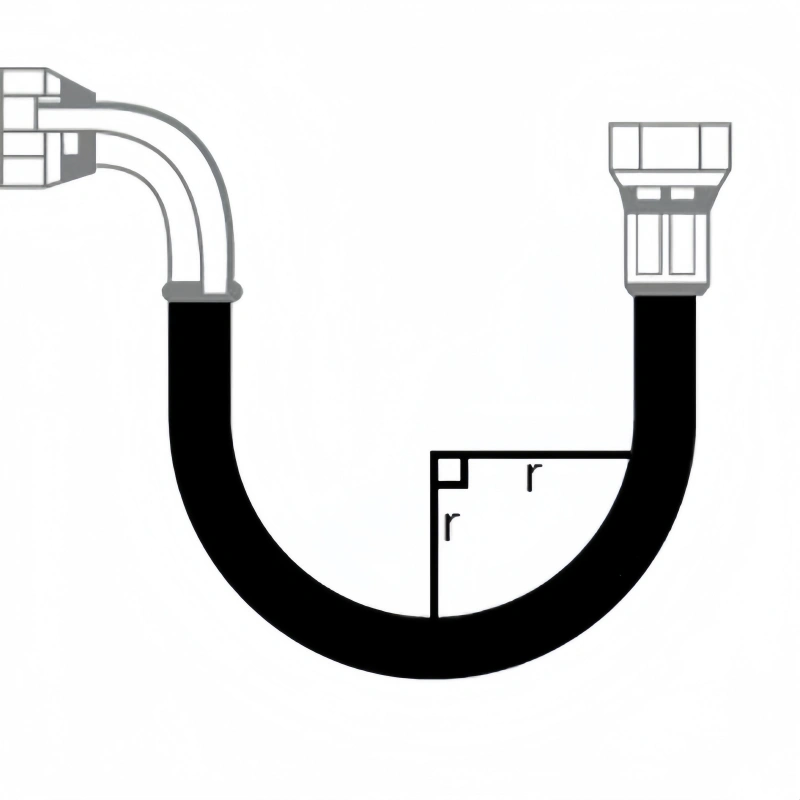
Imagine working at an oilfield site where a hydraulic hose bends sharply around machinery. You risk hose failure, leaks, or even dangerous bursts if you ignore the hydraulic hose bend radius. You need to understand how proper bending protects your equipment, improves performance, and extends service life.
The right hydraulic hose ensures reliable operation and safety in demanding environments.
Always respect the bend radius to prevent costly downtime and hazards.
Key Takeaways
- Always respect the minimum bend radius of hydraulic hoses to prevent kinking and ensure safe operation.
- Use manufacturer specifications to determine the correct bend radius for your hose type and application.
- Regularly inspect hoses for signs of wear, such as kinking or abrasion, to maintain performance and safety.
- Understand the difference between static and dynamic bend radius to choose the right hose for your needs.
- Consult technical support for expert advice on complex routing challenges to avoid costly failures.
Hydraulic Hose Bend Radius Basics
What is a Hose Minimum Bend Radius?
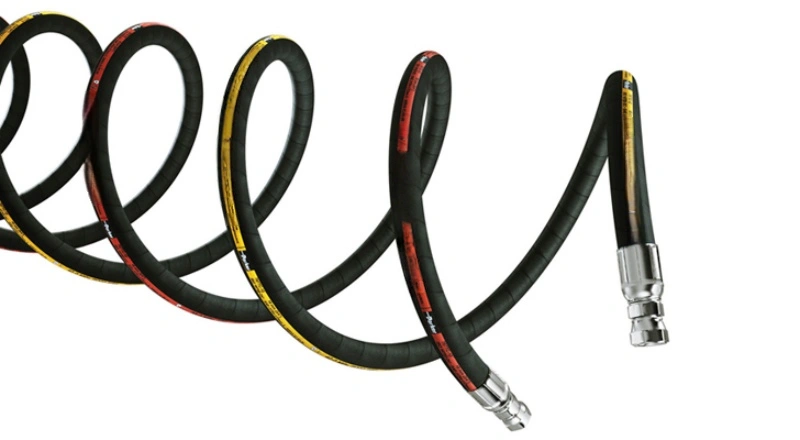
You need to understand the minimum bend radius when working with hydraulic hoses. The minimum bend radius is the smallest diameter you can bend a hose without causing kinks or damage. If you exceed this limit, you risk hose failure and compromise the entire hydraulic system.
In industrial settings, hoses often navigate tight spaces and sharp corners. You must respect the minimum bend radius to ensure safe and reliable operation.
Tip: Always check the manufacturer’s specifications for the minimum bend radius before installation.
Here is a table showing industry-accepted standards for minimum bend radius according to SAE specifications:
| SAE Standard | Minimum Bend Radius |
|---|---|
| SAE 100R6 | 2” to 6” |
| SAE 100R7 | 1” to 12” |
| SAE 100R8 | 1” to 12” |
| SAE 100R12 | 5” to 25” |
| SAE 100R13 | 9.5” to 25” |
| SAE 100R14 | 1-1/2” to 16” |
| SAE 100R15 | 6” to 21” |
| SAE 100R16 | 2” to 8” |
| SAE 100R17 | 2” to 6” |
| SAE 100R18 | 1” to 10” |
| SAE 100R19 | 2” to 6” |
You must follow these standards to prevent kinking and maintain hose integrity. The minimum bend radius is crucial in hydraulic hose bend radius calculations and helps you avoid costly downtime.
How Is Bend Radius Measured?
You measure the bending radius by following industry methods. First, check the hydraulic hose manual for the recommended minimum bend radius based on the hose’s inner diameter. Manufacturers provide these values to guide you during installation.
You can also estimate the bending radius using an empirical formula:
Minimum bending radius ≈ flexibility factor × hose inner diameter
Follow these steps to measure the bending radius:
- Find the hose’s inner diameter in the manufacturer’s datasheet.
- Locate the flexibility factor or minimum bend radius value.
- Multiply the flexibility factor by the inner diameter to estimate the minimum bend radius.
- Use a ruler or tape measure to check the actual bend during installation.
Note: Always use the manufacturer’s specifications for the most accurate minimum bend radius. Estimations help, but official values ensure safety.
You must avoid bending the hose below the minimum bend radius. This practice protects the hydraulic hose from damage and extends its service life.
Static vs Dynamic Bend Radius
You encounter two types of bending radius requirements in hydraulic hose applications: static and dynamic. Each type affects how you install and use hoses.
- Static Bend Radius: This is the smallest radius you can bend a hose without kinking when the hose stays fixed in place. You use static bend radius for hoses that do not move during operation.
- Dynamic Bend Radius: This is the smallest radius you can bend a hose without kinking while the hose moves or flexes. Dynamic bend radius accounts for movement and pressure changes. You must use a larger bending radius for dynamic applications because repeated bending stresses the hose.
The dynamic bend radius is crucial for flexible hydraulic hoses that experience movement. Manufacturers provide a bend factor to help you calculate the maximum bend radius for dynamic conditions. You multiply the minimum bend radius by this factor to ensure the hose withstands operational stresses.
Alert: In dynamic applications, always use a larger bending radius than in static setups. This practice prevents premature hose failure and keeps your hydraulic system running smoothly.
You must understand the difference between static and dynamic bend radius. This knowledge helps you choose the right hydraulic hose and install it correctly for each application.
Why Minimum Bend Radius Matters?
Risks of Exceeding Minimum Bend Radius
You face serious risks when you bend a hydraulic hose below its minimum bend radius. Exceeding this limit can cause catastrophic hose failure and create a safety hazard for everyone on site. You may see kinking, which blocks fluid flow and reduces efficiency.
Permanent deformation weakens the hose structure, making it prone to future failures. Increased pressure from tight bends can lead to violent ruptures. You must prevent damage by respecting the minimum bend radius.
- Safety hazards: Violent ruptures threaten personnel and equipment.
- Reduced flow rates: Kinking and obstruction decrease hydraulic fluid movement.
- Increased maintenance costs: Frequent failures raise replacement expenses.
- Kinking disrupts flow and lowers performance.
- Excess strain increases pressure and risks rupture.
- Permanent deformation weakens the hose and leads to more failures.
Exceeding the minimum bend radius causes severe structural damage, including compromised internal reinforcement and reduced flow capacity. You must prevent damage to maintain optimal performance and avoid costly downtime.
Impact on Performance and Safety
You must understand how improper bending radius affects hose performance and safety. An excessively small bend radius creates hidden stress that may not appear until a sudden burst occurs. The inner tube compresses and the outer cover stretches, distorting flow velocity and causing localized heating.
Micro-cracking can develop, leading to internal deformation and increased stress.
- Improper bend radius causes internal deformation and stress, risking rupture.
- Excessive bends create constrictions, forcing the hydraulic system to work harder and reducing efficiency.
- Uneven wire loading and heat buildup cause fatigue and eventual failure.
- Deformation reduces the hose’s ability to withstand pressure pulsation, leading to premature failures.
Regular checks help you identify hoses that do not meet standards. You ensure optimal performance and prevent safety hazards by maintaining the correct bending radius.
Signs of Hose Failure
You must watch for signs of hose failure related to bending radius damage. Kinking appears as folds or crimps that disrupt fluid flow.
External abrasion occurs when sharp bends cause the hose to rub against other components, damaging the outer cover. Internal damage results from excessive bending, causing fatigue, fractures, and cracks that may not be visible.
- Kinking disrupts hydraulic fluid flow and lowers hose performance.
- External abrasion wears down the hose cover, risking leaks.
- Internal fatigue leads to fractures and cracks, causing leaks or bursts.
You protect your hydraulic hose by monitoring these signs and preventing hose failure. Maintaining the minimum bend radius ensures optimal performance and safety in every application.
Factors Affecting Bending Radius
Hose Construction and Reinforcement
You must consider hose material and construction when evaluating the minimum bend radius. The type of reinforcement inside a hydraulic hose plays a major role in flexibility and performance. Textile braid hoses offer the greatest flexibility, allowing for the smallest bending radius.
These work well in low-pressure applications. Wire braid hoses use one or more layers of steel wire. More layers increase stiffness, so the minimum bend radius grows as reinforcement increases. Spiral wire hoses, designed for high-pressure environments, have the stiffest construction and require the largest bending radius.
Alienfrac’s Industrial Hydraulic Hose uses advanced reinforcement techniques. You benefit from options like textile braid for flexibility or spiral wire for demanding, high-pressure jobs. Each hose meets strict industry standards, ensuring reliable performance and safety.
- Textile braid: Smallest bend radius, high flexibility
- Wire braid: More layers mean larger minimum bend radius
- Spiral wire: Largest bend radius, best for high-pressure
Diameter, Pressure, and Temperature
The diameter of your hydraulic hose directly affects the minimum bend radius. Larger diameter hoses are stiffer and need a bigger bending radius. Higher pressure hoses have thicker walls, which also increases the minimum bend radius.
Extreme temperatures can change hose flexibility, so you must adjust your bending radius requirements in hot or cold environments.
| Factor | Effect on Minimum Bend Radius |
|---|---|
| Hose Diameter | Larger diameters require larger minimum bend radii |
| Pressure Rating | Thicker walls in higher pressure hoses increase bend radius |
| Temperature | Extreme temperatures alter flexibility and bend radius |
Alienfrac hoses are engineered to handle a wide range of pressures and temperatures. You can trust their construction to maintain performance even in harsh conditions.
Material and Application Type
Hose material and construction influence the minimum bend radius and overall performance. Synthetic rubber and steel wire reinforcement provide durability and flexibility. The application type also matters.
Static installations allow for a smaller bending radius, while dynamic applications—where hoses move or flex—require a larger radius to prevent fatigue.
You should always match the hose material and construction to your specific needs. Alienfrac’s Industrial Hydraulic Hose offers tailored solutions for oilfield, marine, and industrial uses. This ensures you meet all bending radius requirements and maximize the influence of bend radius on safety and efficiency.
Tip: Always consult manufacturer data to select the right hose for your application. The right choice extends service life and boosts performance.
How to Calculate Minimum Bend Radius of Hose?
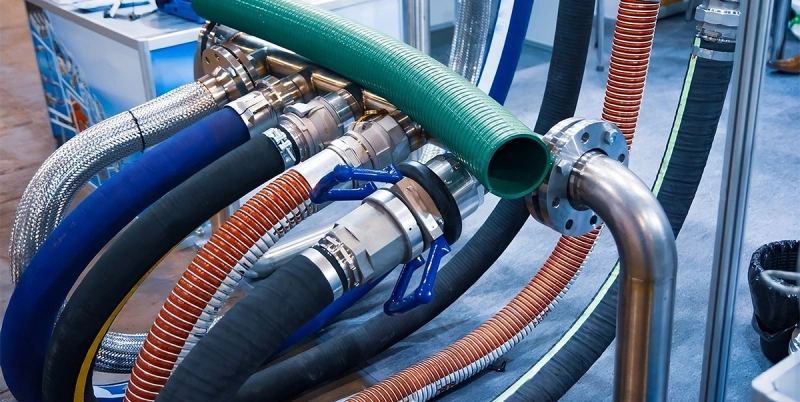
Understanding how to determine hydraulic hose bend radius is essential for safe and efficient system design. You need to follow a systematic approach to ensure your hose installation meets industry standards and maintains optimal performance.
This section guides you through using manufacturer specifications, understanding bend radius ratios, performing step-by-step calculations, and reviewing real-world examples.
Using Manufacturer Specifications
You should always start with the manufacturer’s datasheet when you want to determine hydraulic hose bend radius. Manufacturers like Alienfrac provide detailed specifications for each hose model. These specifications reflect the hose’s material quality, reinforcement design, and intended application.
They also account for the latest trends in compact machinery, which often require hoses with smaller bending radii.
- Manufacturer specifications consider the hose’s construction and material.
- Application-specific requirements influence the minimum bend radius.
- Modern hoses often support tighter bends for space-saving installations.
Alienfrac’s product datasheets list the minimum bend radius of hydraulic hose for every model. You can contact Alienfrac’s technical support for custom solutions or clarification on unique applications. This ensures your installation meets both safety and performance requirements.
Tip: Always use the minimum bend radius values from the official datasheet. These values guarantee compliance with industry standards and maximize hose service life.
Bend Radius Ratios and Standards
Industry organizations such as SAE and ISO set clear standards for the minimum bend radius of hydraulic hose. These standards use bend radius ratios, which relate the hose’s inner diameter to its minimum bend radius. You can use these ratios to quickly estimate the required bending radius for your application.
Here is a table showing common standards:
| SAE Standard | ISO Equivalent | Min Bend Radius |
|---|---|---|
| SAE 100R1AT | ISO 1436-1 Type R1AT | 3.5 inches (90mm) |
| SAE 100R2AT | ISO 1436-1 Type R2AT | 5.0 inches (130mm) |
| SAE 100R12 | ISO 3862 Type R12 | 5.5 inches (140mm) |
| SAE 100R17 | ISO 11237 Type R17 | 2.0 inches (50mm) |
You should check which standard applies to your hose type. Alienfrac’s Industrial Hydraulic Hose complies with these international standards, ensuring you always have reliable data for your calculations.
Step-by-Step Calculation
You can calculate the minimum bend radius of hydraulic hose by following a straightforward process. This method ensures you avoid kinking and maintain hose performance.
- Identify the inner diameter (ID) of your hydraulic hose. You can find this information printed on the hose or in the product datasheet.
- Find the minimum bend radius ratio for your hose type. The manufacturer or industry standard provides this ratio.
- Multiply the inner diameter by the bend radius ratio. The result is the minimum bend radius you must use during installation.
Example: If your hose has an inner diameter of 1 inch and the bend radius ratio is 4:1, then the minimum bend radius is 4 inches.
This calculation helps you plan your hose routing and ensures you do not exceed the recommended bending radius.
Example Calculations
Let’s look at how you can apply these steps in real-world scenarios:
Example 1:
You have a hydraulic hose with an inner diameter of 1 inch. The manufacturer specifies a bend radius ratio of 4:1.
- Minimum bend radius = 1 inch × 4 = 4 inches
Example 2:
You select a hose with an inner diameter of 2 inches. The datasheet lists a bend radius ratio of 6:1.
- Minimum bend radius = 2 inches × 6 = 12 inches
Example 3:
You use an Alienfrac Industrial Hydraulic Hose with an inner diameter of 1.5 inches. The datasheet recommends a bend radius ratio of 5:1.
- Minimum bend radius = 1.5 inches × 5 = 7.5 inches
You can see how these calculations help you determine hydraulic hose bend radius for any application. Always consult Alienfrac’s datasheets or technical support for the most accurate minimum bend radius of hydraulic hose. This practice ensures your system operates safely and delivers peak performance.
Note: For custom applications or unique installation challenges, reach out to Alienfrac’s technical team. They can help you select the right hose and confirm compliance with all industry standards.
Measuring Bend Radius in Practice
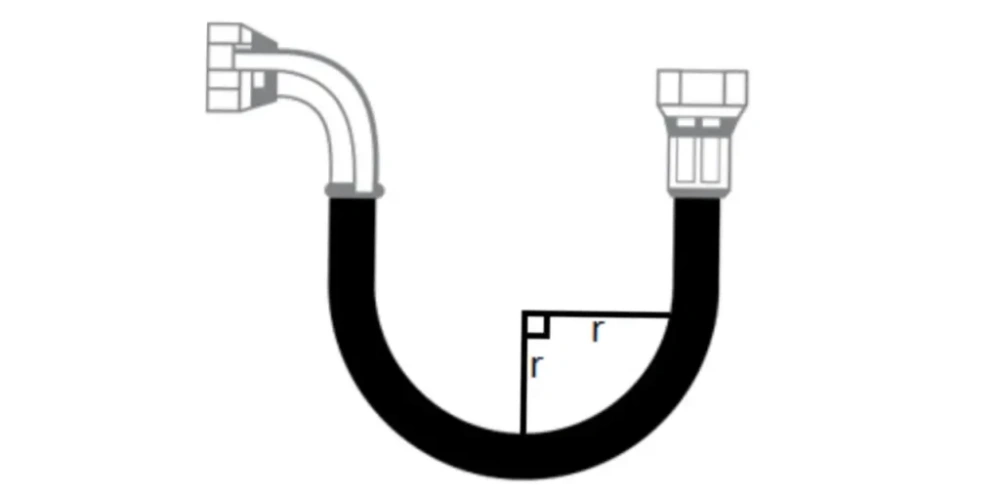
Tools and Techniques
You need the right tools to measure the bending radius accurately during installation. These tools help you avoid mistakes and ensure your hydraulic hose performs as expected. Here are some essential items you should use:
- Measuring tape: Use this to measure the distance between connection points along the hose’s path.
- Protractor: This tool helps you measure angles and determine the required bending radius for proper hose routing.
- Hose assembly calculator: Many manufacturers offer online calculators. You can input your hose specifications to find the correct hose length and bending radius.
- Bend radius gauge: This tool checks that your hose bends do not exceed the specified minimum radius during installation.
These tools make it easier to follow best practices and maintain the correct hydraulic hose bend radius. You can prevent kinks and damage by using them during every installation.
Ensuring Installation Compliance
You must follow industry standards and manufacturer recommendations to ensure your installation meets minimum bending radius requirements. For fixed installations, you only need to check compliance once during setup.
In dynamic applications, such as those involving moving machinery or industrial robots, you must use a smaller bending radius to handle repeated motion. Standards from organizations like NEC, TIA, and IEC provide clear guidelines for different hose and cable types.
Following these standards is critical for safety and reliable operation. Improper bending can lead to serious safety risks and equipment failure. Always review the manufacturer’s datasheet and consult technical support if you have questions about compliance.
Tip: Consistent checks and proper tools help you maintain safe and efficient hydraulic systems.
Installation Best Practices
Routing and Straight Sections
You must follow best practices for hose routing to maintain system safety and efficiency. Proper hose routing prevents stress, kinks, and premature wear. Use these best practices for hose routing to preserve the minimum bend radius and extend hose life:
- Provide enough slack in the hose routing to allow for changes in length when the hose is pressurized.
- Avoid clamping hoses at bends. This allows the hose to flex naturally and prevents damage.
- Use angle adapters in hose routing to prevent sharp bends that could exceed the minimum bend radius.
- Distribute hose length evenly along the hose routing path to reduce concentrated stress.
- Clamp hoses at changes of plane to prevent twisting and maintain alignment.
- Avoid direct hose routing with tight bends. This makes maintenance easier and reduces wear.
- Bend hoses in the same plane during hose routing to prevent torsional stress.
- Use angle adapters as needed to maintain the minimum bend radius in all hose routing scenarios.
Tip: Always plan hose routing before installation. This step helps you avoid costly mistakes and ensures proper bending practices.
Avoiding Common Mistakes
Many installation errors occur during hose routing. These mistakes can lead to system failure and safety risks. The table below highlights frequent issues and solutions:
| Mistake | Description | Solution |
|---|---|---|
| Violating Minimum Bend Radius | Bending the hose too sharply can cause kinks and stress on the reinforcement, leading to potential failure. | Always adhere to the specified minimum bend radius and plan the routing accordingly. |
Other common mistakes include using hoses that are too short, forcing hoses into confined spaces, and ignoring manufacturer specifications. You can prevent these problems by checking the minimum bend radius and using angled fittings in your hose routing.
Tips for Dynamic Applications
Dynamic applications require special attention to hose routing. Movement and vibration can increase stress on the hose. Follow these tips for best practices for hose routing in dynamic systems:
- Use longer hose routing paths to distribute flexing over a greater length.
- Avoid clamping hoses at points where they need to move.
- Select hoses designed for flexibility and dynamic use.
- Inspect hose routing regularly for signs of wear or fatigue.
You can ensure safe operation and long service life by following proper bending practices and focusing on correct hose routing in every application.
Flexibility, Service Life, and Maintenance
Bend Radius and Hose Flexibility
You must understand how the hydraulic hose bend radius impacts flexibility and overall performance. The ability of a hose to flex without damage depends on several factors, including temperature, pressure, and construction. Cold temperatures reduce elastomer flexibility.
When you operate below 0°F (-18°C), you should increase the minimum bend radius by 15-20%. At extreme cold, such as -40°F (-40°C), you may need to increase the bend radius by 30-50%. High temperatures can make hoses more pliable, but they may also reduce structural integrity.
In these cases, you can sometimes reduce the bend radius by 5-10% if temperatures exceed 150°F (65°C). Thermal cycling creates extra stress, so you should always manage bend radius conservatively.
Pressure also affects flexibility. Low-pressure systems below 1500 PSI allow for smaller bend radius factors, usually 4-6 times the outer diameter. Medium-pressure systems between 1500-3000 PSI require more conservative bend radius factors, around 6-8 times the outer diameter.
If you bend hoses below these specifications, you can reduce burst pressure ratings by 15-25%. Spiral hoses need larger bend radius factors—30-50% more than braided hoses—because of their structure.
Maintaining proper flexibility ensures optimal performance and extends service life. You protect your equipment and maximize longevity by respecting these guidelines.
Longevity and Inspection
You play a key role in maximizing the longevity of your hydraulic hoses. Bending a hose beyond its specified radius can cause structural damage to the reinforcement layers and inner liner. This damage leads to leaks and reduces flow capacity, which lowers performance and shortens service life.
Excessive bending constricts the inner diameter, increases pressure drop, and accelerates wear. Over time, repeated bending beyond the limit causes cracks, kinks, and eventual failure, reducing longevity.
Regular inspections are critical for maintaining hose longevity and performance. You should check for abrasion marks, cuts, gouges, exposed wire braid, oil saturation, chemical damage, kinks, twists, or crushing. Always verify that you maintain the correct bend radius.
Inspection frequency depends on application severity. For high-pressure systems, inspect daily. For standard operations, inspect weekly. For low-risk systems, monthly checks are enough.
Tip: Consistent inspection and proper bend radius management are the best ways to ensure maximum service life and longevity for your hydraulic hoses.
By following these practices, you support safe operation, reliable performance, and the longest possible service life for every hose in your system.
Manufacturer Support and Resources
Alienfrac Product Support
You gain a significant advantage when you rely on Alienfrac for hydraulic hose selection and maintenance. Alienfrac provides comprehensive resources to help you choose the right hose and maintain proper bend radius. You access detailed datasheets that specify the minimum bend radius for each hose model.
These datasheets guide you in preventing kinks and avoiding damage to the hose reinforcement. You also receive recommendations for using elbow fittings or angled adapters in tight spaces, which helps you avoid forcing the hose into sharp bends.
Alienfrac’s technical support team assists you throughout the installation process. You can ask questions about hose construction, size, and routing. The team explains why planning the hose path is crucial.
Proper planning improves hose lifespan and promotes laminar flow, which prevents turbulence and erosion inside the hose. Alienfrac ensures you follow industry standards and manufacturer guidelines, so your system operates safely and efficiently.
Tip: Always check the minimum bend radius in the datasheet before installation. Use angled adapters for tight turns to protect your hose and maintain optimal flow.
When to Seek Expert Advice
You should seek expert advice when you face complex challenges with hose routing or bend radius. If you risk exceeding the minimum bend radius, consult Alienfrac’s specialists. Exceeding this limit can cause damage to hose reinforcement, kinks, collapsed hoses, restricted flow, and premature failure.
You avoid costly downtime and fluid leaks by following expert recommendations.
You benefit from expert guidance when optimizing hose routing for unique applications. Alienfrac’s team helps you design safe and efficient systems, especially when working with high-pressure or dynamic environments.
You maintain a safe bend radius and extend the service life of your hydraulic hose by consulting professionals.
Alert: Reach out to Alienfrac’s technical support if you encounter tight bends or unusual routing requirements. Expert advice prevents failures and ensures reliable operation.
Conclusion
You protect your team and equipment when you respect hydraulic hose bend radius. Ignoring this guideline can cause catastrophic failures and disrupt operations. Quality hoses like Alienfrac’s Industrial Hydraulic Hose deliver wear resistance, chemical stability, and reliable performance.
- Longer hose life
- Uninterrupted fluid flow
- Reduced downtime
| Standard | Description |
|---|---|
| SAE J1273 | Guidelines for safe hose routing and minimum bend radius |
| ISO 17165-2 | Comprehensive standards for hydraulic hose bend radius compliance |
You maintain system reliability by inspecting hoses regularly and following manufacturer recommendations.
FAQ
What happens if you bend a hydraulic hose below its minimum bend radius?
You risk kinking, internal damage, and reduced flow. This can cause leaks or sudden hose failure. Always follow the manufacturer’s minimum bend radius to keep your system safe and reliable.
How do you find the minimum bend radius for your hose?
Check the product datasheet or manufacturer’s website. Alienfrac provides clear specifications for each hose model. You can also contact technical support for guidance on special applications.
Can you use the same bend radius for all hose types?
No. Different hoses have unique constructions and reinforcement. Each type requires a specific minimum bend radius. Always verify the correct value for your hose before installation.
Does temperature affect the bend radius of hydraulic hoses?
Yes. Extreme cold makes hoses less flexible, so you need a larger bend radius. High temperatures may allow slightly tighter bends. Always adjust your installation based on the operating environment.