
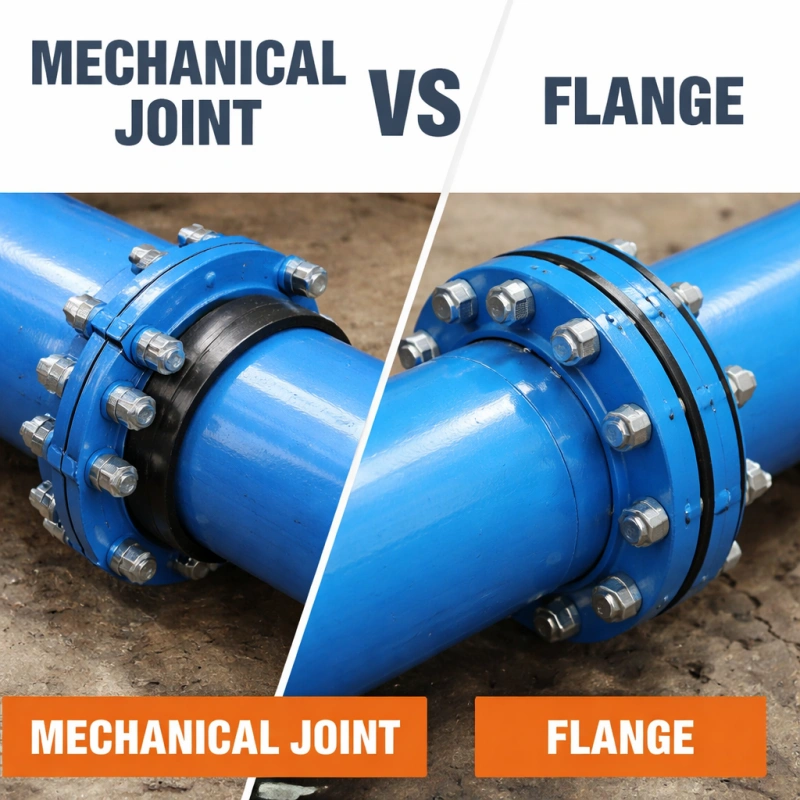
Choosing the right connection can determine the safety and reliability of a pipeline system. In the mechanical joint vs flange debate, mechanical joints excel in underground or low-pressure settings, often saving up to 40% on installation costs for pressures below 350 psi.
Flanges provide a secure, bolted solution for high-pressure or critical applications, handling extreme conditions such as 15,000 psi or high temperatures. Mechanical joints and flanges each serve distinct roles, making proper selection essential for project success.
Key Takeaways
- Mechanical joints are ideal for low-pressure applications, offering easier installation and flexibility for underground systems.
- Flange connections excel in high-pressure environments, providing strong, leak-proof seals suitable for critical applications.
- Choosing the right connection type depends on factors like pressure, temperature, and the nature of the media being transported.
- Regular maintenance and inspections are crucial for both connection types to ensure safety and reliability over time.
- Consulting with experts can help ensure the best choice for your project, especially in complex or high-pressure situations.
Mechanical Joint vs Flange Overview
Mechanical Joint Basics
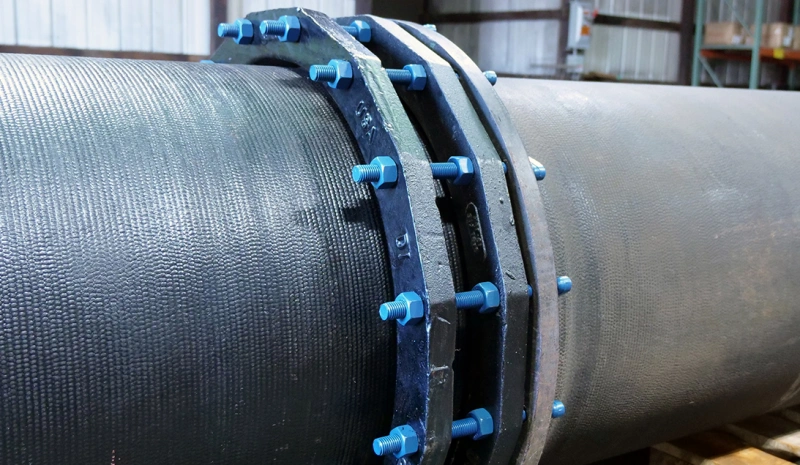
Workers often choose mechanical joint fittings for underground installations because they allow for some flexibility and can accommodate minor misalignments. The mechanical joint connection process does not require welding, which makes installation faster and easier.
Mechanical joint fittings play a vital role in connecting pipes, especially in water supply, wastewater, and low-pressure industrial systems. These fittings use a combination of a gland, gasket, and bolts to create a tight seal around the pipe.
Maintenance teams can disassemble these fittings quickly for repairs or replacements, reducing downtime. Mechanical joint fittings work best in low-pressure applications, such as municipal water lines, steam systems, and other non-flammable, non-explosive media.
Their design supports the use of pipes made from the same material, which helps maintain system integrity.
Flange Connection Basics
Flange fittings provide a strong and rigid connection for pipelines that must withstand high pressure and temperature. The use of flanges involves bolting two flange faces together with a gasket in between, creating a leak-proof seal. Flange fittings come in several types, including weld neck, threaded, and blind flanges.
Each type serves a specific purpose in high-pressure systems. The flanged joint design allows for easy access during maintenance, as workers can unbolt the connection to inspect or replace components. The use of flanges is common in oil and gas, chemical, and power industries, where safety and reliability are critical.
Alienfrac stands out as a trusted source for high-pressure connection solutions, offering API flanges that meet strict industry standards. These flange fittings handle pressures up to 20,000 psi, making them ideal for demanding environments.
Key Differences
The mechanical joint vs flange debate centers on their core functional differences. Mechanical joint fittings offer easier and faster installation, making them suitable for projects with tight schedules or limited access.
Flange fittings, on the other hand, require more complex installation steps but provide a strong and rigid connection that excels in high-pressure systems. The following table summarizes the main differences:
| Feature | Mechanical Joint Fittings | Flange Fittings |
|---|---|---|
| Installation Process | Easier and faster | More complex |
| Pressure Capabilities | Lower-pressure applications | High-pressure systems |
| Flexibility | Allows for misalignment | Rigid, less flexible |
| Maintenance | Easy to disassemble for repairs | Easier access for maintenance |
Mechanical joint vs. flange selection depends on the application. For example, mechanical joint fittings are preferred in low-pressure, underground, or municipal water systems.
Flange fittings are the top choice for high-pressure, flammable, or hazardous media, and for connecting pipes of different materials or diameters. The table below highlights these preferred scenarios:
| Connection Type | Preferred Scenario |
|---|---|
| Mechanical Joint | Low-pressure applications, non-flammable and non-explosive media, same material pipes (e.g., water, steam) |
| Flange | High-pressure applications, flammable and explosive media, different materials, or pipes of different diameters |
The mechanical joint vs flange comparison shows that each fitting type serves a unique role in pipeline design. Mechanical joint fittings offer flexibility and speed, while flange fittings deliver unmatched strength and reliability.
Alienfrac provides high-quality flange fittings for high-pressure systems, ensuring safety and performance in critical applications. Choosing the right pipe fitting depends on the specific needs of the project and the operating environment.
Design and Components
Mechanical Joint Structure
Mechanical joint fittings use a straightforward design that supports quick installation and reliable performance. Workers assemble these fittings by compressing a gasket between pipe ends using a gland and securing the assembly with bolts and nuts.
This structure allows for flexibility and minor misalignment, making mechanical joint fittings ideal for underground or low-pressure systems. The table below outlines the main components and their functions:
| Component | Function |
|---|---|
| Gasket | Provides the sealing interface between pipe ends. |
| Gland (or follower ring) | Compresses the gasket into place. |
| Bolts and nuts | Apply uniform pressure to secure the assembly. |
Mechanical joint fittings offer several advantages:
- Easier and faster installation compared to welded or flanged connections.
- Flexibility and misalignment tolerance, accommodating minor pipe movement.
- Repairability, allowing easy disassembly for maintenance.
Flange Structure
Flange fittings feature a robust design that ensures secure connections in high-pressure environments. The structure includes two flange faces, a gasket, and bolts that create a tight seal. Alienfrac API Flanges stand out for their precision machining and consistent quality.
These flange fittings handle pressures up to 20,000 psi and meet API standards, making them suitable for oil, gas, and power systems. Alienfrac offers weld neck, threaded, and blind flanges, each designed for specific applications.
The use of corrosion-resistant materials ensures durability and long-lasting performance. Alienfrac API Flanges provide leak-free connections and reduce maintenance costs in demanding environments.
Material Options and Standards
Manufacturers select materials for mechanical joint fittings and flange fittings based on operating conditions. Common choices include steel, stainless steel, and alloy. Industry standards guide the selection and design of these fittings. The table below summarizes key standards:
| Standard | Description | Size Range | Pressure Rating |
|---|---|---|---|
| AWWA C207 | Steel Pipe Flanges for Waterworks Service | 4 in. to 144 in. | Up to 300 psi |
| AWWA C228 | Stainless-Steel Pipe Flange Joints for Water Service | 2 in. to 72 in. | Water/wastewater limits |
AWWA standards focus on potable water use, while ANSI/ASME standards address industrial applications. AWWA ratings apply at atmospheric temperatures, and ANSI covers a wider range.
ANSI includes more flange types, such as weld neck and socket weld flanges. API standards ensure high-pressure performance for oil and gas systems.
Installation Process
Mechanical Joint Installation
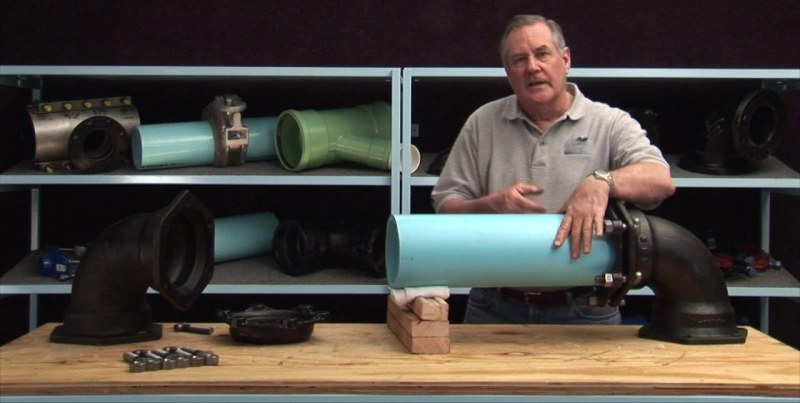
Mechanical joint fittings offer easier and faster installation compared to other connection types. Workers begin by cleaning and smoothing the sealing surface from the pipe end to the groove. They check that the width and depth of the groove meet technical requirements.
The next step involves gathering all necessary components, such as the mechanical joint bell, gland, gasket, and tee-head bolts and nuts. Workers insert the gland and gasket into the mechanical joint bell of the connecting pipe, valve, or fitting.
They then place the tee bolts into the gland and bell, tightening them evenly to compress the gasket and form a secure seal. Throughout the installation, they ensure the pipeline remains concentric.
This process helps maintain the integrity of mechanical joint fittings and reduces installation time and cost, especially in underground or low-pressure systems.
Flange Installation Steps
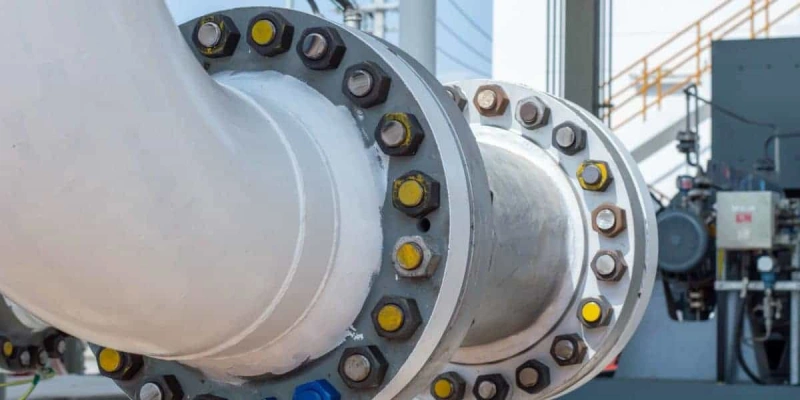
Flange fittings require a more detailed installation process, especially in high-pressure or critical applications. Workers first confirm that all flange fittings comply with standards such as ASME B16.5, ASME B16.47, or API 6A.
They select the appropriate flange type, such as weld neck or ring-type joint, based on the system’s needs. Material selection plays a key role, with options like carbon steel, stainless steel, or alloy steel for durability. Workers choose the right gasket, often spiral wound or ring joint, to ensure a reliable seal.
Using calibrated torque wrenches, they tighten bolts in a specific sequence to achieve even pressure. Regular inspection for corrosion, cracks, or leaks follows, along with hydrostatic testing to verify the connection’s integrity.
Tools and Expertise Needed
Mechanical joint fittings require basic hand tools, including wrenches and torque tools, for proper assembly. Workers must understand the importance of surface preparation and correct bolt tightening. Flange fittings demand more advanced tools, such as calibrated torque wrenches and alignment devices.
Installation teams need experience with industry standards and safety protocols. Proper training ensures that both mechanical joint and flange installations meet performance and safety requirements.
Performance Comparison
Pressure and Temperature Ratings
Mechanical joints and flange connections show clear differences in pressure and temperature performance. Mechanical joints work best in underground water systems and allow for some joint deflection. They handle pressures up to 350 psi for sizes 2″ to 24″, and 250 psi for larger sizes.
These joints are less sensitive to temperature changes, which helps maintain a reliable seal in varying conditions. Flange connections, on the other hand, provide a strong and rigid connection for high-pressure systems.
Flanges follow ASME B16.5 standards, with pressure classes from 150 to 2500. For example, a Class 150 flange can handle 285 psi at 100°F, but this rating drops as temperature rises. Flanges are better suited for high-pressure and high-temperature applications, making them the preferred choice for critical systems.
| Connection Type | Pressure Rating | Temperature Dependency |
|---|---|---|
| Mechanical Joints | Up to 350 psi (2″–24″), 250 psi (30″–36″) | Less sensitive to temperature changes |
| Flange Connections | Class 150: 285 psi at 100°F, 170 psi at 500°F | Pressure decreases as temperature increases |
Sealing and Leak Prevention
A secure and leak-proof seal remains essential for any pipeline system. Mechanical joints use a gasket compressed by a gland and bolts to create the seal. This design works well for low-pressure water or steam lines but may not prevent leakage under high pressure or vibration.
Flange connections use a gasket between two flange faces, tightened by bolts. This method provides a stronger seal, especially in high-pressure or hazardous environments.
Flanges also allow for regular inspection and replacement of the gasket, which helps prevent leakage over time. Both connection types rely on proper installation and maintenance to ensure the seal remains effective.
Flexibility and Misalignment
Mechanical joints offer more flexibility than flanges. They can accommodate minor misalignments and pipe movement, which reduces stress on the system. This flexibility helps absorb vibration and allows for some thermal expansion without breaking the seal.
Flange connections provide a rigid joint, which means they handle less misalignment but offer better control over the seal in high-pressure systems. The table below shows how each connection type manages misalignment:
| Misalignment Type | Description |
|---|---|
| Angular | Pipes meet at an angle, causing bending stress at the joint. |
| Parallel | Pipes are parallel but offset, creating shear stress. |
| Axial | Pipe ends move closer or farther apart, risking seal failure. |
Mechanical joints help prevent leakage caused by movement or vibration. Flanges, while less flexible, maintain a strong seal in stable, high-pressure environments.
Cost and Maintenance
Material and Manufacturing Costs
Material selection impacts both the initial cost and long-term value of pipeline connections. Mechanical joint fittings often use ductile iron or carbon steel, which keeps manufacturing costs low.
Flange connections, especially those designed for high-pressure systems, require premium materials like stainless steel, alloy steel, or super duplex stainless steel. Alienfrac API flanges use advanced alloys and precise machining to ensure durability and performance in demanding environments.
Manufacturers must follow strict standards such as API 6A or ASME B16.5, which can increase production costs but guarantee reliability. Engineers choose materials based on operating pressure, temperature, and corrosion resistance.
Investing in high-quality flanges reduces the risk of leaks and failures, saving money over the lifecycle of the system.
Installation and Labor
Installation and labor costs vary significantly between mechanical joints and flange connections. Mechanical joints require less time and fewer specialized tools, making them ideal for projects with tight budgets or schedules.
Flange connections demand careful alignment, torque-controlled bolting, and compliance with industry standards. Workers spend more time on each flange joint, especially in high-pressure applications. The table below compares typical installation times and labor costs:
| Connection Type | Installation Time (minutes) | Labor Cost per Joint ($) |
|---|---|---|
| Grooved Couplings | 5 to 10 | 4 to 8 |
| Flange Connections | 15 to 20 | 12 to 17 |
| Welding | 20 to 30 | 20 to 50 |
Mechanical joints offer faster installation and lower labor costs. Flange connections, while more expensive to install, provide superior strength and reliability. Alienfrac API flanges deliver consistent quality, which helps reduce errors and rework during installation.
Maintenance and Lifecycle
Maintenance requirements depend on the connection type and operating environment. Mechanical joints allow easy disassembly for repairs, making them suitable for systems that need frequent maintenance.
Flange connections require regular inspection of bolts and gaskets, especially in high-pressure or corrosive conditions. Alienfrac API flanges feature corrosion-resistant materials and precision engineering, which extend service life and minimize downtime.
Engineers recommend scheduled maintenance to check for leaks, gasket wear, and bolt tension. Investing in high-quality flange fittings reduces the frequency of repairs and lowers overall lifecycle costs. Reliable connections ensure safe operation and protect valuable assets in oil, gas, and power systems.
Tip: Choosing the right connection type and material can significantly reduce maintenance costs and improve system reliability.
Applications and Use Cases
Mechanical Joint Applications
Mechanical joints serve a wide range of applications in municipal, industrial, and utility piping systems. Engineers rely on these connections for their flexibility and ease of installation. Common applications include:
- Waterworks systems, where they secure pipe joints in municipal water distribution networks.
- Wastewater systems helping prevent leaks and environmental contamination.
- Oil and gas pipelines, where they mitigate the risk of hazardous spills.
- Industrial applications, maintaining system integrity during pressure and temperature changes.
- Fire protection systems, ensure an uninterrupted water flow to hydrants and sprinklers.
Mechanical joints often use restraining glands and locking rings to keep pipes securely connected. These features are especially important at bends and valves, where system failures can cause significant disruptions.
Flange Applications with Flanges
Flange connections play a critical role in high-pressure systems. Their robust design and reliable sealing make them the preferred choice for demanding environments. Typical applications include:
- Oil and gas production facilities, where flanges connect pipelines that transport crude oil, natural gas, and refined products.
- Chemical processing plants, which require secure connections to handle aggressive chemicals and high temperatures.
- Power generation stations, where flanges maintain the integrity of steam and cooling water lines.
Alienfrac API Flanges stand out in these applications. Their precision machining and use of corrosion-resistant materials ensure reliable performance in high-pressure systems. These flanges meet strict industry standards, making them ideal for industrial piping systems that demand safety and durability.
Real-World Examples
Mechanical joints have proven their value in challenging environments. For example, single flanged expansion joints in a Louisiana pipeline used 304L stainless steel and carbon steel to resist corrosion and provide structural strength.
These joints operated at 300°F and 85 psig, accommodating thermal expansion and misalignment. Hydrostatic testing confirmed their reliability before installation.
Flange connections also demonstrate exceptional performance in real-world applications. Their high-strength materials and leak prevention capabilities make them essential in oil and gas, chemical, and power industries.
Alienfrac API Flanges deliver secure, leak-free connections that reduce maintenance costs and downtime, providing lasting value in the most demanding environments.
Note: Selecting the right connection for each application ensures system safety, reliability, and long-term performance.
Advantages and Disadvantages
Mechanical Joint Pros and Cons
Mechanical joints offer several advantages for pipeline systems. They allow easy disassembly and maintenance, which helps reduce downtime during repairs. Many engineers choose mechanical joints for projects that require frequent adjustments.
These connections are cost-effective, especially in applications where flexibility and reusability matter. Mechanical joints also work well with lightweight and soft materials, using wire thread inserts to improve compatibility.
The advantages of mechanical joint fittings include their ability to enhance sustainability and bring flexibility to designs.
However, there are some disadvantages of mechanical joint connections. They may have lower strength compared to permanent joints, which can limit their use in high-pressure systems. Mechanical joints can loosen under vibration if not secured properly.
Regular maintenance is often necessary to ensure reliable performance. The disadvantages of mechanical joint fittings make them less suitable for critical or high-stress environments.
Tip: Mechanical joints provide a practical solution for low-pressure and underground systems, but regular inspection helps maintain their reliability.
| Advantages of Mechanical Joint | Disadvantages of Mechanical Joint |
|---|---|
| Easy disassembly and maintenance | Lower strength than permanent joints |
| Cost-effective for frequent adjustments | Prone to loosening under vibration |
| Compatible with lightweight/soft materials | May require regular maintenance |
| Reusable and flexible design |
Flange Pros and Cons
Flange connections deliver strong and reliable joints for high-pressure and critical applications. The advantages of flanges include excellent stress distribution, long fatigue life, and suitability for high-temperature and high-pressure lines. Weld neck flanges, for example, provide ideal performance in demanding environments.
Flanges also allow for easy inspection and gasket replacement, which supports long-term system integrity.
Despite these strengths, there are some disadvantages of flanges. Installation often requires skilled labor and precise alignment. Some types, such as weld neck flanges, involve higher costs due to welding and material requirements.
Other disadvantages of flanges include the need for regular inspection to prevent leaks and the potential for high bolt loads in large sizes.
| Flange Type | Advantages of Flanges | Disadvantages of Flanges |
|---|---|---|
| Weld Neck | Excellent stress distribution, long fatigue life | Requires skilled welding, higher cost |
| Slip-On | Easy alignment, low cost | Lower strength, limited to low pressure |
| Blind | Seals pipe ends, useful for testing | No flow-through, high bolt load on large size |
| Threaded | Quick connection, no welding needed | Not for high pressure or temperature |
| Socket Weld | Good for small, high-pressure pipes | Needs expansion gap, not for corrosive use |
| Lap Joint | Easy to dismantle and align | Lower pressure handling, needs stub end |
Note: Flange connections provide unmatched reliability for high-pressure systems, but careful installation and maintenance are essential for best performance.
Material Compatibility and Standards
Material Selection Guide
Choosing the right material for mechanical joints and flange connections ensures safe and reliable pipeline operation. Engineers must consider several important factors before making a selection:
- Material Compatibility: The material must resist chemical reactions with the fluid or gas inside the pipeline. This prevents leaks and extends the life of the connection.
- Pressure and Temperature Ratings: Each material has limits for how much pressure and heat it can handle. Selecting a material that matches or exceeds the system’s maximum operating conditions is essential.
- Environmental Exposure: External factors like sunlight, moisture, and temperature swings can weaken some materials. For outdoor or harsh environments, corrosion-resistant alloys or coatings may be necessary.
- Installation Space and Alignment Constraints: The available space and alignment of pipes can affect which materials and fittings work best. Some materials are easier to install in tight spaces or with slight misalignments.
Selecting the right flange or joint material helps prevent system failures and costly repairs. For example, stainless steel resists corrosion in chemical plants, while carbon steel works well in less aggressive environments.
Industry Standards
Industry standards guide the design, manufacturing, and use of mechanical joints and flanges. These standards ensure that products meet safety and performance requirements across different industries. The following table summarizes the most important standards:
| Standard | Description |
|---|---|
| ASME B16.5 | Covers flanges up to 24″ nominal pipe size, including pressure classes and material specifications. |
| ASME B16.47 | Covers larger flanges from 26″ to 60″ nominal pipe size, with Series A and Series B variants. |
| ASME B16.1 | Sets requirements for cast iron pipe flanges used in many industrial applications. |
| AWWA Standards | Apply to waterworks service flanges, covering sizes from 4″ to 144″ for municipal water systems. |
Engineers should always check that mechanical joints and flanges meet the correct standards for their project. Following these guidelines ensures compatibility, safety, and long-term performance.
Connection Selection Guide
Decision Checklist
Selecting the right connection for a piping system requires careful evaluation. The mechanical joint vs flange decision depends on several factors. Engineers should review each item in this checklist before making a final choice:
- System Pressure and Temperature
Determine the maximum pressure and temperature the system will face. Mechanical joints work best for low-pressure and moderate temperature applications. Flange connections handle high-pressure and high-temperature environments. - Media Type and Safety
Identify the type of fluid or gas in the pipeline. Flanges provide better safety for hazardous, flammable, or explosive media. Mechanical joints suit water, steam, and non-hazardous fluids. - Installation Environment
Consider whether the pipeline will be above ground or underground. Mechanical joints offer flexibility for underground installations and areas with limited access. Flanges work well in exposed or critical locations where inspection is frequent. - Alignment and Flexibility Needs
Assess the possibility of misalignment or movement. Mechanical joints allow for minor misalignment and thermal expansion. Flanges create a rigid, stable joint. - Maintenance and Accessibility
Plan for future maintenance. Mechanical joints allow quick disassembly and reassembly. Flanges enable easy gasket replacement and inspection. - Material Compatibility
Match the connection material with the pipe and media. Review corrosion resistance and compliance with industry standards. - Project Requirements and Budget
Compare installation time, labor costs, and long-term maintenance. Mechanical joints often reduce initial costs. Flanges may require higher investment but offer greater reliability in demanding conditions. - Industry Standards and Certification
Confirm that all components meet relevant standards such as API, ASME, or AWWA. Alienfrac API flanges provide assurance for high-pressure and critical applications. - Expert Guidance
For complex or high-pressure projects, consult with specialists. Alienfrac experts can help match the right flange or joint to unique project requirements.
Tip: Use this checklist to guide the mechanical joint vs flange selection process. Proper evaluation ensures safety, reliability, and cost-effectiveness.
Common Mistakes to Avoid
Many projects encounter issues due to errors in the selection or specification of connections. The following mistakes often lead to delays, leaks, or costly rework:
- Confusing pressure class or face type, which can cause mismatches and unsafe joints.
- Using slip-on flanges in high-pressure or cyclic service, risking joint failure.
- Incorrect gasket ring seating, leading to leaks and maintenance problems.
- Ordering bolts of the wrong length for ring-type joint or insulation joints.
- Failing to check bore compatibility with pipe dimensions, resulting in poor fit.
- Not specifying the pipe schedule in the flange purchase order, which affects strength.
- Mixing imperial and metric bolting, causing assembly issues.
- Missing heat number traceability on flange material test certificates, reducing quality control.
- Ordering the wrong flange standard for the project, leading to non-compliance.
- Not specifying spectacle blind material class, which can compromise safety.
- Ordering flanges without marking requirements, making identification difficult.
- Ignoring lead time for large-bore and high-class flanges, which can delay the project.
Note: Careful review of all requirements and specifications prevents these common mistakes. For high-pressure or specialized systems, seek guidance from experienced suppliers like Alienfrac.
The mechanical joint vs flange decision shapes the safety and performance of every pipeline. Following a structured checklist and avoiding common errors ensures the connection meets all project requirements. When in doubt, professional guidance helps achieve the best results.
Conclusion
| Feature | Mechanical Joint Fittings | Flange Fittings |
|---|---|---|
| Flexibility | High | Low |
| Installation | Faster | Slower |
| Pressure Capability | Generally lower | Generally higher |
| Maintenance | Can be more challenging | Easier for disassembly |
| Cost | Generally lower | Generally higher |
| Typical Applications | Underground pipelines, water distribution | High-pressure systems, power plants |
Choose mechanical joints for low-pressure, non-flammable applications. Flanges suit high-pressure, flammable, or explosive environments.
Selecting the right connection depends on material suitability, pressure and temperature tolerance, and project environment. The checklist helps guide this decision. For complex or high-pressure projects, consulting Alienfrac experts ensures the best solution.
FAQ
What is the main difference between a mechanical joint and a flange connection?
A mechanical joint uses a gasket, gland, and bolts to seal pipes. A flange connection uses two flanges, a gasket, and bolts for a rigid, high-pressure seal. Flanges suit critical or high-pressure systems. Mechanical joints work best in low-pressure or underground pipelines.
When should engineers choose Alienfrac API flanges?
Engineers should select Alienfrac API flanges for high-pressure, high-temperature, or hazardous environments. These flanges meet strict API standards and provide reliable, leak-free connections in oil, gas, and power systems. Alienfrac products ensure safety and long-term performance.
Can mechanical joints handle high-pressure applications?
Mechanical joints do not suit high-pressure applications. They perform best in systems with pressures below 350 psi. For higher pressures, engineers should use flange connections, especially those built to API or ASME standards.
How often should flange connections be inspected?
Flange connections require regular inspection. Engineers should check bolts, gaskets, and sealing surfaces during scheduled maintenance. Frequent inspections help prevent leaks and ensure system reliability, especially in high-pressure or corrosive environments.
What materials are available for Alienfrac API flanges?
Alienfrac API flanges come in carbon steel, stainless steel, alloy steel, super duplex stainless steel, and Inconel alloys. These materials provide corrosion resistance and strength for demanding oil, gas, and industrial applications.