
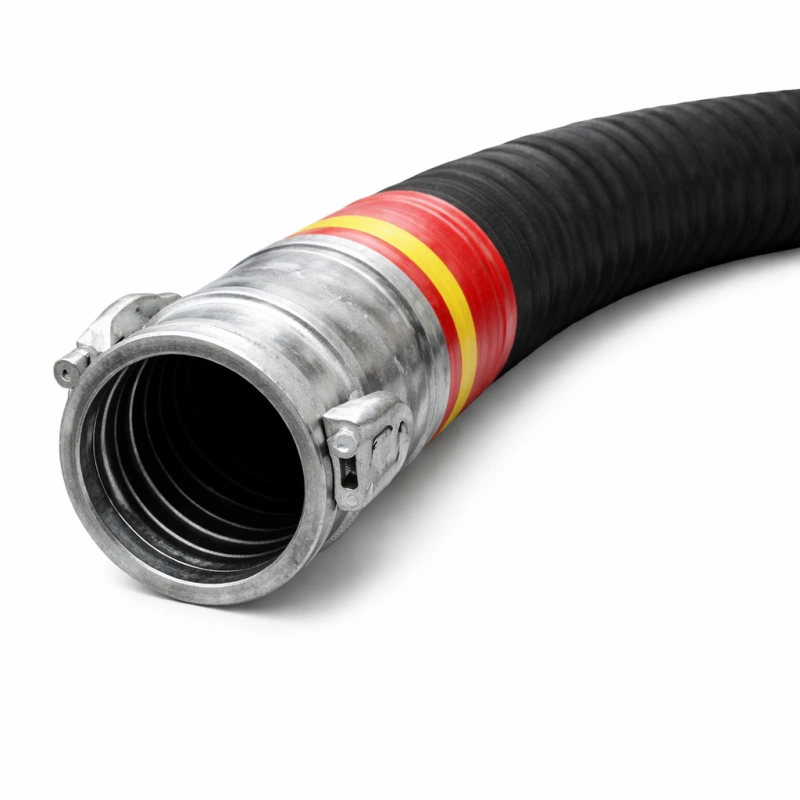
You need the right concrete pump hose diameter to maximize your construction results. Selecting the correct size boosts efficiency, improves concrete quality, and keeps your jobsite safe. Industry studies show that:
- The standard 125mm hose delivers about 120m³/h, balancing conveying speed and mix quality for most construction jobs.
- Larger hoses can reduce pouring time by over 30% on large projects.
- Proper diameter avoids clogging and maintains outlet pressure, ensuring safe and effective concrete pump technology.
- Efficient pressure management prevents segregation and bleeding, helping you achieve top-quality results and timely completion.
Alienfrac brings you innovative hose solutions for every construction challenge, meeting the demands of high-pressure conveying systems.
Key Takeaways
- Select the right hose diameter to boost construction efficiency and safety. A proper size prevents clogging and maintains pressure.
- Use a 125mm hose for most projects. It balances flow rate and pressure, making it ideal for high-rise buildings and large infrastructure.
- For large-scale projects, opt for a 150mm hose. This size allows rapid concrete delivery, reducing pour times significantly.
- Consider the distance and height of your pour. Larger diameters help reduce friction and maintain steady flow in challenging conditions.
- Always match hose specifications to your concrete mix. This ensures smooth delivery and prevents blockages during pumping.
Common Hose Diameters and Pumping Uses
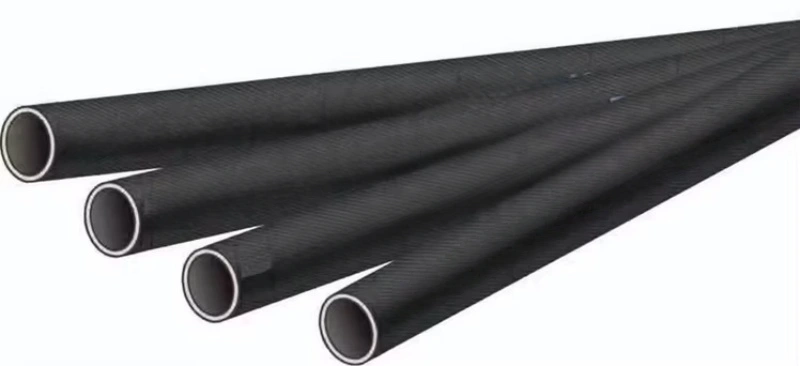
100mm (4-Inch): Confined Spaces and High-Rise
You often see the 100mm small diameter hose in construction projects where space is tight or vertical reach is critical. This size works best for high-rise construction and interior pours.
The 100mm hose fits well with boom pump truck systems, especially when you need precise concrete delivery in narrow shafts or upper floors. You can use this diameter for self-consolidating concrete, fiber-reinforced mixes, and standard mixes.
The maximum aggregate size for this hose is 12.5mm, which helps prevent blockages and ensures smooth delivery.
| Application Type | Hose System Used | Concrete Mix Compatibility | Key Benefit |
|---|---|---|---|
| High-rise construction | Boom pump with articulating arm | Standard, SCC, fiber-reinforced | Vertical reach up to 200+ ft with precision placement |
This diameter supports concrete delivery in confined spaces, making it a commonly used concrete pump hose for specialized construction needs.
125mm (5-Inch): Standard for Most Projects
You will find the 125mm hose to be the industry standard for concrete delivery. Most construction sites rely on this size for its balance of flow rate, pressure, and versatility. The 125mm hose handles a wide range of concrete mixes and supports efficient pumping for both horizontal and vertical delivery.
You can use this diameter for high-rise buildings, bridges, high-speed railways, and large-scale infrastructure. The 125mm hose fits most boom pump truck systems, making it the most commonly used concrete pump hose in the field.
- High-rise building construction
- Bridge project construction
- High-speed railway projects
- Large-scale infrastructure construction
- Concrete conveying in a special environment
You get reliable performance and consistent delivery with this diameter, which covers over 70% of the market share in construction pumping.
150mm (6-Inch): Large-Scale Infrastructure
You need the 150mm large diameter hose for massive construction projects that demand high-volume concrete delivery. This size works best for dams, bridges, and other large infrastructure. The 150mm hose allows for rapid concrete delivery, reducing pour times and supporting heavy-duty boom pump truck operations.
You can move large aggregate mixes and achieve high pumping rates, making it ideal for challenging construction environments.
| Project Type | Description |
|---|---|
| Dams | Large infrastructure projects requiring high conveying capacity |
| Bridges | Engineering scenarios that necessitate substantial concrete flow |
Alienfrac provides advanced hoses for every concrete pump hose diameter, ensuring your pumping system delivers top performance.
You can trust Alienfrac for reliable, high-quality hoses that match your construction delivery needs, from small diameter hose for confined spaces to large diameter hose for infrastructure delivery.
Concrete Pump Hose Diameter Specs and Performance
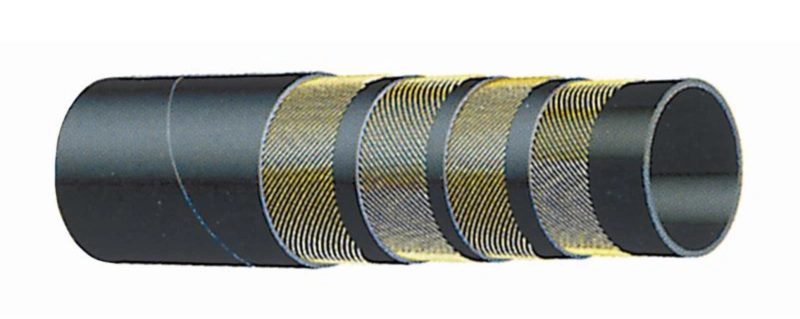
Flow Capacity and Efficiency
You need to understand how the concrete pump hose diameter affects pumping capacity and performance. Larger diameters increase pumping efficiency and allow you to move more concrete with less resistance.
Tests show that when you use a bigger hose, you achieve greater flow rates at distances up to 200 feet. This boosts performance and reduces the time needed for construction pours. You also see higher pressure output from the pump, which improves continuous pumping capacity and keeps your project on schedule.
- Larger hose diameters deliver higher pumping capacity.
- Increased flow rates enhance performance and reduce energy consumption.
- Efficient pumping supports quality construction and minimizes delays.
Equipment and Pressure Needs
You must match hose diameter specifications to your equipment and construction requirements. Each diameter has a recommended working pressure and burst pressure. Choosing the right hose ensures safe performance and reliable pumping. Review the table below for typical construction scenarios:
| Hose Diameter | Working Pressure | Burst Pressure | Recommended Application |
|---|---|---|---|
| 1″ – 2″ (25-51mm) | 55 bar (800 PSI) | 165 bar | Small trailer pumps, grouting |
| 3″ – 4″ (76-102mm) | 85 bar (1230 PSI) | 255 bar | Standard truck-mounted pumps |
| 5″ – 6″ (127-152mm) | 85 bar (1230 PSI) | 255 bar | High-volume commercial projects |
| 7″ – 8″ (178-203mm) | 55 bar (800 PSI) | 165 bar | Large stationary pumps, foundations |
Alienfrac hoses meet API 7K and API 16C standards. You benefit from enhanced flexibility, extended service life, and superior performance compared to industry standards.
| Feature | Alienfrac Hoses | Industry Standards |
|---|---|---|
| Compliance | API 7K, API 16C | API standards |
| Working Pressure (W.P.) | Up to 15,000 PSI and 20,000 PSI | Varies by application |
| Flexibility during installation | Enhanced flexibility | Standard flexibility |
| Service Life | Extended service life | Varies by material and design |
Concrete Mix Compatibility
You must consider technical considerations for concrete mix compatibility. Hose diameter specifications determine the maximum aggregate size you can use. For 100mm hoses, limit aggregate size to 12.5mm.
For 125mm and 150mm hoses, you can use larger aggregates, which improves performance and support demanding construction projects. Alienfrac hoses handle a wide range of mixes, ensuring safe and efficient pumping for every construction scenario.
Tip: Always check hose diameter specifications before starting pumping. This prevents blockages and maintains optimal performance.
You achieve reliable performance and pumping efficiency when you select the right concrete pump hose diameter for your construction needs.
Selecting the Right Hose for Pumping
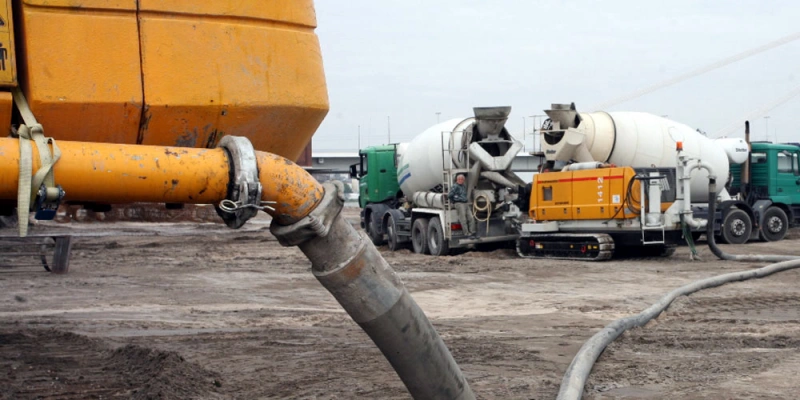
Choosing the right concrete pump hose diameter is essential for maximizing construction efficiency and ensuring safe, reliable pumping. You need to consider several factors that influence the selection process. Follow this step-by-step guide to make the best decision for your construction site.
Distance and Height Factors
Pumping distance and vertical height play a major role in the selection of concrete pump hose diameter. When you increase the distance or height, friction resistance rises. This means you need more pressure to maintain flow.
For every additional 100 meters of horizontal pumping or 30 meters of vertical lift, resistance increases sharply. In these construction scenarios, a larger diameter hose helps reduce friction, keeps the flow steady, and lowers the risk of blockages.
You should always assess the total length and elevation changes on your construction site before making your selection.
Tip: For long-distance or high-rise pumping, consider increasing the hose diameter to maintain construction efficiency and prevent delays.
Mix Strength and Aggregate Size
The type of concrete mix and the size of aggregates directly affect hose selection. High-strength concrete mixes often have a lower water-cement ratio, which reduces workability. You must ensure that the maximum aggregate size does not exceed one-third of the smallest inside diameter of the hose.
This geometric rule helps prevent clogging and supports smooth pumping. If your project uses large aggregates or high-strength mixes, select a hose with a larger diameter. This approach maintains construction efficiency and ensures consistent delivery in demanding construction scenarios.
| Concrete Mix Type | Recommended Hose Diameter | Maximum Aggregate Size |
|---|---|---|
| Standard Mix | 100mm or 125mm | Up to 12.5mm |
| High-Strength Mix | 125mm or 150mm | Up to 20mm |
| Large Aggregate Mix | 150mm | Up to 25mm |
Equipment Matching and Site Needs
You must match the hose to your equipment and the specific needs of your construction site. Start by evaluating the project scope and site conditions. Calculate the required pumping capacity based on the volume of concrete needed per hour.
Longer hoses require larger diameters to maintain flow and construction efficiency, while smaller diameters work better for precision tasks. Always check that the hose material is compatible with your concrete mix to avoid wear and degradation.
Review protective coatings and fastening methods to ensure safe operation throughout the project.
Here is a step-by-step process to guide your selection of concrete pump hose diameter:
- Analyze your pour schedule. Map out each pour zone, volume, required slump, maximum aggregate size, and time window. Identify any critical path constraints that could affect construction efficiency.
- Calculate the worst-case resistance. Compute the total equivalent length and required pressure at your target flow rate. Add a 15% safety margin to account for unexpected challenges.
- Shortlist 3–4 hose models that meet your pressure and flow thresholds. Prioritize hoses with proven reliability and documented field performance.
- Verify service support. Confirm that your supplier offers strong local support, with available parts and responsive technicians.
- Test-pour with your mix. Rent the shortlisted hose for a small pour using your exact batch plant mix design. This step ensures compatibility and optimal performance on your construction site.
Note: Alienfrac offers tailored hose solutions for complex requirements. You can rely on Alienfrac’s expertise to match the right hose to your equipment, mix, and construction environment, ensuring top-tier construction efficiency and safety.
By following this structured approach, you improve the selection of concrete pump hose diameter for every construction scenario. You achieve consistent pumping, reduce downtime, and deliver quality results on every construction site.
Special Conditions and Advanced Applications
Ultra-High-Rise and Variable Diameter
You face unique challenges when pumping concrete in ultra-high-rise construction. High-pressure resistance becomes essential. You must adapt to complex working conditions and handle abrasive materials. Variable-diameter hoses give you flexibility in delivery direction.
This flexibility reduces the risk of blockages and makes handling and installation easier. You improve construction efficiency by choosing hoses that adapt to changing site demands.
Alienfrac offers custom solutions for these advanced scenarios, ensuring your concrete pump hose diameter matches the pressure and wear requirements of every project.
Underwater and Reinforced Hoses
Underwater construction projects require reinforced hoses that deliver safety and performance. You rely on these hoses for offshore oil rigs, dam construction, emergency repairs, and trenchless repair techniques.
Reinforced hoses handle high-density grouts and acid-resistant concretes, supporting durability in harsh environments. Smart hoses with sensors help you monitor pressure, flow rate, and wear in real time, improving construction efficiency and safety.
| Application Area | Benefit Description |
|---|---|
| Offshore oil rigs | Used for underwater concrete placement via tremie methods |
| Dam construction | Relies on large-diameter hoses for mass concrete pours |
| Emergency repairs | Utilized following natural disasters or structural failures |
| Trenchless repair techniques | Enables methods like cured-in-place pipe (CIPP) backing |
| High-density grouts | Capable of handling high-density grouts and acid-resistant concretes |
| Flexible routing | Allows pumping into confined or deep underground chambers |
| Smart hoses | Equipped with sensors to monitor pressure, flow rate, and wear in real time |
Alienfrac’s advanced manufacturing ensures you get reinforced hoses that meet the highest standards for underwater and challenging construction environments.
Special Mixes and Safety
You must consider special requirements when pumping concrete mixes with additives or fibers. Pressurization can force water and cement paste into porous lightweight aggregates, reducing flowability and increasing friction.
The volume of fresh concrete may decrease as lightweight aggregates absorb water, which leads to compressible behavior and less effective pressure transmission. Compressed air in these aggregates can create overpressure, causing segregation and affecting the hardened concrete’s quality.
To maintain construction efficiency and safety, follow these protocols:
- Use the shortest effective hose length for the job.
- Combine multiple shorter sections instead of one long hose.
- Use rigid pipeline sections for fixed runs to minimize flexible hose use.
- Support vertical hose runs every 6–8 meters to prevent sagging and stress on couplings.
- Ensure hose compatibility with your specific concrete mix, especially for fiber-reinforced concrete.
Alienfrac provides custom hose options with enhanced wear-resistant liners and advanced features. You can trust these solutions to maintain construction efficiency and safety, even with the most demanding mixes.
Conclusion
You make the best decisions on your construction site when you follow clear guidelines for selecting concrete pump hose diameter. Use this quick-reference table to match your hose to your construction needs:
| Factor | Recommendation |
|---|---|
| Pump Type and Output | Choose 125mm or larger for high-output pumps in large construction. |
| Project Requirements | Use larger hoses for big pours or high-rise construction. |
| Concrete Mix Characteristics | Select larger diameters for thick mixes to avoid clogging. |
| Length and Configuration | Pick larger diameters for long hose runs in complex construction. |
Alienfrac stands out in the construction industry. You benefit from advanced engineering, high-pressure capabilities, and unmatched durability. Every hose meets strict standards, giving you confidence in every construction project.
FAQ
What is the most common hose diameter for construction projects?
You will find that 125mm is the most common diameter in construction. This size works well for most building sites. It balances flow rate and pressure, making it ideal for many construction tasks.
How do I choose the right hose diameter for my construction site?
You should consider the type of construction, the distance you need to pump, and the concrete mix. Larger diameters help with long distances and high-rise construction. Always match the hose to your equipment and project needs.
Can I use the same hose for different types of construction mixes?
You can use one hose for several construction mixes, but always check the maximum aggregate size. For special mixes or fiber-reinforced concrete, select a hose that matches the construction requirements to avoid blockages.
Why does hose diameter matter in construction safety?
You improve construction safety by choosing the correct diameter. The right size prevents blockages and reduces pressure spikes. This keeps your construction site safer and helps you avoid costly delays.
Does Alienfrac offer custom hose solutions for unique construction needs?
You can request custom hose solutions from Alienfrac for any construction challenge. The company provides advanced options for high-rise, underwater, or special mix construction, ensuring you meet every project demand.