
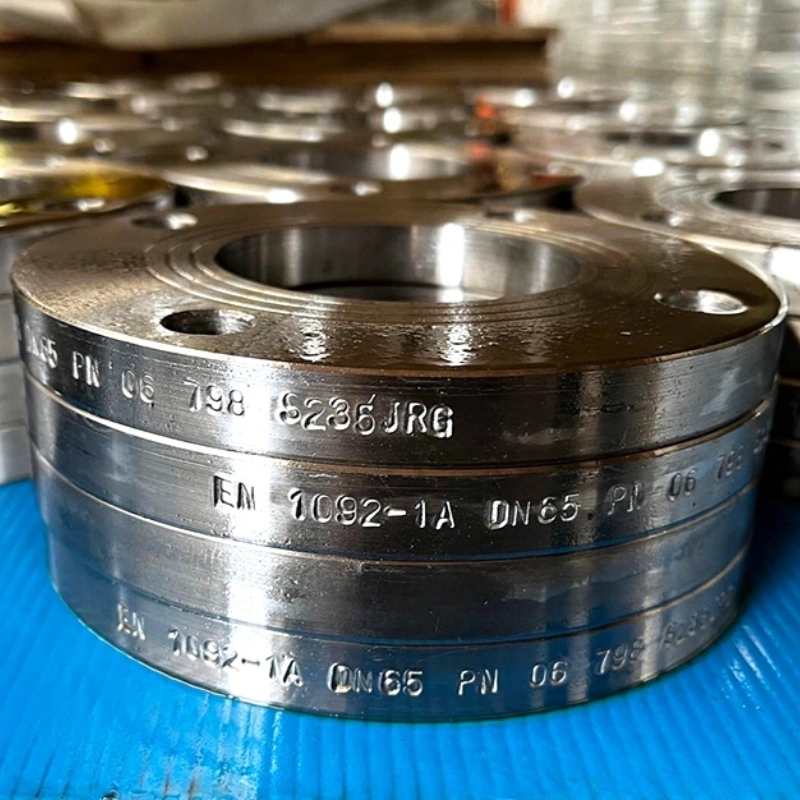
In oil and gas operations, you depend on clear flange markings to protect system integrity and ensure safety. Proper identification helps you avoid mismatches, verify material suitability, and maintain compliance with industry standards.
For example, Alienfrac’s API Flanges deliver the reliability and traceability you require for mission-critical connections.
| Aspect | Contribution to Safety and Compliance |
|---|---|
| Ensuring Compatibility | Prevents costly mismatches by verifying that flanges are compatible with connected piping and equipment. |
| Material Identification | Enables quick verification of materials on site to resist corrosion, pressure, and temperature conditions. |
| Compliance with Standards | Certifies that flanges meet recognized industry standards, ensuring safety and reliability. |
| Traceability and Maintenance | Provides clear identification for quality control and facilitates efficient maintenance or replacement. |
Key Takeaways
- Clear flange markings are essential for safety and compliance in oil and gas operations. They help prevent mismatches and ensure proper connections.
- Regular inspections of flange markings can identify wear and prevent leaks. Always check for legibility to maintain system integrity.
- Understanding flange marking elements, such as size, material, and pressure rating, ensures you select the right components for your system.
- Using advanced technologies like laser engraving and QR codes enhances traceability and accuracy in flange identification.
- Follow best practices for inspection and documentation to support compliance and safety in your operations.
Flange Markings Basics
Definition and Purpose
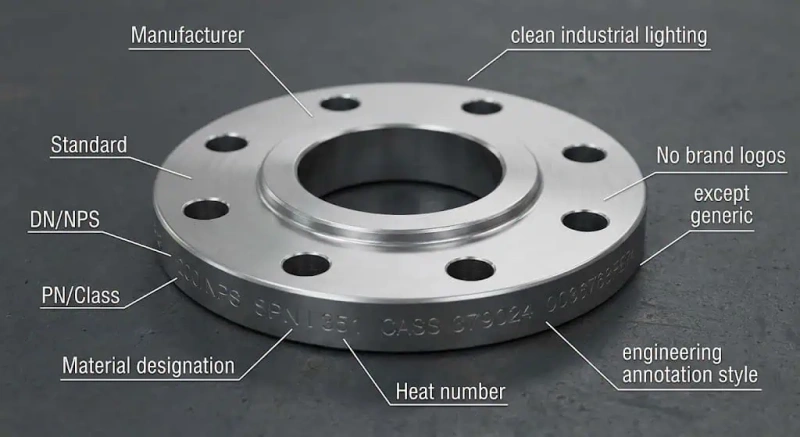
You see flange markings every time you inspect or install a pipeline connection. These markings are permanent identifiers stamped or engraved on the surface of a flange. They include details such as size, material, pressure rating, and manufacturer.
The main purpose of flange markings is to give you quick and reliable information about the component. This helps you confirm that you have the right part for your system. Markings also support traceability, so you can track the history and specifications of each flange during its service life.
Alienfrac stands out as a leading brand in oilfield hose and API flange manufacturing. The company uses advanced technology to produce high-quality products that meet strict industry standards.
When you choose Alienfrac’s API Flanges, you get components designed for high-pressure applications. These flanges offer clear and durable markings, making them easy to identify and verify in the field.
Importance in Oil and Gas
In oil and gas operations, flange markings play a critical role in maintaining safety and compliance. You rely on these markings to prevent mismatches and ensure that every connection meets the demands of high-pressure environments. Flange marking helps you avoid costly errors and operational failures.
- Flange inspection tags ensure compliance with safety regulations, which is crucial for preventing operational failures.
- They provide traceability, linking physical assets to inspection histories, which helps avoid leaks and operational disruptions.
- Missing or unreadable tags can lead to non-compliance and increased safety risks during maintenance.
Regular monitoring and maintenance, made possible by clear markings, help you detect wear and prevent leaks. Documented inspections allow you to spot corrosion or misalignment early, so you can take corrective action before problems escalate.
Accurate records from flange markings also help you plan future maintenance, reducing downtime and keeping your operations safe.
When you use Alienfrac’s API Flanges, you benefit from reliable markings that support both safety and compliance. These features protect your team, your equipment, and the environment.
Key Elements of Flange Marking
Understanding the key elements of flange markings helps you verify the suitability and safety of every connection in your oil and gas system. Each marking provides essential information for installation, inspection, and maintenance.
Flange Type and Application
You must identify the flange type to ensure compatibility with your system’s requirements. Flange type identification appears as a clear marking on the component. The most common types of oil and gas include weld neck and ring-type joint (RTJ) flanges.
Weld neck flanges work best for high-pressure pipelines and crude oil transfer. RTJ faces provide superior sealing in high-temperature steam and sour gas environments.
| Flange Type | Application Description |
|---|---|
| Weld Neck | Commonly used in high-pressure pipeline systems and crude oil transfer. |
| RTJ Faces | Preferred for their sealing capabilities in high-temperature steam and sour gas. |
When you read flange markings, you can quickly determine the application scope and select the right component for your project.
Flange Size and Dimensions
Flange size and dimensions must match the connected piping to prevent leaks and ensure structural integrity. Markings include the nominal pipe size (NPS), outside diameter (O.D.), thickness, number of bolts, bolt hole diameter, and bolt circle. These details help you confirm that the flange fits your system.
| NPS (inches) | Flange O.D. (inches) | Flange Thickness (inches) | No. of Bolts | Bolt Hole Diameter (inches) | Bolt Circle (inches) |
|---|---|---|---|---|---|
| 1/2 | 3.50 | 0.38 | 4 | 0.62 | 2-3/8 |
| 1 | 4.25 | 0.50 | 4 | 0.62 | 3-1/8 |
| 2 | 6.00 | 0.69 | 4 | 0.75 | 4-3/4 |
| 4 | 9.00 | 0.88 | 8 | 0.75 | 7-1/2 |
| 6 | 11.00 | 0.94 | 8 | 0.88 | 9-1/2 |
| 8 | 13.50 | 1.06 | 8 | 0.88 | 11-3/4 |
| 12 | 19.00 | 1.19 | 12 | 1.00 | 17.00 |
| 16 | 23.50 | 1.38 | 16 | 1.12 | 21-1/4 |
| 24 | 32.00 | 1.81 | 20 | 1.38 | 29-1/2 |
You should always check these markings before installation to avoid mismatches and ensure a secure fit.
Flange Material Specification
Material specification on flange markings tells you what the flange is made of, such as carbon steel, stainless steel, or alloy. This information is critical for compatibility with the fluids and gases in your system. You must match the flange material with both the pipe and the type of fluid to prevent corrosion and failure.
| Aspect | Importance of Compatibility |
|---|---|
| Corrosion resistance | Ensures materials do not degrade in harsh fluids. |
| Pressure ratings | Guarantees that flanges can handle the operational pressures. |
| Temperature tolerances | Ensures materials remain stable under varying temperatures. |
- Match flange material with pipe and fluid types (e.g., carbon steel, stainless steel, or alloy).
When you select the correct material, you protect your system from leaks and costly downtime.
Flange Pressure Rating
Pressure rating markings indicate the maximum pressure the flange can safely handle. You will see these ratings as either PN (Pressure Nominal) or Class markings. Always verify the pressure rating identification to ensure the flange meets your system’s design requirements.
| Pressure Rating System | Example Markings |
|---|---|
| PN (Pressure Nominal) | PN10, PN16, PN25, PN40, PN100 |
| Class | Class 150, 300, 600, 900, 1500, 2500 |
If you install a flange with the wrong pressure rating, you risk leaks or catastrophic failure.
Manufacturer and Heat Number
Flange markings include the manufacturer’s logo or code and a unique heat number. These identifiers link the flange to its material test report (MTR) and inspection certificate. You can trace the origin and quality of each flange, which is essential for safety and compliance.
| Evidence Description | Impact on Safety/Compliance |
|---|---|
| Heat number on flange matches the MTR/inspection certificate package stored for the project. | Enables auditable traceability and targeted disposition if a nonconformance is discovered. |
| Certificate package exists, but the heat number on the flange is missing/illegible after coating or blasting. | Traceability chain breaks; flange should not be installed until identity is restored or replaced. |
You should never install a flange if the heat number is missing or unreadable.
Standard Reference
Standard reference markings show which industry standard the flange meets, such as ASME, API, or EN. These markings confirm that the flange has passed strict quality and performance tests.
You can rely on these references for proper flange type identification, dimensional accuracy, material compatibility, and pressure rating identification.
| Standard Type | Description |
|---|---|
| Flange Type Identification | Marks the type of flange (e.g., weld neck, threaded, blind) for the application scope. |
| Dimensional Identification | Includes size and thickness to ensure correct fittings and installations. |
| Material Identification | Indicates the material (e.g., carbon steel, stainless steel) to avoid mismatches. |
| Pressure Rating Identification | Shows rated pressure class (e.g., ANSI 150, PN 16) to meet design requirements. |
| Manufacturer Identification | Displays manufacturer’s logo or code for quality control identification. |
Always check the standard reference to ensure compliance with project specifications.
Face Type and Finish
Face type and finish markings affect the sealing performance of the flange. You must select the right face type and finish to achieve a leak-free connection. Raised face (RF) and ring-type joint (RTJ) are common options. The finish determines how well the gasket seals under pressure.
- The right flange face finish is essential for ensuring a reliable and leak-free connection in industrial applications.
- ASME standard surface finish types provide varying levels of sealing efficiency tailored to specific requirements.
- Engineers must consider pressure, temperature, and the nature of the transported fluid or gas when selecting the optimal flange face finish.
- The choice of flange face type significantly affects the overall performance of the system.
- Sealing effectiveness depends on gasket compression, surface finish, alignment, and bolt load.
You should always verify face type and finish markings to match the operational needs of your system.
Flange Marking Standards
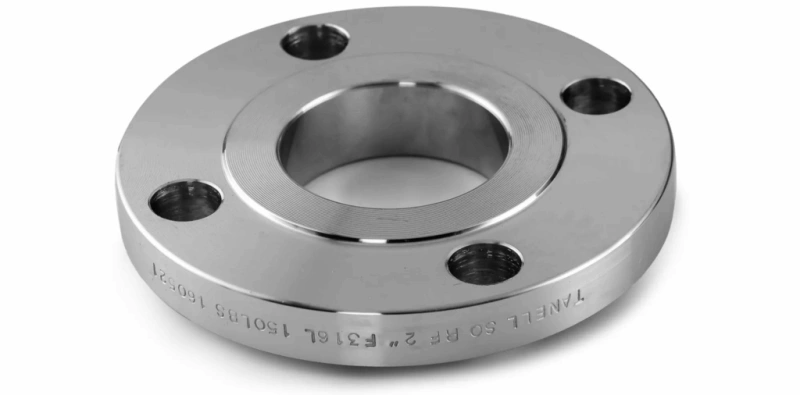
You must understand the applicable flange marking standards before selecting or installing any flange in your oil and gas system. These standards set the foundation for safety, reliability, and traceability.
When you use Alienfrac’s API Flanges, you benefit from compliance with standards such as API, ASME, and EN. These standards ensure that every flange meets strict requirements for material, pressure, and performance.
ASME, EN, API, DIN, JIS
You will encounter several common standards in the industry. ASME (American Society of Mechanical Engineers) and API (American Petroleum Institute) are widely used in North America and global oil and gas projects. EN (European Norms) applies to European operations.
DIN (Deutsches Institut für Normung) and JIS (Japanese Industrial Standards) are also important for international projects. Each standard defines dimensions, materials, and testing methods for flanges.
You must always verify that your flange matches the project’s required standard to guarantee compatibility and compliance with standards.
Pressure Rating Systems
Pressure rating systems vary across international standards. ASME uses “Class” ratings based on psi, while EN and DIN use “PN” (Pressure Nominal) measured in bars. JIS uses “K” to indicate pressure in kilograms per square centimeter. These differences affect how you select and specify flanges for your system.
| Standard | Pressure Rating System | Measurement Unit |
|---|---|---|
| JIS | K | kg/cm² |
| ANSI | Class | psi |
| DIN | PN | bar |
You must check the pressure rating system to ensure the flange can withstand the operating pressure in your application.
Flange Marking Formula
Each standard provides a formula or sequence for marking flanges. You will see markings that include the flange type, size, pressure rating, material, standard reference, manufacturer, and heat number. For example, an API flange might display: “API 6A 4” 5000# A105N Alienfrac 123456″.
This marking tells you the standard, size, pressure class, material, manufacturer, and traceability number. You should always confirm that the marking sequence matches the applicable flange marking standards for your project.
Tip: Always keep a reference chart of standards and marking formulas on hand during inspections. This practice helps you verify compliance and maintain traceability.
Example Flange Marking Interpretation
Marking Sequence
When you examine a flange in the field, you will see a specific sequence of information stamped or engraved on its surface. This sequence helps you quickly identify and verify the component. For Alienfrac API Flanges, you can expect the following order:
- Manufacturer identification or logo
- Material type according to ASTM, including any thermal treatment
- Face type
- Standard used to manufacture the flange
- Nominal thickness of the pipe (for weld neck or socket weld flanges)
- Pressure rating and nominal diameter
- Manufacturer batch or series number
This sequence gives you a reliable method to confirm the flange’s suitability for your oil and gas system.
Practical Interpretation Steps
You can follow a clear process, for example, flange marking interpretation using Alienfrac API Flanges as your reference. Start by locating the manufacturer’s logo. This confirms the origin and quality.
Next, check the material type and any thermal treatment. This step ensures compatibility with your process fluids and operating conditions.
Move to the face type marking. This tells you if the flange will provide the right seal for your application. Review the standard reference, such as API 6A or ASME B16.5, to confirm compliance with your project requirements.
For weld neck or socket weld flanges, verify the nominal thickness marking. This ensures a proper match with your piping.
Check the pressure rating and nominal diameter. These markings help you avoid mismatches and ensure safe operation. Finally, record the batch or series number. This number links the flange to its material test report and inspection certificate, supporting traceability.
Tip: Always use a checklist during inspections. This practice helps you avoid missing any critical markings and supports safe, compliant operations.
By following these steps, you can interpret flange markings with confidence and maintain the integrity of your oil and gas system.
Traceability and Safety
Role of Markings in Traceability
You need to track every component in your oil and gas system. Flange markings give you a reliable way to do this. Each marking links the flange to its material test report and inspection certificate.
This connection helps you trace the origin and quality of every part. If you find a problem during inspection, you can quickly identify and isolate the affected flange.
| Evidence Description | Impact on Safety/Compliance |
|---|---|
| Heat number on flange matches the MTR/inspection certificate package stored for the project. | Enables auditable traceability and targeted disposition if a nonconformance is discovered. |
| Certificate package exists, but the heat number on the flange is missing/illegible after coating or blasting. | Traceability chain breaks; flange should not be installed until identity is restored or replaced. |
| Standard reference shows the EN family on one side and the ASME family on the other (mixed lot). | High risk of bolt-hole mismatch, gasket misfit, and forced assembly; isolate and re-verify before fit-up. |
Alienfrac uses certified manufacturing processes to ensure every product has clear and durable markings. This commitment supports traceability from production to installation.
Ensuring Safety and Compliance
You must follow strict procedures to maintain safety and compliance in your plant. Regular inspections help you spot corrosion and leaks before they become serious. Careful material selection extends the service life of your flanges.
Proper torque management and the use of suitable gaskets keep connections secure and leak-free. You should document torque values and maintenance history for each flange. This practice ensures consistency and supports compliance with industry standards.
Durable tags make identification and tracking easier during audits.
- Flange tags give you a visual record for isolation verification and process confirmation.
- These tags assign responsibility for each task, which promotes accountability.
- Well-designed tags reduce human error and improve safety.
Alienfrac’s focus on certified processes and reliable markings helps you meet the highest standards for safety and compliance in oil and gas operations.
Common Issues with Flange Markings
Fading and Wear
You may notice that flange markings can fade or wear over time, especially in harsh oil and gas environments. Sunlight, chemicals, and abrasive cleaning methods can cause these markings to become illegible.
When this happens, you lose visibility into the condition and identity of the flange. This lack of information can lead to several problems:
- You may not detect damage or leaks early, which increases the risk of safety incidents.
- Maintenance teams might miss critical inspection points, leading to reactive repairs and higher costs.
- Personnel face greater risks, including exposure to hazardous substances.
- Environmental hazards, such as spills, become more likely.
- Regulatory compliance can suffer if you cannot verify component identity.
You should always check for clear and durable markings during routine inspections to avoid these issues.
Misinterpretation Risks
You can encounter misinterpretation risks when reading common flange markings, especially if you are new to the industry or if the markings use unfamiliar abbreviations. Confusing or unclear markings may cause you to select the wrong component for your system.
This mistake can result in mismatched connections, leaks, or even equipment failure. You should always refer to a standard reference chart and seek clarification when you find markings that are difficult to understand. Training and experience help you reduce these risks and maintain safe operations.
Tip: Use a checklist and reference guide during inspections to minimize errors and ensure correct identification.
Incomplete or Counterfeit Markings
You may come across flanges with incomplete or counterfeit markings. Incomplete markings make it impossible to verify the material, pressure rating, or manufacturer. Counterfeit markings can mislead you into believing a component meets industry standards when it does not.
These issues threaten the safety and reliability of your system. Always source flanges from reputable manufacturers and verify all markings before installation. If you suspect a marking is incomplete or fake, remove the flange from service and report the issue to your quality control team.
Technological Advancements in Flange Marking
Traditional Methods
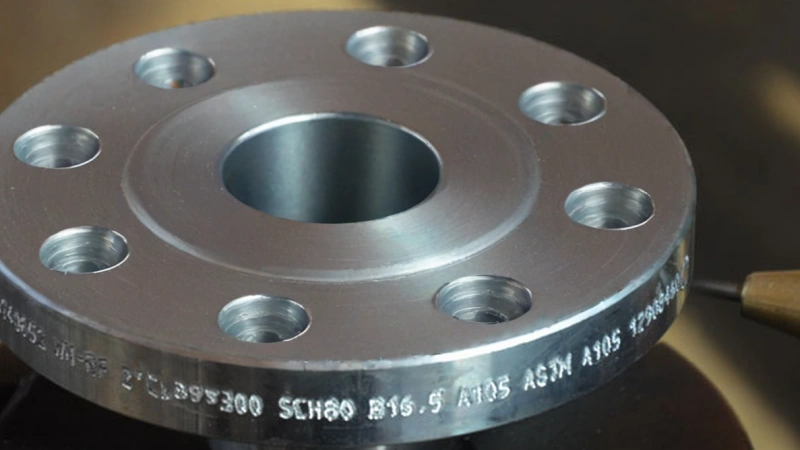
You may remember when manufacturers used stamping, embossing, or manual engraving to mark each flange. These methods provided basic identification but often faded or became unreadable after years in harsh environments. Manual processes made verification slow and sometimes unreliable.
You had to rely on visual checks, which increased the risk of human error. In many cases, you needed to re-mark components after maintenance or repainting, which delayed operations and complicated verification.
Modern Methods (Laser, QR Codes)
Today, you benefit from advanced technologies that make verification faster and more accurate. Laser engraving creates permanent, high-contrast markings that resist wear, chemicals, and weather. You can scan QR codes or barcodes etched onto the flange to access digital records instantly.
This technology supports easy verification of production batches, materials, and manufacturers. You ensure compliance with industry standards like ASME, ANSI, or ISO. You improve safety by selecting the correct component every time.
- Laser marking and QR codes:
- Enhance traceability for each flange.
- Ensure clear, accurate markings for verification.
- Support compliance with strict industry standards.
Laser etching remains readable even after repainting or abrasive cleaning. You can trust these markings for long-term verification and asset management.
Digital Traceability
Digital traceability solutions now connect each flange to a secure database. You can track manufacturing, installation, and maintenance history with a quick scan. This system streamlines verification and reduces paperwork.
You schedule preventative maintenance and manage inventory more efficiently. You also improve root-cause analysis and part replacement during decommissioning.
| Application | Benefits |
|---|---|
| Manufacturing | Enables tracking for recalls, quality assurance, and warranty management. |
| Installation | Mark’s equipment usage or installation dates for operational systems. |
| Maintenance | Facilitates checking records and scheduling preventative maintenance. |
| Decommissioning | Aids in root-cause analysis and part replacement recommendations. |
Digital traceability platforms help you remove friction and improve transparency throughout the supply chain. You gain confidence in every verification step, from production to decommissioning.
Best Practices for Inspection and Verification
Inspection Checklist
You need a structured approach for every inspection. Start with a visual check of each flange. Look for clear, legible markings. Confirm that the manufacturer, material, pressure rating, and standard reference are present. Use a flashlight if the area is dim. Check for signs of corrosion or damage.
Record every finding in your inspection log. Always compare the heat number on the flange with the material test report. If you find any mismatch, stop the installation. Review the inspection checklist before moving to the next flange.
Repeat the inspection process for every connection. Use Alienfrac API Flanges for reliable marking and traceability. These flanges help you maintain high standards during inspection.
| Best Practice | Description |
|---|---|
| Implement Joint Integrity Programs | Establish comprehensive programs that include procedures for inspecting and verifying flange markings. |
| Follow ASME Standards | Align practices with the American Society of Mechanical Engineers standards to ensure compliance and safety. |
| Adhere to OSHA and EPA Regulations | Ensure that flange marking inspections meet Occupational Safety and Health Administration and Environmental Protection Agency requirements. |
You should always follow these practices to support safety and compliance.
Inventory Management
You must keep accurate records for every flange in your inventory. Assign a unique identification number to each item. Store all inspection results in your documentation system. Update your records after every inspection. Track the location and status of each flange.
Use barcodes or QR codes for faster inspection and inventory checks. Review your documentation before issuing any flange for installation. Remove any flanges with unclear or missing markings from inventory. Schedule regular inspection intervals for all stored items. Keep your documentation organized and accessible for audits.
Handling Unclear Markings
You may find a flange with faded or unreadable markings during inspection. Do not install this flange. Set it aside for further review. Check your documentation for any clues about its origin. Compare the flange with similar items in your inventory. If you cannot confirm its identity, remove it from service.
Report the issue to your supervisor. Update your inspection records to reflect the action taken. Never guess or assume the details of a flange. Reliable inspection and thorough documentation protect your system from errors and ensure safety and compliance.
Tip: Consistent inspection and complete documentation reduce risks and support efficient operations.
Conclusion
You play a vital role in maintaining safe and compliant oil and gas operations. Accurate marking interpretation helps you prevent costly errors and supports traceability. Alienfrac and API Flanges set the standard for quality and reliability.
Adopt best practices for inspection and verification. Embrace new technologies to streamline your workflow and enhance system integrity. Your attention to detail protects your team and your assets.
FAQ
What is the purpose of a traceability system in oil and gas flange management?
You use a traceability system to track every flange from production to installation. This system links each part to its inspection certificate, ensuring you meet compliance requirements and reduce risk in safety-critical operations.
How do traceability protocols support safety and compliance?
Traceability protocols require you to document every inspection certificate and identification step. These protocols help you verify that each flange meets safety standards, reducing risk and supporting traceability and maintenance.
Why are inspection certificates important for risk management?
Inspection certificates confirm that your flanges meet industry standards. You rely on these certificates to prove compliance, manage risk, and support the traceability process. Always keep certificates for every flange in your records.
How does the traceability process help with identification and maintenance?
The traceability process connects each flange to its inspection certificate and identification records. This connection helps you quickly locate parts, manage risk, and ensure traceability controls during maintenance.
What should you do if you cannot find an inspection certificate for a flange?
If you cannot find an inspection certificate, you should not install the flange. Missing certificates increase risk and break traceability. Always follow traceability controls and remove any flange without proper documentation from service.