

You will encounter several flange manufacturing processes, such as forging, casting, plate cutting, stamping, and laser cutting. Each method offers unique benefits for specific applications.
When you select a flange, consider factors like material selection, production steps, finishing, attachment, and quality assurance. Brands like Alienfrac deliver industry-standard products, including API Flanges, that ensure reliability and safety in demanding environments.
Key Takeaways
- Understand the different flange manufacturing methods like forging, casting, and laser cutting. Each method has unique benefits suited for specific applications.
- Choose the right flange material based on your needs. Carbon steel is cost-effective, while stainless steel offers high corrosion resistance for harsh environments.
- Always verify quality through strict inspection processes. Request a material test report to ensure flanges meet industry standards for safety and performance.
- Select the appropriate attachment technique for your flanges. Welding provides strong, permanent connections, while bolt-on methods allow for easy assembly and disassembly.
- Partner with trusted manufacturers like Alienfrac to ensure you receive high-quality flanges that meet your operational requirements and industry standards.
Flange Manufacturing Methods and Material Selection
Common Flanges Materials
You need to understand the materials before choosing the right flange manufacturing methods. The most common flange materials dominate the market because they offer specific advantages for different applications:
- Carbon steel holds about 44% of the global market share. You will find it cost-efficient and strong, making it a popular choice for general industry use.
- Stainless steel, especially grades like 304L and 316L, provides high corrosion resistance. You can rely on it for chemical, marine, and food processing environments.
- Nickel alloys are growing in demand. These materials give you superior resistance to corrosion and high temperatures, which is essential for extreme environments.
Alienfrac selects only high-quality materials for its API Flanges, ensuring you receive products that meet the highest standards for durability and performance.
Material Properties and API Flanges
You must match the material properties to your application. The table below summarizes the key grades and their performance characteristics for API Flanges:
| Material / Class | Key Grades / Examples | Performance Characteristics | Typical Application Domains |
|---|---|---|---|
| Carbon Steel | ASTM A105, A36 | Good strength up to ~425 °C; needs coatings for corrosion | Oil & gas, steam, water, HVAC |
| Stainless Steel | 304L, 316L, F55 | High corrosion resistance; good strength at moderate temperatures | Chemical, marine, offshore, desalination |
| Alloy Steel | Various | Excellent strength at high temperatures; moderate corrosion | Power plants, refineries |
| Nickel Alloys | Inconel 625, Monel 400 | Outstanding resistance to heat and chemicals | Offshore, subsea, reactors |
| Duplex/Super Duplex | 2205, 2507 | Very high strength; excellent resistance to stress corrosion | Marine, oil & gas, desalination |
| Titanium | ASTM B381 | Excellent seawater resistance; high strength-to-weight ratio | Marine, aerospace, heat exchangers |
Alienfrac’s API Flanges use these materials to deliver reliable performance in high-pressure and high-temperature environments. You can trust their precise material selection for your critical operations.
Quality Control in Flange Manufacturing
You should always verify that your flanges pass strict quality control procedures. Leading manufacturers like Alienfrac follow these steps:
- Incoming inspection checks raw materials to prevent defects.
- In-process inspection detects issues early during manufacturing.
- Non-destructive and destructive testing confirm strength and durability.
- Dimensional and visual inspections ensure each flange meets specifications.
- Performance testing simulates real-world conditions.
- Statistical process control improves consistency and quality.
You must request a material test report (MTR) for every flange. This report provides traceability and confirms the material’s properties.
Certificates of compliance, such as those for ASME B16.5, guarantee that your flanges meet industry standards. Proper quality control and documentation protect your operations from failures and ensure long-term reliability.
Flange Manufacturing Processes Overview
You need to understand the main flange manufacturing processes to select the right flange for your application. Each method offers unique strengths and suits specific environments.
Alienfrac uses advanced manufacturing techniques to produce API Flanges that meet strict industry standards. You can rely on their flanges for high-pressure and high-temperature systems.
Forging Method
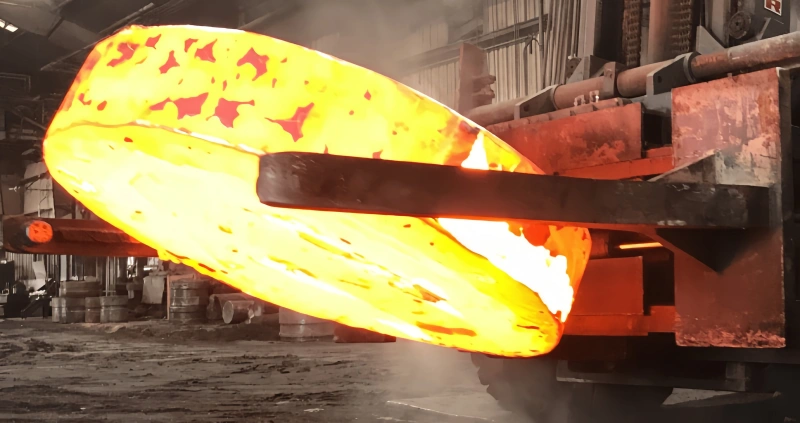
Forging stands as one of the most robust flange manufacturing processes. You will see this method used for flanges that must withstand extreme pressure and stress. The forged production method shapes metal using heat and force, creating a dense, uniform structure.
This process improves mechanical properties and ensures high quality. You can expect longer production cycle times with hot-forged parts. Handling complexity increases per-piece costs unless you require large or specialized flanges.
Automated die forging achieves cycle times around 13 seconds, while crank press forging reduces this to 11.5 seconds. You should choose forging when you need superior strength and reliability, especially in oil and gas pipelines.
Tip: Forged flanges offer excellent resistance to fatigue and impact, making them ideal for critical connections.
| Method | Production Time (s) | Notes |
|---|---|---|
| Die Forging | 13 | Cycle time for three operations with automation. |
| Crank Press | 11.5 | Higher speed allows for reduced forging time. |
Casting Method
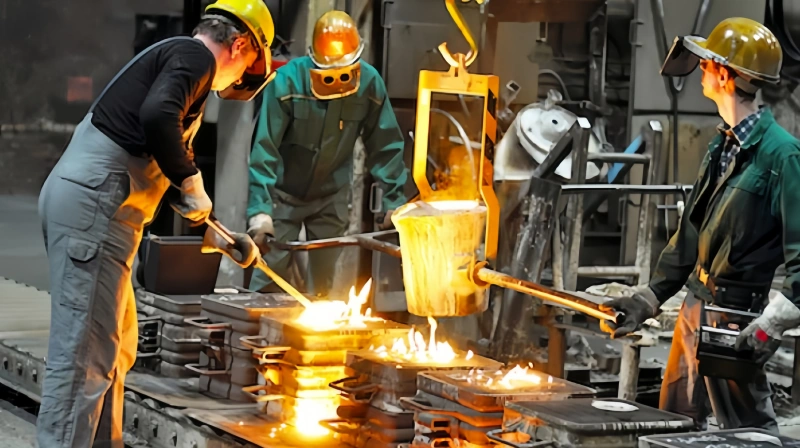
Casting is another common flange manufacturing process. You will find the cast production method useful for complex shapes and large sizes. This process pours molten metal into a mold, allowing you to create flanges with intricate designs.
However, you must watch for defects such as corrosion, mechanical wear, structural integrity issues, and dimensional inaccuracies. These defects can cause leaks, especially under corrosive media, temperature, and pressure.
If you do not address leaks promptly, you risk material loss, downtime, and even catastrophic failures. Cast flanges suit applications where cost and shape flexibility matter more than ultimate strength.
Note: Always inspect cast flanges for defects before installation to ensure safety and performance.
Plate Cutting Method
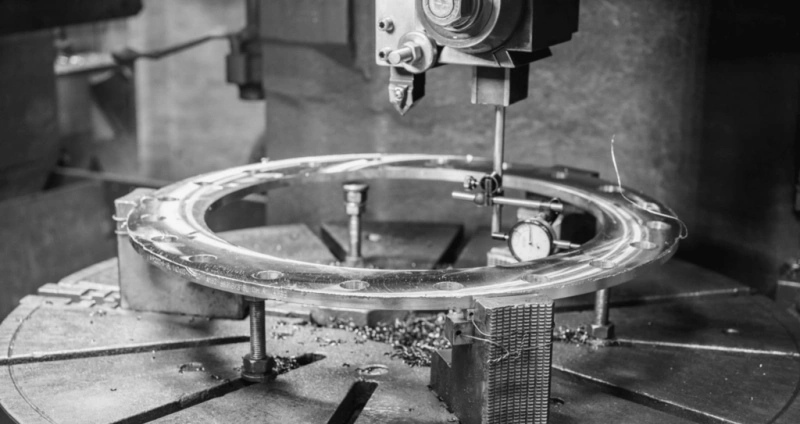
The plate cutting production method uses flat metal plates to create flanges. You will see this process in applications requiring quick turnaround and cost efficiency. Manufacturers cut plates to shape, then machine bolt holes and sealing surfaces. Plate flanges must comply with ANSI/ASME B16.5 dimensional tables.
This ensures proper bolt alignment and gasket seating. You can achieve tight tolerances, such as ±0.005 inch for ¼ inch 6061 aluminum. Plate cutting works well for moderate-pressure systems and standard sizes.
- Plate cutting delivers consistent quality and dimensional accuracy.
- You can rely on this method for flanges in water, HVAC, and general industry.
| Material Type | Tolerance Range |
|---|---|
| ¼ inch 6061 aluminum | ±0.005 inch |
Stamping Method
Stamping stands out among flange manufacturing processes for speed and cost efficiency. You will benefit from high production efficiency, with cycle times reaching 100–600 strokes per minute. When you produce more than 10,000 units, per-part costs can drop by 50–80% compared to CNC machining.
Stamping offers excellent repeatability, with minimal dimensional variation. This method suits thin metals like carbon steel and aluminum, preserving material continuity and quality. You should choose stamping for the large-scale production of standard flanges.
| Advantage | Description |
|---|---|
| High Production Efficiency | Stamping can achieve cycle times of 100–600 strokes per minute, significantly increasing output. |
| Cost Reduction at Scale | Per-part costs can drop by 50–80% compared to CNC machining when production exceeds 10,000 units. |
| Excellent Repeatability | Dimensional variation is extremely low due to controlled forming processes with hardened steel dies. |
| Suitability for Thin Metals | The process is ideal for materials like carbon steel and aluminum, preserving material continuity. |
Laser Cutting Method
Laser cutting represents the most advanced flange manufacturing process. You will see this method used for precision flanges and custom designs. Laser cutting improves dimensional accuracy by 40% and reduces material waste by 40%.
You can achieve measurement tolerances of ±0.02 mm and surface roughness between 0.8 and 1.2 μm. The kerf width stays at 0.2 mm, and the heat-affected zone remains minimal at 0.3 mm. Maximum throughput rates reach 120–150 linear feet per minute.
Maintenance costs drop by 85%, and cycle times reduce by 40%. Laser cutting suits applications where you need high precision and minimal waste.
| Metric | Value |
|---|---|
| Kerf Width | 0.2 mm |
| Heat-Affected Zone | 0.3 mm |
| Material Waste Reduction | 40% |
| Dimensional Accuracy Improvement | 40% |
| Measurement Tolerances | ±0.02 mm |
| Surface Roughness (Ra) | 0.8-1.2 μm |
| Maximum Throughput Rate | 120-150 linear feet per minute |
| Cycle Time Reduction | 40% |
| Maintenance Cost Reduction | 85% |
You can trust Alienfrac’s advanced manufacturing capabilities to deliver API Flanges that meet demanding requirements. These flange manufacturing processes ensure you receive flanges with consistent quality, durability, and performance for your critical operations.
Flange Manufacturing Process Steps
Shaping and Machining
You start the production process of flanges by sourcing high-quality raw materials. This step sets the foundation for reliable performance in any application. The flanges manufacturing process continues with shaping, where you use methods like forging, casting, or cutting from rolled plates to form the basic flange shape.
After shaping, you move to machining. Here, you use advanced equipment to achieve precise dimensions and smooth surfaces.
Tip: Accurate machining ensures that flanges fit perfectly and seal pipelines without leaks.
The most common machining techniques include:
| Machining Technique | Description |
|---|---|
| CNC Turning | Forms cylindrical shapes and ensures precise dimensions. |
| CNC Milling & Drilling | Creates flat surfaces and drills bolt holes for secure connections. |
| Tapping | Cuts internal threads for bolts, ensuring proper fit. |
| CNC Grinding | Provides a smooth finish for sealing surfaces. |
| Face Milling | Produces uniform surfaces for gasket installation. |
| CNC Grooving | Cuts grooves for gaskets, ensuring proper sealing. |
| Cutting/Shearing | Shapes flanges from metal profiles. |
| Blasting | Cleans surfaces before final machining. |
You must follow each step carefully to maintain the integrity of the flanges.
Welding and Assembly
You assemble flanges using welding methods that match the production requirements and the type of flange. For high-pressure or high-stress environments, you attach a weld neck flange to the pipe with a full penetration weld. This method gives you maximum structural integrity.
Socket weld flanges work well for small-diameter, high-pressure pipelines. They minimize leaks and provide a strong connection.
- Weld neck flanges use full penetration welds for strength.
- Socket weld flanges offer robust connections for small pipelines.
Slip-on flanges are easier to install and cost less, but you should avoid them for high-stress conditions. You select the welding method based on the specific needs of your production and the application.
Dimensional Accuracy and Testing
You must ensure that every flange meets strict dimensional accuracy standards. Industry standards, such as those from ASME, set requirements for outer diameter, inner diameter, and thickness.
You use precision tools to measure these dimensions. High precision in bolt holes is critical because incorrect sizes can compromise the integrity of the connection.
- Surface roughness should range from 125 to 250 µin (3.2 to 6.3 µm) for most applications.
- ASTM A105 carbon steel flanges require a minimum tensile strength of 485 MPa (70 ksi).
You also perform mechanical performance testing, such as tensile and compressive strength tests, to confirm the load-bearing capacity and service life. Quality control includes visual inspections for surface defects and strict control of measurement errors.
These steps guarantee that the flanges you produce will perform reliably in any production environment.
Finishing and Coating for Flanges
Surface Finishes
You need to select the right surface finish to protect flanges from corrosion and wear. The finish you choose impacts the service life and performance of your flange in harsh environments. Review the table below to compare common surface finishes and their benefits:
| Surface Finish Type | Benefits |
|---|---|
| Epoxy Coatings | Excellent resistance to chemicals and moisture, ideal for petrochemical and water treatment. |
| Hot-Dip Galvanized Finish | Long service life, ideal for outdoor and marine applications due to sacrificial zinc coating. |
| Coated Finish | Specialized performance for high-temperature and chemical resistance, high corrosion resistance. |
You should match the finish to your operating environment. For example, hot-dip galvanized finishes work well in marine settings, while epoxy coatings suit chemical plants.
Protective Coatings
You can extend the lifespan of flanges by applying advanced protective coatings. Epoxy-based composites provide strong corrosion prevention and repair for flanges in aggressive conditions.
Ceramic-filled novolac epoxy coatings protect the internal surfaces of vessels and flanges from chemical attack. Composite materials also help repair flange faces when traditional methods are not practical.
Tip: Use protective coatings to reduce maintenance costs and prevent unexpected downtime in your operations.
Packing and Shipment
You must protect flanges during packing and shipment to prevent damage. Follow best practices to ensure every flange arrives in perfect condition:
| Best Practice | Description |
|---|---|
| Use waterproof and corrosion-resistant packaging | Essential for overseas shipping to withstand harsh marine environments. |
| Proper handling equipment | Use forklifts, cranes, or hoists, ensuring they are in good condition and operated by trained personnel. |
| Follow loading and unloading procedures | Stack flanges orderly for stability and use soft slings to avoid damage. |
| Use tracking systems | Monitor shipment location and status to quickly address any issues. |
| Environmental monitoring | Use devices to measure temperature, humidity, and vibration levels during transit. |
| Protect sealing surfaces | Use soft padding or protective covers for critical sealing surfaces to prevent damage. |
| Conduct post-transportation checks | Inspect flanges upon arrival for any damage and document issues for resolution. |
You should also use sturdy plastic or wooden end caps to protect every flange’s sealing surface. Apply VCI paper or anti-rust oil for extra corrosion prevention. Always palletize units and secure loads with airbags and lashing straps. Mark packages clearly with handling instructions to avoid mishandling.
By following these steps, you ensure that flanges maintain their quality from the factory to the field.
Flange Attachment Techniques
You must choose the right attachment technique to ensure a secure and reliable connection. Each method suits different operational needs and environments. Review the main options below to understand how you can achieve optimal performance.
Welding
Welding creates a permanent bond between the flange and the pipe. You use welding neck flanges, slip-on flanges, and socket weld flanges for high-pressure systems. Welding provides superior strength and resists pressure, temperature, and vibration.
You benefit from cost-effective, long-term installations. Skilled labor and specialized equipment are necessary. Disassembly is difficult once you weld the parts.
Tip: Select welding for critical connections in oil and gas pipelines where maximum integrity is required.
| Method | Advantages | Disadvantages |
|---|---|---|
| Welding | Superior strength, resistance to pressure, temperature, and vibration. Cost-effective for long-term installations. | Requires skilled labor and specialized equipment, difficult to disassemble. |
Bolt-On
Bolt-on attachment lets you assemble and disassemble flanges easily. You use tension control bolting, hydraulic bolt tensioners, and torque-to-yield bolts for secure connections.
This method handles a wide range of pressures and temperatures. You must align bolts precisely to prevent leaks. Bolt corrosion can occur over time, so regular inspection is important.
- Easy assembly and disassembly
- Versatile for many applications
- Requires precise alignment
| Method | Advantages | Disadvantages |
|---|---|---|
| Flanged | Easy assembly and disassembly, versatile, handles a wide range of pressures and temperatures. | Potential for bolt corrosion requires precise alignment to prevent leaks. |
Heat Shrinking
Heat shrinking uses thermal expansion to fit the flange onto the pipe. You heat the flange, then slide it over the pipe. As the flange cools, it contracts and forms a tight seal.
This method works well for certain metals and applications where welding or bolting is not ideal. You achieve a strong, interference fit without mechanical fasteners.
Note: Use heat shrinking for applications requiring a seamless, vibration-resistant connection.
Roll Staking
Roll staking forms a mechanical joint by deforming the flange material around the pipe. You use specialized tools to roll the edge, locking the flange in place. This technique suits thin-walled pipes and light-duty applications. You avoid welding and bolting, making roll staking a fast and efficient option for specific environments.
- Fast installation
- No need for welding or bolts
- Best for light-duty systems
You must evaluate each technique based on your operational requirements and the environment. Proper attachment ensures the longevity and safety of your flanges.
Quality Assurance in Flange Manufacturing
Inspection and Testing Standards
You must follow strict inspection and testing standards to guarantee the reliability of every flange. These standards help you avoid failures in critical applications. When you inspect flanges, you focus on several key areas:
- Drill bolt holes with high precision to ensure proper installation and tightening. This step is crucial for maintaining the integrity of the connection.
- Achieve a smooth surface finish on the flange face. This finish helps form a tight seal with gaskets and prevents leaks.
- Maintain surface roughness within the standard range of 125 to 250 µin (3.2 to 6.3 µm) for most uses.
- Check the outer surface for defects like cracks or pits. These flaws can weaken the flange and lead to early failure.
- Verify mechanical properties such as tensile strength and yield strength through laboratory testing.
- Use non-destructive testing methods, including ultrasonic, magnetic particle, liquid penetrant, and radiographic testing. These tests detect hidden defects without damaging the flanges.
- Ensure proper certification and documentation. Always request a material test report (MTR) to confirm compliance with ASME B16.5 standards.
By following these steps, you can trust that your flanges will perform well under pressure and in harsh environments.
API Flanges Compliance and Alienfrac Reliability
You need to ensure that your equipment meets international standards for safety and performance. Alienfrac manufactures API Flanges that comply with leading industry requirements. Review the table below to see how these products align with key API standards:
| API Standard | Description |
|---|---|
| API 6A | Covers design and material requirements for flanges in wellhead and Christmas tree equipment, ensuring high-pressure handling in deep-water applications. |
| API 6D | Pertains to pipeline valves and flanges, setting material, and pressure-temperature ratings for transporting crude oil and natural gas. |
| API 5L | Addresses requirements for flanges used in pipelines, ensuring durability under harsh conditions in the petroleum and natural gas industries. |
Alienfrac’s commitment to quality assurance means you receive flanges that meet or exceed these standards. You can rely on their products for consistent performance and safety in demanding operations.
Comparing Flange Manufacturing Methods
Strengths and Weaknesses
You need to understand the pros and cons of each method before making a decision. Forging gives you superior strength and reliability. Cast flanges allow for complex shapes but may have lower mechanical properties.
Plate cutting offers quick production and consistent quality. Stamping delivers high efficiency and repeatability. Laser cutting achieves unmatched precision and minimal waste.
| Method | Strengths | Weaknesses |
|---|---|---|
| Forging | High strength, durability | Higher cost, longer cycle time |
| Casting | Complex shapes, cost-effective | Potential defects, lower strength |
| Plate Cutting | Fast, accurate, flexible | Limited to standard sizes |
| Stamping | Efficient, low cost at scale | Best for thin metals |
| Laser Cutting | Precise, minimal waste | Higher equipment cost |
Tip: Always match the method to your operational needs for best results.
Application Suitability
You must select the right manufacturing process based on your application. Forged flanges suit high-pressure oil and gas pipelines. Cast flanges work well in low-pressure systems or where shape complexity matters.
Plate cutting fits water, HVAC, and general industry. Stamping is ideal for the mass production of standard flanges. Laser cutting is perfect for custom designs and tight tolerances.
- Forging: Oil and gas, power plants, critical connections
- Casting: Chemical plants, low-pressure pipelines
- Plate Cutting: HVAC, water systems, general industry
- Stamping: Automotive, large-scale manufacturing
- Laser Cutting: Custom, precision engineering
Cost and Efficiency
You need to consider cost and efficiency in the comparison of flange manufacturing methods. Forging requires more investment but delivers long-term value. Casting reduces upfront costs but may need more inspection.
Plate cutting and stamping lower costs for standard flanges. Laser cutting minimizes waste and maintenance, saving money over time.
Note: Efficient production methods help you reduce downtime and improve profitability.
You can optimize your choice by balancing performance, application, and budget. Alienfrac offers advanced solutions that help you select the best flange for your needs.
Selecting the Right Flange Manufacturing Method
Application Requirements
You must start by identifying the requirements for your project. Each flange must meet the demands of your system. You need to consider factors such as pressure, temperature, and the type of fluid or gas flowing through the pipeline.
If your application involves high-pressure or high-temperature environments, you should select flanges manufactured by forging. This method gives you greater strength and reliability. For less demanding requirements, cast flanges offer a cost-effective solution.
Always match the manufacturing method to the requirements of your operation.
Tip: Review your system’s requirements before choosing a flange. This step helps you avoid costly mistakes and ensures long-term performance.
Operating Conditions
You must evaluate the operating conditions that affect flange selection. Temperature, pressure, and corrosive environments play a major role in determining the best manufacturing method. Review the table below to see how these factors influence your choice:
| Manufacturing Method | Advantages | Applications |
|---|---|---|
| Forged Flanges | Higher strength, better wear resistance, improved sealing performance, and long-term stability | Petrochemicals, electric power, and marine engineering |
| Cast Flanges | Cost-effective for large quantities, easier to produce complex shapes | General applications where extreme performance is not critical |
If you operate in harsh environments, forged flanges provide better sealing and durability. Cast flanges work well in standard conditions where requirements are less strict. You must always check the requirements for temperature and pressure to ensure safe operation.
Industry Standards and Partnering with Alienfrac
You need to follow industry standards to guarantee safety and performance. Standards like API and ASME set strict requirements for flange design and manufacturing. Alienfrac produces flanges that comply with these standards. You can trust their products for high-pressure and high-temperature applications.
When you partner with Alienfrac, you gain access to advanced manufacturing technology and reliable quality control. Their expertise helps you meet your requirements and ensures your system operates safely.
Note: Choosing a trusted manufacturer like Alienfrac gives you peace of mind and supports your operational requirements.
Conclusion
You now understand why flange manufacturing methods, material selection, and quality assurance matter. When you choose Alienfrac and API Flanges, you gain reliability for high-pressure systems.
- Review your application’s needs.
- Match the right process to your requirements.
- Consult trusted manufacturers for expert guidance.
Remember: The right flange ensures safety, performance, and long-term value for your operation.
FAQ
What is the main advantage of forged flanges?
You gain superior strength and durability with forged flanges. This method creates a dense, uniform structure that resists high pressure and impact. Choose forged flanges for critical oil and gas applications.
How do you verify the quality of API Flanges?
You should request a Mill Test Report (MTR) and check for API or ASME certification. These documents confirm material properties and compliance with industry standards. Always inspect for surface defects and precise dimensions.
When should you use laser-cut flanges?
You should select laser-cut flanges for custom designs or when you need tight tolerances. Laser cutting provides high dimensional accuracy, minimal waste, and smooth edges. This method suits precision engineering and specialized projects.
What materials can you choose for API Flanges?
| Material Type | Key Benefit |
|---|---|
| Carbon Steel | Cost-effective strength |
| Stainless Steel | Corrosion resistance |
| Alloy Steel | High-temperature use |
| Nickel Alloys | Extreme environment |
You can match the material to your application’s needs.
How does Alienfrac ensure flange reliability?
Alienfrac uses advanced manufacturing, strict inspections, and certified materials. You receive flanges that meet or exceed API and ASME standards. This process ensures consistent performance in high-pressure and harsh environments.