
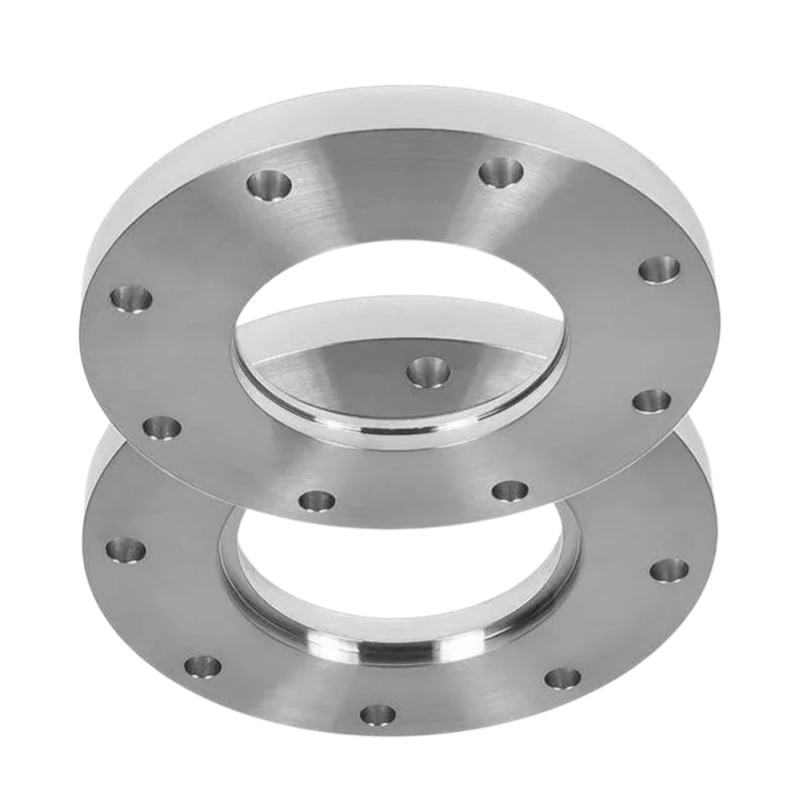
You face serious risks when you overlook flange standard compatibility in global piping and pump installations. Mismatched flanges can lead to mechanical incompatibility, sealing failures, and pressure mismatches that threaten system safety. Common problems include:
- Improper fitting due to differences in bolt hole layout and flange thickness
- Leaks or blowouts from sealing failures under pressure
- Costly repairs caused by minor dimensional differences and manual modifications
Understanding international flange standards helps you avoid these hazards. Trusted brands like Alienfrac deliver compliant solutions that protect your operations and reputation.
Key Takeaways
- Understand international flange standards to avoid costly mistakes and ensure safety in global installations.
- Always verify flange specifications against system requirements to prevent leaks and mechanical failures.
- Select the right flange type and material based on pressure, temperature, and application needs for reliable performance.
- Consult technical documentation and experts to ensure compliance with relevant standards and reduce risks.
- Choose trusted brands like Alienfrac for flanges that meet international standards and support safe operations.
International Flange Standards Overview
Key Flange Standards Worldwide
You encounter a wide range of international flange standards when working on global piping projects. Each standard covers specific regions and industries, and you must understand their coverage to ensure compatibility. The table below shows the most recognized standards and their primary regions:
| Standard | Region/Industry | Specifications |
|---|---|---|
| ANSI | United States | ANSI B16.5, ANSI B16.47 |
| DIN | Germany | DIN 2501, DIN 2633 |
| JIS | Japan | JIS B2220, JIS B2291 |
| BS | United Kingdom | BS 10, BS 4504 |
| AS | Australia | AS 2129, AS 4087 |
| GOST | Russia | GOST 12821, GOST 12820 |
| GB/T | China | GB/T 9112, GB/T 9124 |
| UNI | Italy | UNI 2278, UNI 6089 |
You also see EN standards, especially the European EN 1092 series, used across Europe. ISO 7005 provides a global reference for flange compatibility.
Major Differences in Flange Specifications
You must pay attention to the differences in dimensional requirements and pressure ratings among international flange standards. These differences can cause installation issues if you mix standards. For example:
- ANSI/ASME uses inch-based bolt sizing, while DIN and JIS use metric measurements.
- Flange outside diameter, thickness, and bolt circle dimensions vary between standards.
- Mixing EN, ANSI, DIN, or JIS flanges often leads to leaks or failures due to bolt hole patterns and facing details.
The table below highlights pressure ratings and descriptions for common standards:
| Standard | Pressure Ratings | Description |
|---|---|---|
| ANSI | 150, 300, 600, 900 | Class designations with pressure–temperature tables by material group. |
| DIN | PN10, PN16, PN25 | Nominal pressure series: allowable pressure reduces as temperature rises. |
| JIS | 10K, 16K, 20K | Nominal “K” series; confirm rating tables and temperature limits. |
Importance of Global Installations
You must understand international flange standards to ensure safe and reliable operation in global installations. ASME B16.5 covers pipe sizes from ½” to 24”, while ASME B16.47 applies to larger sizes up to 60”. EN standards require strict adherence to local specifications.
If you mix standards, you risk leaks, failures, and costly repairs. You should always select flanges that match the project’s requirements and consult technical documentation.
Alienfrac provides API flanges that meet international requirements and support compatibility across EN, ANSI, DIN, JIS, and other standards. You gain peace of mind knowing your installation meets global specifications and operates safely.
Flange Types, Ratings, and Classifications
Common Flange Types and Faces
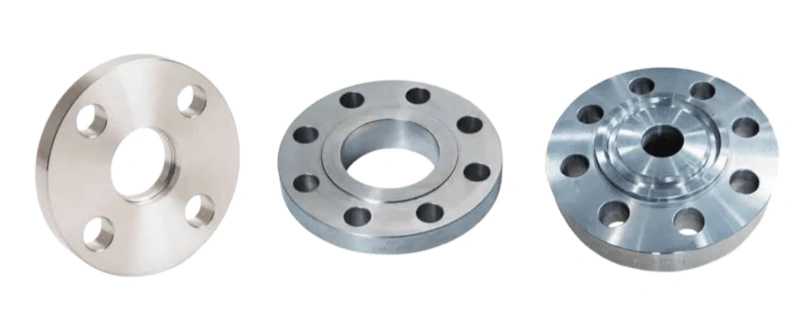
You encounter many types of flanges in industrial piping systems. Each type serves a specific function and fits certain applications. The most common standard flanges include weld neck, slip-on, threaded, and blind flanges. Weld neck flanges have a long tapered hub that provides extra strength for high-pressure systems.
Slip-on flanges slide over the pipe and are easy to install. Threaded flanges connect to pipes without welding, making them ideal for quick assembly. Blind flanges seal the end of a pipeline or vessel.
Face types play a key role in sealing and pressure containment. You often see raised face, flat face, and ring-type joint faces in standard flanges. The table below summarizes these face types:
| Flange Type | Description | Applications |
|---|---|---|
| Raised Face (RF) | Most widely used, features a raised surface for a tighter seal. | Oil & gas pipelines, chemical plants, power generation |
| Flat Face (FF) | Completely flat sealing surface, used with brittle materials. | Water treatment plants, HVAC systems, and fire protection piping |
| Ring Type Joint (RTJ) | Precision-machined with a groove for a metallic gasket, ideal for extreme conditions. | Oil & gas drilling rigs, refineries, petrochemical plants |
You must select the right face type to match the pressure and sealing requirements of your system.
Pressure Ratings: PN, Class, and API
You need to understand pressure ratings when choosing standard flanges for global projects. ASME uses “Class” ratings, such as Class 150 or Class 300, to indicate maximum allowable pressure. DIN and EN standards use “PN” (Pressure Nominal) ratings, like PN 16 or PN 100.
API ratings cover high-pressure oil and gas applications.
The table below compares the main pressure rating systems for standard flanges:
| Pressure Rating System | Maximum Allowable Pressure (psig) | Temperature (°F) |
|---|---|---|
| ASME Class 150 | 285 | 100 |
| ASME Class 300 | 740 | 100 |
| EN 1092-1 PN 16 | 232 | 68 |
| EN 1092-1 PN 100 | 1450 | 68 |
You see that API flanges, such as those from Alienfrac, meet strict requirements for high-pressure service. These flanges comply with both API and ASME B16.5 standards, ensuring safety and reliability in demanding environments.
Material and Temperature Considerations
You must consider material and temperature when selecting standard flanges. High-pressure and high-temperature systems require flanges made from strong, corrosion-resistant materials. The table below shows common materials used for standard flanges:
| Material | Properties | Common Grades | Key Industries |
|---|---|---|---|
| Stainless Steel | Exceptional resistance to corrosion, oxidation, and wear; high strength-to-weight ratio; withstands extreme temperatures. | 304, 316, 316L, 321 | Marine, chemical processing, food and beverage, pharmaceuticals, wastewater treatment |
| Alloy Steel | Enhanced tensile strength, creep resistance, and toughness; maintains integrity under thermal cycling and mechanical stress. | ASTM A182 (F11, F22, F91) | Power plants, petrochemical refineries, aerospace, and high-pressure steam systems |
| Nickel Alloys | Outstanding resistance to oxidation, sulfidation, and stress corrosion cracking; suitable for severe operating conditions. | Inconel (600, 625, 718), Monel (400, K500), Hastelloy (C-276, B-2) | Offshore drilling, aerospace, nuclear reactors, chemical processing, marine engineering |
You should always match the material of your standard flanges to the operating conditions. This practice ensures long service life and reduces the risk of failure.
Tip: When you select Alienfrac API flanges, you get products designed for high-pressure, high-temperature, and corrosive environments. These flanges support your operations in oil, gas, and industrial applications worldwide.
Standard of Flanges
JIS Flange Standard

You often see the JIS flange standard in Japanese and Asian markets. This standard supports industries that demand precision and reliability. The table below highlights where you find JIS flanges and their key features:
| Industry | Key Features |
|---|---|
| Chemical and Petrochemical Plants | Use of corrosion-resistant materials; precise dimensional tolerances for tight sealing; various pressure ratings. |
| Shipbuilding and Marine Engineering | Marine-grade materials; resistance to galvanic and pitting corrosion; ensures interchangeability. |
| Manufacturing Sector | Secure connections for fluid and gas transfer; supports modular design; standardized bolt hole patterns. |
| Power Generation | Reliability under extreme conditions, paired with high-integrity gaskets and consistent inspection protocols. |
ISO Flange Standard
The ISO flange standard, especially ISO 7005, helps you achieve compatibility across borders. This internationally standardised approach ensures that flanges from different countries fit together. ISO 7005 specifies dimensions and pressure ratings, making it easier for you to manage global projects.
| Key ISO Standards | Description |
|---|---|
| ISO 7005 | Covers general requirements for flanges in piping systems, specifying dimensions and pressure ratings to ensure compatibility across borders. |
ASME Flange Standard
ASME B16.5 stands as the backbone of American standards for flanges. You rely on this standard for most industrial piping in the United States and many international projects. ASME B16.5 defines pressure class ratings and covers a wide range of applications:
- Class 150
- Class 300
- Class 600
- Class 900
- Class 1500
- Class 2500
You use these pressure classes in oil and gas processing, petrochemical plants, refining, power generation, food and beverage manufacturing, marine and offshore systems, and water treatment facilities. ASME B16.5 ensures you meet strict safety and performance requirements.
DIN Flange Standard
DIN origin standards dominate European markets. DIN flanges use PN (Pressure Nominal) ratings and offer a wide selection of types and faces. The table below compares DIN and ANSI standards:
| Standard | Pressure Ratings | Flange Types | Flange Faces |
|---|---|---|---|
| ANSI | 150 LB, 300 LB, 400 LB, 600 LB, 900 LB, 1500 LB, 2500 LB | slip on, welding neck, threaded, lap joint, socket weld, blind | flat face, raised face, ring type joint, male and female, tongue and groove |
| DIN | PN6, PN10, PN16, PN25, PN40, PN64, PN100, PN160, PN250, PN320, PN400 | slip on, welding neck, threaded, lap joint, blind | raised face, ring type joint, male and female, tongue and groove |
ANSI Flange Standard

You encounter ANSI standards in American and international projects. ANSI flanges follow the same pressure class system as ASME B16.5. These standards ensure you get reliable performance and compatibility in a wide range of pipeline applications.
SAE Flange Standard
SAE flanges serve hydraulic and high-pressure systems. You benefit from their four-bolt assembly and O-ring seals, which provide leak-free connections. SAE flanges come in Code 61 (up to 3000 PSI) and Code 62 (up to 6000 PSI). You find these flanges in automotive, marine, petroleum, and power generation industries.
| Characteristic | Description |
|---|---|
| Design Features | Four-bolt assembly, O-ring seals for leak-free connections. |
| Pressure Ratings | Code 61 (up to 210 Bar / 3000 PSI), Code 62 (up to 420 Bar / 6000 PSI). |
| Connection Types | Threaded, socket weld, butt weld. |
| Material Specifications | Carbon steel, stainless steel, and duplex stainless steel. |
| Predominant Industries | Hydraulic systems, automotive, marine, petroleum and gas, power generation, piping systems. |
| Manufacturing Standards | ISO 6162, SAE J518. |
| Advantages | High-pressure resistance, shock and vibration resistance, and easy installation in confined spaces. |
API Flange Standard
API flanges meet the unique demands of oil and gas operations. Unlike general-purpose standards, API specifications such as API 6A address severe conditions found in wellhead and drilling equipment. You gain superior pressure containment, sealing integrity, and corrosion resistance.
API flanges play a critical role in high-performance pipeline systems.
Application in High-Pressure Systems
When you select flanges for high-pressure systems, you must consider several factors:
- Pressure and temperature ratings define the maximum limits for safe operation.
- Material compatibility ensures the flange withstands harsh environments.
- The connection method impacts both system integrity and installation.
- Flange face design affects sealing under pressure.
- Pipeline conditions, such as fluid type and flow, may require special designs.
You should always match the flange standard to your system’s requirements. Alienfrac API flanges offer robust solutions for oil, gas, and industrial use. These flanges meet API and ASME B16.5 standards, provide high-pressure class ratings, and deliver reliable performance in the most demanding environments.
Alienfrac API Flanges
Features and Value
You gain a distinct advantage when you choose Alienfrac API flanges for your oil and gas operations. These flanges deliver exceptional performance in high-pressure and high-temperature environments.
You benefit from robust engineering and strict adherence to international standards, which ensures safety and reliability in every installation.
Alienfrac API flanges stand out because they meet the requirements of API and ASME B16.5 standards. You can trust these products in severe operating conditions. The company designs its flanges to handle demanding environments, including subsea and offshore applications.
You see consistent quality and durability across the entire product range.
Note: Alienfrac API flanges support your operations with reliable sealing and corrosion resistance. You minimize downtime and maintenance costs by using flanges built for extreme conditions.
You find a comprehensive selection of flange types that fit diverse oil and gas configurations. Weld neck, blind, target, adapter, and threaded flanges are available for wellhead assemblies and subsea connections. You can select the right flange for your specific project requirements.
The table below highlights the main features that differentiate Alienfrac API flanges from other brands:
| Feature Type | Description |
|---|---|
| Material Specifications | API standards reference ASTM material grades with additional requirements for oil & gas service. |
| Extreme Underwater Environments | Flanges designed for subsea applications, addressing external pressure and marine corrosion. |
| Comprehensive Range | A variety of flange types conforming to API standards for diverse oil & gas configurations. |
| API 6A Flanges | Includes Weld Neck, Blind, Target, Adapter, and Threaded flanges for wellhead assemblies. |
| API 17D Flanges | Specifically designed for subsea connections, ensuring integrity under extreme conditions. |
You also benefit from Alienfrac’s commitment to international compliance:
- Alienfrac API flanges conform to API and ASME B16.5 standards.
- The company ensures products meet API 6A, API 605/ASME B16.47, and API 17D requirements.
- Flanges are engineered for severe operating conditions, supporting safety and performance.
You secure your global installations with Alienfrac API flanges. These products deliver value through quality, reliability, and compatibility with industry standards.
Flange Standard Compatibility and Selection
Compatibility Issues and Risks
You face significant risks when you connect flanges from different standards. Many installations fail because of small dimensional differences or mismatched pressure ratings. You must recognize the most common compatibility issues to prevent leaks, mechanical failures, and costly downtime.
| Compatibility Issue | Description |
|---|---|
| Bolt Hole Misalignment | Differences in bolt circle diameter and bolt size can lead to misalignment, even with matching hole counts. |
| Rating Misinterpretation | Class/PN/K ratings are not straightforward conversions; allowable pressure varies with temperature and material. |
| Facing/Gasket Mismatch | Different facing types (RF/FF/RTJ) require appropriate gasket selection and assembly methods to ensure a proper seal. |
You often see bolt hole misalignment when you try to join flanges from ASME B16.47 and DIN standards. The bolt circle diameter and hole size may look similar, but they rarely match exactly. Rating misinterpretation happens when you assume that Class 150 and PN16 flanges have the same pressure tolerance.
In reality, allowable pressure changes with temperature and material. A facing and gasket mismatch occurs when you use a raised face flange with a flat face gasket. This mistake leads to poor sealing and frequent leaks.
You must inspect flanges and their joints before installation. If you ignore compatibility, you risk system failure and safety hazards.
Selection Guidelines for Global Projects
You need a clear process for the proper selection of flanges in global installations. You must follow technical documentation and industry standards to ensure reliability and safety. You should always verify flange specifications against system requirements.
Recommended steps for verifying flange standard compatibility:
- Ensure that flange adaptors are manufactured to relevant standards such as BS, EN, and ISO9001:2008. These standards guarantee that flanges withstand high-pressure conditions and corrosion.
- Verify the flange adaptor specifications against the pipe specifications to ensure a proper fit.
- Identify your system’s pressure, temperature, and flow conditions.
- Choose the appropriate flange type based on service and accessibility.
- Confirm material compatibility with process media.
- Verify flange rating using ASME pressure-temperature tables.
- Ensure compliance with relevant standards such as ASME B16.5 and ASME B16.47.
You must consult technical documentation for every project. The table below shows how documentation supports proper selection:
| Standard Type | Description |
|---|---|
| National Standards | GB/T and HG/T in China |
| International Standards | ANSI, ASME, DIN, JIS |
| Compliance Importance | Ensures reliability and safety, avoiding potential hazards |
You should confirm the required standard edition, such as ASME B16.47 Series A or Series B. You must verify flange face type and gasket style early in the process. You need to follow the proper torque and tightening sequence to reduce uneven gasket compression.
You should inspect and maintain flanged joints, recording leakage history and corrective actions. You must keep traceability documentation for QA audits and maintenance planning.
Tip: Always match the flange standard to your system’s requirements. This practice ensures safe operation and reduces maintenance costs.
Consulting Experts and Reliable Brands
You benefit from consulting experts and choosing reliable brands for flange selection. Technical professionals help you interpret standards and avoid compatibility issues. Trusted brands like Alienfrac support compliance and reduce risk in global projects.
| Evidence | Description |
|---|---|
| Material Selection | Choosing the right material based on operating conditions ensures reliability and safety. |
| Specification Verification | Verifying flange specifications against system requirements prevents leaks and equipment damage. |
You gain advantages by working with brands that offer a strong flange management program. This program reduces leak incidents, enhances safety, and improves operational efficiency. You see lower maintenance costs and regulatory compliance.
Alienfrac provides flanges that meet ASME B16.47 and API standards. You receive products with verified specifications and material compatibility. You secure your installation with flanges designed for high-pressure and corrosive environments.
Note: Consulting experts and using flanges from Alienfrac ensures proper selection of flanges for global projects. You protect your operations and achieve long-term reliability.
Conclusion
You protect your installation when you select the correct flange standard. Certified products like Alienfrac API Flanges deliver reliable performance and reduce the risk of failure. You avoid costly repairs by matching pressure ratings and not mixing different standards.
Standardized flanges make connections easier and safer. You should prioritize application requirements and consider supply chain availability. Consult technical experts and review documentation for every global project. Proper selection ensures safety, reliability, and cost-effectiveness.
FAQ
What are the main flange standards used in global installations?
You encounter many flange standards in global projects. These include ASME, ANSI, DIN, JIS, ISO, BS, SAE, and API. Each standard defines dimensions, pressure ratings, and materials. You must check standards for compatibility before installation.
How do I ensure flange compatibility across different standards?
You verify flange compatibility by comparing dimensions, pressure ratings, and face types. You review technical documentation for each standard. You consult experts to confirm standards match your system requirements. You avoid mixing standards without proper adaptors.
Why do flange standards matter for high-pressure systems?
You rely on flange standards to guarantee safety and performance in high-pressure systems. Standards specify material strength, sealing methods, and pressure limits. You prevent leaks and failures by following standards for every installation.
Can I use adaptors to connect flanges from different standards?
You use adaptors when you must join flanges from different standards. Adaptors bridge dimensional gaps and ensure proper sealing. You select adaptors manufactured to recognized standards. You confirm adaptors meet pressure and material requirements.
How do Alienfrac API flanges comply with international standards?
You trust Alienfrac API flanges because they meet API and ASME standards. These flanges undergo strict testing and quality control. You use them in oil, gas, and industrial systems. Alienfrac ensures standards compliance for global installations.
