
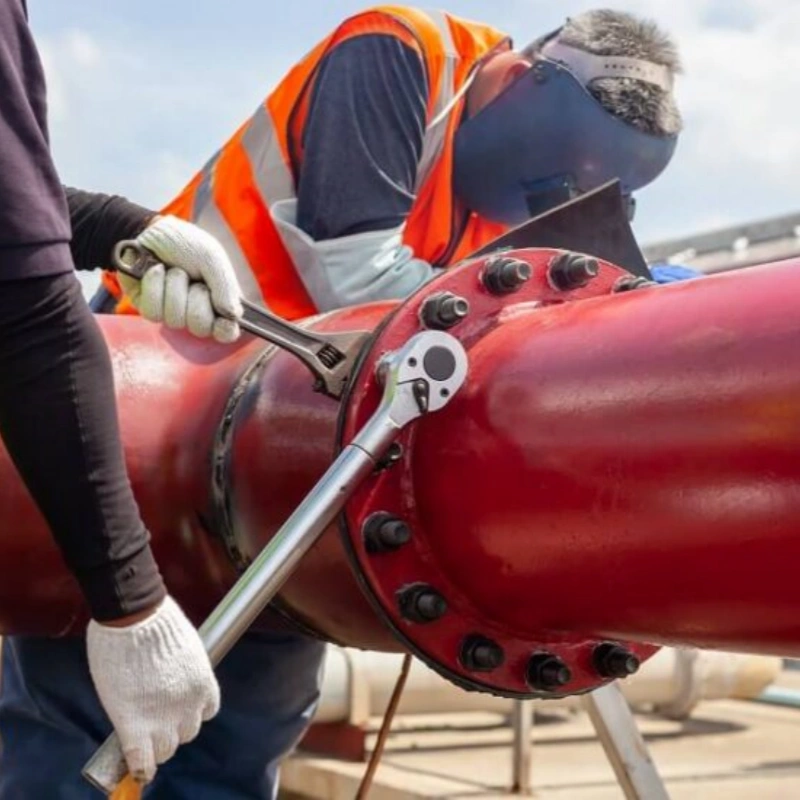
You play a critical role in industrial flange maintenance, ensuring safety and reliability in every piping system. Proper flange maintenance prevents leaks and supports compliance with industry regulations. You need to inspect for corrosion, check gasket wear, and tighten bolts evenly to avoid failures.
When you repair corroded flanges or replace worn gaskets, you protect your operations and the environment. Alienfrac’s API Flanges deliver the durability and precision you demand for consistent performance.
Key Takeaways
- Regular inspections are crucial. Check flanges in high-risk areas every three to six months and at least once a year in normal conditions.
- Use the right tools for flange management. Gather flange alignment tools, torque wrenches, and flange spreaders to ensure safe and efficient maintenance.
- Follow safety protocols. Always wear proper PPE, conduct safety training, and prepare for emergencies to protect your team during maintenance.
- Choose quality materials. Select flanges, gaskets, and bolts that match the fluid’s properties and operating conditions to prevent leaks and failures.
- Document everything. Keep detailed records of inspections, repairs, and maintenance to improve compliance and accountability.
Pre-Maintenance Steps for Flange Management
Preparation forms the backbone of effective flange management. When you take the time to plan and organize, you reduce risks and improve the reliability of your piping systems.
Alienfrac’s commitment to quality and compliance with international standards ensures that every step in your maintenance procedures meets the highest benchmarks.
Tools and Equipment Preparation
You need the right tools to perform safe and efficient flange management. Before you begin, gather all necessary equipment to avoid delays and ensure each task runs smoothly.
- Flange alignment tools help you achieve precise alignment, which prevents premature failure and reduces assembly time by up to 30%.
- Flange spreaders provide quick and safe access to flanges during maintenance.
- Torque wrenches allow you to tighten bolts evenly, following manufacturer specifications for secure connections.
Tip: Always inspect your tools before use to confirm they are in good working condition.
Safety and PPE Guidelines
Safety must always come first in flange management. International standards require you to follow strict safety protocols and use proper personal protective equipment (PPE).
- Complete comprehensive safety training before starting any maintenance.
- Prepare for emergencies by reviewing response plans and ensuring first aid readiness.
- Assign skilled operators who understand mechanical operations and equipment.
- Select equipment that matches flange dimensions and the work environment.
- Develop reliable lifting plans for heavy machinery.
- Secure all equipment to prevent falls or accidents.
- Manage cross-operations carefully when multiple tasks occur at once.
- Use fall protection gear and secure tools for high-altitude work.
Safety officers, supervisors, and competent persons should inspect PPE daily and after any incident.
Reviewing Standards and Documentation
You must review all relevant standards and documentation before starting flange management. This step ensures your maintenance procedures align with industry requirements and best practices.
| Standard | Description |
|---|---|
| ASME B16.5 | Covers flanges for piping systems, specifying dimensions, materials, pressure-temperature ratings, and marking requirements. |
| ASME B16.47 | Addresses larger flanges and their specifications for various applications in the industry. |
| ANSI/ASME PCC-1 | Provides guidelines for the proper assembly and maintenance of flange connections to ensure safety and functionality. |
Alienfrac’s API flanges meet these international standards, giving you confidence in every flange management project.
Flange Inspection and Testing
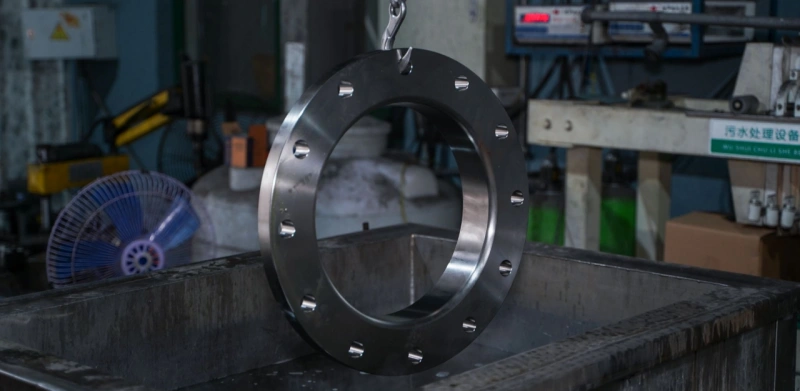
Regular inspection forms the foundation of effective flange management. You protect your piping systems from leaks and failures when you follow a structured inspection routine. Alienfrac’s API Flanges support reliable inspection outcomes, giving you confidence in every connection.
Visual Inspection Checklist
You start every periodic inspection with a thorough visual check. This step helps you identify obvious issues before they escalate. You should inspect flanges in high-risk environments every six months or quarterly. In normal conditions, you perform inspections at least once a year.
Always inspect after maintenance or repair work.
- Examine the flange surface for signs of corrosion, cracks, or deformation.
- Check for dirt, paint, or grease on gasket seating areas.
- Confirm that the flange faces are parallel and concentric.
- Look for wear or damage in gaskets and bolts.
- Verify that the raised face meets minimum thickness requirements.
Tip: Use a flashlight and a magnifying glass to spot small defects during your inspection.
Identifying Surface Defects
Surface defects can compromise flange management and threaten system integrity. You must recognize these issues early to prevent costly downtime.
- Cracks allow air leakage and reduce efficiency.
- Corrosion weakens flange material, increasing the risk of failure.
- Deformation causes fitting and sealing problems.
- Improper surface finish affects gasket sealing and may lead to leaks.
- Damaged or incorrectly installed gaskets also result in leakage.
You address these defects immediately to maintain the reliability of your flanges.
Gasket and Bolt Assessment
You inspect gaskets and bolts closely during every flange inspection. Their condition directly influences the likelihood of leaks.
- Proper installation and maintenance of gaskets and bolts prevent leaks.
- Under-tightened gaskets fail to provide enough surface contact.
- Loose or uneven bolt tightening creates weak points.
- Corrosion and galling of bolts worsen over time, jeopardizing the joint.
- Misalignment increases leak risk by placing uneven stress on gaskets and bolts.
- Gasket integrity relies on proper seating; surfaces must be parallel and clean.
You replace damaged gaskets and bolts promptly to ensure safe flange management.
Flange Alignment and Integrity
Flange alignment is critical for leak-free operation. You measure alignment and integrity against industry benchmarks during inspection.
| Aspect | Tolerance/Standard |
|---|---|
| Overall Flatness | 0.18″ |
| Tolerance Between Bolt Holes | 0.08″ |
| Flange Alignment | 1 mm in 200 mm (1/16 in./ft) |
You check that gasket seating areas are free from foreign materials. Minor defects may be allowed based on location, size, and depth. You verify that the gasket contact area meets minimum width requirements. You confirm parallelism and concentricity of flange faces.
You inspect for signs of wear or damage in gaskets and bolts. You ensure the raised face meets the minimum thickness as specified by codes.
Note: Alienfrac’s API Flanges are engineered for precise alignment and durability, supporting your flange management goals.
Non-Destructive Testing Methods
You use non-destructive testing (NDT) methods to detect hidden flaws in flanges. These techniques help you maintain system integrity without dismantling connections.
| NDT Method | Description |
|---|---|
| Ultrasonic Testing (UT) | Uses high-frequency sound waves to detect internal flaws, such as cracks or voids, in the flange material. Highly sensitive to hidden flaws. |
| Magnetic Particle Testing (MT) | Detects surface and near-surface flaws in ferromagnetic materials by applying a magnetic field and using magnetic particles. |
| Liquid Penetrant Testing (PT) | Identifies surface flaws in non-porous materials by applying a liquid penetrant that reveals flaws after developer application. |
| Radiographic Testing (RT) | Utilizes X-rays or gamma rays to detect internal flaws, providing detailed images of the internal structure of the flange. |
| Phased Array Ultrasonic Testing (PAUT) | An advanced method that electronically steers and focuses sound waves, ideal for detecting crevice corrosion in complex geometries. |
Phased Array Ultrasonic Testing (PAUT) gives you precise results for complex geometries, such as weld seams on curved components. You rely on these methods to ensure your flanges meet industry standards and maintain safe operations.
Alert: Schedule NDT as part of your periodic inspection plan to catch hidden defects before they cause leaks.
You strengthen your flange management program when you combine visual checks, surface defect identification, gasket and bolt assessment, alignment verification, and advanced NDT. Alienfrac’s API Flanges deliver consistent quality, making your inspection process more reliable.
Corrosion Prevention in Industrial Flange Maintenance
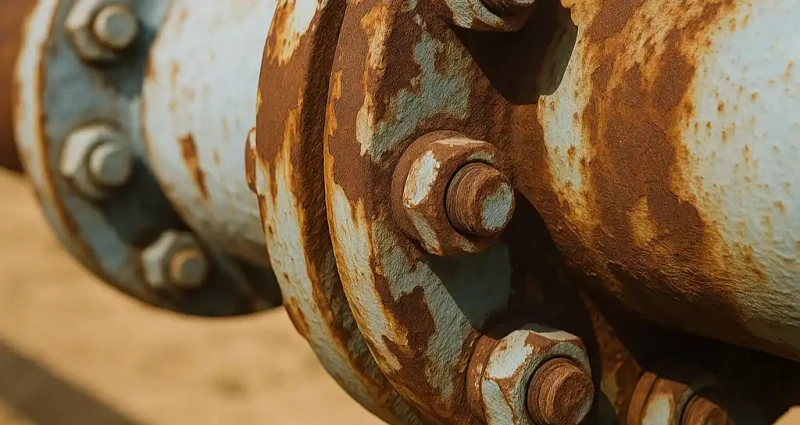
Corrosion remains one of the leading threats to flange management in industrial piping systems. You must address this challenge to extend the service life of your flanges and prevent costly downtime. Alienfrac’s API Flanges offer advanced corrosion resistance, supporting your maintenance goals in harsh environments.
Cleaning and Surface Prep
You start every maintenance cycle with thorough cleaning and surface preparation. Remove all corrosion products using a wire brush, grinding, or chemical cleaning. Ensure a clean, bare surface for proper coating adhesion.
This step is critical because even small amounts of residue can accelerate corrosion and compromise flange management. Gaskets help prevent corrosion, but they can fail under extreme conditions, leaving flanges vulnerable.
You must inspect for corroded flanges and address them before they threaten system integrity.
Material Selection and Compatibility
Choosing the right materials for flanges, gaskets, and bolts is essential for effective flange management. You need to match materials to the chemical properties of the fluid, operating temperature, and pressure. The table below outlines key criteria for material selection:
| Criteria | Description |
|---|---|
| Fluid Compatibility | Match materials to the fluid’s corrosiveness and toxicity. |
| Operational Parameters | Ensure materials withstand temperature and pressure extremes. |
| Corrosion Resistance | Select materials that resist stress corrosion cracking. |
| Surface Finish | Use softer gaskets for rough surfaces to improve sealing. |
| Regulatory Compliance | Meet all local safety and emissions standards. |
Alienfrac’s API Flanges use high-quality alloys and stainless steel, providing superior resistance to corrosion and supporting long-term flange management.
Protective Coatings and Inhibitors
You apply protective coatings and corrosion inhibitors to extend the life of your flanges. Modern coatings, such as FPS, can reduce corrosion rates from 0.93 to 0.05 mm per year. These coatings work in diverse climates and can be applied over existing corrosion, making them ideal for maintenance.
Volatile corrosion inhibitors offer cost-effective protection, especially in harsh environments. You should always ensure proper application for maximum effectiveness.
Flange Covers and Packing Systems
You protect flanges from environmental exposure by using flange covers and packing systems. Plastic flange caps prevent corrosion, especially in marine and outdoor installations where salt and moisture accelerate damage. Flange covers keep surfaces dry and sealed, stopping corrosion before it starts.
Packing systems, made from composite polymers, fill gaps and create a strong seal against moisture and contaminants. You should include these solutions in your flange management plan to prevent corrosion and extend the life of your piping systems.
Tip: Regularly inspect and replace flange covers and packing systems to maintain optimal protection.
By following these steps, you strengthen your flange management program and ensure reliable, long-lasting performance from your flanges.
Gasket and Bolt Care for Flanges
Gasket Selection and Installation
You must select the right gaskets to achieve an excellent seal and maintain reliable flange management. Always consider the fluid’s chemical compatibility to prevent gasket degradation. Assess the maximum temperature and pressure to ensure the gasket maintains integrity.
For sensitive applications, evaluate contamination risks. Use tighter gaskets for toxic or explosive fluids to guarantee leak-proof joints.
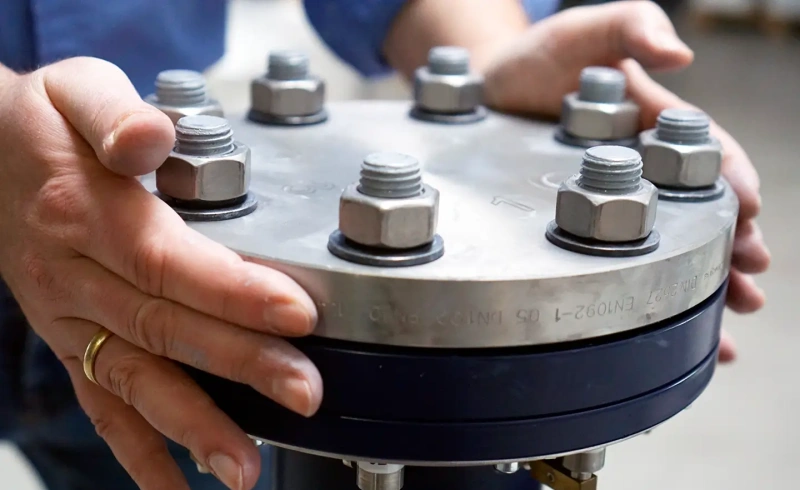
Before installation, clean flange surfaces and inspect for defects. Proper installation starts with correct flange alignment, which ensures even gasket loading. Use a calibrated torque wrench and follow a cross-bolt tightening sequence for uniform compression.
Apply suitable lubricants to bolt threads, but avoid contaminating gasket surfaces. Always follow manufacturer torque guidelines for optimal performance.
Bolt Tightening Patterns
Proper bolt tightening patterns play a crucial role in flange management. A criss-cross pattern distributes clamping force evenly across the flange, reducing the risk of leaks. The table below highlights key aspects:
| Key Aspect | Description |
|---|---|
| Proper Tightening Sequence | Criss-cross pattern ensures even force distribution. |
| Use of Calibrated Torque Wrenches | Accurate torque measurement achieves correct bolt preload. |
| Impact of Uneven Tightening | Uneven compression creates weak points and potential leaks. |
Monitoring and Re-Tightening
You need to monitor flange bolts regularly to prevent leaks and corrosion. Inspect bolt condition and check for gasket relaxation. Re-torque bolts when necessary, especially in systems with high temperature or pressure cycling. Document torque values and inspect at defined intervals.
Conduct a load check or retorque not less than three days and not more than two weeks after installation. This practice accounts for relaxation effects from process temperatures and system pressure.
Tip: Shorter dwell times, such as 15 minutes, can be effective for some gaskets. Validate timing based on gasket type and operating conditions.
Addressing Common Failures
Common failures in flange management often result from improper bolting practices, misalignment, corrosion, or surface damage. The table below summarizes frequent causes and their consequences:
| Cause | Description | Consequence |
|---|---|---|
| Improper Bolting Practices | Incorrect tightening leads to leaks and joint failure. | Permanent distortion, leaks |
| Misalignment | Poor alignment causes uneven gasket seating and stress. | Structural damage, leakage |
| Corrosion | Corrosive environments cause gasket failure and leakage paths. | Surface attack, leakage path |
| Surface Damage | Damaged flange faces create unsealable leak paths. | Gasket sealing failure |
You can prevent these issues by following proper installation procedures, using quality gaskets, and maintaining strict flange management protocols.
Repair and Maintenance of Flange Connections
Alienfrac’s API Flanges simplify the repair and maintenance of flange connections. You benefit from their precise engineering, which allows for quick repairs and reliable performance.
Their durability and cost-effectiveness help you reduce downtime and extend the life of your piping systems. Effective flange management depends on your ability to assess, repair, and maintain connections with confidence.
Repair vs Replacement Criteria
You must decide whether to repair or replace a flange based on several important factors. Consider these points during your assessment:
- Extent and type of damage: Minor scratches or surface wear often allow for repair. Deep cracks or severe deformation usually require replacement.
- Flange material: Some materials, like carbon steel, are easier to repair. Specialized alloys may need replacement due to complex welding requirements.
- Operating conditions: High-pressure or high-temperature environments demand higher safety margins. Replacement is often safer in these cases.
- Cost and downtime: Repair can be faster and less expensive, especially for large or integral flanges.
- Regulatory requirements and standards: Industry codes may limit repair options for certain applications.
- Remaining life expectancy: Evaluate if a repair will provide a long-term solution or only a temporary fix.
You improve flange management when you use these criteria to make informed decisions.
Surface and Face Repairs
You restore flange performance by repairing damaged surfaces and faces. Several field-proven techniques help you achieve a reliable seal:
- Flat or raised face resurfacing removes scratches and corrosion, restoring the primary sealing area.
- Groove machining and repair allow you to re-cut or create grooves for different gasket types.
- Weld preparation ensures strong, defect-free welds for structural repairs.
- Heat exchanger repair involves re-machining gasket seals in heat exchangers.
- Pump base or housing resurfacing creates flat mounting surfaces for proper alignment.
- Bearing surface repair restores worn bearing areas on components.
- Spot facing produces flat surfaces around bolt holes for secure fastening.
- Specialized applications, such as facing ship thruster mounts or limited drilling, address unique repair needs.
You maintain system integrity by selecting the right repair method for each situation.
Gasket and Bolt Replacement
You ensure long-term reliability by replacing gaskets and bolts during flange maintenance. Pay attention to these common issues:
- Bolt stretching and yielding reduce clamping force and compromise the joint.
- Loose or uneven bolt tightening leads to leaks and uneven gasket compression.
- Corrosion and galling worsen over time, making future maintenance more difficult.
- Thread damage and wear decrease torque effectiveness and clamping force.
- Gasket condition and sealing ability decline with age and stress, increasing leak risk.
- A gasket blowout can occur from excessive pressure or incorrect selection.
- Creep relaxation causes long-term deformation, leading to loss of sealing stress and leakage.
You prevent failures by inspecting and replacing these components as part of your flange management plan.
High-Temperature Sealing Solutions
You face unique challenges when working with high-temperature flange sealing. Select the right gasket materials and sealing compounds to ensure safety and performance. The table below compares recommended gasket materials for extreme service conditions:
| Gasket Material | Max Temperature (°F) | Max Pressure (psi) | Gasket Service Recommended |
|---|---|---|---|
| Carbon/Graphite with Nitrile | 840 | 1900 | Excellent for steam. Good chemical resistance except oxidizers. |
| Carbon/Graphite with SBR | 900 | 2000 | Excellent for steam. Good chemical resistance except oxidizers. |
| Pure Flexible Graphite | 950 | 2100 | Excellent chemical resistance except for strong oxidizers. |
| Flexible Graphite (metal insert) | 950 | 2800 | Excellent chemical resistance. |
You achieve the best results by using flat, high-temperature flange sealing solutions. Single-component and paste sealants work well for high-temperature and pressure applications. High-quality sealing compounds provide reliable performance on smooth and flat sealing surfaces.
Alienfrac’s API Flanges support these advanced sealing solutions, giving you confidence in every repair and maintenance of flange connections. Their robust design ensures durability and cost-effectiveness, even in the most demanding environments.
Recordkeeping and Flange Tagging
Flange Identification and Traceability
You improve safety and compliance when you use clear identification and traceability for every flange in your system. Accurate identification links each component to its inspection history and ensures you meet regulatory requirements. Missing or damaged tags can lead to audit failures and increased safety risks.
Flange tags make safety information visible and traceable for your team. They also support consistent maintenance steps across shifts and crews.
| Standard | Application Description |
|---|---|
| ANSI/ASME | Defines NPS/Class families, drilling, facing conventions, and dimensional rules. |
| DIN | References EN 1092-1 PN/DN families with metric drilling. |
| EN | Applies to circular steel flanges using DN/PN families and specific facing “Forms.” |
| API | Used in oil & gas; requires documentation and traceability rules. |
Traceability lets you link each flange to its production and inspection records. The heat number stamped on the component connects it to material test results and compliance documents. You should always verify the manufacturer’s name, material designation, size, rating, and heat number before installation.
Maintenance Documentation
You need structured documentation to support your flange management program. Good records help you track inspections, repairs, and replacements. They also make audits easier and improve accountability.
- Pre-assembly checks: Inspect faces, verify alignment, check gasket specs, confirm bolt sizes, lubricate threads, and calibrate torque tools.
- Assembly and tightening: Position gaskets, insert bolts, apply lubricant, follow tightening sequences, verify torque, and tag flanges.
- Post-assembly and testing: Check for gasket damage, verify bolt elongation, complete torque records, and monitor for leaks.
- Documentation and turnover: Maintain a log, ensure proper handover, and create a complete dossier.
You reduce errors and support compliance when you keep detailed records.
Visual Tags and Checklists
You use visual tags and checklists to improve oversight and control during maintenance. Tags make it easy to identify each flange and confirm its inspection status. Checklists guide your team through every maintenance step, reducing mistakes and ensuring nothing gets missed.
Tip: Review tags and checklists before and after each maintenance task to ensure accuracy and completeness.
You build a safer and more reliable system when you combine clear tagging, structured documentation, and visual checklists.
Best Practices for Flange Management
Alienfrac leads the industry in flange management solutions. You can trust their expertise and advanced API Flanges to support your operations. When you follow best practices, you improve safety, reduce downtime, and lower maintenance costs.
Workforce Training
You need a skilled team to achieve effective flange management. Training should cover every aspect of flange selection, gasket selection, bolting, and inspection. The table below shows how each training component benefits your team:
| Key Components | Benefits |
|---|---|
| Flange Selection | Reduced Risk of Leaks |
| Gasket Selection | Improved Safety |
| Bolting | Increased Reliability |
| Inspection and Maintenance | Compliance with regulations |
You can use a step-by-step approach to build skills:
- On-Boarding Training (Level 1): Learn basic assembly of a bolted flange joint.
- Bolting Trainee (Level 2): Understand core concepts of bolted joints.
- Bolting Inspector (Level 3): Inspect and monitor flange assembly.
- Qualified Bolting Specialists (Level 4): Manage complex flanged joints.
- Qualified Senior Bolting Specialists (Level 5): Solve unique challenges in flange management.
Preventive Maintenance Scheduling
You keep your systems reliable when you schedule regular maintenance. Effective flange management means you track inspection dates and plan repairs before problems occur. This approach reduces unplanned downtime and helps you control costs. You should always document each maintenance activity for future reference.
Tip: Use digital tools to set reminders for inspections and repairs.
Standards Compliance
You must follow industry standards to ensure safe and reliable flange management. Standards like API, ASME, and DIN set clear rules for flange selection, installation, and inspection. When you use Alienfrac’s API Flanges, you meet these standards with confidence. You also improve traceability and reduce the risk of errors.
Continuous Improvement
You should always look for ways to improve your flange management program. Review your maintenance records and inspection results. Update your training and procedures based on new technology or lessons learned. When you adopt a culture of continuous improvement, you keep your operations safe and efficient.
Note: Effective flange management depends on your commitment to training, planning, and using high-quality products like API Flanges.
Conclusion
You gain safer operations and fewer leaks when you follow a comprehensive flange maintenance checklist. Alienfrac’s API Flanges deliver unmatched reliability and support your commitment to system integrity.
- Schedule regular inspections
- Train your team
- Document every flange repair
Consult Alienfrac for expert solutions that keep your flanges performing at their best.
FAQ
What is the recommended inspection frequency for industrial flanges?
You should inspect flanges in high-risk environments every three to six months. For standard conditions, schedule inspections at least once a year. Always check flanges after any maintenance or repair work.
How do you select the right API flange for your piping system?
You need to match flange material, size, and pressure rating to your system’s requirements. Review the fluid type, temperature, and industry standards. Consult the manufacturer’s specifications for guidance.
Tip: Use Alienfrac’s API Flanges for reliable performance in demanding environments.
Why is proper bolt tightening important in flange maintenance?
Proper bolt tightening ensures even gasket compression and prevents leaks. Uneven torque can cause joint failure or permanent distortion.
| Issue | Result |
|---|---|
| Uneven tightening | Leaks, distortion |
| Correct tightening | Reliable seal |
What makes Alienfrac’s API Flanges suitable for harsh environments?
Alienfrac’s API Flanges use high-quality alloys and advanced manufacturing. You get excellent corrosion resistance and durability. These flanges meet strict API standards, making them ideal for oil, gas, and chemical applications.
How can you improve traceability in flange management?
You should use clear flange tags and maintain detailed records. Link each flange to its inspection and maintenance history. This practice supports compliance and improves safety.
Note: Always verify the heat number and manufacturer’s details before installation.