
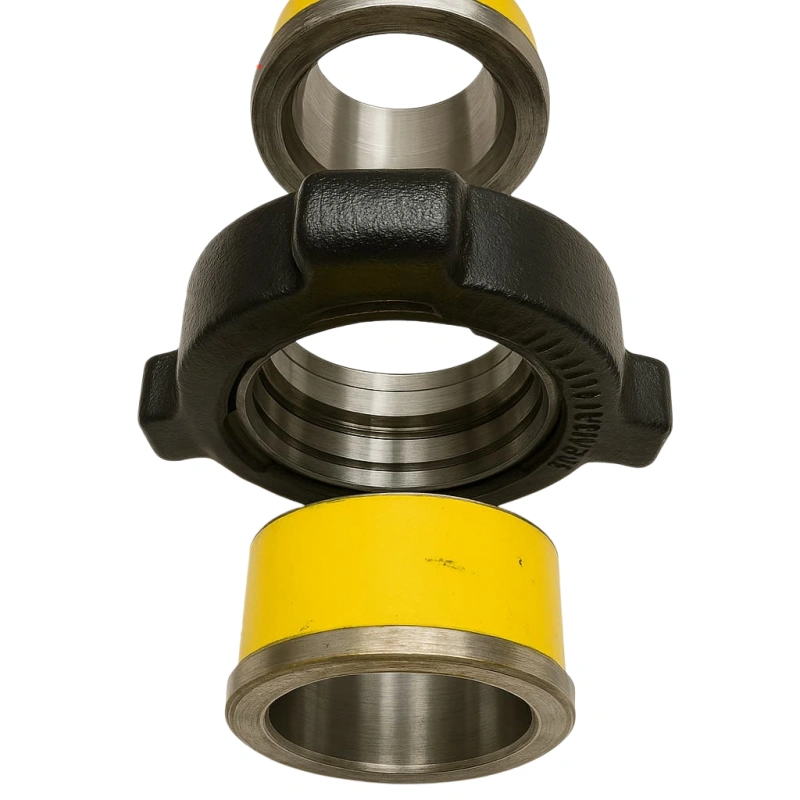
You face real challenges when you identify these unions during oilfield operations. The ability to distinguish the male and female halves of a hammer wing union directly affects your safety and efficiency, especially when working with high-pressure oilfield pressure control equipment.
Alienfrac Hammer Unions deliver reliable performance in these demanding environments. Pay close attention to visual cues and correct terminology to prevent costly errors.
Proper hammer wing union identification reduces risk. Review the table below to understand why accuracy matters:
| Component Type | Description | Safety Implication |
|---|---|---|
| Male Half | The half with the nut (internal thread) | Can lead to mismatches if not identified correctly |
| Female Half | The half with the external thread | Commonly mistaken for male due to the external thread appearance |
| Mismatched Unions | Joining incorrect halves | Can cause catastrophic failures, leaks, and blowouts |
Key Takeaways
- Identify the male half by locating the nut with the internal thread. This feature is crucial for proper assembly.
- Spot the female half by its external thread. Recognizing this helps prevent mismatches during operations.
- Always inspect sealing surfaces before use. Clean and undamaged surfaces ensure a secure, leak-proof connection.
- Use Alienfrac’s clear markings and documentation to confirm you have the correct parts. This reduces the risk of errors.
- Train your team to recognize visual cues and store unions in labeled bins. This practice improves efficiency and safety.
Hammer Wing Union Identification: Male vs Female
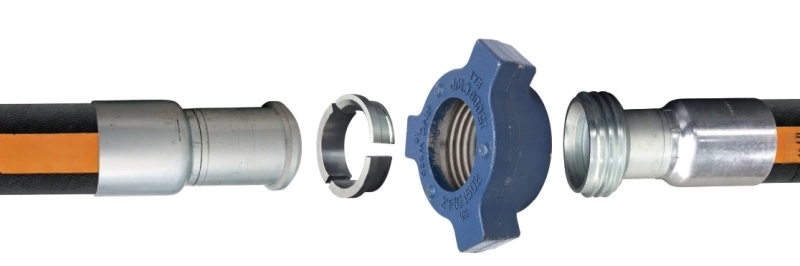
Correct hammer wing union identification is essential for safe and efficient oilfield operations. You must recognize the differences between the male and female halves to avoid mismatches and ensure proper assembly.
Alienfrac Hammer Unions feature precise engineering that makes visual identification straightforward. You can rely on specific cues to distinguish each union half.
| Feature | Male Half | Female Half |
|---|---|---|
| Thread Type | Internal thread (nut) | External thread |
| Description | The half with the nut | The half with the external thread |
| Connection Mechanism | Fits into the female half’s taper | Receives the male half’s nose |
| Sealing Mechanism | Primary metal-to-metal seal | Secondary elastomeric seal backup |
Spotting the Male Half: The Nut
You identify the male union half by locating the nut. This nut contains an internal thread, which serves as the primary connection point. The male half fits into the female union half, creating a secure metal-to-metal seal. When you handle hammer wing unions, always check for the nut.
This feature distinguishes the male half from the female half and prevents confusion during assembly. Alienfrac Hammer Unions use this clear terminology to help you communicate accurately with your team.
Identifying the Female Half: External Thread
You recognize the female union half by its external thread. This thread wraps around the outside of the union, making it easy to spot. The female half receives the nose of the male half, completing the connection. You can use these visual cues to avoid mistakes:
- The female half of hammer wing unions is identified by the presence of an external thread.
- The male half is characterized by having a nut with an internal thread.
- This distinction helps prevent confusion when identifying the two halves.
You must pay attention to these details during hammer wing union identification. Alienfrac Hammer Unions provide clear markings and documentation, making your job easier and safer. When you follow these guidelines, you reduce the risk of mismatched unions and improve operational reliability.
Why Confusion Happens in Hammer Wing Unions?
Thread Terminology vs Union Function
You often encounter confusion when you try to identify hammer wing unions in the field. The main reason is the difference between thread terminology and the actual function of each half.
Many workers use the terms “male” and “female” based only on the appearance of threads. This habit can lead to mistakes, especially when you work with different manufacturers or models.
For example, you might see an external thread and assume it is always the male half. In reality, the female half of a hammer wing union has the external thread. The male half contains the nut with the internal thread. This difference in terminology can cause you to select the wrong part during assembly.
You need to focus on how each half connects and seals, not just the thread type.
Tip: Always check the connection mechanism, not just the thread location. This practice helps you avoid costly errors in oilfield operations.
Common Mislabeling Issues
Mislabeling happens when you or your team use the wrong terms or mix up the halves during storage or transport. You may find bins labeled “male” or “female” that do not match the actual parts inside. This confusion can slow down your workflow and increase the risk of mismatched connections.
Alienfrac addresses these issues by providing clear labeling and detailed documentation with every union. You receive visual guides and part numbers that match the correct halves. This support helps you and your crew quickly identify each component, reducing mistakes and improving safety.
- Use the documentation provided with each shipment.
- Train your team to recognize the correct visual cues.
- Store unions in clearly marked bins to prevent mix-ups.
When you follow these steps, you improve efficiency and reduce the risk of accidents in the field.
How do Alienfrac Hammer Unions Fit and Seal?
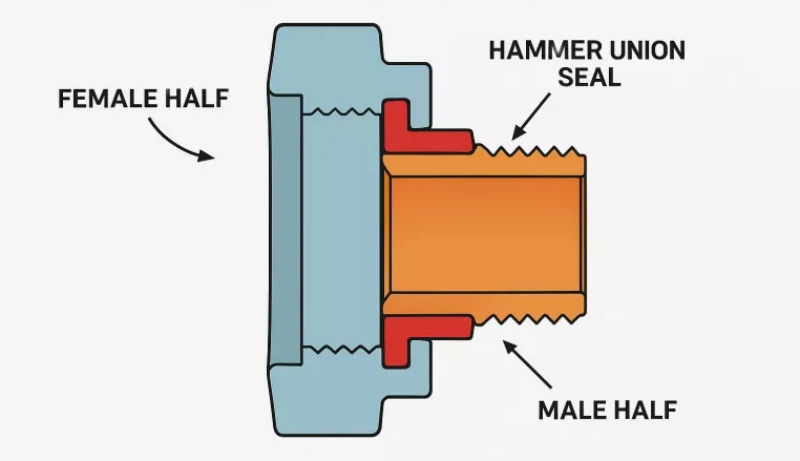
Sealing Surface Design and Function
You need to understand how each half of the Alienfrac hammer union creates a secure seal. The male half features a precision-machined nose that fits tightly into the female half. This nose forms a primary metal-to-metal seal, which is critical for high-pressure oilfield operations.
The female half contains an external thread and a matching tapered surface. When you assemble the two halves, the contact between the male nose and the female taper prevents leaks and withstands extreme pressure.
Alienfrac uses advanced manufacturing to ensure every sealing surface meets strict tolerances. You benefit from this attention to detail because it reduces the risk of leaks and blowouts.
The robust construction of each half also resists wear, even in harsh environments. You can trust these unions to maintain integrity during repeated assembly and disassembly.
Tip: Always inspect the sealing surfaces on both the male and female halves before use. Clean, undamaged surfaces ensure the best seal and longest service life.
Connection Mechanism Explained
You assemble a hammer union by aligning the male half with the female half. The male half slides into the female half until the nose seats against the taper. You then tighten the union using the wing nut, which draws the two halves together.
This action compresses the sealing surfaces, locking the connection and creating a leak-proof joint.
Alienfrac hammer unions feature a wing nut design that allows you to quickly secure or release the connection. This design saves time and reduces the risk of cross-threading. The robust threads and precision fit ensure that each half connects smoothly, even under field conditions.
You can rely on Alienfrac for consistent performance and safety in every operation.
| Step | Action | Result |
|---|---|---|
| 1 | Align male and female halves | Proper fit and orientation |
| 2 | Insert the male half into the female | Nose seats on taper |
| 3 | Tighten the wing nut | Secure, leak-proof connection |
You improve safety and efficiency when you follow these steps and use Alienfrac’s engineered solutions.
Safety Importance of Correct Identification
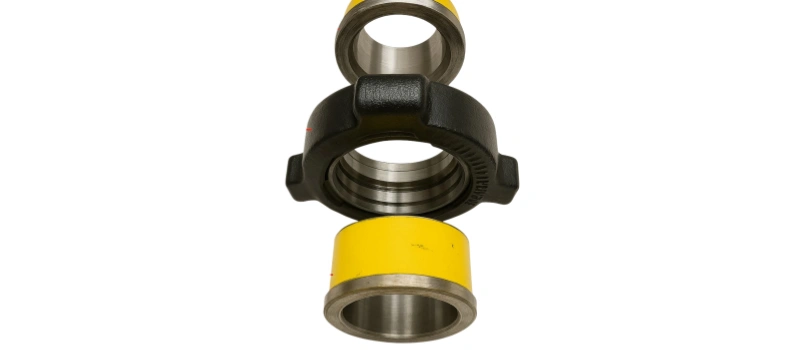
Hazards of Mismatched Hammer Wing Unions
You face serious risks when you connect the wrong half of a hammer union. Mismatched hammer wing unions can cause leaks, pressure loss, or even catastrophic failure. If you join a male half to the wrong female half, the seal will not hold. High-pressure fluid can escape, putting you and your team in danger.
Equipment damage often follows these mistakes. You may also experience costly downtime while you fix the problem.
Always double-check each union before assembly. A single error can lead to injury or environmental harm.
Alienfrac understands these hazards. The company designs each union with clear markings and documentation. This attention to detail helps you avoid confusion and keeps your operation safe.
Best Practices for Safe Assembly
You can prevent accidents by following a few simple steps. Start by inspecting each half before use. Look for the nut on the male half and the external thread on the female half. Make sure the halves match in size and figure. Use the documentation provided by Alienfrac to confirm you have the correct parts.
Follow this checklist for every assembly:
- Inspect the sealing surfaces on both halves.
- Match the male half with the correct female half.
- Tighten the union according to manufacturer guidelines.
- Store unions in clearly labeled bins.
A table can help you remember the key points:
| Step | What to Check |
|---|---|
| Visual Inspection | Nut (male), external thread (female) |
| Size Confirmation | Both halves match |
| Sealing Surface | Clean and undamaged |
| Documentation | Use Alienfrac guides |
You improve safety and reliability when you use these best practices. Alienfrac supports your efforts with reliable products and clear instructions.
Conclusion
You improve safety and efficiency when you identify hammer wing union halves correctly. Focus on these key tips:
- Check for the nut to spot the male half.
- Look for the external thread to find the female half.
- Use Alienfrac’s clear markings and documentation.
Ongoing training and attention to detail help you prevent mistakes. Alienfrac Hammer Unions support your team with reliable performance and easy identification.
FAQ
What is the main difference between the male and female halves of a hammer union?
You spot the male half by its nut with an internal thread. The female half has an external thread. This difference helps you assemble unions correctly and safely.
How do you prevent mismatched hammer union halves in the field?
You should always check the visual cues—nut for male, external thread for female. Use Alienfrac’s clear markings and documentation. Store each half in labeled bins to avoid confusion.
Can you use Alienfrac Hammer Unions for sour gas applications?
Yes. You can use specific Alienfrac Hammer Unions for sour gas environments. Always check the product specifications and color codes to confirm compatibility before installation.
Why is it important to inspect sealing surfaces before assembly?
You must inspect sealing surfaces to ensure they are clean and undamaged. This step prevents leaks and extends the service life of your hammer union.
Where can you find more information or support for Alienfrac Hammer Unions?
Visit Alienfrac’s official website or contact their support team for technical guidance, product details, and documentation.
