

On an oil rig, you encounter numerous risks, making the function of choke and kill lines essential in oil and gas drilling operations. These lines are responsible for moving drilling mud and managing well pressure, effectively preventing uncontrolled releases of oil or gas.
The function of choke and kill lines is crucial for ensuring worker safety and safeguarding the oil rig. In 2024, there were 956 recordable oil rig incidents, highlighting the importance of robust pressure control equipment. Alienfrac delivers dependable choke and kill hose solutions for every oil and gas drilling site.
Key Takeaways
- Choke and kill lines are vital for controlling well pressure and preventing blowouts during drilling operations.
- The choke line allows for controlled fluid release, helping maintain safe pressure levels in oil wells.
- The kill line is essential for emergency response, enabling the injection of heavy drilling fluid to stabilize the well during a blowout.
- Using high-quality hoses, like Alienfrac’s Choke and Kill Hose, ensures reliability and safety in extreme drilling conditions.
- Regular inspections of choke and kill lines and their connections are crucial for maintaining a secure well control system.
Function of Choke and Kill Lines in Well Control

Choke Line Role in Pressure Management
You play a critical role in maintaining safety on the rig by understanding the function of choke and kill lines. The choke line forms a vital part of your pressure management system during drilling operations. When you drill for oil, you must control the pressure inside the wellbore to prevent a blowout.
The choke manifold, connected to the choke line, lets you adjust the flow of drilling fluids. This adjustment is essential for keeping the wellbore pressure stable and stopping formation fluids from entering the well uncontrollably.
Choke manifolds give you the ability to regulate pressure during drilling operations. You can use the choke line to direct drilling mud and manage the release of fluids, which helps you avoid a potential blowout. By adjusting the choke valves, you maintain bottom-hole pressure and keep the well within safe limits.
This process is especially important during kick circulation, when unexpected formation fluids enter the well. You need to respond quickly to stabilize pressure and prevent a blowout.
- Choke lines allow you to:
- Release fluids in a controlled way, maintaining safe pressure levels in oil wells.
- Adjust flow rates using valves, which helps you control pressure and avoid a blowout.
- Monitor pressure in real time, so you can react before a blowout occurs.
You rely on the function of choke and kill lines to keep drilling operations safe. The choke line gives you a controlled path for fluid returns and lets you circulate kill mud when needed. This system helps you apply backpressure and avoid an underbalanced well, which could lead to a blowout.
In both offshore and onshore drilling operations, you face different environmental challenges, but the need for effective pressure management remains the same.
Alienfrac’s Choke and Kill Hose supports your pressure management strategy. The hose connects your choke manifold to other well control equipment, handling high-pressure drilling fluids and abrasive mud.
You can trust its reinforced construction and certified quality to perform under the toughest drilling operations, whether you work on land or at sea.
Kill Line Purpose in Emergency Response

You depend on the kill line for emergency well control during drilling operations. When you face a kick or a blowout, the kill line becomes your main tool for regaining control. The kill line connects your mud pump to the well, allowing you to pump heavy drilling fluid directly into the wellbore.
This action helps you balance the pressure and stop the uncontrolled flow of oil or gas.
During a blowout, you must act fast. The kill line lets you inject kill mud, which increases the hydrostatic pressure in the well. This process pushes formation fluids back and prevents further escalation of the blowout. You use the kill line to stabilize the well and protect your crew and equipment from danger.
The function of choke and kill lines is essential for your emergency well control plan. You need reliable hoses that can handle extreme pressures and harsh drilling environments. Alienfrac’s Choke and Kill Hose meets industry standards for rated working pressure, temperature ratings, and sour service compliance.
You benefit from multi-stage hydrostatic testing and design validation, which ensure the hose performs during critical moments.
Note: Offshore drilling operations expose your kill line to seawater corrosion, wind, and waves. Onshore drilling operations may face deserts or mountains. Alienfrac’s hoses are built to withstand these challenges, giving you confidence in every drilling operation.
| Requirement Type | Details |
|---|---|
| Rated Working Pressure | Engineered for 2,000 to 20,000 psi, with safety factors for operational spikes |
| Temperature Ratings | Suitable for -75°F to 350°F |
| Sour Service Compliance | Materials resist sulfide stress cracking in H2S environments |
| Quality Control & Validation | Multi-stage hydrostatic and non-destructive testing |
| Design Validation | Pressure-temperature cycles and burst testing for real-world extremes |
You must always prepare for a blowout during drilling operations. The function of choke and kill lines, especially the kill line, gives you the tools to respond quickly and safely. By choosing Alienfrac’s Choke and Kill Hose, you ensure your well control system remains strong and reliable, no matter the challenge.
Choke Manifold and Kill Manifold Integration
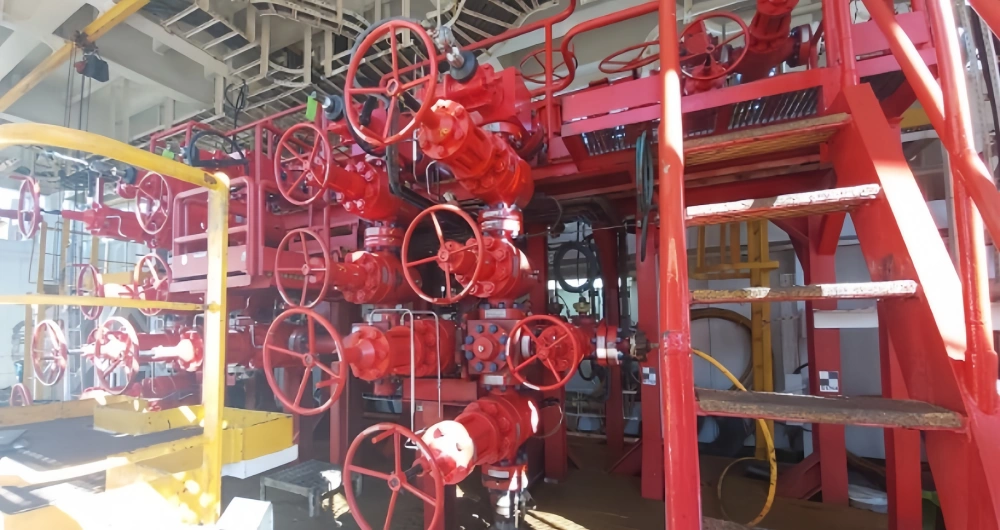
Choke Manifold for Flow Regulation
You rely on the choke manifold to regulate the flow of drilling fluids and manage well pressure during oil drilling operations. The choke manifold connects directly to the choke line, forming a critical interface between the blowout preventer and surface control systems.
When you adjust the choke valves, you control the flow rate of oil-based mud and other fluids. This process helps you prevent pressure spikes that could lead to dangerous blowouts.
Choke manifolds use multiple valves and gauges to give you real-time control over wellbore pressure. You can lower the flow to reduce pressure or increase it to maintain balance.
This dynamic regulation is essential for keeping oil wells safe and stable. The choke manifold allows you to respond quickly to changes in formation pressure, especially during kick events.
- Choke manifolds help you:
- Regulate wellbore pressure for safety and operational efficiency.
- Prevent blowouts by adjusting the flow of drilling fluids.
- Make real-time pressure adjustments to mitigate risks from well kicks.
Alienfrac’s Choke and Kill Hose integrates seamlessly with choke manifolds. You benefit from reliable connections and stable sealing performance, even when handling abrasive oil-based fluids.
The hose’s reinforced design ensures compatibility with manifold systems, supporting safe and efficient oil drilling operations.
Kill Manifold for Pressure Control
You depend on the kill manifold to manage wellbore pressure during critical oil drilling events. The kill line connects to the kill manifold, which features check valves and pressure gauges. This setup allows you to inject heavy drilling fluid into the wellbore, equalizing pressure and preventing blowouts.
Kill manifolds maintain equilibrium between the static liquid column pressure and formation pressure. You circulate performance-adjusted drilling fluids through the kill manifold, effectively managing pressure during emergencies. This system reduces the risk of overflow and keeps your oil rig safe.
- Kill manifolds are designed to:
- Manage wellbore pressure when drilling fluid is compromised by formation fluids.
- Maintain a balance between the liquid column pressure and formation pressure.
- Allow circulation of adjusted drilling fluids during critical events.
Alienfrac’s Choke and Kill Hose offers proven reliability for kill manifold integration. You gain confidence knowing the hose withstands extreme oil drilling pressures and harsh environments. Its compatibility with manifold systems ensures you maintain control and safety throughout your operations.
Tip: Always inspect your choke manifold and kill manifold connections before starting oil drilling. Alienfrac hoses provide secure fittings and durable performance, helping you avoid unexpected failures.
Anatomy of the BOP Stack and Line Placement
BOP Stack Structure
You work with the blowout preventer every day on the rig. The BOP stack sits on top of the wellhead and forms the heart of your well control system. This assembly includes the main body, several types of preventers like rams and annular preventers, and advanced control systems.
The blowout preventer stack is modular, so you can adjust its components to fit the needs of each oil drilling operation. You rely on the BOP stack to regulate the flow of oil, gas, and other fluids from the well.
Each preventer in the stack serves a specific purpose, giving you flexibility and control during drilling. The modular design lets you customize the blowout preventer stack for both onshore and offshore oil projects, making it a vital part of your safety plan.
Placement of Choke and Kill Lines
You attach choke and kill lines to the outside of the blowout preventer stack. These lines run from the drill manifold to the BOP and connect directly to the wellhead. You install them separately along the riser, which allows you to manage well control during kicks or special oil operations.
The placement of these lines ensures you have quick access to pressure control when you need it most.
- Choke and kill lines:
- Attach to the exterior of the BOP stack for easy access.
- Run from the manifold to the blowout preventer and wellhead.
- Allow you to control oil well pressure during emergencies.
You need hoses that can handle the harsh environment around the blowout preventer. Alienfrac’s Choke and Kill Hose is designed for this exact purpose. The hose features strong reinforcement and a durable outer cover, so it stands up to the extreme pressures and abrasive fluids found in oil drilling.
You can trust its performance and reliability when integrating it with your BOP stack. The hose’s robust construction ensures safe and efficient operation, protecting both your crew and your equipment.
Note: Always inspect your blowout preventer stack and line connections before starting any oil drilling operation. Reliable hoses, such as those from Alienfrac, help you maintain a secure and effective well control system.
Alienfrac Choke and Kill Hose Advantages
High-Pressure Performance
You need a hose that stands up to the toughest drilling conditions. Alienfrac’s Choke and Kill Hose delivers outstanding performance as a high-pressure line.
You can rely on its ability to handle extreme pressures, which is essential for safe and efficient well control. The hose meets or exceeds industry standards, giving you confidence during critical operations.
| Product | Maximum Pressure Rating |
|---|---|
| Alienfrac Hose | Up to 15,000 PSI |
| Alienfrac Hose | Up to 20,000 PSI |
| Industry Standard | Up to 15,000 PSI or higher |
You benefit from hoses that comply with API 16C standards. This means you get equipment that endures both high pressure and harsh environments. The design includes multiple layers, such as a high-strength reinforcing layer and a durable outer rubber layer.
These features boost pressure resistance and wear protection. You can trust Alienfrac hoses to maintain integrity, even when you face the most demanding drilling challenges.
Durability and Safety Features
You want hoses that last and keep your crew safe. Alienfrac’s Choke and Kill Hose offers advanced durability and safety features. The hose resists severe cold, extreme heat, and corrosive environments. You can use it at temperatures from -75°F to 350°F, covering almost any drilling location.
| Requirement | Specification |
|---|---|
| Rated Working Pressure | 2,000 to 20,000 psi tiers |
| Temperature Ratings | -75°F to 350°F (Classes A-X) |
| Sour Service Compliance | NACE MR0175 for H2S resistance |
| Quality Control | Multi-Stage Hydrostatic Testing at 1.5x working pressure |
| Comprehensive NDE | Ultrasonic or radiographic inspection for defect detection |
| Design Validation | Pressure-temperature cycles and burst testing before production approval |
You also benefit from strict quality control. Every hose goes through multi-stage hydrostatic testing and non-destructive evaluation. This process ensures you get a product that performs under real-world conditions.
The API 16C certification means you can connect Alienfrac hoses with other global equipment, making your operations more flexible and reliable.
Tip: Always inspect your hoses before use. Regular checks help you catch wear early and keep your well control system strong.
Conclusion
You depend on choke and kill lines, along with their manifolds, to keep your drilling operations safe. Kill manifolds let you inject heavy drilling fluid during emergencies, while choke manifolds help you manage pressure every day. Together, these systems protect your crew and equipment.
Alienfrac’s Choke and Kill Hose meets strict API 16C standards. You get a hose that handles high pressure, extreme temperatures, and tough environments.
When you choose Alienfrac, you invest in reliability and safety. Explore advanced hose solutions to strengthen your well control system.
FAQ
What is the main function of choke and kill lines?
You use choke and kill lines to control well pressure and manage drilling fluids. These lines help you prevent blowouts and maintain safe drilling operations.
How do you select the right choke and kill hose for your rig?
You should check the required pressure rating, temperature range, and compatibility with your drilling fluids. Alienfrac offers hoses with multiple pressure tiers and certified quality for both onshore and offshore projects.
Why do you need API 16C certified hoses?
API 16C certification ensures your hose meets strict industry standards for safety and performance. You gain confidence that your equipment will handle high-pressure and harsh environments.
Tip: Always verify certification labels before installation to ensure compliance.
What are the typical pressure ratings for choke and kill hoses?
| Pressure Rating | Application Example |
|---|---|
| 5,000 psi | Moderate drilling |
| 10,000 psi | High-pressure drilling |
| 15,000 psi | Deep or offshore drilling |
You choose the rating based on your project’s demands.
