
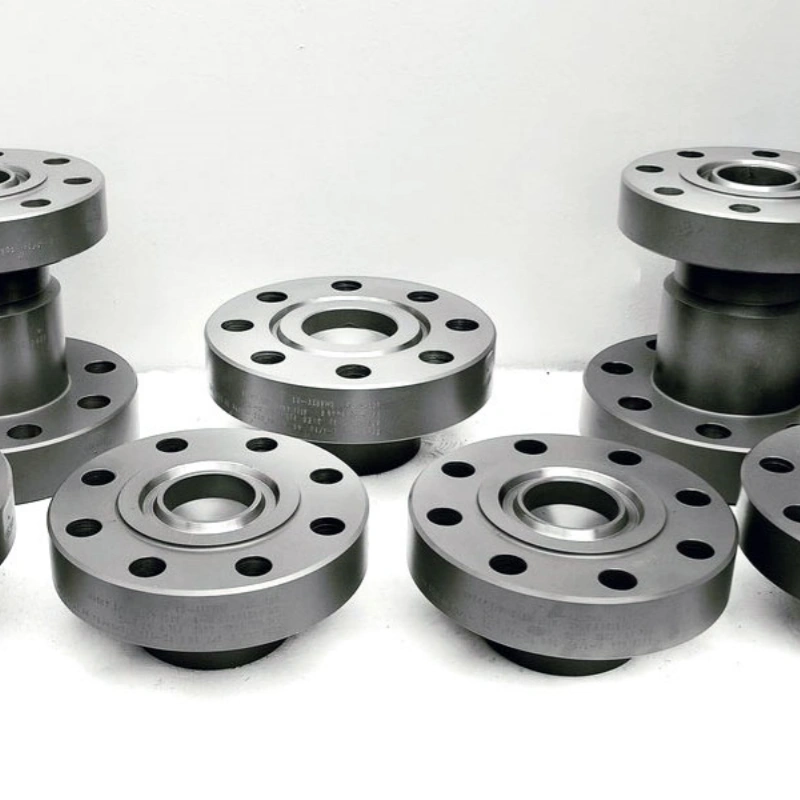
You need to follow a precise pipe flange material selection process when working with oil and gas systems. Start by identifying material properties that match your application requirements. Consider how manufacturing methods impact the durability and safety of each flange.
Always check compatibility with the pipe and operating environment. Certified, high-quality products like Alienfrac API Flanges reduce risks such as material mix-ups, incomplete documentation, and failures caused by poor material properties.
Common risks of using uncertified or low-quality flanges include:
- Material defects from low-quality manufacturing
- Incorrect heat numbers leading to failures
- Lack of compliance with recognized standards
- Using counterfeit flanges that compromise safety
You protect your system and ensure reliability when you select materials based on quality and verified material properties.
Key Takeaways
- Select flange materials based on specific application requirements to ensure safety and reliability.
- Prioritize high-quality, certified flanges to reduce risks of failures and maintenance costs.
- Match flange materials to the operating environment to prevent corrosion and extend service life.
- Understand pressure and temperature ratings to choose flanges that can handle extreme conditions.
- Always verify supplier certifications and documentation to ensure compliance with industry standards.
Importance of API Flange Material Selection
Durability and Safety in Oil and Gas
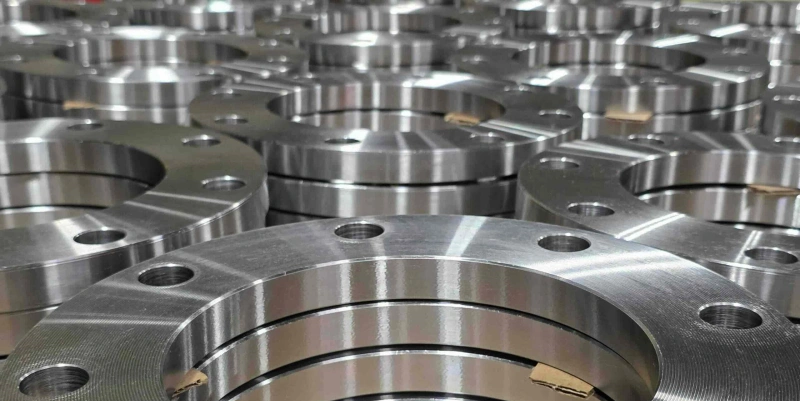
You must prioritize durability and safety when selecting a flange for oil and gas applications. Industry studies show that about 25% of pipeline failures result from poor flange choices. This highlights the importance of matching material properties to your specific applications.
If you neglect factors like temperature and pressure ratings, you risk equipment failures and safety hazards. Flanged joints often cause leaks and unplanned shutdowns in industrial systems. Common root causes include improper design, misapplication of standards, installation errors, mechanical degradation, and insufficient inspection.
These issues can lead to emissions and safety hazards.
Dr. Sarah Johnson, a well-known expert on flanges, emphasizes, “Picking the right flanges is absolutely critical for keeping systems running smoothly.”
You need to consider several durability factors for industrial applications. The table below summarizes the most critical aspects:
| Durability Factor | Description |
|---|---|
| Material Compatibility | The flange material must withstand the fluid’s chemical properties, operating temperatures, and pressures. Titanium and stainless steel are preferred for corrosive environments. |
| Pressure and Temperature Ratings | Flanges are categorized by pressure classes and temperature thresholds to ensure safety and performance. |
| Compliance with Industry Standards | Compliance with standards like ASME, ANSI, or API guarantees quality and compatibility. |
| Durability and Maintenance Requirements | The operational lifespan and ease of maintenance significantly affect costs and reliability. High-quality flanges minimize the risk of failures. |
System Performance and Longevity
You enhance system performance and longevity by selecting the right flange material for your industrial applications. High-quality API 6A flanges minimize leaks and failures, which reduces maintenance costs. Durable flanges lower the total cost of ownership by ensuring long-term reliability.
The design of these flanges also makes routine maintenance easier, reducing downtime in industrial settings.
Material selection directly influences the expected lifespan of your system components. The table below shows how different materials perform in various environments:
| Material Type | Corrosive Environment | Expected Lifespan Impact |
|---|---|---|
| Stainless Steel | Mild acids | Good resistance, suitable for long-term use |
| Duplex Alloys | High-chloride environments | Excellent resistance, minimizes replacements |
| Nickel Alloys | Acidic conditions | High durability, extends service life |
Choosing the right flange material prevents corrosion and reduces maintenance needs. You must consider chemical compatibility with the operating environment for all industrial applications. Improper material selection can cause rapid failures, such as crevice corrosion or brittleness in cast flanges.
These failures disrupt operations and increase downtime. You protect your system and maximize performance by making informed choices for your applications.
Key Properties of API Flange Material
Strength and Durability Factors
You must evaluate strength and durability when selecting an API flange for oil and gas systems. These properties determine if the flange can withstand high pressures, heavy loads, and harsh operating conditions.
Industry standards set minimum requirements for yield strength, tensile strength, and elongation. These values ensure that the flange will not deform or fail during service.
The table below summarizes the minimum strength requirements for common API flange materials:
| Material Designation | 0.2% Yield Strength min. (psi) | Tensile Strength min. (psi) | Elongation in 50 mm (2 in) min. % | Reduction in Area min. % |
|---|---|---|---|---|
| 36K | 36,000 | 70,000 | 21 | N/A |
| 45K | 45,000 | 70,000 | 19 | 32 |
| 60K | 60,000 | 85,000 | 18 | 35 |
| 75K | 75,000 | 95,000 | 17 | 35 |
You can also visualize the differences in yield and tensile strength using the chart below:
You should always match the flange material’s strength to the system’s pressure and temperature demands. High strength and durability prevent leaks, cracks, and catastrophic failures.
You also reduce the risk of downtime and costly repairs. When you choose a flange with high durability, you ensure the system operates safely under extreme conditions.
You must consider the following strength and durability factors:
- Yield strength: The stress at which the flange begins to deform permanently.
- Tensile strength: The maximum stress the flange can withstand before breaking.
- Elongation: The ability of the material to stretch without breaking, which helps absorb shocks and vibrations.
- Reduction in area: The measure of ductility, which affects how the flange handles stress concentrations.
You need to select a flange that meets or exceeds these requirements for your application. This approach guarantees that the flange will maintain its integrity throughout its service life.
Corrosion Resistance and Weldability
Corrosion resistance is another critical property for API flange materials. Oil and gas systems often operate in environments with moisture, chemicals, and saltwater. These conditions accelerate corrosion and can weaken the flange over time. You must choose materials that resist corrosion to maintain safety and performance.
The table below compares the most effective corrosion-resistant materials for API flanges:
| Material Type | Advantages | Limitations/Considerations | Typical Applications |
|---|---|---|---|
| Nickel-based Alloys | High corrosion resistance, strong mechanical stability, suitable for sour environments | Very high cost, difficult machining and welding, requires special expertise | Chemical processing, offshore, subsea, high-temperature reactors |
| Duplex / Super Duplex | Higher yield strength, excellent resistance to pitting and crevice corrosion | More expensive than ordinary stainless steel, careful fabrication is required | Marine, offshore, desalination, chemical, oil & gas |
| Aluminum | Very low weight, decent corrosion resistance, easier to work with | Lower strength than steels, susceptible to galvanic corrosion | Lightweight systems, aircraft, irrigation, HVAC |
| Titanium | Very high strength-to-weight ratio, excellent corrosion resistance | Much more expensive than steel, difficult to machine | Offshore oil & gas systems, desalination plants |
You can also consider these corrosion-resistant materials for specific applications:
- Nickel-based alloys: Used in chemical processing, offshore, subsea, and high-temperature reactors.
- Duplex / Super Duplex steels: Commonly applied in marine, offshore, desalination, and oil & gas industries.
- Aluminum: Suitable for lightweight systems, aircraft, and low-pressure fluid systems.
- Titanium: Ideal for offshore oil & gas systems and chemical processing industries.
You must also evaluate weldability when selecting a flange material. Good weldability ensures strong, leak-free joints and simplifies installation. The table below outlines weldability characteristics for common API flange materials:
| Material Type | Weldability Characteristics |
|---|---|
| Carbon Steel | Excellent tensile strength, cost-effective, ideal for general applications without corrosion concerns. |
| Stainless Steel | Superior corrosion resistance, maintains integrity in aggressive environments, common grades include 304, 316, and 316L. |
| Exotic Alloys | Engineered for extreme conditions, suitable for high pressure and corrosive media, includes Titanium and Inconel. |
| Titanium | High strength-to-density ratio reduces system weight while maintaining structural integrity. |
You should select a flange material that balances corrosion resistance and weldability. This balance ensures the flange will perform reliably in your system and resist degradation from harsh chemicals or saltwater.
When you use materials with high corrosion resistance, you extend the service life of your equipment and reduce maintenance costs.
Common Flange Materials and Applications
Steel and Stainless Steel Flanges
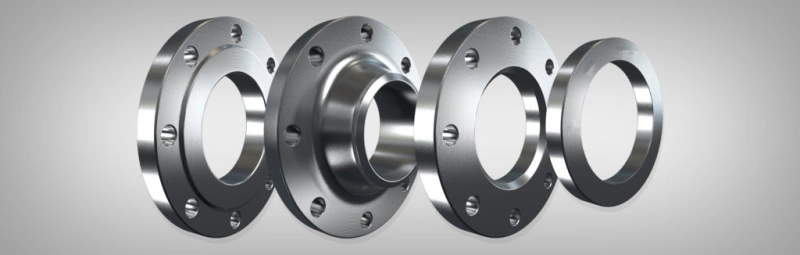
You will find that steel pipe flange materials dominate oil and gas systems. Steel pipe flanges offer high strength and cost efficiency for most applications. Stainless steel pipe flanges provide superior corrosion resistance and durability, especially in harsh or sour service conditions. You can select from several grades to match your system’s needs:
- Stainless steel (ASTM A182 F304/F316) delivers excellent corrosion resistance and durability.
- Super Duplex 2507 gives exceptional strength and corrosion resistance, making it ideal for offshore steel pipe systems.
The table below summarizes common steel pipe flange materials and their applications:
| Material Type | Common Grades | Applications |
|---|---|---|
| Carbon steel | N/A | General use in oil and gas |
| Stainless steel | ASTM A182 F304/F316 | Corrosive environments |
| Duplex stainless steel | N/A | Offshore and subsea applications |
| Super Duplex stainless steel | Super Duplex 2507 | High strength and corrosion resistance |
| Alloy steel | N/A | Various applications |
You should choose the steel pipe flange that matches your pressure, temperature, and corrosion requirements.
Ductile Iron and Aluminum Flanges
You may also encounter ductile iron and aluminum pipe flanges in specialized applications. Ductile iron pipe flanges provide good mechanical properties and moderate corrosion resistance. You can use them in lower-pressure steel pipe systems.
Aluminum pipe flanges offer a lightweight solution and decent corrosion resistance, but they have lower strength than steel pipe flanges. You will see aluminum pipe flanges in lightweight or temporary steel pipe installations.
Material Compatibility with Fluids
You must always match the flange material to the fluids in your system. Material compatibility prevents corrosion, leaks, and failures. The table below shows how common steel pipe flange materials perform with different fluids:
| Flange Material | Corrosion Resistance | Suitable Conditions |
|---|---|---|
| Carbon steel | Moderate | Cost-efficient for moderate environments |
| Stainless steel | Superior | Resistant to sour service conditions |
| Duplex alloys | High | Reduces hydrogen-induced cracking risk |
A study found that stainless steel pipe flanges improved service life by over 35% in high-corrosion areas compared to carbon steel pipe flanges. You can avoid problems like material mismatch and galvanic corrosion by analyzing your system’s fluids and selecting the right steel pipe flange.
This approach ensures long-term durability and safety for your oil and gas operations.
Manufacturing Methods for API Flanges
Forged Flanges by Alienfrac
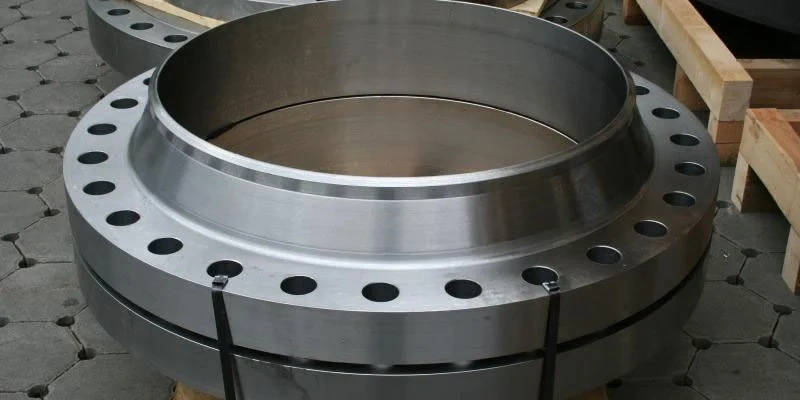
You gain superior performance when you choose forged flanges for your oil and gas systems. Alienfrac uses advanced forging techniques to produce steel flanges with high mechanical strength and consistent quality. The forging process starts with careful material selection.
Engineers pick raw steel based on the intended pipe application and required corrosion resistance. The steel undergoes forging under high pressure, which improves its grain structure and increases strength. Heat treatment follows, including quenching and tempering, to boost durability and mechanical properties.
| Step | Description |
|---|---|
| Material Selection | Engineers select high-quality steel for pipe and flange applications. |
| Forging | Steel is forged under high pressure, enhancing strength and grain structure. |
| Heat Treatment | Quenching and tempering improve durability and corrosion resistance. |
Forged flanges offer a consolidated material structure. You benefit from higher mechanical strength and reliable performance under extreme pressure. These flanges resist corrosion and maintain integrity in harsh environments. You can trust Alienfrac forged flanges for critical pipe connections in oil and gas systems.
Cast and Plate Flanges
You encounter cast and plate flanges in various pipe applications. Cast flanges allow for complex shapes and designs. Manufacturers pour molten steel or iron into molds, then cool and finish the flange. Cast flanges may contain defects like air bubbles, which can lower strength and affect performance.
Plate flanges are machined from flat steel plates. You can tailor these flanges to specific requirements, making them ideal for precision pipe connections.
- Forged flanges have a consolidated structure, leading to higher mechanical strength.
- Cast flanges can be shaped easily, but may have defects that impact performance.
- Plate flanges are machined from flat steel and are suitable for applications needing precision.
| Type of Flange | Mechanical Properties | Cost Comparison | Application Suitability |
|---|---|---|---|
| Forged Steel Flange | Higher mechanical strength, more consistent under pressure | Higher than cast iron | Preferred for pressure piping applications |
| Cast Iron Flange | Prone to defects like air bubbles, lower strength | Lower than forged steel | Suitable for non-pressure applications |
| Plate Flange | Machined from flat steel, it can be complex shapes | Varies based on design | Used for specific applications requiring precision |
You must select the right flange manufacturing method based on your pipe system’s pressure, corrosion resistance, and application needs. Forged steel flanges deliver unmatched durability and safety for oil and gas operations.
Application-Specific Flange Selection
Medium, Pressure, and Temperature
You must always match the flange to the medium, pressure, and temperature of your intended application. High-pressure applications in oil and gas systems demand flanges that meet strict requirements for strength and safety. Alienfrac API flanges are engineered for these environments.
They handle extreme pressure and temperature, maintaining a secure connection between each pipe. You should review the requirements for your application before selecting a flange. The table below summarizes key criteria for high-pressure applications:
| Criteria | Description |
|---|---|
| Industry Requirements | Each application has unique operational demands that affect flange selection. |
| Pressure and Temperature | High-pressure applications need flanges with high ANSI/ASME classes. |
| API Specifications | API compliance ensures safety and regulatory approval. |
| Material Compatibility | Flange materials must match process fluids and environmental conditions. |
| Carbon Steel | Offers strong tensile strength for general applications. |
| Stainless Steel | Provides corrosion resistance for aggressive environments. |
| Exotic Alloys | Designed for extreme pressure and temperature requirements. |
You should always confirm that the flange material and design meet the requirements of your intended application. This approach prevents failures and extends system durability.
Environmental and Maintenance Needs
You need to consider environmental factors when selecting a flange for your pipe system. High humidity and salinity increase the risk of corrosion, especially in offshore or coastal applications.
Stainless steel flanges, such as ASTM A182 F316L, provide enhanced corrosion resistance for these environments. The table below shows how different materials perform in challenging conditions:
| Material | Corrosion Resistance | Application Environment |
|---|---|---|
| Stainless Steel | High | High humidity and saline environments |
| ASTM A182 F316L | Enhanced | Offshore platforms and chemical processing |
You reduce maintenance needs and improve reliability by choosing the right flange for your application requirements. Regular inspection and proper material selection help you avoid costly repairs and downtime.
Fitting Types and Installation
You must select the correct flange type for your intended application. Weld neck flanges work best for high-pressure applications and critical pipe connections. Threaded flanges allow for easy installation in low-pressure systems. Blind flanges close off pipe ends and provide flexibility for future expansion.
Each flange type meets specific requirements for installation and performance. Alienfrac API flanges come in various types to fit your application needs. You should always match the flange type to the requirements of your pipe system. This ensures a secure fit and reliable operation in high-pressure applications.
Tip: Always consult with your engineering team to verify that the flange type and material meet the requirements of your intended application.
Compliance with Industry Standards
API and International Standards
You must follow industry standards when selecting a flange for oil and gas systems. These standards ensure that each flange meets strict requirements for safety, performance, and compatibility.
Alienfrac API flanges adhere to API specifications, ASTM standards, and ASME guidelines. You can trust these flanges to deliver reliable performance in high-pressure and corrosive environments.
Industry standards cover a wide range of applications. The American Society for Testing and Materials sets guidelines for material quality and testing. API specifications focus on wellhead equipment and pipeline connections. ASME and ANSI standards define dimensions and pressure classes for flanges used in the United States.
DIN standards apply to international and maritime projects. MSS standards are common in steel pipelines. AWWA standards are used in waterworks and treatment facilities.
| Standard | Description |
|---|---|
| ANSI/ASME | Industry standard for pipeline flanges in the United States. |
| MSS | Standard used in steel pipelines. |
| API | Covers large diameter carbon steel flanges for high-pressure oilfield applications. |
| AWWA | Standards for water treatment and supply in the waterworks industry. |
| DIN | European metric standard used internationally, often in maritime applications. |
You see API 6A flanges in wellhead equipment, pipeline connections, subsea installations, and manifold systems. These flanges maintain secure connections under extreme pressure and temperature.
API specifications require that each flange meet performance criteria for material compatibility and durability. You protect your system by choosing flanges that comply with recognized standards.
Note: Certification and regulatory compliance are essential for oil and gas projects. You must verify that your flange supplier provides documentation proving adherence to API, ASTM, and ASME standards.
Pressure and Temperature Ratings
You need to understand pressure and temperature ratings when selecting a flange. These ratings indicate the maximum pressure a flange can handle at specific temperatures.
API specifications and ASME standards define these limits based on material and design. You must match the flange rating to your system’s requirements to prevent failures.
Pressure ratings vary by flange type and standard. For example, weld neck flanges have different ratings under ASME and API standards. You can see the comparison in the table below:
| Flange Type | ASME/ANSI Pressure Class Rating (psi) | API Pressure Class Rating (psi) |
|---|---|---|
| Weld neck | 600 | 2000 |
| 900 | 3000 | |
| 1500 | 5000 |
ASME ratings depend on material and design temperature. API specifications assign specific pressure ratings and allowable materials. You find API flanges in refinery systems where high strength is required. You must check both pressure and temperature ratings to ensure safe operation.
Tip: Always review the pressure and temperature ratings for each flange. This step helps you avoid leaks, cracks, and catastrophic failures in your oil and gas system.
Flange Dimensions and Tolerances
You must pay attention to flange dimensions and tolerances. Industry standards set strict limits to ensure proper fit and performance. API specifications and ASTM standards define tolerances for outside diameter, contact face, hub diameter, inside diameter, and thickness.
You guarantee a secure connection by selecting flanges with precise dimensions.
The table below shows standard flange dimension tolerances required by API and ASME for oil and gas applications:
| Dimension | Tolerance (inches) | Tolerance (mm) |
|---|---|---|
| Outside Diameter (≤ 24″) | ±0.06″ | ±1.6 mm |
| Outside Diameter (> 24″) | ±0.12″ | ±3.2 mm |
| Diameter of Contact Face (0.06″ raised face) | ±0.03″ | ±0.8 mm |
| Diameter of Contact Face (0.25″ raised face) | ±0.02″ | ±0.5 mm |
| Diameter of Hub at Welding Point (NPS 5 and smaller) | +0.09″, -0.03″ | +2.4 mm, -0.8 mm |
| Diameter of Hub at Welding Point (NPS 6 and larger) | +0.16″, -0.03″ | +4.0 mm, -0.8 mm |
| Inside Diameter (NPS 10 and smaller) | ±0.03″ | ±0.8 mm |
| Inside Diameter (NPS 12 to 18) | ±0.06″ | ±1.6 mm |
| Inside Diameter (NPS 20 and larger) | +0.12″, -0.06″ | +3.2 mm, -1.6 mm |
| Thickness (NPS 18 and smaller) | +0.12″, -0.00″ | +3.2 mm, -0.0 mm |
You must verify that each flange meets these tolerances before installation. This step ensures compatibility with pipes and prevents leaks. Alienfrac API flanges are manufactured to meet or exceed these industry standards, providing you with confidence in every connection.
Alert: Always request dimensional inspection reports and certificates from your supplier. This practice confirms that your flanges comply with API, ASTM, and ASME standards.
Sourcing and Procurement for API Flanges
Domestic, Buy America, and Global Sourcing
You must understand the sourcing requirements before you select an API flange for your project. Domestic sourcing follows the American Iron & Steel standard. Manufacturers melt and produce the flange in the United States, even if they import raw components.
Buy America applies to government-funded projects. This standard prefers domestically produced materials but allows sourcing from approved countries. Global sourcing gives you flexibility. You can use imported materials to reduce costs, without strict restrictions.
| Type of Sourcing | Description |
|---|---|
| Domestic | Flanges that meet the American Iron & Steel (AIS) standard, allowing imported raw components but requiring melting and manufacturing in the U.S. |
| Buy America | Standard for government-funded projects that prefer domestically produced materials but allow sourcing from approved countries under certain conditions. |
| Global Sourcing | Generally allows for the use of imported materials, often to reduce costs, without the specific restrictions of Buy America or Domestic standards. |
Alienfrac offers global supply capabilities. You can source API flange products that comply with local and international regulations. The company supports projects in the United States, Europe, and Asia. You gain access to high-quality flange solutions that meet your project’s requirements.
Tip: Always verify the sourcing standard for your project before you place an order. This step helps you avoid delays and compliance issues.
Substitution Rules and Documentation
You must follow substitution rules and maintain proper documentation when you procure an API flange. Each project requires proof of compliance with industry standards. You need certificates and inspection reports to confirm that the flange meets specifications. The table below lists common documentation requirements:
| Standard | Description |
|---|---|
| ASME B16.5 | Covers flanges for piping systems, specifying dimensions, materials, pressure-temperature ratings, and marking requirements. |
| AWWA C207 | Specific to the water industry, covering flanged fittings for steel pipes, including flanges, gaskets, and bolting. |
| MSS SP-44 | Provides guidelines for the proper selection, installation, operation, and maintenance of pipe fittings, including flanges. |
| NACE Certification | Ensures proper material selection and corrosion resistance for flanges used in corrosive environments. |
| Fire-Safe Certification | Essential for applications involving flammable materials, mitigating the risk of fire and explosion. |
You protect your project by working with certified suppliers. Alienfrac provides full documentation for each flange, including certificates and inspection reports. You ensure reliable procurement and compliance with all regulations.
Note: Always request documentation from your supplier. This practice confirms that your flange meets all industry standards and project requirements.
Advantages of Alienfrac API Flanges
High Pressure and Corrosion Resistance
You need a flange that can handle extreme conditions in oil and gas systems. Alienfrac API flanges use high-quality steel to deliver outstanding performance under high pressure. You can rely on these flanges for secure connections in critical environments.
The advanced forging process improves the grain structure of steel, which increases strength and resistance to cracking. You see these flanges perform well in applications where pressure can reach up to 20,000 psi.
Alienfrac API flanges also offer superior corrosion resistance. You can choose from stainless steel or alloy options to match your system requirements. Stainless steel flanges resist chemical attack and moisture, making them ideal for offshore or coastal installations.
You protect your equipment from rust and pitting when you select the right flange material. The table below shows how different materials perform in harsh environments:
| Material | Pressure Tolerance | Corrosion Resistance | Typical Application |
|---|---|---|---|
| Carbon steel | High | Moderate | General oil and gas |
| Stainless steel | High | Superior | Offshore, chemical |
| Alloy steel | Very High | Excellent | High-pressure pipe |
Note: You improve system safety and reduce maintenance costs when you use flanges with high corrosion resistance.
Reliable Performance and Cost Efficiency
You want a flange that delivers consistent results and reduces downtime. Alienfrac API flanges provide reliable performance because of strict quality control and precise machining. You avoid leaks and failures when you use these flanges in your steel pipe systems. The design ensures a tight seal, even in high-pressure applications.
You also benefit from cost efficiency. Alienfrac API flanges last longer due to their durability and resistance to harsh conditions. You spend less on replacements and repairs.
Stainless steel flanges offer extended service life, which lowers your total cost of ownership. You can trust Alienfrac to supply flanges that meet API standards and deliver value for your project.
Tip: You maximize operational efficiency and protect your investment when you choose Alienfrac API flanges for your steel pipe connections.
Conclusion
You achieve reliable oil and gas operations by following these steps for effective flange material selection:
- Review flange material, measurements, and bolt hole alignment.
- Evaluate chemical composition and physical properties for application suitability.
- Match flange and pipe materials, considering specific requirements.
- Consult standards to ensure compatibility and quality.
You protect your project by verifying supplier certifications. The table below highlights key certifications that guarantee quality:
| Certification | Description |
|---|---|
| ISO 9001:2015 | Quality management system for consistent quality control. |
| API 6A | Certification for high-pressure oil and gas applications. |
| ASME B16.5 / B16.47 | Verifies dimensions and materials. |
You maximize safety, durability, and compliance when you choose Alienfrac API Flanges and partner with trusted suppliers.
FAQ
What are the main types of API flanges you can use?
You can choose weld neck, threaded, and blind flanges. Each type fits specific applications. Weld neck flanges handle high pressure. Threaded flanges work for easy installation. Blind flanges seal pipe ends.
How do you select the right flange material for your oil and gas system?
You match the flange material to your system’s pressure, temperature, and fluid properties. Stainless steel resists corrosion. Carbon steel offers strength. Duplex alloys suit harsh environments.
Why is API certification important for flange selection?
API certification proves the flange meets industry standards. You gain confidence in quality, safety, and performance. Certified flanges reduce risks and ensure compliance with regulations.
Can you use API flanges in offshore applications?
Yes, you can use API flanges offshore. Stainless steel and duplex alloys resist saltwater corrosion. Alienfrac API flanges meet strict requirements for offshore and marine environments.
What documents should you request from your flange supplier?
You should request material certificates, inspection reports, and compliance documents. These papers confirm that the flange meets API, ASTM, and ASME standards. Reliable suppliers like Alienfrac provide full documentation.
