
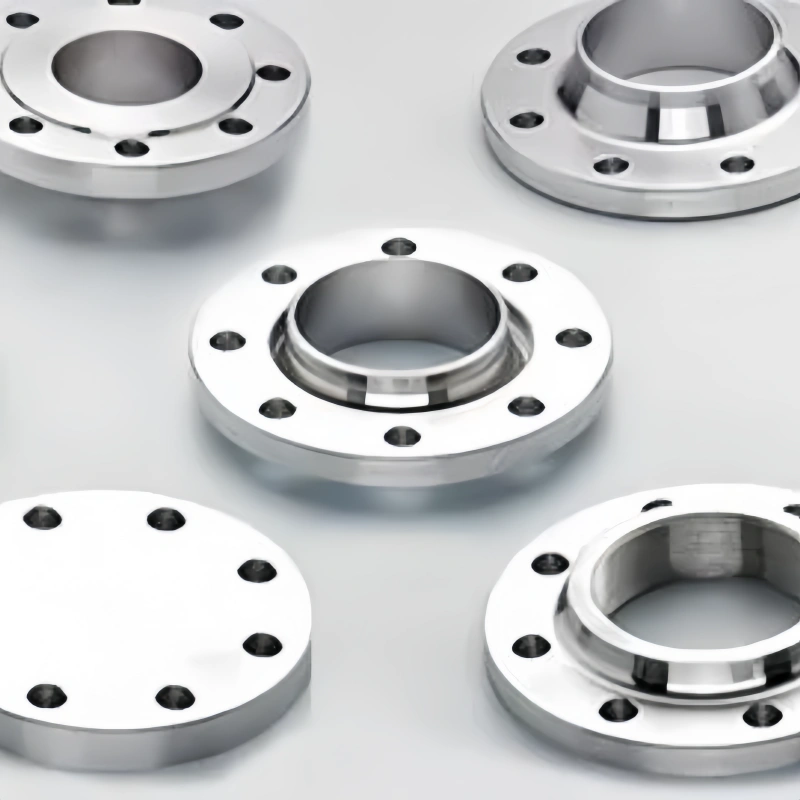
You will find several materials used for pipe flanges in industrial applications. The most common include carbon steel, stainless steel, alloy steel, and nickel alloys. The table below shows the market share for these materials:
| Material | Market Share (%) |
|---|---|
| Carbon Steel | 44 |
| Stainless Steel | N/A |
| Alloy Steel | N/A |
| Nickel Alloys | N/A |
| Others | N/A |
Choosing the right flange materials and the selection process matter. Your decision directly affects safety, durability, and compliance in high-pressure environments. You ensure reliable operations when you use high-quality API Flanges from Alienfrac, designed for the most demanding oil and gas applications.
Key Takeaways
- Understand the main types of flange materials: carbon steel, stainless steel, alloy steel, and nickel alloys. Each has unique properties for different applications.
- Always match flange materials to your system’s pressure, temperature, and corrosion requirements. This ensures safety and long-term reliability.
- Check industry standards like ASME and API for material grades and pressure-temperature ratings. Compliance is crucial for safety and performance.
- Consider corrosion resistance when selecting flanges. Use materials like stainless steel or duplex alloys in aggressive environments to extend service life.
- Follow a step-by-step guide for flange selection: assess application needs, evaluate materials, and verify compliance with relevant standards.
Common Pipe Flange Materials
When you select pipe flange materials for industrial use, you must understand the main types of flange materials available. Each group offers unique properties that suit different environments and applications. Alienfrac API Flanges use a range of these materials to ensure reliable performance in high-pressure systems.
Carbon Steel and Alloy Steel
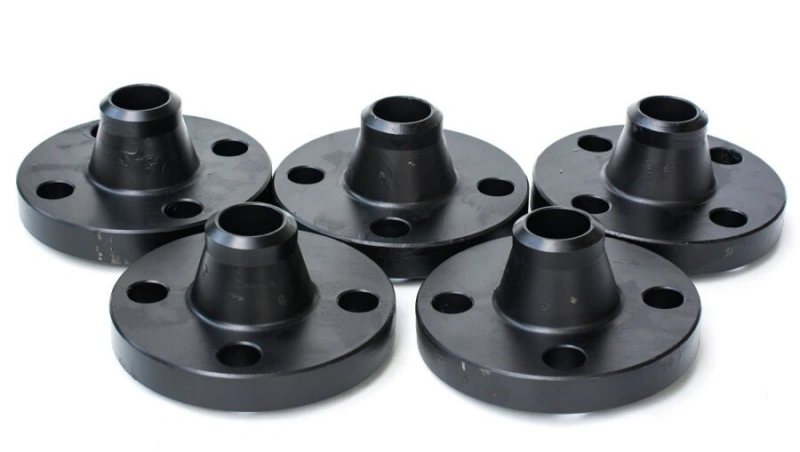
You will find that carbon steel remains the most widely used among all types of flange materials. It offers high strength, good machinability, and cost-effectiveness. However, it does not provide strong corrosion resistance, so you should use it mainly in non-corrosive environments or where protective coatings are applied.
Alloy steel flanges, including low-alloy and high-alloy grades, add elements like chromium or molybdenum to improve mechanical properties and resistance to wear.
| Material Type | Defining Properties |
|---|---|
| Carbon Steel | High strength, economical, good machinability, poor corrosion resistance, and wide application in pipelines. |
| Alloy Steel | Enhanced strength, improved resistance to wear and temperature, suitable for demanding conditions. |
You will often see carbon steel and alloy steel flanges in oil and gas pipelines, power plants, and general industrial piping.
Stainless Steel Grades
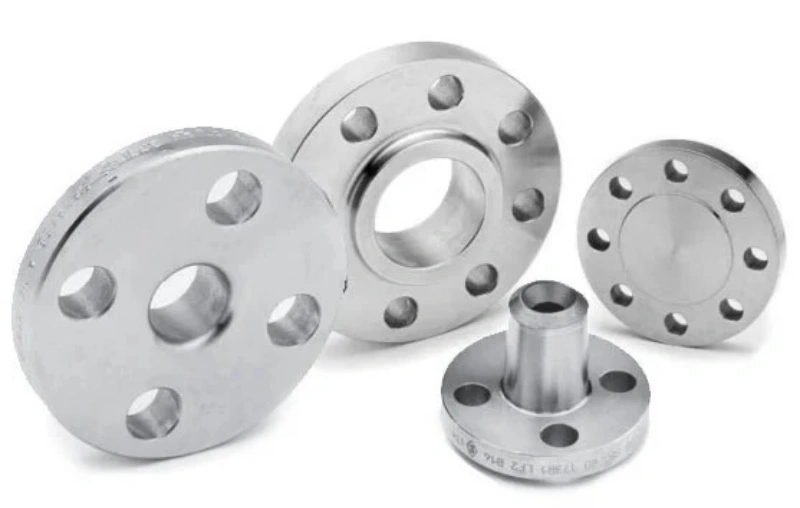
Stainless steel stands out among types of flange materials for its superior corrosion resistance. You should consider grades like 304, 316, 321, and 904L, each offering specific advantages.
For example, 316 resists chlorides, making it ideal for marine and chemical environments. Duplex stainless steel combines the benefits of austenitic and ferritic structures, giving you high strength and excellent resistance to stress corrosion cracking.
Super duplex stainless steel takes these properties further, making it suitable for the harshest conditions.
| Grade | Corrosion Resistance | Mechanical Properties | Applications |
|---|---|---|---|
| 304 | Good resistance to rust and oxidation | High strength | Food processing, chemical industries |
| 316 | Enhanced resistance to chlorides | High tensile strength | Marine, chemical, pharmaceutical |
| 321 | Prevents intergranular corrosion | High-temperature performance | Aerospace, oil, and gas |
| 904L | Superior in acidic environments | Excellent mechanical properties | Chemical and power industries |
- Duplex stainless steel and super duplex stainless steel provide outstanding performance in aggressive environments.
- You benefit from excellent corrosion resistance, high strength, and long service life.
Nickel, Copper, and Specialty Alloys
You may need nickel, copper, or specialty alloy flanges for extreme environments. These types of flange materials excel in chemical processing, offshore, and high-temperature applications. Nickel alloys like Inconel resist hydrogen sulfide and meet NACE MR0175 requirements.
Copper-nickel alloys offer strong resistance to seawater corrosion, making them a top choice for marine and subsea systems. Duplex stainless steel also finds use in these demanding areas due to its mechanical stability.
| Application Area | Advantages |
|---|---|
| Chemical processing | High corrosion resistance in harsh chemical environments |
| Offshore and subsea operations | Strong mechanical stability at high temperature |
| High-temperature reactors | Suitable for sour environments and aggressive media |
Other Flange Materials (Aluminum, Ductile Iron, Polymers)
You can also choose from other types of flange materials for specialized needs. Aluminum flanges offer low weight and good corrosion resistance, though they have medium strength. Ductile iron provides good machinability and castability, but is heavier.
Polymer flanges, such as PVC, are easy to assemble, durable, and resist chemical attack, but they do not handle high temperatures or pressures.
| Flange Type | Advantages | Limitations |
|---|---|---|
| Aluminum | Low density, ductile, malleable, better corrosion resistance than steel. | Medium strength |
| Ductile Iron | Good machinability, castability, and fluidity. | Heavier than aluminum |
| Polymer (PVC) | Easy to assemble, durable, inexpensive, and resistant to biological and chemical corrosion. | May not withstand high temperatures or pressures. |
You should match your flange materials to your system’s pressure, temperature, and corrosion requirements. This approach ensures safety and long-term reliability for your industrial piping.
Flange Material Grades and Standards
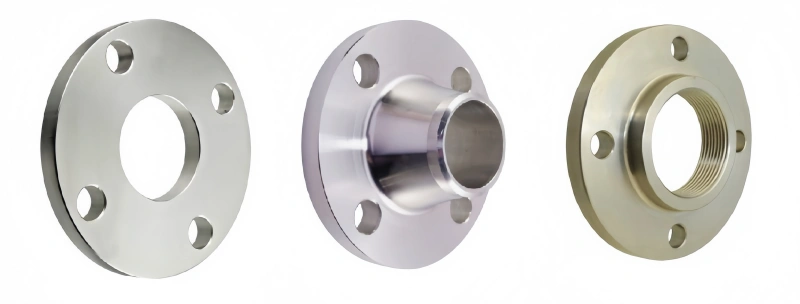
You must pay close attention to material grades and standards when selecting pipe flanges for industrial systems. These factors determine the safety, reliability, and long-term performance of your piping network.
Each flange class has specific requirements for pressure, temperature, and corrosion resistance. You should always verify that your chosen flange class matches the demands of your application.
Key Flange Material Grades (ASTM, API, EN, JIS)
You will find that leading standards organizations specify material grades for industrial flanges. These grades ensure that each flange class delivers consistent quality and performance. The table below highlights common material grades:
| Material Type | Standards |
|---|---|
| Carbon Steel | ASTM A105, ASME A/SA 105, 350LF 2 |
| Stainless Steel | F304, 304L, 309S, 309H, 310S, 316, 316L, 317, 317L, 321, 321H, 347, 904L |
| Alloy Steel | ASTM A182, ASME A182, ASME SA182, ASTM A182 F1, F11, F12, F22, F5, F9, F91 |
| Other Standards | ASME B16.5, ASME B16.47, ASME B16.48, AWWA C207, MSS SP-44, DIN2573, DIN2577, EN1092-1, JIS B2220 |
You should check the material grade for every flange class you use. This step helps you meet both operational and regulatory requirements.
Flange Standards (ASME, API, AWWA, ISO)
You must understand the main standards that govern flange class and performance. In North America, ASME and API standards set the rules for design, pressure ratings, and material selection. For example, ASME B16.5 and B16.47 define dimensions and pressure-temperature ratings for each flange class.
API standards, such as API 6A, cover high-pressure applications and require robust materials. AWWA standards focus on waterworks, while ISO and EN standards apply to international projects. JIS standards are common in Asia, especially for water and shipbuilding systems.
Tip: Always confirm that your flange class meets the relevant standard for your region and industry.
Sourcing and Compliance (AIS, Buy America)
You must also consider sourcing and compliance for critical infrastructure projects. Regulations like AIS and Buy America require that materials for public waterworks and federally funded projects be melted and manufactured in the USA.
You need proper certification to prove compliance. A “Made in USA” label alone does not guarantee that your flange class meets all requirements. Always request documentation from your supplier.
| Requirement | Description |
|---|---|
| AIS Compliance | Materials must be melted and manufactured in the USA for federally funded waterworks projects. |
| Buy America | Similar to AIS, but with project-specific requirements. Certification is mandatory. |
| Certification | Obtain a letter confirming compliance with domestic preference laws. |
| Made in USA | Additional documentation required to ensure full compliance. |
Alienfrac’s API Flanges comply with API and ASME standards, giving you confidence in both quality and regulatory adherence. You can rely on these flanges for high-pressure, high-temperature, and critical service environments.
Types of Flanges and Their Applications
Weld Neck, Threaded, and Blind Flanges
You will encounter several types of flanges in industrial piping. Weld neck flanges have a long, tapered hub that provides strong connections. You should use these flanges for high-pressure and high-temperature systems, such as oil refineries and offshore drilling.
The design helps distribute stress evenly, which increases safety and durability.
Threaded flanges connect to pipes without welding. You can use them for temporary setups or in hazardous environments where welding is not safe. These flanges work well in low-pressure systems and allow for quick assembly and disassembly.
Blind flanges seal the end of a pipe or vessel. You will find them essential for maintenance, inspection, or system isolation. They prevent leaks and allow you to close off sections of your piping network securely.
Tip: Always match the flange material to the pipe and the intended application to ensure compatibility and long-term performance.
Other Flange Types (Slip-On, Socket Weld, Lap Joint, RTJ)
You can choose from other types of flanges based on your intended application. Slip-on flanges slide over the pipe and require two welds. They are easy to install but best for low-pressure systems. Socket weld flanges provide a strong connection for small-bore, high-pressure lines, but you should avoid them with corrosive fluids.
Lap joint flanges consist of a stub end and a backing flange. They allow for easy alignment and frequent maintenance, making them ideal for food and pharmaceutical systems.
RTJ (Ring-Type Joint) flanges use a metal ring gasket for a tight seal. You should select RTJ flanges for high-pressure and high-temperature environments, such as petrochemical and offshore applications.
| Flange Type | Application Description |
|---|---|
| Weld Neck | High-pressure, high-temperature pipelines (oil refineries, offshore drilling) |
| Slip-On | Low-pressure water and HVAC systems |
| Socket Weld | Chemical and hydraulic lines, small bore, high-pressure |
| Threaded | Temporary or hazardous environments |
| Blind | Sealing pipe ends for inspection or maintenance |
| Lap Joint | Food, pharmaceutical, and systems needing frequent disassembly |
| RTJ | Petrochemical, offshore, and high-pressure sealing |
Industry Uses (Oil & Gas, Chemical, Power, Marine)
You will see different types of flanges used across industries. In oil and gas, weld neck and RTJ flanges handle extreme pressure and temperature. Chemical plants often use stainless steel or alloy flanges for corrosion resistance.
Power generation relies on carbon steel and alloy flanges for durability. Marine applications require flanges with strong resistance to seawater, such as duplex or copper-nickel alloys.
- Stainless steel flanges serve the chemical, food, and pharmaceutical industries.
- Carbon steel flanges are common in oil and gas, power, and water treatment.
- Duplex and super duplex flanges work well in marine and offshore environments.
Selecting the right flange type and material ensures your system meets safety, reliability, and performance standards.
Flange Materials and Selection Guide
Selecting the right flange materials and the selection process ensures your industrial piping system operates safely and efficiently. You must evaluate several technical and environmental factors before making a decision. This guide will help you navigate the key steps and considerations for optimal flange material selection.
Key Selection Criteria (Pressure, Temperature, Corrosion)
You must start by understanding the main factors to consider when choosing a flange. These criteria directly impact the performance and longevity of your system. The table below summarizes the essential points:
| Criteria | Description |
|---|---|
| Application Requirements | Select flange materials and selection options based on the specific needs of your application. |
| Flow Characteristics | Consider what flows through the pipes—liquids, gases, or slurries. |
| Temperature Conditions | Evaluate the highest and lowest temperatures the flange will face. |
| Pressure Conditions | Assess the maximum and minimum pressures in your system. |
| Maintenance Requirements | Factor in how often you can inspect and maintain the flanges. |
| Environmental Factors | Analyze the presence of chemicals, humidity, or salt that could cause corrosion. |
| Budget Considerations | Balance initial costs with long-term maintenance and replacement expenses. |
You must also account for mechanical properties, such as strength and ductility, and ensure the flange meets all regulatory standards. For example, Alienfrac API Flanges offer high strength and corrosion resistance, making them suitable for high-pressure and high-temperature applications.
Tip: Always check the pressure-temperature ratings for each flange material. These ratings determine if the flange can withstand your system’s operating conditions.
Matching Flange and Pipe Materials
You must ensure compatibility between flange and pipe materials to prevent premature failure. Use these guidelines for proper matching:
- Match the flange material to the pipe and the fluid to avoid galvanic corrosion.
- Select the correct flange face and gasket material to achieve a reliable seal under pressure.
- Assess the characteristics of the fluid, such as viscosity and temperature, to choose the right flange type.
- For corrosive environments, use corrosion-resistant materials like stainless steel or duplex alloys.
- In high-temperature applications, select materials with proven resistance to thermal stress.
Alienfrac’s range of API Flanges includes options in carbon steel, stainless steel, and specialty alloys. These choices allow you to match flange materials and selection to your system’s unique requirements.
Corrosion Allowance and Galvanic Corrosion
Corrosion is a constant threat in industrial piping. You must address it during flange selection to ensure long-term reliability.
- Add a corrosion allowance to the flange thickness. This extra material compensates for expected material loss over time.
- Use corrosion-resistant materials in environments with aggressive chemicals, high humidity, or salt exposure.
- Prevent galvanic corrosion by pairing flanges and pipes made from compatible metals. Dissimilar metals can create an electrochemical reaction, accelerating corrosion.
- For marine or chemical plants, select flanges with superior corrosion resistance properties, such as super duplex stainless steel or Inconel.
You extend the service life of your system and reduce maintenance costs by considering corrosion resistance at every stage.
Pressure-Temperature Ratings and Classes
You must always verify the pressure-temperature ratings before finalizing your flange selection. These ratings define the maximum pressure and temperature a flange can safely handle.
- Review the flange pressure rating for each material and class. Higher-strength materials support higher pressures, but allowable pressure decreases as temperature rises.
- Consult ASME B16.5 and B16.47 standards for detailed pressure-temperature ratings. These standards provide clear limits for each flange material and class.
- For high-pressure and high-temperature applications, choose flanges with proven resistance and robust design, such as Alienfrac API Flanges.
- Always match the flange pressure rating to your system’s maximum operating conditions to avoid leaks or failures.
- Consider the impact of cyclic loading and temperature fluctuations on flange performance.
- Use the correct pressure-temperature ratings for each flange type, especially in critical service environments.
- Remember that pressure-temperature ratings affect not only safety but also compliance with industry regulations.
- Regularly review and update your flange requirements as system conditions change.
Note: The cost of flange materials and selection varies widely. For example, carbon steel flanges are cost-effective for low-pressure systems, while super duplex and exotic alloys command higher prices due to their superior corrosion resistance and high-temperature performance.
Step-by-Step Guide for Flange Materials and Selection
Follow these steps to ensure you choose pipe flange materials that meet your system’s needs:
- Identify the maximum pressure and temperature your system will encounter. Check the flange pressure rating and pressure-temperature ratings for each candidate material.
- Evaluate the environment. For corrosive environments, prioritize corrosion-resistant materials with high corrosion resistance.
- Match the flange material to the pipe and fluid. Prevent galvanic corrosion by using compatible metals.
- Select the appropriate connection type. Use weld neck flanges for high-pressure and high-temperature applications, or slip-on flanges for easier installation.
- Choose the correct flange face and gasket. Ensure effective sealing under all operating conditions.
- Consider lifecycle costs. Balance initial purchase price with maintenance, inspection, and replacement expenses.
- Verify compliance with industry standards. Ensure all flange requirements align with ASME, API, or other relevant codes.
You can rely on Alienfrac’s API Flanges for robust performance, consistent quality, and full compliance with international standards. These flanges deliver exceptional corrosion resistance and pressure-temperature ratings, making them ideal for demanding industrial applications.
Always consult with a qualified engineer or flange supplier when you face complex or critical service conditions.
Conclusion
You play a critical role in ensuring the safety and efficiency of your industrial piping systems by selecting the right flange materials. Improper choices can lead to:
- Corrosion
- Leaks
- Cracks
- Reduced structural integrity
- Increased maintenance costs
- Safety hazards
| Failure Mode | Description |
|---|---|
| Corrosion | Rapid rusting and pitting in corrosive environments |
| Leakage | Material failure causing fluid escape |
| Failure under pressure | Inadequate material strength for high-pressure applications |
To avoid these risks, follow these expert steps:
- Define your application’s requirements.
- Consult ANSI and ASME standards.
- Evaluate pressure ratings.
- Assess material compatibility.
- Seek advice from specialists.
You should always recognize the importance in piping systems of matching flange materials to your application. For high-pressure, high-temperature needs, Alienfrac’s API Flanges deliver reliable performance and compliance.
FAQ
What is the difference between API and ASME flanges?
You will find that API flanges handle higher pressures and temperatures. ASME flanges suit general industrial use. API flanges follow oil and gas industry standards. ASME flanges cover a broader range of applications.
How do you select the right flange material?
You should consider pressure, temperature, and corrosion resistance. Match the flange material to your pipe and fluid. Always check industry standards and consult with a qualified supplier.
Why is corrosion resistance important for flange materials?
Corrosion resistance protects your system from leaks and failures. You extend the service life of your piping and reduce maintenance costs. Stainless steel and specialty alloys offer excellent protection.
Can you mix different flange materials in one system?
You should avoid mixing dissimilar metals. This practice can cause galvanic corrosion. Always match flange and pipe materials for best results.
Where can you use Alienfrac API Flanges?
You can use Alienfrac API Flanges in oil and gas, chemical, power, and marine industries. These flanges perform well in high-pressure and high-temperature environments.