
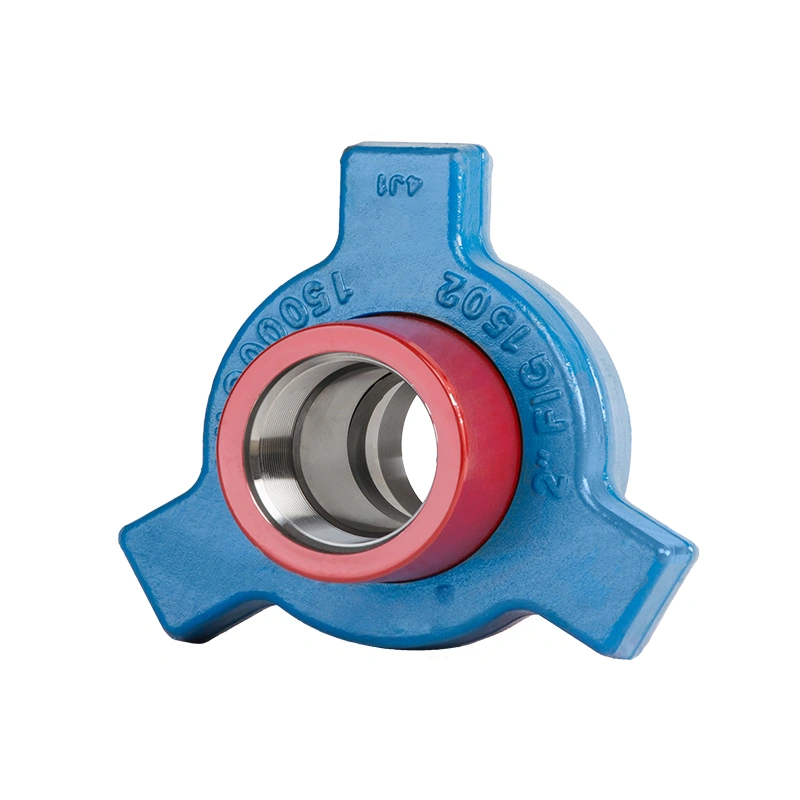
You operate in environments where safety and efficiency depend on strict hammer union standards. These connections support quick and dependable assembly in high-pressure oilfield operations. When you follow field-proven manufacturing standards, you improve operational efficiency and minimize downtime.
You see faster maintenance and safer performance. Alienfrac commits to delivering high-quality hammer unions through rigorous manufacturing standards, ensuring you meet every industry requirement.
- Hammer unions enable reliable connections in harsh conditions.
- Standards drive productivity and reduce operational risks.
Key Takeaways
- Always check for certifications like API, NACE, and ISO before selecting hammer unions. Certified products ensure safety and compliance.
- Understand the importance of pressure ratings. Match the hammer union’s rating to your specific application to prevent failures.
- Use color coding to quickly identify hammer union types and pressure ratings. This practice enhances safety and efficiency on-site.
- Prioritize regular inspections and maintenance of hammer unions. Early detection of wear or damage can prevent costly downtime.
- Work with reputable manufacturers like Alienfrac. Their commitment to quality ensures you receive reliable and compliant hammer unions.
Hammer Union Standards Overview
Alienfrac stands as a trusted name in the natural gas and oil industry. You rely on their hammer unions for secure connections in high-pressure environments. Alienfrac’s commitment to quality shows in its certifications, including API, DNV MED, CCS, and ABS.
These certifications confirm that Alienfrac products meet industry standards and deliver reliable performance in oilfield operations.
You must understand the hammer union standards that govern safety and efficiency. These standards ensure that hammer unions perform under extreme conditions and maintain integrity throughout their service life. The most frequently cited standards in oilfield hammer unions include API, NACE, and ISO.
Each standard addresses specific requirements for manufacturing, corrosion resistance, and product quality.
Tip: Always check for certifications before selecting hammer unions for your oilfield projects. Certified products guarantee compliance with industry standards and reduce operational risks.
API Standards
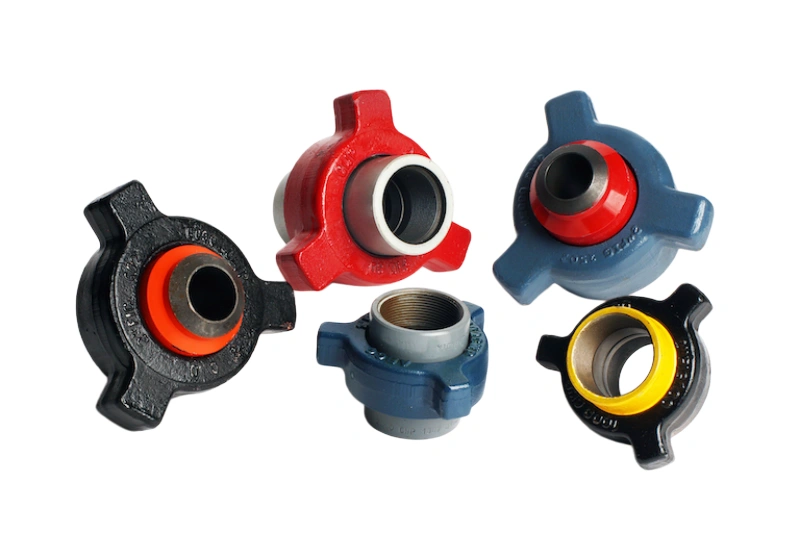
API standards set the foundation for reliability and safety in hammer union applications. You see these standards referenced across the industry because they define the minimum requirements for manufacturing, design, and performance.
API standards ensure that hammer unions meet strict specification criteria, allowing you to interchange components without compatibility issues.
| Requirement Type | Description |
|---|---|
| Manufacturing Standards | Sets minimum requirements for the manufacturing of hammer unions to ensure safety and reliability. |
| Dimensional Interchangeability | Ensures that components can be interchanged without compatibility issues. |
| Functional Interchangeability | Guarantees that components will function correctly when used together. |
| Design | Specifies design criteria to enhance safety and performance. |
| Materials | Outlines acceptable materials for manufacturing hammer unions. |
| Inspection | Details inspection protocols to ensure quality and safety. |
| Marking | Requires proper marking of components for identification and traceability. |
| Storage | Provides guidelines for the safe storage of hammer unions. |
| Shipment | Establishes standards for the shipment of hammer unions to prevent damage during transport. |
You benefit from API standards because they guarantee that hammer unions will perform reliably in the field. These standards also help you identify products that meet the requirements of the oilfield and the broader industry.
NACE Standards
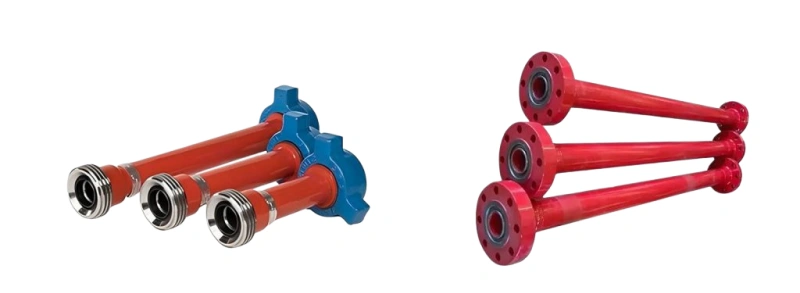
NACE standards focus on corrosion resistance, especially in sour gas environments. You must select hammer unions that comply with NACE MR0175 to prevent sulfide stress cracking and ensure long-term durability.
NACE standards require manufacturers to use materials that withstand corrosive environments. For sour service applications, hammer unions often feature Viton seals, which enhance corrosion resistance.
| NACE Standard | Application |
|---|---|
| NACE MR0175 | Prevents sulfide stress cracking in sour service |
| Viton Seals | Enhances corrosion resistance |
You protect your equipment and personnel by choosing hammer unions that meet or exceed NACE standards. These requirements are essential for maintaining safety in the natural gas and oil industry.
ISO Standards
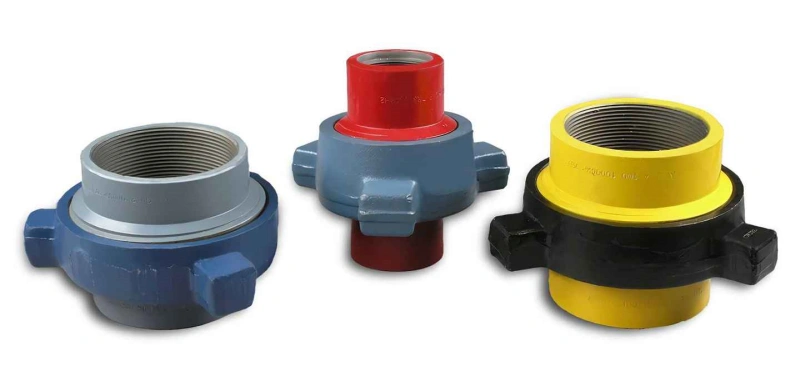
ISO standards guarantee product quality through rigorous testing and performance criteria. You see ISO 9001 and ISO 15156 referenced in hammer union manufacturing. ISO 9001 ensures that manufacturers follow strict quality management systems.
ISO 15156 works alongside NACE MR0175 to address material selection for H₂S-containing environments.
- API 6A and ISO 9001 are critical standards for hammer union manufacturing.
- These standards ensure product quality through rigorous testing and performance criteria.
- Compliance with these standards guarantees safety and reliability in operations.
You gain peace of mind when you select hammer unions that comply with ISO standards. These standards confirm that products have passed stringent quality checks and will perform reliably in demanding oilfield conditions.
Note: Hammer union standards play a vital role in the oilfield. You must prioritize compliance to ensure safety, reliability, and efficiency in every operation.
API Hammer Union Standards
You work in an industry where safety and reliability depend on strict adherence to hammer union standards. The American Petroleum Institute, or API, sets the most recognized benchmarks for hammer unions in the natural gas and oil industry.
These standards ensure that every connection you make in the field meets the highest levels of performance and safety.
API 6A
API 6A stands as the primary specification for wellhead and Christmas tree equipment. You rely on this standard when you select hammer unions for high-pressure applications.
API 6A defines the design, materials, and testing requirements for pressure control equipment. You see this standard referenced in every major oilfield operation.
When you choose hammer unions that comply with API 6A, you guarantee that your connections can withstand extreme pressures and harsh environments. The specification covers everything from material traceability to pressure ratings. You benefit from consistent quality and compatibility across different manufacturers.
Tip: Always verify that your hammer unions carry the API 6A monogram. This mark confirms compliance with industry standards and assures you of reliable performance.
API 16C
API 16C addresses choke and kill systems used in drilling operations. You use this standard when you need hammer unions for flexible choke and kill lines. API 16C outlines requirements for design, materials, and testing to ensure safe operation under dynamic pressure conditions.
You protect your crew and equipment by selecting hammer unions that meet API 16C. This standard ensures that your connections can handle rapid pressure changes and resist failure during critical operations. You also gain confidence that your equipment will perform as expected in emergencies.
API 7HU2
API 7HU2 is a newer standard that focuses on hammer unions used in rotary drilling and well servicing. You follow this standard to ensure that your hammer unions meet the latest requirements for fatigue resistance, pressure integrity, and dimensional compatibility.
API 7HU2 builds on the foundation set by api recommended practice 7hu1, offering updated guidance for modern drilling environments.
You benefit from improved safety and longer service life when you use hammer unions certified to API 7HU2. The standard requires rigorous testing and documentation, so you know your equipment meets the demands of today’s oilfield operations.
| API Standard | Application Area | Key Focus |
|---|---|---|
| API 6A | Wellhead, Christmas Tree | Pressure control, material quality |
| API 16C | Choke and Kill Systems | Dynamic pressure, safety |
| API 7HU2 | Rotary Drilling, Well Servicing | Fatigue resistance, compatibility |
Compliance Risks
You face significant risks if you ignore api hammer union standards. Non-compliance can lead to equipment failure, safety incidents, and costly downtime. You may also face legal and regulatory penalties if your hammer unions do not meet industry standards.
Common compliance risks include:
- Using hammer unions without proper certification or traceability.
- Failing to match pressure ratings with application requirements.
- Overlooking updates to industry standards and specifications.
You can avoid these risks by working with reputable manufacturers like Alienfrac. Their commitment to quality and compliance ensures that your hammer unions meet or exceed every relevant standard in the industry.
Alert: Never compromise on compliance. The safety of your crew and the success of your operation depend on using certified, high-quality hammer unions.
NACE and Corrosion Resistance
Sour Service Requirements
You face unique challenges when you operate in sour service environments. Hydrogen sulfide (H₂S) exposure can cause rapid corrosion and sulfide stress cracking in your equipment. You must select hammer unions that meet NACE MR0175 standards to protect your crew and assets.
These standards require you to use materials that resist cracking and maintain integrity under harsh chemical attack. You cannot afford to overlook these requirements, as failure can lead to leaks, equipment damage, or even catastrophic incidents.
When you choose hammer unions for sour service, you need to confirm that each component is rated for H₂S exposure. You should look for unions with special seals, such as Viton, which provide extra protection against aggressive media.
You also need to verify that the manufacturer follows strict quality controls and testing protocols. This approach ensures that your oilfield hammer unions will perform reliably, even in the most demanding conditions.
Alert: Never use standard hammer unions in sour service unless they are specifically certified for this application. The risks to safety and equipment are too high.
Material Selection
You must pay close attention to material selection when you source hammer unions for sour service. NACE guidelines outline several criteria to help you make the right choice. You should consider pressure and temperature ratings, corrosion resistance, mechanical strength, weldability, and cost versus lifecycle value.
The following table summarizes these key criteria:
| Criteria | Description |
|---|---|
| Pressure & Temperature | Follow ASME B31.3, B31.4, B31.8 |
| Corrosion Resistance | Refer to NACE MR0175 for sour/aggressive media |
| Mechanical Strength | Ensure ASTM impact test compliance |
| Weldability/Fabrication | Consider PWHT needs and field conditions |
| Cost vs. Lifecycle | Balance upfront cost with long-term reliability |
You improve safety and reduce downtime when you select hammer unions that meet these standards. High-quality materials extend the service life of your connections and lower your total cost of ownership.
You should always work with suppliers who understand these requirements and can provide full traceability for every union.
Tip: Ask your supplier for documentation that proves compliance with NACE and related standards. This step gives you confidence in the performance and safety of your hammer unions.
ISO Quality Standards
ISO 9001
You need confidence that your hammer unions will perform reliably in every operation. ISO 9001 gives you that assurance. This specification sets the global benchmark for quality management systems in manufacturing.
When you choose oilfield hammer unions from a manufacturer certified to ISO 9001, you know they follow strict processes from start to finish.
ISO 9001 requires companies to document every step, plan their processes, and ensure all departments work together. Management must take responsibility for quality, and resource management covers both people and the work environment.
Every stage, from design to delivery, follows a clear process. Regular audits and improvements keep quality high. The table below summarizes the main requirements:
| Requirement Type | Description |
|---|---|
| Quality Management System | Documentation, planning, and process interactions are required. |
| Management Responsibility | General responsibilities of management must be outlined. |
| Resource Management | Methods for managing human resources and the work environment are needed. |
| Product Realization | Processes for all production steps from design to delivery are essential. |
| Measurement, Analysis, and Improvement | Regular internal audits and corrective actions are necessary. |
You benefit from these systems because they reduce errors and ensure every batch of hammer unions meets industry standards. ISO 9001 certification signals that a manufacturer values quality and consistency.
Tip: Always ask for ISO 9001 certification when sourcing hammer unions. This step helps you avoid costly mistakes and ensures compliance with industry standards.
International Compliance
You operate in a global industry where equipment must meet more than local requirements. International compliance standards help your hammer unions gain acceptance in markets worldwide.
These standards include api, ISO 10423, and CE marking. Each one ensures your equipment meets strict safety and performance rules.
| Standard | Description |
|---|---|
| API 6A | Ensures compliance with dimensional, performance, and testing standards for wellhead equipment. |
| ISO 10423 | International equivalent of API 6A, enhancing global acceptance. |
| CE Marking | Required for use in European markets, ensuring safety and compliance. |
When you select hammer unions that meet these international standards, you open doors to new markets and guarantee compatibility with other equipment. You also show your commitment to safety and quality, which builds trust with partners and clients.
Following these standards protects your reputation and keeps your operations running smoothly.
Note: International compliance is not just about meeting rules. It is about proving your hammer unions can perform anywhere in the world.
Material & Pressure Ratings
Material Grades
You need hammer unions that deliver consistent performance in every oilfield application. Material selection plays a critical role in safety and reliability. Alienfrac uses high-strength carbon steel and stainless steel in its manufacturing process.
These materials align with industry demands for durability and resistance to harsh environments. Dual-certified materials support both standard and sour service, giving you flexibility and peace of mind.
The table below shows common material grades and their performance characteristics:
| Material Grade | Performance Characteristics |
|---|---|
| Nitrile (NBR) | Excellent oil and abrasion resistance; suitable for hydraulic fluids and moderate temperatures. |
| Viton® (FKM) | Superior chemical resistance; high-temperature stability; ideal for aggressive chemical environments. |
| HNBR | Improved chemical resistance; higher temperature stability; suitable for high-pressure applications. |
| PTFE | Exceptional chemical resistance; low friction; handles extreme temperatures. |
| EPDM | Excellent resistance to heat, steam, and water; less resistant to oils and hydrocarbons. |
You ensure dimensional and functional interchangeability by choosing hammer unions built with these advanced materials. This approach supports safe operations and extends equipment life.
Pressure Ratings
You must understand pressure ratings to select the right hammer unions for your operation. These ratings indicate the maximum pressure a union can handle without risk of failure.
Alienfrac offers hammer unions with pressure ratings from 1,000 psi up to 20,000 psi. This range covers everything from low-pressure to extremely high-pressure applications.
| Pressure Rating Range | Description |
|---|---|
| 1,000 – 20,000 psi | Common pressure ratings for hammer unions indicate the maximum pressure they can safely handle. |
You protect your crew and equipment by matching the correct specification to your application. Always check the manufacturer’s documentation to confirm the pressure rating before installation.
Color Coding
Color coding helps you quickly identify the type and pressure rating of each hammer union. Alienfrac follows industry-standard color codes to reduce errors and improve safety on site. The table below outlines common color codes:
| Hammer Union Type | Color Code | Pressure Rating |
|---|---|---|
| Fig 100 | Black nut, Grey subs | Low-pressure applications |
| Fig 200 | Blue nut, Grey subs | Higher pressures |
| Fig 206 | Orange nut, Grey subs | Mid-range pressures |
| Fig 400 | Red nut, Blue subs | Higher pressure tolerance |
You save time and avoid mistakes by using color-coded unions. This system supports fast visual checks and ensures you always use the right connection for the job.
Tip: Always verify both the color code and the pressure rating before installation. This practice keeps your operation safe and efficient.
Testing & Certification
Hydrostatic Testing
You need to confirm that your hammer unions can withstand the pressures they will face in the field. Hydrostatic testing provides this assurance. During this process, you fill the hammer union with water and apply pressure that exceeds its rated working pressure.
This test helps you detect leaks, weaknesses, or manufacturing flaws before the product reaches your site. You can trust that a hydrostatically tested hammer union will perform safely under real-world conditions.
Tip: Always request hydrostatic test certificates from your supplier. These documents prove that your hammer unions have passed rigorous pressure tests.
Non-Destructive Testing
You want to avoid surprises in the field. Non-destructive testing (NDT) helps you do that. NDT methods, such as ultrasonic testing, magnetic particle inspection, and dye penetrant testing, allow you to check for internal or surface defects without damaging the hammer union.
These tests help you identify cracks, voids, or inclusions that could lead to failure. You benefit from increased safety and reliability when you use hammer unions that have passed NDT.
| NDT Method | Purpose |
|---|---|
| Ultrasonic Testing | Detects internal flaws |
| Magnetic Particle Testing | Finds surface cracks |
| Dye Penetrant Testing | Reveals surface discontinuities |
You should always verify that your hammer unions have undergone proper non-destructive testing. This step reduces the risk of unexpected failures during operation.
Traceability
You need full traceability to ensure quality and compliance. Traceability means you can track every hammer union from raw material to finished product. This process gives you confidence in the origin and quality of each component. Alienfrac maintains strict traceability throughout manufacturing.
- All hammer unions are made from high-quality raw materials.
- Each component is precision-machined and serialized.
- Full material traceability documentation comes with every part.
- Products comply with industry standards such as API 6A and API 16C.
You can quickly identify and resolve issues if they arise. This level of traceability supports safety, accountability, and regulatory compliance in your oilfield operations.
Compliance Tips & Pitfalls
Common Mistakes
You must stay alert to common errors during compliance checks. Many oilfield incidents happen because workers overlook basic steps. The table below highlights frequent mistakes you should avoid:
| Mistake | Description |
|---|---|
| Mixing Pressure Ratings | Using a green-rated union in a high-pressure red-rated system can lead to catastrophic failure. |
| Dry Assembly | Installing without lubrication increases friction and risks seal damage or thread galling. |
| Reusing Old Seals | Compromised seals are the leading cause of leaks in reusable connections. |
| Improper Tools | Using oversized wrenches or impact tools can over-torque and damage the union. |
| Ignoring Alignment | Angular misalignment creates uneven seal compression and stress points. |
You risk equipment failure and safety hazards if you ignore these issues. Always match the pressure rating to the application. Never reuse old seals. Use the correct tools and check alignment before tightening.
Alert: Even small mistakes can cause major problems in the field. Review every step before you sign off on compliance.
Practical Tips
You can improve safety and efficiency by following a few best practices. Start by reviewing hammer union standards before each job. Confirm that every union meets api requirements and carries the correct markings.
Always check the color code and pressure rating. Lubricate threads and seals before assembly to prevent damage. Replace seals with new ones for every installation.
You should keep detailed records for each hammer union. Track serial numbers, test certificates, and inspection dates. This practice helps you maintain traceability and meet api guidelines.
Train your team on proper assembly and inspection procedures. Regular training reduces mistakes and keeps everyone up to date with the latest hammer union standards.
Tip: A checklist can help you catch errors before they become costly failures. Use it every time you install or inspect a hammer union.
Conclusion
You must never overlook hammer union standards if you want to protect your oilfield operations. These standards keep your team safe and your equipment reliable. Ignoring them can lead to costly failures and serious risks.
Always choose certified products and trusted suppliers. Alienfrac stands ready to support your oilfield with quality and compliance at every step.
FAQ
What are hammer unions used for in oilfields?
You use hammer unions to connect pipes and hoses in high-pressure oilfield operations. These unions provide secure, leak-proof connections for drilling, cementing, and fracturing tasks.
How do you select the right hammer union for your application?
You check the pressure rating, material grade, and color code. You match these specifications to your operational requirements. Always verify certifications and compatibility with the source service if needed.
How often should you inspect hammer unions?
You inspect hammer unions before every installation and after each operation. Regular checks help you spot wear, corrosion, or seal damage early. This practice keeps your equipment safe and reliable.
Are Alienfrac hammer unions suitable for sour gas environments?
You can use Alienfrac hammer unions in sour gas environments. Alienfrac offers unions with NACE-compliant materials and Viton seals. These features protect against corrosion and sulfide stress cracking.
What documentation should you request from your supplier?
You request hydrostatic test certificates, material traceability records, and compliance certifications. These documents confirm that your hammer unions meet industry standards and ensure safe operation.