

You need a dependable solution when moving cement or other abrasive materials under pressure. A cement hose provides the strength and flexibility to handle cement slurry in demanding environments. When you ask what a cement hose is, you look for durability and reliability.
Alienfrac leads the industry with advanced hose designs for construction and industrial projects. Each hose resists high pressure and abrasion, ensuring your cement pumping jobs run safely and efficiently.
Key Takeaways
- A cement hose moves slurry, dry cement, and other abrasive materials safely under pressure when standard hoses wear out too fast.
- Choose the hose by material, pressure, flow, temperature, and fitting to match to keep the transfer smooth, safe, and efficient.
- Look for strong pressure resistance, abrasion protection, and secure couplings to reduce leaks, blockages, wear, and downtime.
- Match the hose type to the job. Use a dry cement hose for powder transfer. Use a concrete hose for wet concrete or grout.
- Inspect hoses often, replace worn parts early, and follow safety rules to extend service life and protect workers on site.
What is Cement Hose?
Definition and Function
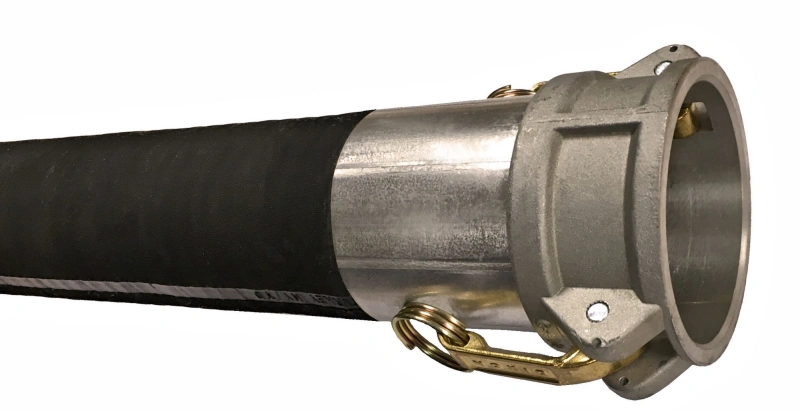
When you ask what a cement hose is, you refer to a heavy-duty flexible line that moves cement slurry, dry blends, sand, and other abrasive media under pressure. This product supports material transfer in construction, mining, wastewater work, and industrial fluid handling.
You use it when a standard line cannot manage wear, pressure, or dense flow.
In practical terms, what is a cement hose? It is a reinforced transfer component built for reliable discharge service. You depend on it to keep material moving through pumping systems with steady flow and strong control. A quality hose helps you transport abrasive mixtures safely through straight, vertical, or curved routes.
You can understand its core function through a few key jobs:
- It moves cement slurry for grouting and structural reinforcement.
- It carries dry cement or abrasive mixtures in demanding job-site conditions.
- It handles high-pressure transfer where ordinary rubber lines wear out fast.
- It supports efficient discharge in construction and other heavy industries.
When you evaluate what a cement hose, function matters as much as definition. You need a product that protects flow, limits clogging, and resists damage from rough particles. That need becomes even more important when your project runs long hours or requires continuous pumping.
Alienfrac brings strong experience to this field. Qingdao Qingflex Hose Factory has focused on high-pressure hose research, development, and manufacturing since 2008. That background gives you confidence in product design, production control, and long-term reliability.
Alienfrac applies that expertise to each cement hose it manufactures, with attention to pressure stability, abrasion resistance, and dependable performance in severe environments.
Tip: If your application involves abrasive solids, dense slurry, or pressure-sensitive transfer, you should treat hose selection as a system decision, not a simple accessory purchase.
Materials and Construction
If you want a clear answer to what a cement hose is, you should also look at how manufacturers build it. Construction defines service life. Material choice defines pressure capacity, flexibility, and resistance to abrasive wear.
Most industrial designs follow a layered structure. Alienfrac uses a robust build that matches high-pressure transfer needs and abrasive service conditions.
| Hose part | Typical material or structure | Purpose |
|---|---|---|
| Inner tube | Abrasion-resistant inner rubber layer, often based on heavy-duty rubber compounds such as natural rubber or neoprene blends | Protects the flow path from wear caused by slurry and abrasive particles |
| Reinforcement layer | Multiple spiral steel wire layers, commonly 2, 4, or 6 wound layers | Gives the hose high-pressure strength, shape retention, and longer service life |
| Outer cover | Tough outer rubber layer | Shields the assembly from external wear and harsh jobsite conditions |
This layered design explains what a cement hose is in engineering terms. The inner tube faces direct contact with abrasive material. The reinforcement package carries the pressure load. The outer cover guards the structure during handling and field use.
Multi-spiral steel wire reinforcement plays a major role in performance. A wound spiral structure strengthens the assembly against positive pressure, pulse pressure, and impact pressure. Reverse spiral layers reduce local friction points that often appear in braided designs.
That improvement helps the product resist pressure cycling more effectively. Strong bonding between steel wire and rubber during vulcanization creates an integrated body, which improves flex life and supports longer service.
You also benefit from better shape retention during pumping. That matters because internal collapse or distortion can interrupt flow. Alienfrac engineers each hose to maintain a dependable passage for material movement under stress.
This design supports smooth transfer through demanding routes while reducing the risk of blockage.
So, what is a cement hose from a construction standpoint? It is a reinforced rubber transfer line designed to balance flexibility with structural strength. It combines an abrasion-resistant tube, spiral steel reinforcement, and a durable outer cover to move cement-based and abrasive media with safety and control.
Alienfrac also adds value through manufacturing quality and practical customization. Depending on your project, you may choose different diameters, lengths, pressure ratings, secure metal couplings, heating tracing, or armored covers.
That flexibility helps you match the hose to real operating conditions instead of forcing your operation to fit a generic product.
Cement Hose Features
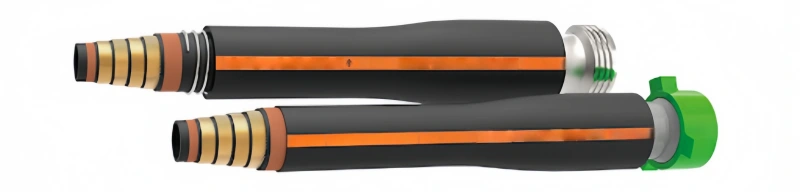
When you evaluate a transfer line for abrasive service, features matter more than appearance. You need strength, flow stability, and connection security. Alienfrac designs each cement hose to meet those needs in demanding jobs.
The structure combines multi-spiral steel wire reinforcement, abrasion-resistant rubber, and secure end fittings. You also can choose optional heating tracing or armored covers when your project needs extra protection.
High-Pressure Resistance
You need a hose that holds its shape and flow path during high-pressure pumping. Alienfrac builds that strength into the reinforcement package. Multi-spiral steel wire layers give the assembly strong structural support. This design helps the line resist expansion, pressure shock, and repeated stress during long pumping cycles.
The result is practical performance in the field:
- You get stable material transfer during continuous pumping.
- You reduce the risk of collapse or blockage in curved routes.
- You maintain flexibility without losing pressure control.
- You improve service reliability in tough construction and industrial work.
The most common performance indicators for this feature include working pressure, burst pressure, and bend radius. These values help you compare one hose assembly with another.
| Specification | Value |
|---|---|
| Working Pressure | 800 psi |
| Burst Pressure | 2400 psi |
| Bend Radius | 9 in |
These figures show why reinforcement design matters. A strong working-pressure rating supports daily operation. A higher burst-pressure margin adds safety confidence. A controlled bend radius helps you route the line without harming performance.
Manufacturers also verify high-pressure resistance through formal testing. Pressure-resistance inspection checks the product under controlled length, temperature, pressure, curvature, and time conditions.
Hydraulic pulse testing adds another layer of proof. In that test, technicians bend the assembly and apply pulse pressure, often at 150% of working pressure, to check for leaks or damage. Fatigue-life testing then simulates vibration and long-term field stress.
These methods help confirm that the hose can handle repeated high-pressure service, not just a single short run.
Tip: If your application includes frequent pressure cycling, ask for test data on pulse performance and bend conditions, not only a basic pressure rating.
Abrasion Protection
Abrasive media can destroy an ordinary transfer line fast. You need a tube and cover that can resist constant wear from slurry, dry powder, and rough particles. Alienfrac uses abrasion-resistant rubber for this reason. That material protects the inner flow path and supports longer service life in hard-working environments.
This protection comes from more than one design choice. The inner rubber lining fights wear from moving cement solids. The reinforced structure helps the line stay stable under load. The outer cover guards against jobsite contact, dragging, and surface damage.
If your work area creates extra risk, you can specify optional armored covers. If temperature control matters during transfer, heating tracing can support smoother material movement.
The following materials and construction choices are widely recognized for abrasive service:
| Recommended compound or liner material | Value in abrasive transfer |
|---|---|
| Abrasion-resistant rubber lining | Handles aggressive particles well and supports long service life |
| Reinforced rubber construction with steel wire layers | Adds strength for demanding transfer conditions |
| High-grade rubber material | Balances durability, flexibility, and lower replacement frequency |
Service life depends on how you use and maintain the line. In heavy-duty delivery work, comparable concrete transfer products often last about 3 to 12 months. Pressure level, mix abrasiveness, bending practice, and cleaning routine all affect that range.
Heavy-duty abrasion-resistant designs usually outperform standard rubber options in continuous pumping because they tolerate harsh aggregates and repeated wear better.
Standardized wear evaluation often uses rubbing or wear-cycle methods such as ASTM D3884 or ASTM D4060, even though published cement-specific abrasion numbers are not always available.
In simple terms, a well-built cement hose protects your uptime. You spend less time dealing with premature wear. You keep material moving with fewer interruptions. You also gain more confidence when routes include bends, elevation changes, or rough ground contact.
Secure Couplings
Connection security affects safety as much as pressure rating. A strong body means little if the end connection leaks or shifts under load. Alienfrac equips its products with secure metal couplings that support tight, dependable sealing.
This design helps you keep each cement hose connected with stable flow and reduced material loss.
Several coupling styles are common in demanding transfer systems:
| Coupling Type | Description |
|---|---|
| Quick-Connect (Sleeve-Lock) | Fast, secure connections with minimal downtime |
| Wing Union (Hammer-Lock) | Rugged choice for heavy-duty service |
| NSC Style Screw Couplings | Provides a secure hose-to-hose union |
You should match the coupling style to your operating conditions, pressure demands, and service routine. Quick-connect systems help when speed matters. Wing union styles suit rugged field work. Screw couplings support firm hose-to-hose joining in transfer layouts that need dependable alignment.
Good installation practice matters too. Safety standards often require safety chains or positive locking devices at connections on high-pressure assemblies, especially at 3/4 inch diameter or larger. Guidance from industrial safety bodies also stresses proper fit, mechanical retention, and protection against accidental disengagement.
In daily handling, you should avoid careless dragging, avoid overbending before pressurizing, and use tools only on fitting hex flats instead of twisting the body itself.
✅ A secure connection system gives you three direct benefits:
- Leak-free transfer
- Faster setup and changeout
- Better operator safety
A reliable hose assembly must do more than survive pressure. It must stay flexible during routing, resist wear during use, and seal tightly at every connection point. That full package defines the real value of a cement hose in demanding service.
Types of Cement Hose
When you select a hose for your project, you need to match the type to your application. Alienfrac offers several options to cover different material transfer needs.
Each type comes with unique features and construction details. You can find the right solution for dry bulk transfer, wet concrete pumping, or specialized requirements.
Dry Cement Hose
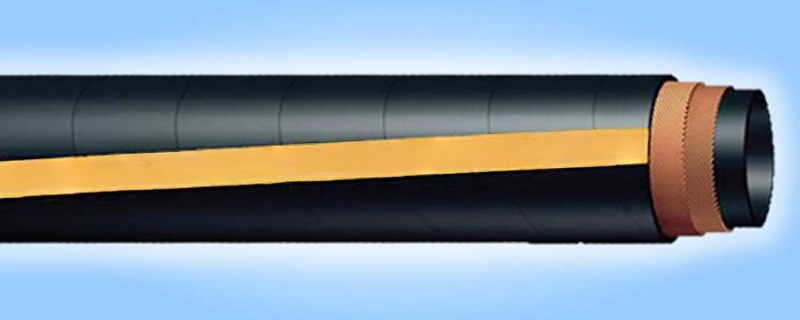
You use a dry cement hose for pneumatic transfer of powdered cement and other abrasive materials. This hose handles high wear and static electricity. The thick, abrasion-resistant liner protects against the harsh effects of dry cement.
You also benefit from static-dissipating properties, which reduce the risk of sparks during fast material flow. The hose withstands sustained pressure in pneumatic systems and works well in extreme temperatures.
- Abrasion-resistant liner for long service life
- Static-dissipating tube for safety
- Handles operating temperatures from -40°F to 180°F
- Suitable for high-pressure pneumatic transfer
You can rely on this hose for bulk cement unloading, silo filling, and other dry material handling tasks.
Concrete Hose
A concrete hose is your best choice for pumping wet concrete, grout, or slurry. This hose features a reinforced structure with multi-spiral steel wire and a tough rubber cover. You get flexibility for routing around obstacles and strength to resist high pressure.
The hose maintains its shape during pumping, which prevents clogging and ensures steady flow.
- Multi-spiral steel wire reinforcement for pressure resistance
- Abrasion-resistant rubber tube for durability
- Secure metal couplings for leak-free connections
- Flexible design for vertical, horizontal, or curved routes
You use a concrete hose on construction sites, in industrial plants, and for infrastructure projects. It supports both short and long-distance pumping.
Custom Options
Alienfrac understands that every job has unique demands. You can customize your hose to fit your exact needs. Choose from a range of diameters, lengths, and pressure ratings. Add optional features for extra protection or performance.
| Optional Feature | Benefit |
|---|---|
| Heating tracing | Maintains material temperature |
| Armored cover | Extra protection in harsh environments |
| Stainless-steel interlock tube | Guards against mechanical damage |
| Fire-resistant layer | Withstands flame exposure up to 1300°F |
| UV-resistant outer cover | Protects against weather and abrasion |
You can also request gas-leading plies for venting, or stiffening spirals to prevent kinking. The specification of the cement hose can be tailored to your project, ensuring you get the best performance and safety.
Tip: Review your operating pressure, material type, and environmental risks before choosing a hose. Customization helps you meet strict safety and efficiency standards.
Cement Hose Applications
Construction Sites
You see many core applications for hose systems on active jobsites. Speed matters. Placement accuracy matters too. Delays can reduce mix quality, so crews rely on efficient transfer during pumping. This need becomes critical during the pumping of concrete in large pours, elevated decks, and restricted work zones.
| Construction scenario | Why do you use hose systems |
|---|---|
| High-rise buildings | Supports vertical pumping to upper floors and tall placement points |
| Bridge and tunnel construction | Handles confined routes and continuous pumping with strong wear resistance |
| Foundation and civil works | Adapts to changing placement points and variable flow rates |
You also use these systems for:
- slab delivery across wide sites
- form filling in the foundation work
- direct transfer from truck to pour zone
- pumping of concrete into tight or obstructed areas
This range shows the practical application of cement hose in modern building work.
Oilfield and Industrial Use
You need reliable transfer equipment when pressure, abrasion, and route complexity increase. Alienfrac serves these demanding applications with durable designs built for severe service. In oilfield operations, you use a cement hose for grouting, slurry transfer, and support work tied to well-site service.
In industrial settings, you use the same hose for pneumatic discharge of cement, minerals, and other abrasive media.
Common applications include:
- slurry and drilling mud transfer
- mortar and grout delivery
- boom transfer in heavy placement work
- bulk material discharge in plants
These applications demand strength, flexibility, and secure connections.
Tip: You should match pressure rating, material type, and routing conditions before selecting a hose assembly.
Pumping Routes
You often route material through vertical, horizontal, or curved lines. Good equipment keeps the flow stable during pumping and helps crews maintain control. Alienfrac products support these applications because they hold shape under stress and resist wear in harsh environments.
You benefit from:
- smoother material movement through bends
- better control during long-distance pumping
- steady delivery in complex applications
This performance helps you move cement with confidence across demanding applications.
Choosing and Maintaining Cement Hose
Selection Tips
You need to match the right cement hose to your project for safe and efficient operation. Compare several factors before making your choice. The material you plan to move, the flow volume, and the pressure requirement all affect performance.
Temperature and coupling compatibility also play a role. Review the table below to guide your selection:
| Selection Factor | Description |
|---|---|
| Media Type | Choose a hose that fits the material you will transfer, such as cement slurry or dry powder. |
| Flow Volume | Make sure the hose supports the flow rate needed for your operation. |
| Pressure Requirement | Select a hose that withstands the maximum pressure in your system. |
| Temperature | Confirm the hose can handle the temperature range at your site. |
| Coupling Compatibility | Check that the hose connects securely with your existing fittings. |
Tip: Always review your project’s specifications and consult with Alienfrac for custom solutions.
Maintenance Guidelines
Proper maintenance extends service life and reduces downtime. You should inspect your equipment before every use. Follow these steps to keep your system reliable:
- Perform regular visual inspections. Look for wear, leaks, or damage.
- Pressure test on a scheduled basis. Identify weak points early.
- Replace aging or worn hoses proactively. Avoid waiting for failure.
A routine inspection checklist helps you spot problems:
- Check the outer surface for abrasion, cuts, or unusual wear.
- Look for blisters, soft spots, or discoloration.
- Inspect fittings and couplings for cracks or looseness.
- Verify clamps are tight and in good condition.
- Examine the full length for kinks, bulges, or deformation.
Note: Proactive maintenance prevents unplanned downtime, expensive repairs, and safety incidents.
Safety Practices
You must follow strict safety procedures to protect workers and equipment. Review the table for best practices:
| Risk addressed | Safety practice |
|---|---|
| Hose whipping during cleaning or discharge | Keep workers clear when compressed air is released. |
| Severe whipping injuries | Avoid double-end or double-S attachments that increase danger. |
| Pressure-related burst or concrete ejection | Never use compressed air to clear blockages from a full boom. |
| Residual pressure before opening the system | Verify pressure before removing clamps. |
| Injury while disconnecting pressurized parts | Use tools that keep your hands away from the line. |
| Leakage from hydraulic components | Inspect for damaged parts and contain fluid leaks promptly. |
| High-pressure oil leak injury | Shut down the machine before addressing leaks. |
| Pressure release from valves | Make sure no pressure remains and loosen valves gradually. |
- Maintain a safe distance whenever air is in the system.
- Constrain hoses to prevent sudden movement.
- Check equipment for defects before operation.
- Stop leaks quickly and collect escaping fluid safely.
Safety first: Always follow Alienfrac’s recommendations and industry standards.
Conclusion
You now understand why choosing the right cement hose matters for your projects. Knowing the types, features, and uses helps you work safely and efficiently. Alienfrac stands behind every hose with proven quality and reliability.
- Choose hoses built for durability.
- Customize for your specific needs.
- Maintain your equipment for long service life.
Prioritize the right hose and proper care to keep your operations running smoothly and safely.
FAQ
What is a cement hose used for?
You use a cement hose to transport cement slurry, sand, and other abrasive materials under high pressure. This hose works well in construction, oilfield, and industrial projects where durability and reliability matter.
How do you choose the right cement hose?
You select a cement hose based on your material type, flow volume, and pressure needs. Review your project requirements and consult with Alienfrac for custom options that fit your application.
How long does a cement hose last?
You can expect a cement hose to last from 12 months to several years. Service life depends on usage, pressure, and maintenance. Regular cleaning and inspections help extend hose life.
Can you use a cement hose for other materials?
You can use a cement hose for transporting concrete, mortar, or even as a hose for plaster. Always check compatibility with your material and operating conditions before use.
What maintenance steps should you follow?
You inspect your cement hose before each use. Clean the hose after every job. Store it in a cool, dry place. Replace hoses showing cracks, leaks, or reduced flow. You can also use a grout hose for similar maintenance routines.